


What Is Window Treatment? Cut Energy Costs by 25% in 2026
Most homeowners assume all window treatments block sunlight equally, but that’s a costly myth. Light control actually varies from 50% reduction with sheer curtains to over 90% with blackout drapes. Understanding these differences helps you choose treatments that optimize light, privacy, and energy savings by up to 25%. This guide clarifies window treatment types, materials, functions, customization options, and installation best practices to empower smart choices for your home.
Table of Contents
- Introduction To Window Treatments
- Functional Benefits Of Window Treatments
- Types And Materials Of Window Treatments
- Common Misconceptions About Window Treatments
- Comparison Of Ready-Made Vs Custom Window Treatments
- Customization And Material Options
- Installation And Practical Considerations
- Conclusion And Next Steps For Homeowners
- Explore Custom Window Treatment Fabrics And Solutions
- Frequently Asked Questions
Key Takeaways
| Point | Details |
|---|---|
| Treatment types offer distinct benefits | Blinds, curtains, shades, and shutters each provide unique light control, privacy, and insulation advantages. |
| Fabric choice drives performance | Material selection directly impacts style, durability, energy efficiency, and maintenance needs. |
| Custom versus ready-made matters | Custom treatments cost 30-50% more but deliver superior fit, design flexibility, and longevity. |
| Installation affects lifespan | Professional mounting can extend fabric durability by up to 40% compared to improper DIY methods. |
| Misconceptions lead to poor choices | Understanding truth about sunlight blockage and fabric thickness prevents wasted money and disappointment. |
Introduction to Window Treatments
Window treatments encompass the various coverings you install over windows, including blinds, shades, curtains, drapes, and shutters. These solutions serve multiple critical functions beyond decoration. They control how much natural light enters your space, provide privacy from outside views, influence insulation for better energy savings, and significantly enhance your interior aesthetics.
Both residential and commercial spaces rely on window treatments to balance functionality with visual appeal. Each treatment type operates differently and offers distinct visual characteristics:
- Blinds use adjustable slats for precise light control
- Shades roll or fold to cover window openings completely
- Curtains and drapes hang from rods using fabric panels
- Shutters feature solid or louvered panels mounted directly to frames
The right treatment transforms how you experience each room. A bedroom needs blackout capability for restful sleep, while a living room benefits from filtered natural light that reduces glare without darkening the space. Understanding these fundamental differences sets the foundation for making informed decisions about which treatments suit your specific needs.
Functional Benefits of Window Treatments
Window treatments deliver tangible benefits that justify their investment. Light control stands as the most obvious advantage. Sheer curtains filter approximately 50% of incoming sunlight, creating a soft glow perfect for daytime ambiance. Meanwhile, blackout drapes block over 90% of light, ensuring complete darkness when needed.
Privacy protection grows increasingly important in urban and suburban settings. Fabric opacity and layered designs prevent outsiders from viewing into your home while still allowing you to enjoy natural light during the day. Translucent materials work well for daytime privacy, while heavier fabrics provide complete screening after dark.
Energy efficiency represents a hidden financial benefit many homeowners overlook. Properly selected and installed window treatments reduce heat transfer and lower heating and cooling costs by up to 25%. Cellular shades trap air in honeycomb pockets, creating insulation barriers. Heavy drapes add thermal resistance during winter months. These features directly impact your utility bills year after year.
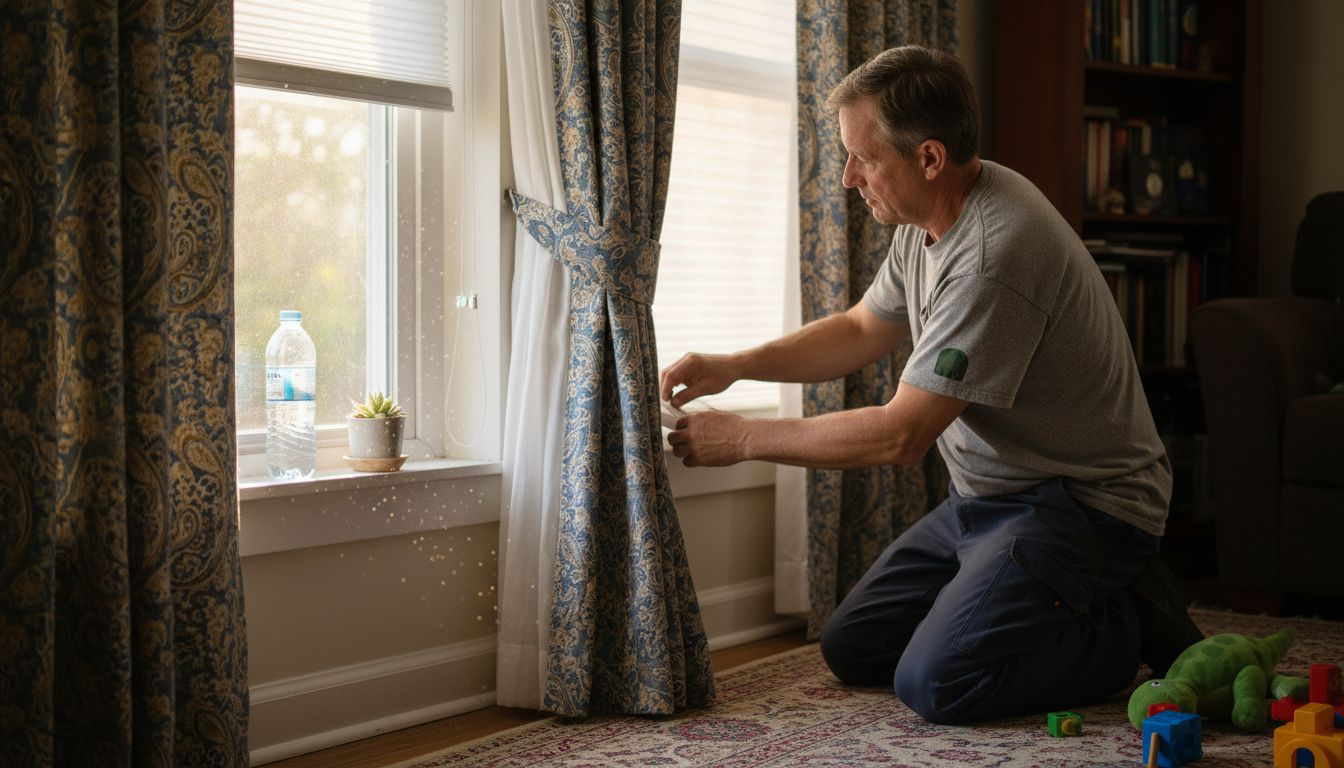
Pro Tip: Combine treatments for maximum energy savings. Layer cellular shades with decorative curtains to achieve both insulation and style without sacrificing aesthetics.
Additional advantages include UV protection that preserves furniture, flooring, and artwork from sun damage. Quality treatments also reduce outside noise, contributing to a more comfortable living environment. When you factor in these multiple benefits, window treatments become one of the most cost-effective home improvements available.
Types and Materials of Window Treatments
Each treatment category offers unique characteristics affecting both appearance and performance. Blinds feature horizontal or vertical slats made from wood, faux wood, vinyl, or aluminum. You rotate the slats to adjust light levels precisely, making blinds ideal for offices and spaces requiring variable lighting throughout the day. However, blinds provide limited insulation compared to fabric options.
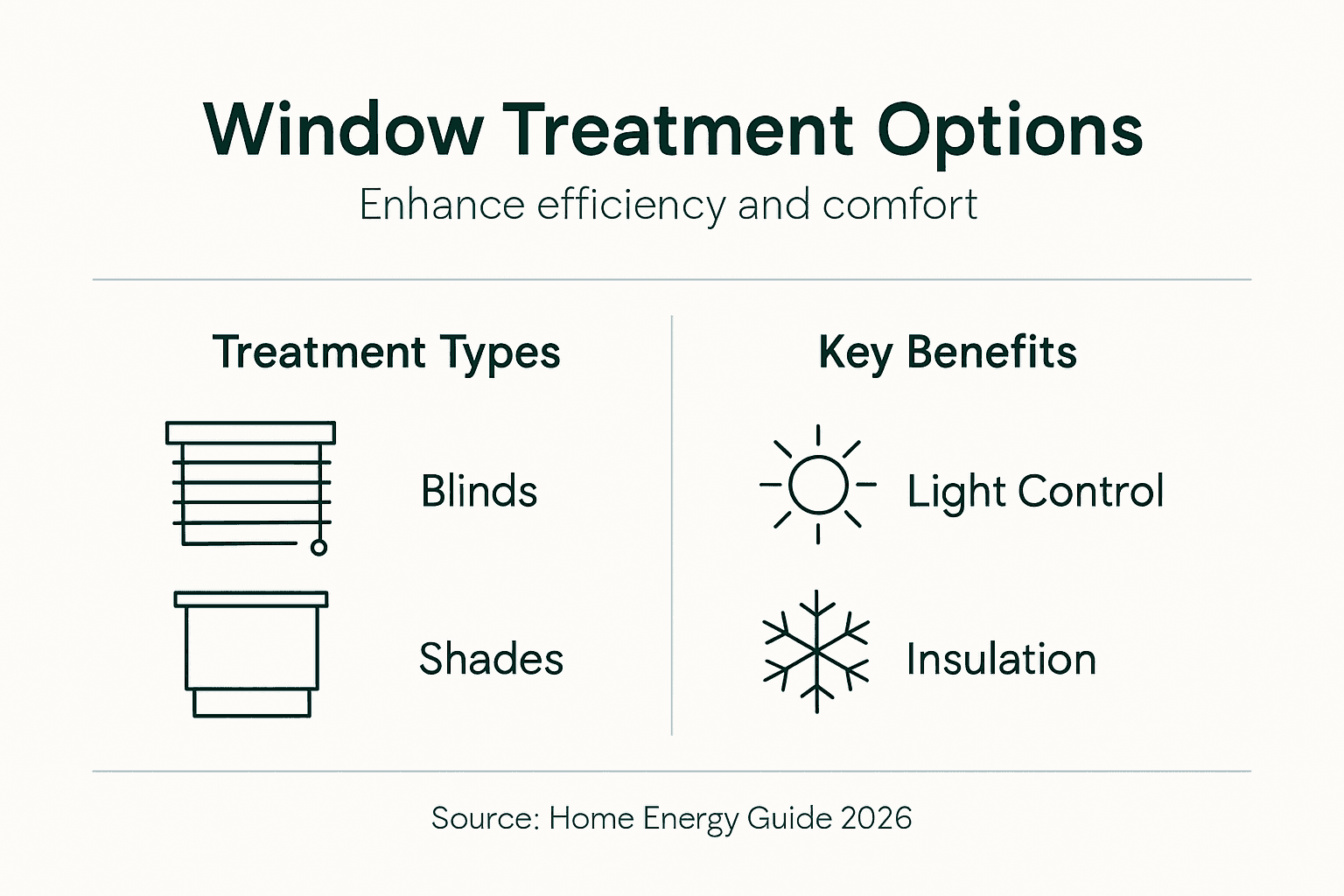
Shades operate differently, using continuous material that rolls, folds, or pleats. Roller shades offer clean, minimalist aesthetics. Roman shades fold into elegant horizontal pleats when raised. Cellular shades utilize honeycomb structures that trap air, delivering superior insulation. The fabric structure and treatment design determine insulation effectiveness, not just thickness.
Curtains and drapes dominate residential applications thanks to their versatility and style range. The distinction lies mainly in weight and lining. Curtains typically use lighter fabrics without lining, while drapes feature heavier materials with insulating liners. Specialty fabrics like jacquard satin and embroidered cotton add distinctive texture and durability lasting 5 to 10 years with proper care.
| Treatment Type | Light Control | Insulation | Style Flexibility | Maintenance |
|---|---|---|---|---|
| Blinds | Excellent | Low | Moderate | Easy wipe down |
| Cellular Shades | Good | Excellent | Limited | Vacuum or dust |
| Curtains | Variable | Moderate | High | Machine wash most |
| Drapes | Excellent | High | Very High | Dry clean recommended |
| Shutters | Excellent | Moderate | Classic only | Wipe with damp cloth |
Shutters provide permanent architectural elements crafted from wood or composite materials. They mount directly to window frames, offering timeless appeal and excellent durability. While more expensive upfront, quality shutters can last decades with minimal maintenance.
Pro Tip: Request fabric samples before committing to large orders. Viewing materials in your actual lighting conditions prevents costly mismatches between expectations and reality.
Polyester blends deliver practical advantages for high-traffic areas, resisting wrinkles and fading better than natural fibers. Natural materials like cotton and linen offer breathability and organic texture but may require more careful maintenance. Your lifestyle and room usage should guide material selection as much as aesthetic preferences.
Common Misconceptions About Window Treatments
Several persistent myths lead homeowners toward poor purchasing decisions. Understanding the truth helps you avoid wasting money on unsuitable treatments.
-
All treatments block sunlight equally: Light reduction varies dramatically by type and fabric. Sheer panels filter approximately 50% while blackout options exceed 90% blockage. Never assume any window covering will deliver specific light control without verifying its design specifications.
-
Thicker fabric always means better insulation: Fabric structure matters more than thickness alone. A cellular shade with air pockets insulates better than a thick flat curtain. Look for thermal ratings and honeycomb designs rather than judging by weight or feel.
-
Motorized controls are essential modern features: While convenient, motorization represents an optional luxury rather than a necessary upgrade. Manual operation works perfectly well for most applications. Only invest in motors if you have hard-to-reach windows or physical limitations affecting manual use.
-
Custom treatments are always better: Ready-made options suit standard window sizes perfectly and cost significantly less. Custom treatments shine when you have unusual dimensions, specific design visions, or performance requirements that off-the-shelf products cannot meet. Assess your actual needs before assuming custom is worth the premium.
“The biggest mistake I see homeowners make is choosing treatments based on appearance alone without considering how they’ll actually function in the space throughout different seasons and times of day.” – Interior Design Professional
Correction of these misconceptions prevents overspending and ensures your treatments deliver expected performance. Always prioritize function alongside aesthetics when making final selections.
Comparison of Ready-Made vs Custom Window Treatments
Deciding between ready-made and custom treatments requires weighing costs against benefits based on your specific situation. Ready-made treatments offer immediate availability and lower prices, typically costing 30 to 50% less than custom alternatives. You’ll find standard sizes at home improvement stores and online retailers, with installation possible the same day you purchase.
However, ready-made options limit your choices. Sizes come in fixed increments that may not fit your windows perfectly, creating gaps that compromise light control and insulation. Fabric selection remains restricted to mass-market options. Style variations exist but pale compared to custom possibilities.
Custom window treatments provide precise fit for any window dimension, eliminating light gaps and ensuring optimal performance. You access broader fabric selections including designer materials unavailable in retail stores. Custom construction typically uses higher quality components that extend lifespan significantly.
| Factor | Ready-Made | Custom |
|---|---|---|
| Cost | $50-$300 per window | $200-$800+ per window |
| Lead Time | Immediate | 2-6 weeks |
| Fit Accuracy | Standard sizes only | Exact measurements |
| Fabric Choices | Limited selection | Extensive options |
| Durability | 3-5 years typical | 7-15 years typical |
| Design Flexibility | Pre-set styles | Unlimited customization |
Installation approaches differ between the two options. Ready-made treatments usually include basic mounting hardware designed for simple DIY installation. Custom treatments often benefit from professional installation to ensure proper mounting and operation, protecting your investment.
Pro Tip: Calculate the cost per year rather than upfront price. A $600 custom treatment lasting 12 years costs $50 annually, while a $150 ready-made option lasting 4 years costs $37.50 annually but requires replacement three times in the same period.
Consider custom treatments for rooms where you plan to stay long-term and where appearance significantly impacts your enjoyment. Choose ready-made for rental properties, temporary housing, or spaces where standard sizes fit well and design flexibility matters less.
Customization and Material Options
Fabric selection forms the foundation of effective window treatment customization. You’ll choose fabric type, color, pattern, and opacity based on each room’s functional needs and your design vision. Light filtering fabrics allow diffused natural light while maintaining daytime privacy. Room darkening materials block 85 to 95% of light. Blackout fabrics eliminate virtually all light penetration.
Designer fabrics such as jacquard satin provide luxury texture and visual depth unavailable in standard retail options. Embroidered cotton adds artisanal detail that elevates simple curtain designs into focal points. These premium materials typically last 5 to 10 years with proper care, making them worthwhile investments for frequently used spaces.
Color choice impacts both aesthetics and performance. Darker colors absorb more heat and light, providing better room darkening but potentially fading faster in direct sun. Lighter colors reflect heat and maintain brightness while showing soil more readily. Consider your room’s orientation and sunlight exposure when selecting colors.
Customization extends beyond fabric alone:
- Lining options add insulation, light blocking, and fabric protection
- Pleat styles affect how treatments hang and stack when open
- Trim details like borders, tassels, and fringe personalize appearance
- Hardware finishes coordinate with room fixtures and furniture
Maintenance requirements vary significantly by material. Polyester blends often allow machine washing, simplifying care. Natural fibers may require dry cleaning to prevent shrinkage or damage. Fabric behaviors including fading resistance and cleaning methods should influence your selection, especially for sunny rooms or homes with pets and children.
Customization ensures treatments perfectly fit unique window sizes, including bay windows, arched openings, and floor-to-ceiling installations. This precision eliminates the light gaps and poor proportions that plague ready-made treatments in non-standard applications. The result combines optimal function with cohesive interior design that reflects your personal style.
Installation and Practical Considerations
Proper installation directly impacts how well your treatments perform and how long they last. Professional installation can extend fabric lifespan by up to 40% by ensuring correct mounting techniques and avoiding damage during setup. Installers understand weight distribution requirements and select appropriate anchors for different wall types.
Hardware selection matters as much as the treatments themselves. Brackets must support the weight of your chosen materials without sagging or pulling away from walls. Rods should extend beyond window frames to allow treatments to stack fully open without blocking glass. Tracks need smooth operation for years of daily use.
Mounting location affects both appearance and function. Inside mount positions treatments within the window frame, creating clean lines that showcase architectural details. Outside mount places treatments on the wall surrounding the frame, making windows appear larger and providing better light blockage. Your choice depends on window depth, trim style, and desired aesthetic.
Pro Tip: Hang curtain rods 4 to 6 inches above the window frame and extend them 3 to 4 inches beyond each side. This creates the illusion of taller, wider windows while ensuring complete coverage when closed.
DIY installation remains feasible if you measure carefully and follow manufacturer instructions precisely. Essential steps include:
- Measuring window width, height, and depth at multiple points
- Marking level lines for bracket placement
- Using appropriate anchors for your wall type
- Testing operation before finalizing installation
Avoid common mistakes like inadequate anchor strength in drywall, uneven bracket placement causing crooked hanging, and insufficient clearance for window cranks or handles. Taking time during installation prevents frustration and potential treatment damage.
Consider ceiling mounting for modern aesthetics and improved proportions in rooms with high ceilings. Hardware style should complement existing room finishes, with brushed nickel, oil-rubbed bronze, and matte black remaining popular choices. Planning installation details upfront ensures your treatments enhance rather than detract from your carefully selected fabrics and styles.
Conclusion and Next Steps for Homeowners
Window treatments uniquely combine functional benefits with significant design impact. They enhance privacy, control light levels throughout the day, and improve energy efficiency by reducing heat transfer. Understanding the differences between treatment types, materials, and installation approaches empowers you to make selections that truly serve your needs.
Customization and thoughtful material choices elevate treatment performance beyond what standard retail options deliver. Whether you prioritize energy savings, aesthetic appeal, or long-term durability, matching treatments to your specific requirements ensures satisfaction for years to come.
Proper selection and installation are essential to realize the full advantages of quality window treatments. Taking time to assess your functional needs, measure accurately, and choose appropriate materials prevents costly mistakes and disappointment. Your home deserves treatments that perform as beautifully as they look, creating comfortable, stylish spaces you’ll enjoy daily.
Explore Custom Window Treatment Fabrics and Solutions
Ready to transform your windows with premium custom fabrics? Discover our extensive collection of designer materials including jacquard satin and embroidered cotton, perfect for creating stunning drapes and curtains tailored to your exact specifications.

Our fabric selection guide helps you navigate choices based on your room’s needs and design goals. Explore professional tips for homeowners to make confident decisions about materials and styles. Learn why custom window treatments deliver superior value through perfect fit, enhanced durability, and unlimited design possibilities. Browse our collection today to find the ideal fabrics for your next project.
Frequently Asked Questions
What window treatment type offers the best energy efficiency?
Cellular shades provide the best energy efficiency due to their honeycomb structure that traps air and creates insulation barriers. Layering cellular shades with heavy drapes maximizes thermal resistance for both heating and cooling seasons.
Can I install custom window treatments myself?
You can install custom treatments yourself if you measure carefully, use proper mounting hardware, and follow instructions precisely. However, professional installation extends fabric lifespan by up to 40% and ensures optimal performance through correct mounting techniques.
How do I choose the right fabric opacity for privacy?
Select sheer fabrics for daytime privacy with natural light, room darkening fabrics for 85 to 95% light blocking, and blackout materials for complete privacy day and night. Consider layering different opacities for flexibility throughout the day.
Do blackout curtains block sound?
Blackout curtains reduce outside noise moderately but aren’t specifically designed for soundproofing. Heavy, multilayered fabrics with dense weaves provide the best noise reduction, typically decreasing sound levels by 10 to 25%.
How often should window treatment fabrics be cleaned?
Vacuum or dust treatments monthly to prevent buildup. Wash machine-washable curtains every 3 to 6 months depending on room use. Dry clean lined drapes and specialty fabrics annually or when visibly soiled to maintain appearance and extend lifespan.
Recommended
- Fall Window Treatment Trends 2025: Warmth, Texture Tailored Elegance – Shop Designer Fabrics by the Yard | Curtains & Drapery
- Fall Window Treatment Trends 2025: Warmth, Texture Tailored Elegance – Shop Designer Fabrics by the Yard | Curtains & Drapery
- Fall Window Treatment Trends 2025: Warmth, Texture Tailored Elegance – Shop Designer Fabrics by the Yard | Curtains & Drapery
- Fall Window Treatment Trends 2025: Warmth, Texture Tailored Elegance – Shop Designer Fabrics by the Yard | Curtains & Drapery