


How to choose designer fabrics for custom drapery
TL;DR:
- Investing in designer fabrics should be enjoyable and lasting, not a source of frustration.
- Understanding fabric weight, durability, and layering helps homeowners make confident, effective choices.
Investing in designer fabrics for your home should feel rewarding, not risky. Yet many homeowners spend considerable money on beautiful textiles only to watch them fade in sunlight, sag under their own weight, or clash with the room they were meant to elevate. The frustration is real and entirely avoidable. This guide walks you through everything you need to know, from understanding fabric weight and durability ratings to layering strategies and final selection steps, so you can make confident, lasting choices the first time.
Table of Contents
- Understand the essentials: Fabric types, weights, and uses
- Assess durability: Longevity factors and best materials
- Match design to function: Style, layering, and orientation
- Expert steps: How to finalize your designer fabric selection
- The surprising truth about choosing designer fabrics
- Transform your home with expert-guided designer fabrics
- Frequently asked questions
Key Takeaways
| Point | Details |
|---|---|
| Know fabric weight | Choose lightweight, medium, or heavyweight fabric based on desired drape and insulation needs. |
| Prioritize durability | Check double rub counts and fiber quality for long-lasting, fade-resistant window treatments. |
| Consider room function | Select designer fabrics that align with the room’s sunlight, orientation, and usage patterns. |
| Layer for style and flexibility | Combining sheer and blackout fabrics offers both style and versatile light control. |
| Test before buying | Ordering swatches prevents costly mistakes and ensures color and texture work in your space. |
Understand the essentials: Fabric types, weights, and uses
Before you select a designer fabric, it’s vital to understand the core elements that determine performance and style. One of the most important concepts is GSM, which stands for grams per square meter. This measurement tells you how dense and substantial a fabric is, and it directly shapes how that fabric will behave when hung as a curtain or drapery panel.
Fabric weight and drape determine how a fabric insulates, folds, and performs in a home setting. A fabric with a low GSM, typically under 150, will billow softly and filter light rather than block it. A fabric with a high GSM, often above 300, will hang with authority and provide genuine insulating and light-blocking properties. Knowing this helps you match the right textile to the right purpose in every room.
Here is a quick reference for fabric weight categories and their most common applications:
| Weight Category | GSM Range | Best Use |
|---|---|---|
| Lightweight | Under 150 | Sheer curtains, layering panels |
| Medium weight | 150 to 250 | Blended panels, bedroom curtains |
| Heavyweight | Above 250 | Blackout drapes, thermal insulation |
Beyond weight, consider these foundational factors when reviewing your window fabric tips before purchasing:
- Weave structure affects light transmission and how well the fabric holds its shape over time.
- Fiber content determines texture, sheen, and how the fabric responds to cleaning.
- Backing or lining options can add insulation and extend the life of even lighter fabrics.
- Shrinkage potential matters for fabrics that will be dry cleaned or washed.
Pro Tip: When evaluating a fabric sample, hold it up to natural light from your window. This simple test reveals how much light it will filter or block, giving you a realistic preview before committing to yardage.
Heavyweight fabrics need sturdier hardware to perform properly. If you choose a dense jacquard satin or a thick embroidered textile, pair it with a rod rated for the weight and use brackets spaced no more than 30 inches apart. This prevents sagging in the center of the panel, which is one of the most common and frustrating installation mistakes homeowners encounter.
Assess durability: Longevity factors and best materials
Now that you know the basics, let’s dig into how to choose designer fabrics that truly last in your space. Durability is not simply about how thick or expensive a textile is. It comes down to measurable performance factors that you can research and verify before buying.
Fabric types for curtain durability show that polyester lasts two to three times longer than cotton in drapery applications. For fade-prone spaces, look for a minimum of 15,000 double rubs and colorfast or solution-dyed construction. Solution-dyed means the color is added during fiber production rather than applied to the surface afterward. This process locks color deep into the fiber, making it far more resistant to ultraviolet light and frequent cleaning.
Here is a comparison of common drapery materials by durability and maintenance requirements:
| Fabric Type | Durability | Fade Resistance | Care Level |
|---|---|---|---|
| Polyester | High | Excellent | Low maintenance |
| Cotton | Moderate | Fair | Moderate maintenance |
| Linen | Moderate | Good | Moderate maintenance |
| Silk | Low to moderate | Poor without lining | High maintenance |
| Blended (poly/cotton) | High | Good | Low to moderate |
When assessing durability, follow these numbered steps to prioritize correctly:
- Identify sun exposure. South and west-facing windows receive the most direct light. Prioritize solution-dyed or UV-treated fabrics for these locations.
- Check the double rub count. A minimum of 15,000 double rubs is the industry standard for residential drapery in high-use rooms like living areas and family rooms.
- Evaluate fiber content. Thread count alone is not a reliable indicator of quality. A tightly woven, high-quality polyester blend often outperforms a loosely woven natural fiber with an impressive thread count.
- Review care instructions. A fabric that requires dry cleaning only may not suit a household with children or pets.
- Ask about colorfastness certifications. Reputable suppliers should be able to confirm whether a fabric meets AATCC or equivalent colorfastness standards.
Pro Tip: Match your durability requirements to the specific room. A formal dining room with filtered northern light can accommodate silk or delicate linen, while a sunny playroom demands colorfast polyester blends built to handle frequent cleaning.
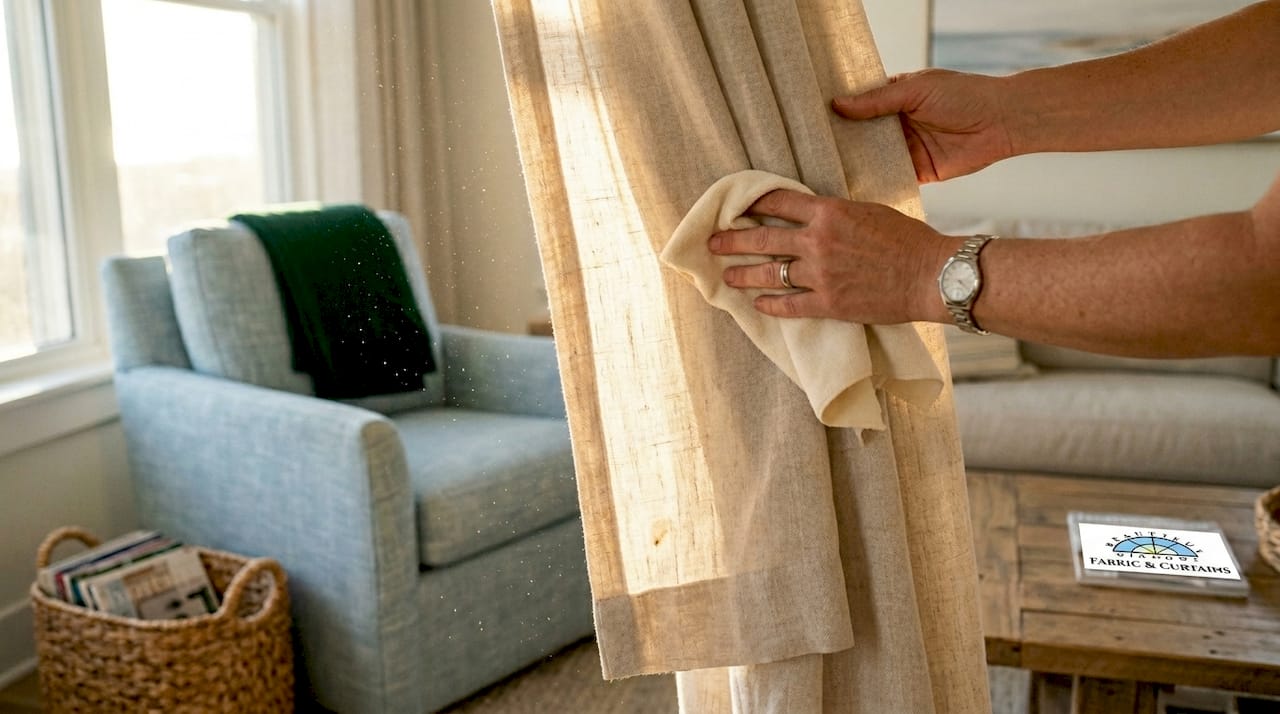
Just as caring for high-end fabrics requires a gentle approach, drapery textiles benefit from scheduled maintenance. Light vacuuming with a soft brush attachment every few months prevents dust buildup that can degrade fibers over time. Well-maintained fabrics retain their appearance and structural integrity significantly longer than neglected ones. Pairing your investment in quality textiles with a consistent care routine is one of the smartest decisions you can make as a homeowner.
For rooms where energy efficiency matters, energy-saving drapery options offer both durability and practical thermal benefits, making them a strong choice for spaces where heating and cooling costs are a concern.
Match design to function: Style, layering, and orientation
Choosing durable designer fabric is only part of the equation. Making it look great in your space is just as crucial. The most technically sound fabric can still feel wrong if it does not harmonize with the room’s proportions, light conditions, and interior style.
Weave structure plays a significant role here. A tightly woven fabric with a smooth, satin finish reflects light and creates a polished, formal look. An open or textured weave, like a slubbed linen or a loosely structured jacquard, diffuses light and adds visual warmth. Neither is objectively better. The right choice depends on the mood you want to create.
“Weave and drape are more important than thread count; layer for versatility and adjust for north- or south-facing rooms.” This expert drapery insight reinforces that visual and functional performance come from the fabric’s structure, not just its fiber content or price.
Room orientation has a measurable impact on fabric choice. Consider the following:
- North-facing rooms receive cool, indirect light throughout the day. They benefit from fabrics in warm tones and medium weights that add visual warmth without needing heavy blackout construction.
- South-facing rooms get intense, direct sunlight for much of the day. These windows demand solution-dyed, fade-resistant fabrics and often benefit from a UV-protective lining.
- East-facing rooms receive strong morning light. Sheer or semi-sheer panels soften the early sun while allowing natural brightness in during the afternoon.
- West-facing rooms are exposed to intense afternoon and evening light. Layering a sheer with a medium-weight panel gives you flexibility to manage glare at peak hours.
Layering window treatments is one of the most practical and design-forward strategies available. Pairing a sheer under a heavier drapery panel gives you precise control over light, privacy, and thermal comfort throughout the day. For detailed guidance on putting this approach into practice, both layering window treatments and layering for function offer practical, room-specific strategies worth reviewing.
The most flexible combination for most U.S. homes is a sheer linen or voile panel paired with a heavier jacquard, velvet, or blackout fabric. This setup adapts to every season and every time of day, making it a reliable investment regardless of how your light conditions change throughout the year.
Expert steps: How to finalize your designer fabric selection
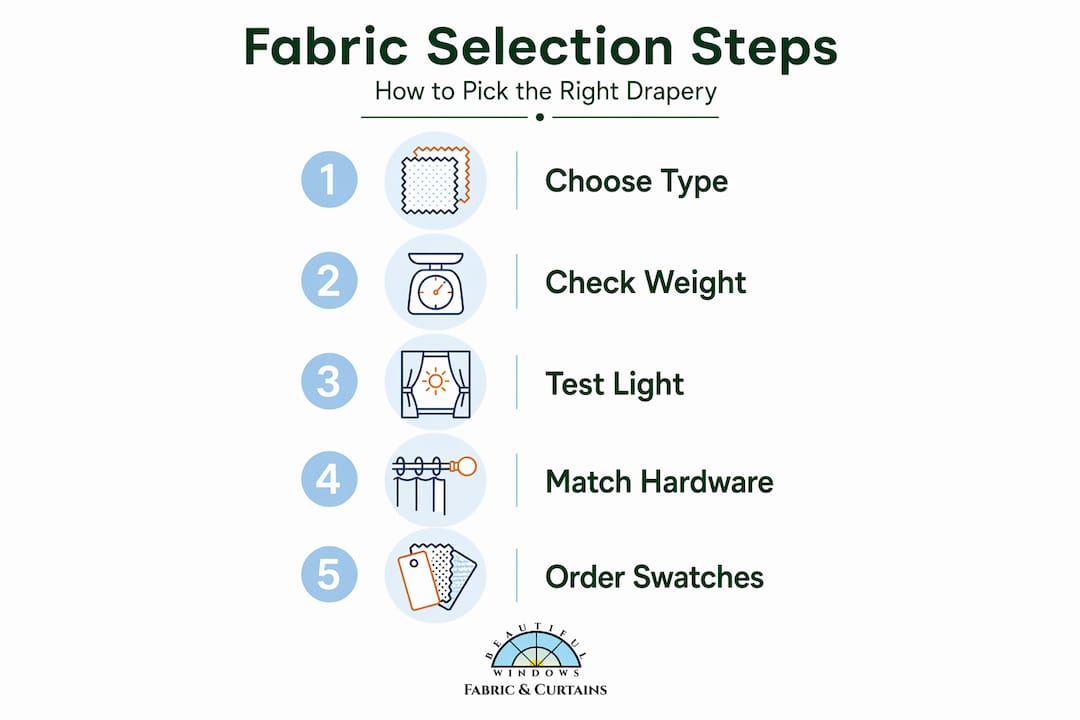
Once you understand your options, it’s time to put your knowledge into action with a simple, expert-guided process. Skipping even one of these steps is often what leads to expensive mistakes.
Follow this numbered process before placing your order:
- Measure your windows precisely. Record width and height for each window separately. Drapery panels typically need to be 1.5 to 2.5 times the width of the window for a full, gathered look.
- Order fabric swatches first. Always evaluate samples in your actual space under your home’s specific lighting conditions before committing to yardage.
- Assess your light and privacy needs by room. A bedroom requires different coverage than a living room. Define what level of light filtering or blocking each space requires.
- Review care requirements against your lifestyle. If a fabric cannot be machine washed and your household generates frequent cleaning needs, choose accordingly.
- Consult style references and current trends. Reviewing the latest fabric trends helps you make selections that feel current and coordinate with broader interior design directions.
- Verify fiber quality and thread count range. A thread count between 300 and 600 is optimal for most drapery applications. Always confirm fiber quality and intended use before purchasing, because thread count above 600 often reflects folded threads rather than denser weave structure.
Common mistakes to avoid:
- Overlooking fabric weight when selecting rods and brackets. Undersized hardware fails quickly and can cause costly damage.
- Ignoring care labels on designer fabrics. A fabric that requires delicate handling but lives in a high-traffic room will deteriorate faster than its fiber quality would otherwise allow.
- Selecting color and pattern in-store only. Store lighting is almost never representative of how a fabric will look in your home. Always assess swatches at home before ordering.
- Underestimating yardage. Pattern repeats in designer fabrics like embroidered jacquards often require additional yardage to align correctly at seams and panel edges.
Pro Tip: Order at least one extra yard per panel when working with patterned designer fabrics. The cost of a small overage is always less than the frustration of a short cut that breaks a repeat or leaves panels mismatched.
The surprising truth about choosing designer fabrics
Even if you follow every technical guideline in this article, some lessons are only learned through real-life experience in actual spaces. After working with homeowners across a wide range of projects, one truth stands out clearly: price is not a reliable guarantee of durability or suitability for a given room.
It is common to see very expensive designer textiles fail in spaces where a moderately priced, technically superior fabric would have performed beautifully for decades. A stunning hand-woven silk drapery panel looks extraordinary in photographs. In a south-facing breakfast room with daily direct sun exposure, that same silk begins fading and weakening within two years. A well-chosen, solution-dyed polyester jacquard in the same room would have held its color and structure for ten years or more with minimal care.
The other side of this reality is equally important. Homeowners who focus exclusively on technical specifications sometimes end up with drapery that performs perfectly but feels cold or disconnected from the home’s personality. A fabric can meet every durability benchmark and still feel like the wrong choice if it does not reflect your personal aesthetic or complement the furnishings around it.
The most successful outcomes we see come from homeowners who blend expert technical guidance with their own informed instincts. Reviewing insider fabric tips helps ground those instincts in practical knowledge. But the final decision should always reflect how you want your home to feel, not just how long a fabric is rated to last.
Trust the specifications. Trust your instincts. And always test swatches in your own space before committing.
Transform your home with expert-guided designer fabrics
Now that you know how to choose designer fabrics confidently, take the next step with help from experienced professionals who understand both the technical and aesthetic sides of custom drapery.
At Beautiful Windows, you have access to a curated selection of premium textiles, including jacquard satin, embroidered fabrics, and upholstery materials sold by the yard, alongside personalized design consultations and custom drapery services. Whether you are outfitting a single room or working through a full home project, the team is equipped to guide you from fabric selection through professional installation. Nationwide shipping means quality and expertise are never out of reach, wherever you are in the U.S. Explore fabric samples, consult with a specialist, and move forward with confidence.
Frequently asked questions
What’s the difference between custom and off-the-shelf drapery fabrics?
Custom fabrics offer superior quality, durability, and design flexibility compared to most mass-produced, ready-made options. They allow precise color matching, pattern placement, and sizing that off-the-shelf products simply cannot deliver.
How do I know if a fabric is fade resistant?
Look for solution-dyed fabrics and colorfast certifications, especially if your windows receive significant direct sunlight throughout the day.
What does double rub count mean for drapery fabrics?
Double rub count measures a fabric’s resistance to abrasion over repeated friction; a minimum of 15,000 double rubs is the recommended standard for drapery in high-use residential areas.
Should I prioritize thread count or fiber type when choosing fabrics?
Focus on fiber quality rather than thread count alone. A thread count of 300 to 600 is a reliable range for designer drapery, and fiber quality determines how a fabric ages far more than a high thread count does.
How important is professional installation for designer drapery?
Professional installation ensures panels hang evenly, hardware is properly secured, and the full lifespan and visual impact of your custom fabric is realized from day one.
Recommended
- How to Choose the Right Fabric for Drapery – Shop Designer Fabrics by the Yard | Curtains & Drapery
- Top designer fabrics for custom drapery and upholstery – Fabric Store in Columbia, SC | Drapery Making Services
- Drapery Fabric Selection Guide for Custom Window Treatments – Shop Designer Fabrics by the Yard | Curtains & Drapery
- Why Use Custom Drapes: Enhanced Comfort and Style – Shop Designer Fabrics by the Yard | Curtains & Drapery