


Embroidered textiles explained: How stitch art transforms home décor
TL;DR:
- Embroidery creates textured, three-dimensional designs on fabrics through stitched threads, differing from flat printing. It adds tactile depth and visual interest, enhancing home décor items like curtains, table linens, and pillows. Choosing the right fabric and technique ensures durable, elegant embroidered textiles that elevate your interior space.
Reach into a pile of decorative fabrics, and you’ll quickly learn that not all of them feel the same. Some lie flat, their patterns locked under a smooth surface. Others carry actual texture, raised threads that shift under your fingers and catch the light differently depending on the angle. That second experience is embroidery, and it represents something fundamentally different from printed or woven designs. Embroidery is the art or process of forming decorative designs on fabric using a needle with thread or yarn, either by hand or machine. This guide explains what embroidered textiles are, how they differ from other decorative fabrics, and how to use them confidently in your home.
Table of Contents
- What is an embroidered textile?
- How embroidered textiles differ from printed fabrics
- Essential embroidery techniques for home décor projects
- Getting started with embroidered textiles: Planning and fabric selection
- The hidden magic of embroidered textiles in modern homes
- Bring embroidery into your next home project
- Frequently asked questions
Key Takeaways
| Point | Details |
|---|---|
| Embroidery creates dimension | Unlike prints, embroidery uses stitches to add texture and a raised feel to fabric. |
| Technique impacts durability | Embroidered motifs tend to last longer and show less fading than printed designs when used properly. |
| Choose the right fabric base | Select stable, tightly woven materials like cotton or linen for best embroidery results in home décor. |
| Plan your motifs and placement | Thoughtful design and stitch selection elevate finished projects from homemade to high-end. |
| Personal touch transforms décor | Using embroidery brings handcrafted luxury and personality to everyday home spaces. |
What is an embroidered textile?
An embroidered textile is any fabric that carries decorative patterns formed by stitching thread or yarn directly onto its surface. The stitching can be dense or sparse, monochromatic or multicolored, and may incorporate additional materials like beads, sequins, or metallic threads. The result is always a surface that looks and feels distinct from the base fabric beneath.
“Embroidery is the art or process of forming decorative designs on fabric (or other materials) by using a needle with thread or yarn, either by hand or machine.” — Merriam-Webster
What truly separates an embroidered textile from a printed one is the physical dimension of the design. Embroidery adds raised, textured decoration because the design is stitched into or onto the textile surface rather than applied flat. Run your hand across a printed floral curtain panel and the surface stays smooth. Run it across an embroidered one and you feel every petal, every leaf, every curved line built up by thread.
Both hand embroidery and machine embroidery are used in home textiles. Hand embroidery tends to carry a slightly irregular, artisan quality that many designers prize for custom or heirloom pieces. Machine embroidery delivers precise, repeatable results and is well suited to production-scale projects where consistency matters. For understanding embroidered fabric fully, it helps to recognize that both methods share the same core mechanic: thread layered onto a base fabric to create a tactile, dimensional surface.
| Feature | Embroidery | Printing | Weaving |
|---|---|---|---|
| Surface appearance | Raised, textured, three-dimensional | Flat, smooth, photographic quality | Flat to slightly textured, pattern integrated into structure |
| Feel to the touch | Dimensional, ridged thread work | Smooth, no texture variation | Consistent hand, pattern feels flush |
| Durability | High, stitches hold shape over time | Moderate, can fade or crack | High, pattern is part of the fabric |
| Design flexibility | Very high, custom motifs possible | Very high, photorealistic capable | Moderate, limited by loom setup |
| Best décor use | Accent items, statement pieces | Everyday textiles, large repeats | Structured drapery, upholstery |
This comparison makes it clear that each technique serves different purposes. Embroidery is not better or worse than printing or weaving in every situation. It is simply the right choice when texture, dimension, and decorative impact matter most.
How embroidered textiles differ from printed fabrics
Many homeowners shopping for decorative fabric make selections based entirely on the visual pattern without considering how the fabric’s surface construction will affect the finished piece. That oversight can lead to disappointment when a fabric that looked rich in a photo feels thin or flat in the room. Understanding the physical difference between embroidery and printing solves that problem before it starts.
Embroidery stitch structure affects feel, drape, and how decorative motifs age compared with flat surface printing. When thread is built up on a fabric, it adds localized weight and slight stiffness in the embroidered areas. This changes the way the fabric hangs, particularly in curtains and drapery panels. A heavily embroidered hem, for example, will create a gentle, structured fall that a printed hem simply cannot replicate.
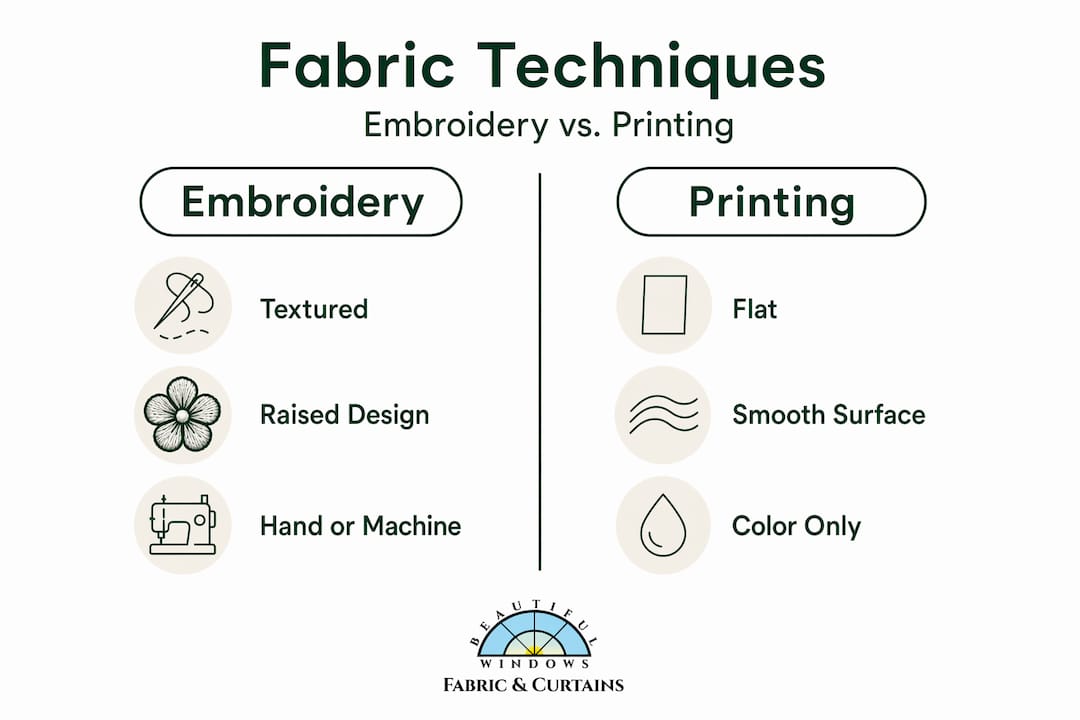
Home décor embroidery uses stitch categories for edges, outlines, and fills on items like tablecloths, napkins, pillowcases, and curtain hems. Each of these stitch categories has its own physical character. Border stitches add definition and a finished edge quality. Outline stitches trace motifs with crisp, clean lines. Fill stitches build coverage and create the most pronounced dimensional effect.
Printed fabrics, by contrast, add no physical structure to the surface. The ink or dye sits in or on the fiber. This gives printed textiles a broader range of achievable design complexity, including photorealistic imagery and ultra-fine detail that stitching cannot reproduce. But that same flatness means the visual effect is entirely dependent on lighting conditions, and over time, printed patterns can fade, crack, or peel.
Pros and cons: embroidery vs. printing for home textiles
Embroidery pros:
- Adds genuine texture and visual depth
- Stitches hold their appearance through laundering better than surface prints
- Creates a premium, artisan quality that elevates décor
- Works with beads, sequins, and metallic threads for added interest
Embroidery cons:
- Generally costs more than printing
- Adds weight and can affect how lightweight fabrics drape
- Complex photorealistic imagery is not achievable with thread alone
Printing pros:
- Broader range of design complexity
- More affordable at scale
- Lighter weight, suitable for sheer and ultra-lightweight textiles
Printing cons:
- No tactile dimension
- Subject to fading, especially under UV exposure
- Can feel generic compared to embroidered alternatives
Pro Tip: Choose embroidered textiles for items that visitors will see and touch up close, such as throw pillow covers, curtain tie-backs, tablecloths, and bed linen borders. For large-scale pattern backgrounds where texture adds less value, quality printed fabric is a practical and cost-effective choice. Layering both types in the same room creates visual interest without overwhelming the space.
When you’re researching decorative textiles for home décor, it also pays to consider how embroidered and non-embroidered fabrics can complement each other. A solid linen drapery panel gains enormous character from an embroidered border along the leading edge. You don’t need to embroider the entire surface to create a meaningful decorative effect.
Essential embroidery techniques for home décor projects
Once you’ve decided that embroidery is the right direction for a project, the next step is understanding which stitching techniques apply to which types of home textile work. Not every stitch is suited to every surface, and choosing the right approach from the start saves time and ensures a polished result.
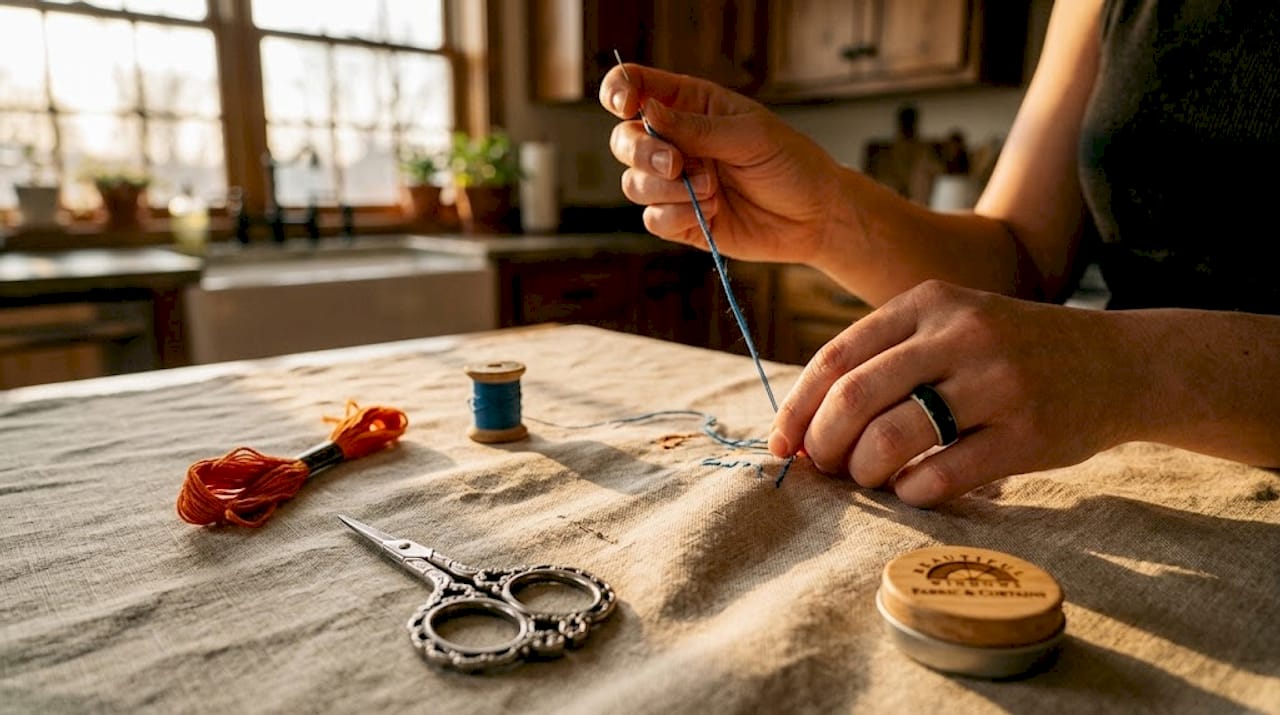
Core embroidery techniques include border and edging stitches, outline stitches, and fill stitches, each serving a specific visual and functional role in home textiles. Border stitches such as the blanket stitch or chain stitch along an edge create a decorative finish that also prevents fraying. Outline stitches like the backstitch or stem stitch trace motifs cleanly, giving a drawn or sketched quality to floral and geometric designs. Fill stitches, including satin stitch and long-and-short stitch, create solid, opaque coverage of a motif area, producing the most visually bold results.
How to plan a home embroidery project: step by step
- Choose your base textile. Select a fabric with a weave tight enough to anchor stitches securely. Medium-weight cotton or linen works well for most beginners.
- Sketch or transfer your motif. Draw the design lightly with a fabric pencil or use a transfer paper method to place the motif accurately on the fabric.
- Decide which stitch type fits each element. Outlines use backstitch or stem stitch. Decorative borders use blanket stitch or chain stitch. Filled areas use satin stitch or a fill variation.
- Select your thread weight and color palette. Standard six-strand embroidery floss allows you to adjust thickness by splitting strands. Choose colors that work with your existing décor palette.
- Work from the center of the motif outward. This approach prevents distortion and keeps the design balanced, particularly on large pieces like tablecloths.
- Press and finish the piece carefully. Use a pressing cloth between the iron and the embroidered surface to protect the raised threads.
For home textiles like tablecloths and napkins, border stitches placed along the hem create an elegant finish that coordinates beautifully across a matched set. Pillowcases suit filled motifs placed in a corner or centered on the face. Curtain panels benefit most from restrained outline detail along hems and leading edges, adding refinement without excessive weight.
Exploring best window treatment fabrics alongside your embroidery planning helps ensure the base fabric can support the stitching without puckering or distorting under the weight of the thread.
Pro Tip: For high-use household linens like napkins and pillowcases, avoid heavily padded satin stitch in areas that will experience repeated friction. Border stitches and outline stitches hold up better through frequent laundering because they carry less thread mass and flex more readily with the fabric.
Getting started with embroidered textiles: Planning and fabric selection
Selecting the right base fabric is where many home embroidery projects succeed or fail. A textile that’s too loosely woven won’t anchor stitches cleanly. One that’s too stiff won’t drape well once embroidered. The goal is finding a fabric that balances workability with the final function of the finished piece.
Treating embroidery as a workflow means choosing the base textile first, then planning motif placement, then selecting stitches for outlines, borders, and fills, rather than approaching it as one undifferentiated task. This sequencing prevents the common mistake of selecting a beautiful thread color palette without first confirming the base fabric will support the intended stitch density.
Top fabric bases for home embroidery projects:
- Cotton: Stable, widely available, and easy to work with. Ideal for table linens, napkins, and beginner-level decorative projects. Takes dye well and launders reliably.
- Linen: Slightly heavier than cotton with a natural texture that adds character to the finished piece. Excellent for tablecloths, napkins, and curtain panels with embroidered borders.
- Cotton-linen blends: Combine the softness of cotton with the body of linen. Well suited to curtain panels and decorative pillow covers where some structure is desirable.
- Premium woven blends (jacquard base): Already carry a refined woven pattern as their base texture. Embroidery on jacquard creates layered visual complexity that reads as highly bespoke.
- Silk: Reserved for experienced embroiderers. The surface is smooth and lustrous but requires very careful handling. Best suited to specialty accent items, not everyday use textiles.
When planning motif placement, use the natural structure of the fabric as a guide. A border motif should align with the grain line of the fabric to prevent skewing. Fill motifs work best placed where the fabric lies flat and smooth, away from seams or structural edges that might cause distortion.
For window treatments specifically, understanding window treatment fabric tips helps you select a base that will support embroidered details while still hanging cleanly. Reviewing curtain fabric types also helps clarify which weights and constructions handle the added structure of embroidery most gracefully.
Finishing edges neatly is the detail that separates a professional-looking result from a homemade one. Hem your base fabric cleanly before beginning embroidery, and plan any border stitches to align precisely with the finished edge. That alignment signals intentional design and elevates the overall impression of the piece.
The hidden magic of embroidered textiles in modern homes
Here is something that rarely gets said plainly: embroidery’s value in home décor is not primarily about pattern. It is about presence. A flat printed cushion cover and an embroidered one can carry identical motifs, but they do not feel the same in a room, and they do not communicate the same things to the people who live there.
The reason is physical. Texture engages attention differently than color or line. When light moves across a room through the course of a day, it reads a raised embroidered surface differently at each hour. A motif that appears subtle at noon can become visually prominent by late afternoon as the angle of light shifts. Printed fabrics do not offer this kind of dynamic visual quality. They look the same at 10 in the morning as they do at 5 in the evening.
There is also the matter of emotional resonance. Mass-produced printed textiles communicate accessibility and convenience. Embroidered textiles, even machine-made ones, communicate care and intentionality. That distinction matters in a home environment, where the objects around us contribute to how a space feels to inhabit. Exploring decorative textiles and embroidery reveals how often experienced designers rely on this effect to add warmth to spaces that might otherwise feel sterile.
The common mistake is overuse. Embroidery placed on every surface in a room loses its ability to create emphasis. The smarter approach is selective deployment. One embroidered hem on a curtain panel in an otherwise restrained room does more work than embroidery on every decorative element. Restraint amplifies the impact. That is a principle that holds across all premium material choices, and it applies with particular force to embroidered textiles.
Bring embroidery into your next home project
Whether you’re planning a custom curtain panel with an embroidered border or looking for quality fabric that will support your next DIY stitching project, having access to the right materials makes all the difference.
At Beautiful Windows Elgin, you’ll find a curated selection of designer fabrics suited to home embroidery projects, including cotton blends, premium woven textiles, and specialty materials sold by the yard. From decorative textiles for home décor to custom drapery solutions, the team offers personalized guidance for homeowners and DIY enthusiasts nationwide. Fabric samples, design consultations, and professional installation support are all available through beautifulwindowselgin.com. Let your next embroidery project begin with the right foundation.
Frequently asked questions
What is the main difference between embroidered and printed textiles?
Embroidered textiles feature stitched, raised designs you can feel with your hand, while printed textiles use flat ink or dye that sits flush with the surface. Embroidery’s raised texture is the defining physical difference between the two techniques.
Which fabrics are best for beginner embroidery projects at home?
Cotton and linen are ideal starting points because they offer a stable, even weave that anchors stitches cleanly and holds up well through the laundering that home textiles require.
Can embroidered textiles be washed and used daily?
Yes, embroidered home textiles can handle regular use and washing, but gentle machine cycles with mild detergent and low-heat drying protect the stitching and preserve the base fabric over time.
What home décor items commonly feature embroidery?
Tablecloths, napkins, pillowcases, and curtain hems are the most popular choices, as these items are seen and touched frequently and benefit most from the texture and refinement that embroidery provides.
Is machine embroidery suitable for home décor textiles?
Absolutely. Machine embroidery produces detailed, consistent results well suited to large-scale or matched home décor projects where precision and repeatability matter more than artisan irregularity.
Recommended
- Understanding embroidered fabric: Custom décor guide – Fabric Store in Columbia, SC | Drapery Making Services
- Decorative Textiles: Transform Your Space with Style – Fabric Store in Columbia, SC | Drapery Making Services
- What is designer textile? A guide to luxurious home fabrics – Fabric Store in Columbia, SC | Drapery Making Services
- How the right textiles elevate home décor and comfort – Fabric Store in Columbia, SC | Drapery Making Services