


How the right textiles elevate home décor and comfort
TL;DR:
- Selecting window fabric requires considering room conditions, sunlight, and usage to ensure durability and performance.
- Blended textiles with proper linings optimize longevity, appearance, and energy efficiency in diverse environments.
Selecting fabric for your home’s windows involves far more than choosing a color or pattern you love. The textile you hang in a sunlit living room behaves completely differently than one placed in a shaded bedroom, and that gap in performance becomes obvious within the first season. Many homeowners invest in beautiful drapery only to find it fades, sags, or fails to deliver the comfort they expected. This guide walks through the full picture of textile selection, connecting design goals with practical, lasting results so every choice you make works as hard as it looks.
Table of Contents
- Understanding textile selection: More than meets the eye
- Core textile types: How material choice impacts function and aesthetics
- Matching textile and room: Functionality for every living space
- Lining and interlining: The hidden heroes of performance
- Our perspective: Rethinking textile selection for enduring style and joy
- Bring your vision to life with expert textile guidance
- Frequently asked questions
Key Takeaways
| Point | Details |
|---|---|
| Textile choice is multi-functional | Selecting drapery fabric affects not just style but light, privacy, and energy comfort. |
| Room matters most | Every room’s lighting, purpose, and location should direct your fabric decision. |
| Lining extends drapery life | Proper lining and interlining protect fabrics and enhance their benefits. |
| Balance is best | Blending natural and synthetic materials plus linings often delivers ideal performance. |
Understanding textile selection: More than meets the eye
Most people approach drapery fabric the way they approach choosing paint: pick what looks right, and move on. But the role of fabric in window treatments goes well beyond surface appearance. A fabric that performs beautifully in one room can fail completely in another, simply because the conditions are different.
Specific textiles are selected for drapery to balance aesthetics with functional performance, including light control, privacy, insulation, acoustics, and durability. That balance is the real goal. A stunning silk panel in a west-facing window will degrade noticeably within a year without proper lining. A thick velvet in a humid bathroom will trap moisture and lose its structure.
“The most successful drapery projects we see are the ones where the homeowner thought about how the room actually lives, not just how it looks in a magazine. Function has to be part of the brief from day one.”
When evaluating any textile, consider these core factors:
- Direction of sunlight: South and west-facing windows receive the most intense UV exposure, which accelerates fading in unprotected fabrics.
- Room purpose: A media room prioritizes light blocking and acoustics; a breakfast nook prioritizes warmth and light diffusion.
- Traffic and handling: Drapery in a family room will be opened, closed, and touched far more often than panels in a formal dining room.
- Climate: High humidity climates demand moisture-resistant materials, while colder regions benefit from insulating weights and interlinings.
- Maintenance expectations: Some households need machine-washable options; others can accommodate dry-clean-only luxury textiles.
Bringing this multi-factor thinking to your selection process is what separates a good result from a great one. For more foundational guidance, window treatment fabric tips offer a solid starting point for homeowners navigating these decisions.
Core textile types: How material choice impacts function and aesthetics
Now that the framework is clear, it helps to understand the specific properties of the most popular drapery fabrics. Each material brings a distinct set of strengths and trade-offs that directly affect how your room looks and feels day to day.
| Fabric | Appearance | Durability | Care | Best uses | Key drawbacks |
|---|---|---|---|---|---|
| Linen | Natural texture, airy | Moderate | Dry clean or gentle wash | Casual living rooms, studies | Wrinkles easily, fades in direct sun |
| Velvet | Rich, dimensional | High | Dry clean only | Bedrooms, media rooms, formal spaces | Heavy, needs sturdy hardware |
| Silk | Lustrous, refined | Low to moderate | Dry clean only | Formal rooms, low-traffic spaces | Expensive, very UV-sensitive |
| Cotton | Clean, versatile | Moderate to high | Machine washable | Most rooms | Can shrink, moderate insulation |
| Polyester | Consistent finish | Very high | Machine washable | Kitchens, high-traffic areas, kids’ rooms | Can look less luxurious than naturals |
| Blends | Varies | High | Often machine washable | Most rooms | Quality varies by blend ratio |
Linen provides natural texture, breathability, and light filtering but wrinkles easily and fades in direct sunlight, making it best suited for casual spaces with moderate light exposure. Its relaxed, organic character suits coastal interiors, farmhouse aesthetics, and any room where an informal warmth is the goal. However, placing unlined linen on a south-facing window is a reliable way to see that characteristic natural color wash out within a single summer.
Velvet and plush fabrics offer superior light blocking, insulation, sound dampening, and warmth, making them ideal for bedrooms and media rooms, though they require sturdier hardware due to their weight. Velvet’s pile traps air, which adds genuine thermal value. It also absorbs sound in a way that lighter fabrics simply cannot, making it a practical choice in rooms where acoustic comfort matters as much as visual drama.
Performance polyester resists fading, moisture, stretching, and wrinkles, making it suitable for high-sun, high-humidity, high-traffic areas like kitchens and homes with pets or children. The quality of performance polyester has improved considerably, and many designer-loved textiles now incorporate synthetic fibers to achieve durability without sacrificing visual sophistication.
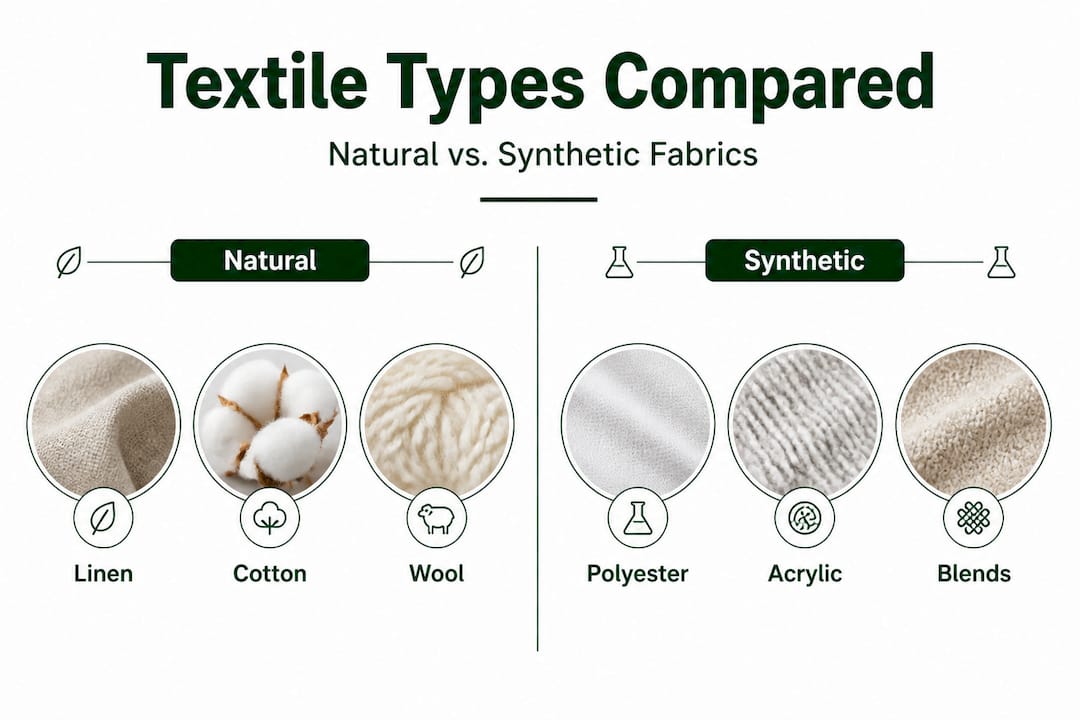
Blended fabrics and properly structured interlinings are frequently the most practical solution. A linen-polyester blend, for example, captures the visual softness of natural fiber while gaining the wrinkle resistance and durability of synthetic construction. This approach serves most real-world homes far better than a pure natural fabric that demands constant maintenance.
Pro Tip: Order fabric swatches before committing to any drapery project. Live with those swatches in your actual room for two to three days, observing how the color and texture shift from morning to evening light. What looks warm and inviting at noon can appear flat and lifeless at dusk.
For a thorough overview of your options, this curtain fabric types resource provides detailed guidance organized specifically for homeowners and designers working on custom window treatments.
Matching textile and room: Functionality for every living space
Understanding individual fabric properties is only half the equation. The other half is matching those properties to what each room actually demands. This is where thoughtful selection separates lasting satisfaction from costly replacements.
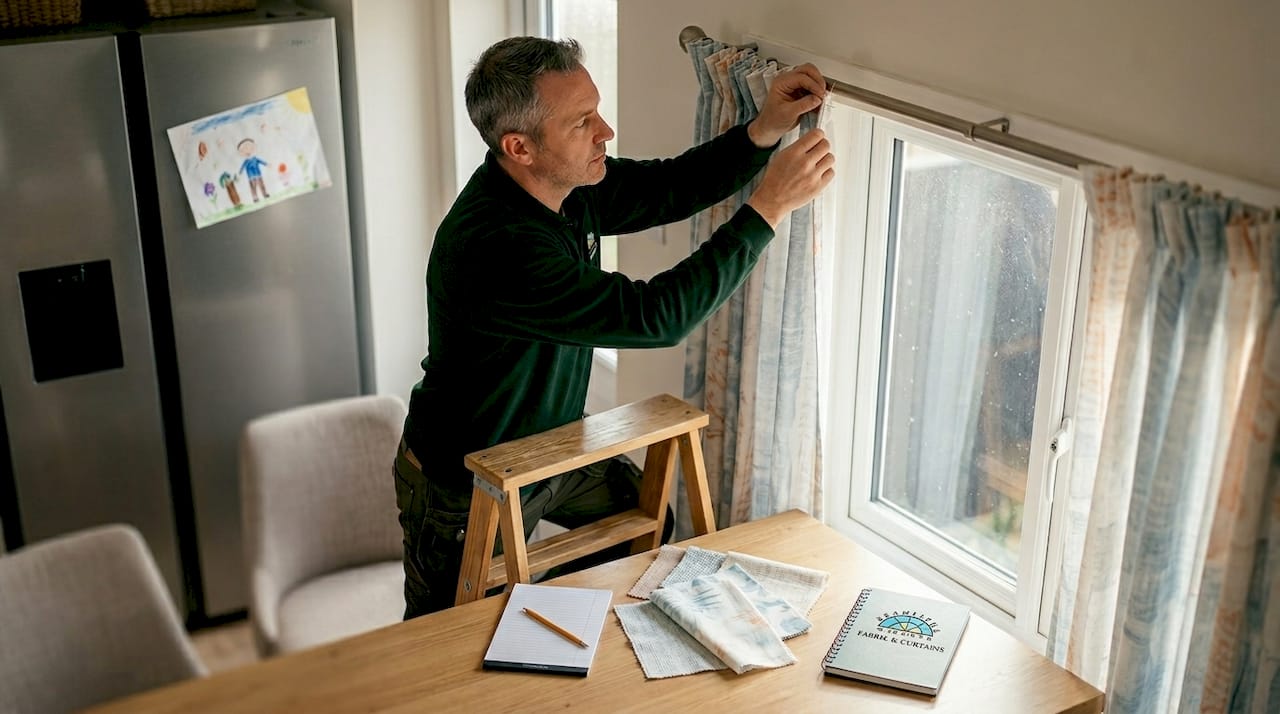
Fabric choice must match room function: light-filtering options work best in living rooms, blackout and insulating materials are essential in bedrooms, and moisture-resistant fabrics are necessary in kitchens and bathrooms. That principle sounds straightforward, but most homeowners underestimate how strongly room function should drive the decision.
| Room | Primary need | Recommended textile | Why it works |
|---|---|---|---|
| Living room | Light diffusion, style | Linen, cotton, sheer | Filters light without blocking views |
| Bedroom | Light blocking, insulation | Velvet, lined cotton, blackout fabric | Promotes sleep, retains heat |
| Kitchen | Moisture resistance, easy care | Performance polyester, cotton blend | Handles humidity, machine washable |
| Bathroom | Privacy, moisture resistance | Synthetic blends, treated cotton | Resists mold, maintains shape |
| Media room | Light control, acoustics | Velvet, blackout lining | Reduces glare, dampens sound |
| Home office | Glare reduction, focus | Linen blend, light-filtering fabric | Softens light without darkening the room |
Window orientation and local climate are significant factors: intense south or west-facing sun demands fade-resistant fabrics, north-facing rooms prioritize insulation, and high UV or high-altitude environments increase fading risk considerably. A homeowner in Denver, Colorado faces far more aggressive UV exposure than one in coastal Maine, which means a fabric rated for moderate sun exposure in New England may fail prematurely in the Mountain West.
Here is a practical sequence for assessing your room’s needs before purchasing:
- Identify the window orientation: Note whether your windows face north, south, east, or west. This tells you how much direct sun the fabric will receive and at what time of day.
- Define the room’s primary function: Is it a space for rest, work, entertaining, or cooking? Each function implies different performance priorities.
- Consider your climate zone: High humidity, extreme cold, or intense sun all create specific demands that narrow the list of viable textiles.
- Set your maintenance threshold: Be honest about how much care you are willing to invest. A dry-clean-only silk panel is beautiful, but if it needs cleaning every few months due to cooking aromas or pet dander, it becomes impractical.
- Match performance criteria to available textiles: Use the table above as a starting point, then refine with fabric swatches tested on-site.
For deeper guidance tailored to specific room scenarios, how to choose window curtains covers practical decision-making for a wide range of home situations. Also, testing fabrics in situ before finalizing your order remains one of the most reliable practices professionals recommend.
Lining and interlining: The hidden heroes of performance
Even the most carefully selected fabric will underperform if it lacks appropriate lining. This is one of the most consistently overlooked elements in drapery design, especially among homeowners pursuing the look rather than the full system.
Proper lining enhances fade resistance, insulation, light control, privacy, and drape structure; interlining adds thermal and acoustic benefits that the face fabric alone cannot deliver. Lining essentially acts as a buffer between your decorative textile and the harsh conditions at the window: UV radiation, temperature fluctuation, and moisture.
The benefits of proper lining are concrete and measurable:
- Fade protection: Lining absorbs a significant portion of UV radiation before it reaches the face fabric, extending color life by years in sun-exposed rooms.
- Thermal insulation: A lined and interlined panel can reduce heat loss through windows noticeably, contributing to lower energy costs during winter months.
- Light control: Even a semi-sheer face fabric gains meaningful privacy and light-blocking capability when paired with the right lining weight.
- Structure and hang: Lining adds body to lighter fabrics, helping them fall in clean, full folds rather than going limp or pulling unevenly.
- Sound absorption: Interlining adds mass to the panel, which reduces sound transmission through the window plane, a real benefit in urban homes or rooms adjacent to busy streets.
Skipping lining is particularly costly in south or west-facing rooms where UV exposure is intense, and in any room where the homeowner invested in a premium face fabric. The upfront cost of proper lining is always less than the cost of replacing faded or structurally compromised drapery.
Pro Tip: When consulting with a drapery professional, ask specifically about both lining and interlining options for your project. The difference between a single-lined panel and a fully interlined panel is immediately visible in how the drapery hangs and how the room feels. It is a detail worth budgeting for.
For more on making the most of this investment, curtain lining benefits and interlining for drapery both offer detailed breakdowns of why this finishing layer matters so much in custom window treatments.
Our perspective: Rethinking textile selection for enduring style and joy
After working with homeowners and designers across a wide range of projects, one pattern emerges consistently: the most satisfied clients are not the ones who chose the most expensive fabric. They are the ones who chose the right fabric for their specific situation, then committed to supporting it with proper lining and professional installation.
There is a persistent belief in the design world that “luxury” means natural fiber, and that synthetic materials are a concession. In practice, that thinking leads to beautiful panels that fail within a few years and require replacement, which is neither luxurious nor economical. A well-chosen polyester-linen blend, lined appropriately and installed by someone who understands the technical demands of the window, will outlast and outperform a pure silk panel that was selected purely for its prestige.
The projects that frustrate clients most are almost always the ones where function was treated as secondary. A homeowner chooses a delicate natural fabric for a kitchen because it photographs well, then spends the next year managing staining, shrinkage, and odor absorption. The lesson is not to avoid beautiful fabrics; it is to respect the conditions those fabrics will actually live in.
Blending natural and synthetic fibers, using proper interlinings, and consulting professionals for windows with challenging orientations or unusual dimensions consistently delivers better long-term results than any single “best” material ever could. The energy savings with window treatments that come from well-insulated drapery systems are a tangible, ongoing return on a thoughtful investment, not just a design benefit.
Experiment, absolutely. But bring a professional into the conversation early, especially for challenging rooms. The difference between a guess and an informed recommendation is the difference between a drapery installation you love for fifteen years and one you replace after three.
Bring your vision to life with expert textile guidance
Choosing the right textile for your home is a satisfying process when you have the right information and the right support behind you. At Beautiful Windows Elgin, we work with homeowners and interior designers nationwide to match the ideal fabrics, linings, and custom drapery solutions to each unique space.
Our curated selection includes jacquard satins, embroidered fabrics, upholstery-grade textiles, and a range of drapery-ready materials sold by the yard, with fabric samples available so you can test your choices in your own light before committing. Whether you need a single statement panel for a formal dining room or a full-home drapery solution that balances beauty with performance, our team offers personalized design consultations and professional installation guidance to ensure the result is exactly right. Explore our collection and reach out to begin the conversation at beautifulwindowselgin.com.
Frequently asked questions
What’s the most durable textile for homes with pets or kids?
Performance polyester is the most practical choice because it resists fading, moisture, stretching, and wrinkles, holding up reliably in high-traffic areas and humid conditions.
How do I stop my drapes from fading?
Select fade-resistant fabrics for sun-exposed windows and invest in proper lining, since proper lining enhances fade resistance along with insulation, light control, and drape structure.
Do all rooms need blackout drapery?
Not at all. Fabric choice must match room function: living rooms typically benefit from light-filtering materials that preserve natural brightness, while bedrooms and media rooms are the spaces where blackout performance genuinely matters.
Should I always choose natural fabrics for drapery?
Natural fabrics offer authentic texture and breathability, but they require more careful maintenance and are less resilient in demanding conditions. Designers recommend blends and proper linings as the most balanced solution for real-world homes, combining the best qualities of both natural and synthetic materials.
Recommended
- How fabric shapes your home’s comfort and style – Fabric Store in Columbia, SC | Drapery Making Services
- Decorative Textiles: Transform Your Space with Style – Fabric Store in Columbia, SC | Drapery Making Services
- Trending curtain fabrics for stylish windows in 2026 – Fabric Store in Columbia, SC | Drapery Making Services
- What is designer textile? A guide to luxurious home fabrics – Fabric Store in Columbia, SC | Drapery Making Services
- What Is Luxury Home Decor and Why It Matters – Marmorique