


Drapery Fabric Selection Guide for Custom Window Treatments
Finding the perfect drapery fabric often feels overwhelming when every room in your home serves a different purpose. In the warm climates of the Southeastern United States, sun exposure, energy efficiency, and room function are all key factors in making lasting window treatment choices. This guide walks you through identifying your room’s unique needs and understanding fabric features so you can create custom drapery that looks beautiful and works hard for your space.
Table of Contents
- Step 1: Assess Room Needs and Window Requirements
- Step 2: Identify Fabric Types and Consider Key Features
- Step 3: Match Colors and Patterns to Decor Style
- Step 4: Request Samples and Inspect Fabric Quality
- Step 5: Confirm Measurements and Place Your Order
Quick Summary
| Key Insight | Explanation |
|---|---|
| 1. Assess Room Functionality | Determine your room’s purpose to select the appropriate fabric type and properties. |
| 2. Choose Fabrics Wisely | Understand fabric types and their characteristics to match your room’s aesthetics and functional needs. |
| 3. Color and Pattern Considerations | Align drapery colors and patterns with existing décor to enhance the overall design and mood. |
| 4. Request and Inspect Samples | Obtain fabric samples to evaluate quality and appearance in your room before making a purchase. |
| 5. Verify Measurements Carefully | Accurate window measurements prevent costly mistakes and ensure a proper fit for your custom drapery. |
Step 1: Assess Room Needs and Window Requirements
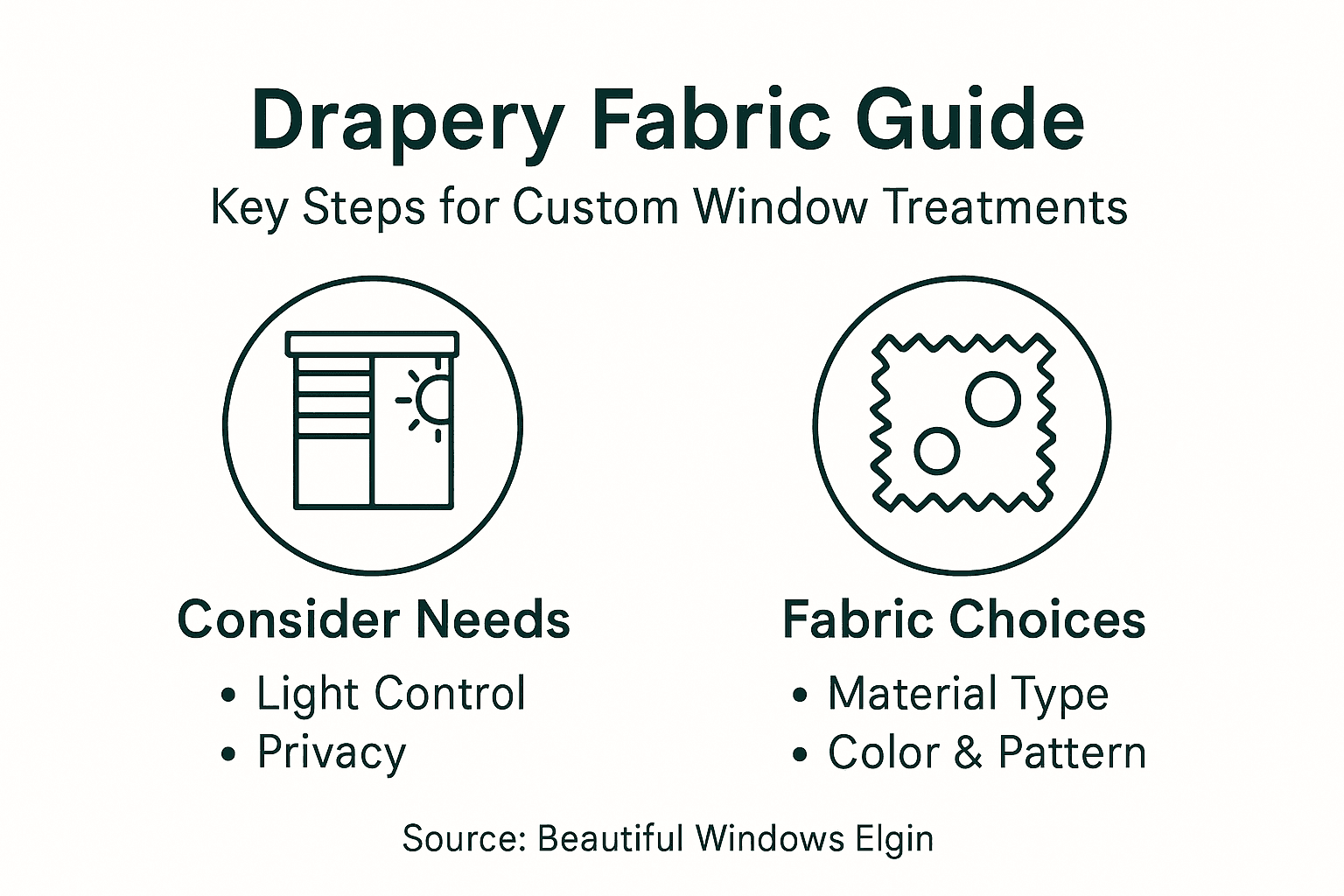
Before you start shopping for drapery fabric, take time to understand what your room actually needs. This foundation step determines whether your windows will perform well and look beautiful for years to come.
Start by identifying the room’s primary function. A bedroom requires different fabric properties than a living room or home office. Ask yourself what you want your windows to accomplish:
- Block light for better sleep or privacy
- Allow natural light to flood the space
- Reduce heat and cold from outside
- Add visual interest and color
- Provide sound dampening
Next, evaluate your window’s orientation and climate exposure. Windows facing south receive intense afternoon sun, especially in the southeastern United States where heat is a real concern. North-facing windows stay cooler and rarely need heavy light control. Western exposures bring intense late-afternoon heat that can fade furnishings and increase cooling costs. Understanding window types and their thermal properties helps you choose fabrics that work with your existing windows rather than against them.
Measure your windows carefully—width, height, and the wall space around them. Note whether windows are single, double, or triple units. Check how far walls extend on either side. These measurements influence how much fabric you’ll need and how your drapery will hang and function.
Consider your room’s existing décor and color palette. Look at your furniture, walls, and flooring. Your new drapery should complement these elements while creating the mood you want. A coastal-inspired bedroom needs different fabric aesthetics than a traditional formal dining room.
Finally, assess traffic patterns and potential hazards. Kitchens and bathrooms need washable or moisture-resistant fabrics. Homes with children or pets benefit from durable, stain-resistant materials. Rooms with heavy use warrant fabrics designed to withstand regular interaction.
Knowing your room’s function and climate exposure eliminates the guesswork from fabric selection and saves you from expensive mistakes.
Pro tip: Create a simple room assessment sheet listing function, light needs, climate exposure, window measurements, and existing décor colors before visiting a fabric showroom—this gives you clear direction when evaluating options.
Step 2: Identify Fabric Types and Consider Key Features
Now that you understand your room’s needs, it’s time to explore fabric options. Different drapery fabrics serve different purposes, and knowing what each type offers helps you make confident selections.
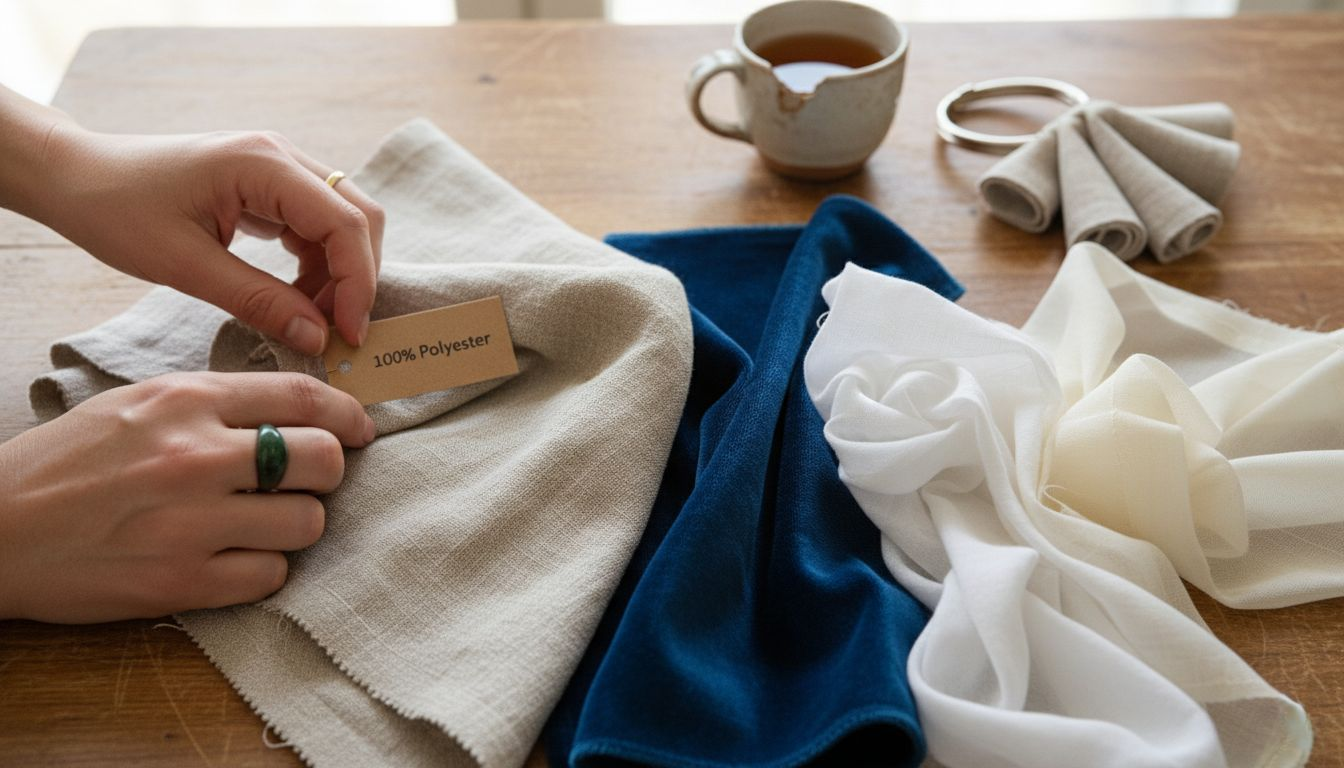
Start by learning the main fabric categories used in window treatments. Natural fibers like cotton and linen offer breathability and a relaxed aesthetic. Silk provides elegance and light-diffusing properties but requires careful maintenance. Synthetic fibers such as polyester deliver durability and stain resistance, making them practical for busy households. Blended fabrics combine the best qualities of multiple fibers.
Evaluate three critical fabric characteristics for your specific needs:
- Weight determines how the fabric drapes and its light-blocking ability. Lightweight fabrics create flowing, ethereal looks. Heavyweight materials provide better insulation and light control.
- Texture affects both appearance and function. Smooth fabrics reflect light and look formal. Textured weaves add visual interest and help conceal dust.
- Opacity controls how much light passes through. Sheer fabrics let light flood in. Blackout fabrics block nearly all light for complete darkness.
Consider the lining as well. Unlined fabrics work for decorative purposes in rooms with minimal light concerns. Lined fabrics protect your main fabric and add weight for better draping. Thermal-lined or blackout-lined options boost energy efficiency, especially important in the southeastern climate where cooling costs matter.
Understanding how different fabric fibers perform in various window treatment applications ensures you select materials that match both your aesthetic vision and functional requirements.
Don’t overlook durability ratings. Look for fabrics labeled as “solution-dyed” or “colorfast,” which resist fading from sunlight. Check for stain resistance certifications if you have pets or children. Testing fiber content through touch and visual inspection reveals how a fabric will age in your specific room.
Here is a comparison of common drapery fabric types and their best room applications:
| Fabric Type | Best Use Cases | Main Advantage |
|---|---|---|
| Cotton | Living rooms, bedrooms | Breathable and versatile |
| Linen | Dining, coastal spaces | Relaxed look, cool feel |
| Silk | Formal areas, studies | Elegant, light diffusion |
| Polyester | Kids, high-traffic rooms | Durable, stain resistant |
| Blended Fibers | Family rooms, offices | Balanced performance |
The right fabric type balances beauty with performance—choose based on your room’s light exposure, traffic level, and maintenance capacity.
Pro tip: Request fabric samples for at least three potential options and observe how they look in your room at different times of day before making your final decision.
Step 3: Match Colors and Patterns to Decor Style
Color and pattern are where your drapery truly transforms a room. The right choices tie your entire design together and reflect your personal style while serving functional purposes.
Start by examining your existing color palette. Look at your walls, furniture, and flooring. Your drapery should either complement these colors or create intentional contrast. Neutral drapery like cream, gray, or taupe works with almost any decor and provides flexibility if you redecorate later. Bold colors make dramatic statements but require more careful planning.
Consider how color affects your room’s mood and function:
This summary table explains how drapery color choices impact room atmosphere:
| Color Family | Effect on Room | Ideal Spaces |
|---|---|---|
| Warm Colors | Cozy and inviting | Living and bedrooms |
| Cool Colors | Calming, spacious | Bedrooms, bathrooms |
| Neutral Tones | Sophisticated, flexible | Any décor style |
| Dark Shades | Intimate, dramatic | Formal or large rooms |
- Warm colors (reds, oranges, yellows) create cozy, inviting atmospheres ideal for living rooms and bedrooms
- Cool colors (blues, greens, purples) feel calming and spacious, perfect for bedrooms and bathrooms
- Neutral tones (grays, beiges, whites) provide sophistication and allow other décor elements to shine
- Dark colors absorb light and create intimacy but can make small rooms feel cramped
Patterns require thoughtful consideration. How window treatments add color and style to match your room’s design coherence depends on balancing patterns with your existing décor. If your furniture already features bold patterns, choose solid drapery to avoid visual chaos. In rooms with minimal pattern, patterned drapery becomes a focal point.
Common drapery patterns include stripes, florals, geometric designs, and damasks. Vertical stripes elongate windows and ceilings. Florals add romance and work well in traditional or cottage-style homes. Geometric patterns suit contemporary spaces. Damask patterns bring elegance to formal interiors.
Test your choices thoroughly. Bring fabric samples home and observe them in natural light at different times of day. Morning light differs dramatically from afternoon sun. View samples against your actual furniture and walls, not just on a showroom table. Colors can shift significantly depending on lighting conditions in your specific space.
The perfect color and pattern combination respects your existing décor while expressing your individual style and meeting your room’s practical needs.
Pro tip: Create a small mood board by taping fabric samples next to paint chips, furniture photos, and wall colors, then step back and evaluate the overall harmony before placing your order.
Step 4: Request Samples and Inspect Fabric Quality
Before committing to your final selection, you need to physically examine fabric samples in your own space. This crucial step prevents expensive mistakes and ensures you’re purchasing quality materials.
Start by requesting samples from your chosen fabrics. Most quality fabric retailers, including Beautiful Windows Elgin, offer sample programs that let you take home actual swatches. Request at least two to three options so you can compare side by side. Ask for samples large enough to assess color, texture, and pattern accurately—typically at least 12 inches square.
When samples arrive, evaluate them under multiple lighting conditions. Observe how they look in natural daylight during morning, afternoon, and evening. Check them under artificial lighting too. Colors shift dramatically depending on light source and time of day. A fabric that looks perfect at noon might appear entirely different at sunset.
Inspect fabric quality using these key criteria:
- Color consistency across the entire sample with no fading or discoloration
- Weave tightness with even thread density and no loose fibers
- Pattern alignment where prints or woven patterns line up correctly
- Seam strength if the sample includes edges or seams
- Finish quality with smooth texture and appropriate hand or drape
Check for quality standards that ensure fabric properties meet industry specifications before finalizing your order. Ask your fabric supplier about test certifications, colorfastness ratings, and durability guarantees. Premium fabrics should include documentation of their performance testing.
Look for specific fabric defects. Run your fingers across the surface to feel for snags, pulls, or rough spots. Hold the sample up to light to check for thin or weak areas. Examine the selvage edges for manufacturer information and care instructions. Verify that dye lots match if you’re ordering multiple panels.
Quality inspection at the sample stage catches problems early and gives you confidence in your final selection.
Pro tip: Tape fabric samples to your windows with painter’s tape, leave them hanging for several days, and observe how they perform with your specific light exposure and furniture before placing your full order.
Step 5: Confirm Measurements and Place Your Order
Accurate measurements are the foundation of successful custom drapery. Before you place your final order, take time to verify every dimension carefully to avoid costly errors.
Measure your window area thoroughly using these essential dimensions:
- Width from the outermost edges of where your drapery rod will mount, not just the window glass
- Height from the top of the mounting hardware to your desired endpoint (sill, apron, or floor)
- Distance from wall to confirm clearance for rod brackets and proper operation
- Window depth if you have deep window frames or architectural features
Take measurements in multiple locations across the window. Windows are often not perfectly square, and uneven measurements catch these variations. Mark down the smallest and largest measurements you find. Professional installers know that accurate measuring of multiple window dimensions ensures a perfect custom fit for your drapery panels.
Decide on your finished length preference. Floor-length drapes create elegance but require careful cleaning. Sill-length treatments suit casual spaces and work well with heating vents below windows. Apron-length (mid-way between sill and floor) offers a classic balanced look. Your choice affects fabric yardage calculations significantly.
Consider these practical factors before finalizing your order:
- Stacking space needed when drapery opens fully
- Mounting location whether on wall, ceiling, or frame
- Weight capacity of your walls or existing hardware
- Fullness ratio how full you want your panels (typically 2 to 2.5 times the width)
- Header style pinch pleat, rod pocket, or grommet
Review your order details one final time. Confirm fabric name, color, pattern repeat, yardage needed, and any special requests. Double-check spelling of any monograms or custom details. Verify shipping and delivery timeframes. Most custom orders take four to eight weeks depending on fabric availability.
When everything is confirmed, place your order with confidence. Beautiful Windows Elgin provides secure checkout and clear order confirmation. You’ll receive tracking information and delivery estimates once your order ships.
Verified measurements and clear order specifications eliminate surprises and guarantee your custom drapery arrives ready to install perfectly.
Pro tip: Use a steel measuring tape rather than fabric tape, measure from a fixed reference point like the floor or window frame corner, and write down measurements on a diagram so you can reference them when communicating with the workroom.
Find the Perfect Drapery Fabrics with Confidence at Beautiful Windows Elgin
Choosing the right fabric for your custom window treatments can feel overwhelming. From matching colors and patterns to considering durability and light control every detail matters for creating a beautiful and functional space. This guide highlights the common challenges of assessing room needs, inspecting fabric quality, and ensuring accurate measurements — all key steps to avoid costly mistakes and achieve stunning results.
At Beautiful Windows Elgin we understand these pain points and offer a comprehensive selection of high-quality designer fabrics including cotton, embroidered, and jacquard satin. Whether you need durable options for high-traffic areas or elegant textures for formal rooms our expert team provides personalized design consultations and custom drapery appointments to guide you every step of the way. You can also request fabric samples directly from our site to see how textures and colors perform in your space.
Discover how easy fabric selection can be when you shop with trusted resources tailored to your unique needs. Start your journey at Beautiful Windows Elgin.
Looking for expert help to pick the right fabric for your project

Explore our extensive collection of custom window treatment fabrics today and request samples to make your vision a reality. Visit Beautiful Windows Elgin now and transform your windows with fabrics designed for beauty and performance.
Frequently Asked Questions
How do I assess my room’s needs for drapery fabric?
Understanding your room’s needs involves identifying its primary function, such as blocking light for sleep or allowing natural light in. Analyze your window orientation and climate exposure, and take accurate measurements of your windows to ensure the fabric will fit and perform well.
What fabric types are best for custom window treatments?
Common fabric types for window treatments include cotton, linen, silk, polyester, and blended fibers. Choose based on durability, maintenance needs, and the aesthetic you desire for your space, ensuring the fabric suits your room’s traffic level and light control requirements.
How should I select colors and patterns for my drapery?
Choose colors and patterns that complement or contrast with your existing décor. Consider how different colors affect the room’s mood, and ensure that patterns balance the space without overwhelming other design elements.
What factors should I consider when requesting fabric samples?
When requesting fabric samples, ensure they are large enough to assess texture and color accurately—ideally at least 12 inches square. Evaluate samples under various lighting conditions in your space to see how colors and patterns change throughout the day.
What measurements should I confirm before placing my custom drapery order?
Double-check the width, height, distance from the wall, and window depth to ensure your drapery fits perfectly. Pay careful attention to how your measuring choices affect fabric yardage calculations based on your finished length preference.
How can I verify the quality of fabric samples?
Inspect fabric samples for color consistency, weave tightness, and finish quality. Hold the sample up to light to check for defects and evaluate the durability so you can be confident in your final selection before placing an order.
Recommended
- How to Choose the Right Fabric for Drapery – Shop Designer Fabrics by the Yard | Curtains & Drapery
- 7 Essential Window Treatment Fabric Tips for Homeowners – Shop Designer Fabrics by the Yard | Curtains & Drapery
- Curtain Style Selection Process for Custom Drapery Success – Shop Designer Fabrics by the Yard | Curtains & Drapery
- 7 Essential Curtain Fabric Types List for Homeowners – Shop Designer Fabrics by the Yard | Curtains & Drapery