


Why Pair Sheers with Drapes for Layered Window Style
TL;DR:
- Pairing sheers with drapes creates a versatile window treatment system that balances light filtration, privacy, and insulation.
- Layering adds texture, depth, and a finished look to windows, making rooms appear larger and more inviting.
Pairing sheers with drapes is the most effective way to combine light filtration, daytime privacy, and full nighttime coverage in a single window treatment system. Sheers are lightweight, translucent panels that soften incoming sunlight without blocking it entirely. Drapes are heavier, opaque or semi-opaque panels that provide insulation, blackout capability, and visual weight. Together, they form what interior designers call a “layered window treatment,” a dual-function setup that serves both day and night needs without compromise. This guide explains the functions, aesthetics, installation steps, and practical applications of this combination.
Why pair sheers with drapes: the core functional logic
Sheers and drapes each solve a different problem. Understanding that distinction is the starting point for any well-designed window treatment.
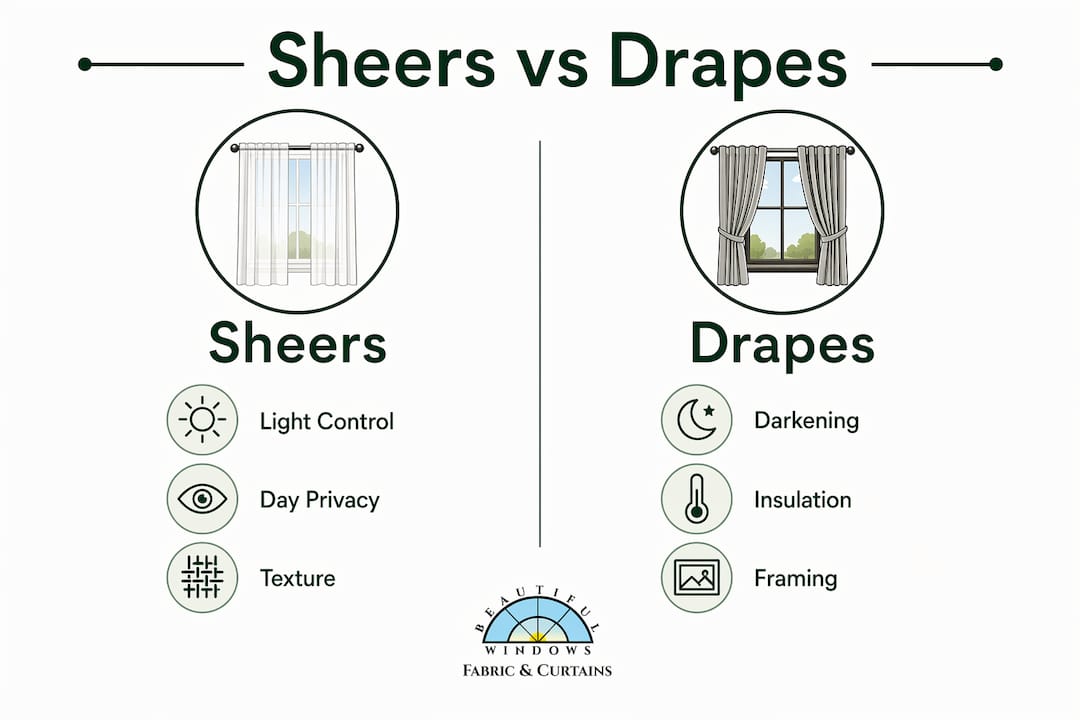
Sheers filter harsh sunlight into soft, diffused light. They let natural brightness into a room while reducing glare on screens and protecting eyes from direct sun exposure. During the day, they also provide a degree of privacy from street-level views without making a room feel closed off. The fabric weight is typically light, often woven from polyester, linen, or voile.
Drapes serve the opposite role. They add room-darkening, insulation, and visual framing to a window. At night, when interior lights make sheer panels transparent from outside, drapes close to restore full privacy. In colder months, their heavier fabric reduces heat loss around window edges. In warmer months, they block solar heat gain when drawn shut.
The table below shows how each layer performs across four key categories.
| Category | Sheers | Drapes |
|---|---|---|
| Light control | Softens and diffuses daylight | Blocks or significantly reduces light |
| Privacy | Daytime privacy at street level | Full nighttime and blackout privacy |
| Insulation | Minimal thermal benefit | Reduces heat loss and air leakage |
| Style role | Adds softness and airiness | Adds weight, color, and architectural framing |
Each layer should serve a clearly defined function for the combination to perform well. When both layers are chosen with purpose, the result is a window treatment that works around the clock.
How does layering sheers with drapes improve room aesthetics?
A window dressed in a single curtain panel reads as flat. A window dressed with both sheers and drapes reads as finished, textured, and intentional. That visual difference is significant in any room.

Layering adds texture and warmth to a window, reflecting a major design shift away from stark minimalism. Interior design in 2026 treats windows as architectural canvases, not just functional openings. The combination of a lightweight sheer and a structured drapery panel creates depth that a single layer cannot replicate.
The specific benefits of layering for aesthetics include:
- Fuller window appearance. Two layers of fabric create a sense of volume that makes windows look larger and more prominent.
- Color and texture contrast. A neutral linen sheer paired with a jacquard satin drape introduces both tactile and visual interest.
- Design flexibility. Sheers can stay closed for a soft, airy look while drapes remain open as side panels, framing the window like a picture.
- Trend alignment. Layered window treatments have shifted from a decorating trend to a standard approach in sophisticated residential interiors.
- Room warmth. Fabric layers absorb sound and soften the hard edges of walls and glass, making a room feel more comfortable.
Pro Tip: When coordinating colors, choose a sheer that is one to two shades lighter than your drape fabric. This creates natural tonal depth without visual competition between the two layers.
The fabric choice for each layer matters as much as the color. A sheer woven from fine polyester voile will hold its shape and resist sagging. A drape cut from a durable jacquard or embroidered fabric will hang with the weight and structure needed to frame the window properly.
What are the best installation practices when pairing sheers with drapes?
Correct installation determines whether a layered treatment looks polished or problematic. The most common mistake is placing both panels on a single rod, which causes fabric collision and makes independent operation impossible.
The correct approach uses a double rod system. The inner rod holds the sheer panel closest to the glass. The outer rod holds the drape panel in front, with enough projection from the wall to prevent the two fabrics from rubbing against each other. Proper rod placement ensures independent movement and extends the lifespan of both treatments.
Follow these steps for a clean, functional installation:
- Measure the window width and height. Add 4–6 inches on each side of the window frame for full coverage when panels are open.
- Mount the inner rod bracket. Position it 2–4 inches from the wall surface so the sheer hangs close to the glass.
- Mount the outer rod bracket. Position it 3–5 inches in front of the inner rod to allow clearance between the two fabric layers.
- Hang the sheer panel first. Attach it to the inner rod and adjust the hem so it just grazes or pools slightly on the floor.
- Hang the drape panel second. Attach it to the outer rod and confirm it can open and close without catching on the sheer.
- Test independent operation. Pull each panel separately to confirm smooth movement without friction or overlap.
Pro Tip: Choose double curtain rod sets that include brackets with two separate projection arms. This single hardware piece handles both rods cleanly and reduces wall anchor points.
Common installation mistakes include insufficient rod projection and mismatched panel lengths. Professionals recommend a minimum of 3 inches of clearance between the two rods. Custom drapery fabrication further improves fit and finish, ensuring both layers hang evenly and operate without friction.
In what scenarios do layered sheers and drapes deliver the most benefit?
The sheer and drape combination performs well across a wide range of room types and conditions. Its value is clearest in spaces where light and privacy needs shift throughout the day.
- Living rooms with street-facing windows. Sheers maintain daytime privacy while keeping the room bright. Drapes close at night for full coverage.
- Bedrooms requiring blackout conditions. A lined drape behind a sheer delivers complete darkness for sleep while the sheer softens morning light when the drape is open.
- Home offices with screen glare. Sheers reduce glare without closing off natural light, making screen work more comfortable during daylight hours.
- Rooms with UV-sensitive furnishings. The sheer and drape combination protects furniture and flooring from sun damage without blocking natural light entirely.
- Open-concept spaces and sliding glass doors. Sheer panels on a track system soften large glass expanses. Drapes on a separate track add privacy and insulation when needed.
- Rooms in cold climates. Heavy drapes improve energy efficiency by reducing heat loss and air leakage around window edges, which can meaningfully lower heating costs over a season.
The adaptability of layered treatments across living areas, bedrooms, offices, and open-concept spaces makes them one of the most versatile window covering choices available. No single-layer treatment matches that range of function.
Key Takeaways
Pairing sheers with drapes is the most reliable way to achieve full-day light control, privacy, and visual depth from a single window treatment system.
| Point | Details |
|---|---|
| Dual-function coverage | Sheers filter daylight; drapes provide nighttime privacy and insulation around the clock. |
| Aesthetic depth | Two fabric layers add texture, volume, and a finished look that single panels cannot achieve. |
| Correct installation order | Sheers hang on the inner rod closest to the glass; drapes hang on the outer rod in front. |
| UV and energy protection | The layered combination protects furnishings from sun damage and reduces heat loss in cold months. |
| Custom fabrication matters | Properly fabricated panels hang evenly, operate smoothly, and extend the life of both layers. |
What I’ve learned from watching layered treatments done right and wrong
The shift away from minimalist single-panel windows has been one of the clearest design moves of the past few years. Homeowners who once chose bare, streamlined treatments are now asking for depth, warmth, and function from the same window. Layered sheers and drapes answer that directly.
What I’ve noticed most, though, is how often the concept is executed without a clear plan for each layer. A sheer chosen only for its look, without considering its opacity or fabric weight, ends up either too transparent for comfort or too heavy to let light through properly. The same applies to drapes selected purely for color without accounting for lining, hem length, or rod clearance.
The installations that work best are the ones where each layer has a defined job before a single yard of fabric is purchased. The sheer handles the daytime. The drape handles the night. When both are chosen with that logic, the result looks effortless because it was planned that way.
Custom fabrication makes a real difference here. Off-the-shelf panels rarely account for non-standard window heights, unusual rod placements, or specific fabric weights needed for proper drape. A panel cut and sewn to the exact window dimensions hangs with a precision that ready-made options cannot match. That precision is what separates a window that looks professionally dressed from one that looks assembled.
— Marrion
Quality fabrics for your layered window treatment
Beautifulwindowselgin carries a curated selection of designer drapery fabrics suited for both sheer and drape layers, including jacquard satin, embroidered textiles, and solid woven materials sold by the yard. Each fabric is selected for durability, drape quality, and visual refinement.

For homeowners who want a precise fit, Beautifulwindowselgin also offers custom drapery services including professional measurement, fabrication, and installation guidance. Nationwide shipping is available on all fabric orders. Whether you are sourcing material for a DIY project or working with a professional workroom, the fabric selection and service support are available to help you get the result right.
FAQ
Why pair sheers with drapes instead of using one layer?
A single layer cannot provide both daytime light filtration and full nighttime privacy. Sheers and drapes together cover both needs without requiring you to choose one function over the other.
Should sheers hang in front of or behind drapes?
Sheers always hang on the inner rod, closest to the glass. Drapes hang on the outer rod in front, which allows each panel to operate independently without fabric friction.
Do layered window treatments help with energy efficiency?
Heavy drapes reduce heat loss and air leakage around window edges. This layered approach can meaningfully improve a room’s thermal performance, particularly in colder climates.
What fabric works best for the sheer layer?
Lightweight woven fabrics such as polyester voile, linen gauze, or fine cotton work well for sheers. They hold their shape, resist sagging, and allow diffused light to pass through evenly.
Can I use sheers and drapes on sliding glass doors?
A track-mounted sheer panel softens the large glass surface while a separate drape track provides privacy and insulation when needed. This setup works well for open-concept spaces and patio-facing rooms.
Recommended
- What is drapery fullness? The key to stylish windows – Fabric Store in Columbia, SC | Drapery Making Services
- Sheer Fabric the Yard & Drapery Making Services – Fabric Store in Columbia, SC | Drapery Making Services
- Layer window treatments like a pro: style, function, comfort – Fabric Store in Columbia, SC | Drapery Making Services
- How to layer window treatments for style and function – Fabric Store in Columbia, SC | Drapery Making Services