


Mohair Upholstery: Is This Luxury Fabric Right for You?
Mohair earns its reputation as a durable, luxury upholstery fabric because its natural sheen, dye clarity, and abrasion resistance outperform most woven textiles, though its price and pile-care needs mean it isn’t the automatic pick for every household. Mohair suits formal seating, accent chairs, and statement sofas where its light-catching finish gets to shine. Choose a performance-grade, shorter-pile mohair with a high Martindale rating if pets, kids, or heavy daily use are part of the picture; save long-pile mohair velvet for lower-contact pieces.
Before you commit to yardage, take these first steps:
- Order physical swatches rather than trusting a screen image, since mohair’s luster shifts under different lighting.
- Ask for the Martindale or double-rub rating and backing construction in writing.
- Talk to a fabric specialist, such as the team at Beautifulwindowselgin, about matching a specific mohair to your project before you buy.
TL;DR:
- Choose performance-grade mohair with a high Martindale rating of at least 25,000 double rubs for family or high-traffic furniture.
- Opt for short-pile mohair velvet for frequently used pieces and reserve long-pile mohair for decorative accent furniture unlikely to see heavy contact.
- Always request fabric specifications, including backing type and construction, before purchasing to ensure long-term durability and proper handling.
- Test mohair swatches under your lighting conditions and perform a hands-on rub test to assess sheen and pile recovery before buying.
- Contact a fabric specialist for personalized advice, and order multiple swatches to confirm color, sheen, and feel for your specific environment.
Table of Contents
- What Types of Mohair Upholstery Fabric Are There?
- How Durable Is Mohair Upholstery Fabric?
- How Do You Clean and Maintain Mohair Upholstery?
- How Do You Choose the Right Mohair for Your Project?
- Where Can You Buy Mohair Upholstery Fabric by the Yard?
- Why Trust Beautifulwindowselgin for Your Mohair Fabric Search?
- Key Takeaways
- Where This Guide’s Information Comes From
- An Editorial Take on Mohair’s “Durable Luxury” Reputation
- Get Mohair Fabric and Expert Guidance from Beautifulwindowselgin
- Sources
What Types of Mohair Upholstery Fabric Are There?
Walk into a fabric showroom and you’ll typically see mohair in two forms: short-pile mohair velvet and long-pile mohair. Short-pile versions have a tighter, denser weave that reads as smooth and formal, with less visible shading when you brush a hand across it. Long-pile mohair has more drama and depth, but it shows pressure marks and shading more readily. That’s not a defect. It’s how the fiber behaves, and it’s part of why designers love it for accent pieces where a little movement in the surface reads as luxury rather than wear.
The backing matters more than shoppers usually realize. It affects how the fabric handles tension during upholstery work, how well it resists stretching over time, and how it responds to cleaning. A fiber content and backing breakdown on a spec sheet tells you more about long-term performance than the fabric’s name alone.
A few practical notes on picking between types:
- Short-pile mohair velvet generally performs better on frequently used seating.
- Long-pile mohair works best on pieces that get admired more than sat on, like a formal accent chair.
- A fabric labeled “suitable for upholstery” should still come with a documented weight and width. If a listing skips those specs, ask before you order.
Weight and width vary by mill, so compare fabrics using upholstery fabric types as a reference point rather than assuming one mohair performs like another.
How Durable Is Mohair Upholstery Fabric?
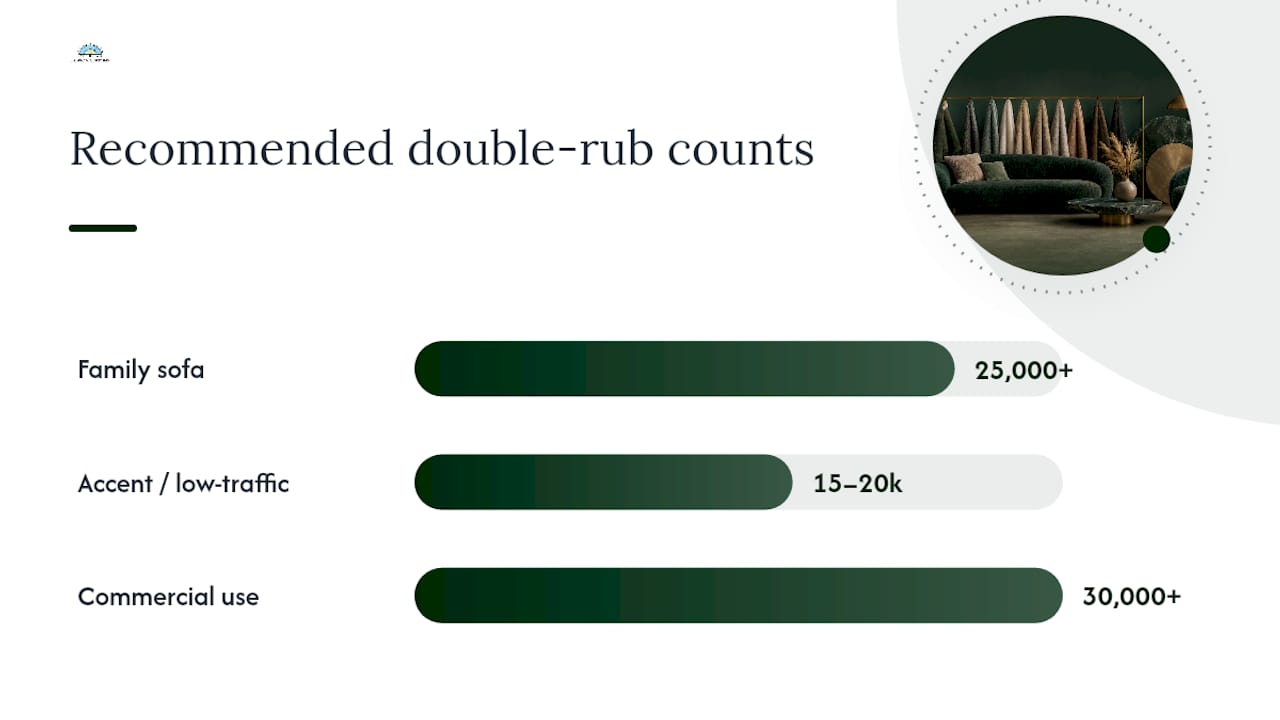
Durability claims mean nothing without a number behind them, and for upholstery fabric that number is the Martindale or double-rub count. Industry guidance generally puts domestic-use fabrics at 15,000 to 25,000 double rubs, with anything above 30,000 considered commercial grade. Mohair often clears both bars with room to spare: some mohair velvets are rated as high as 80,000 Martindale, putting them solidly in commercial territory.
Quick reference for your next fabric order:
- Everyday family sofa: look for 25,000+ double rubs
- Accent chairs and low-traffic seating: 15,000 to 20,000 is usually fine
- Commercial or heavy-use furniture: 30,000+ is the standard to request
Beyond abrasion counts, check for lightfastness ratings and flame-compliance references like NFPA or CAL TB117 test citations on the product page. These test labels tell you whether a fabric will hold its color in a sunny room and whether it meets furniture flammability standards. Pile density and backing quality also affect how well a mohair resists creasing and bounces back after someone sits down, so a high Martindale number paired with a thin backing still deserves a second look.
How Do You Clean and Maintain Mohair Upholstery?
Mohair rewards a light touch. Overcomplicating the routine is the most common mistake owners make.
- Vacuum weekly with a soft upholstery brush attachment, moving in the direction of the pile.
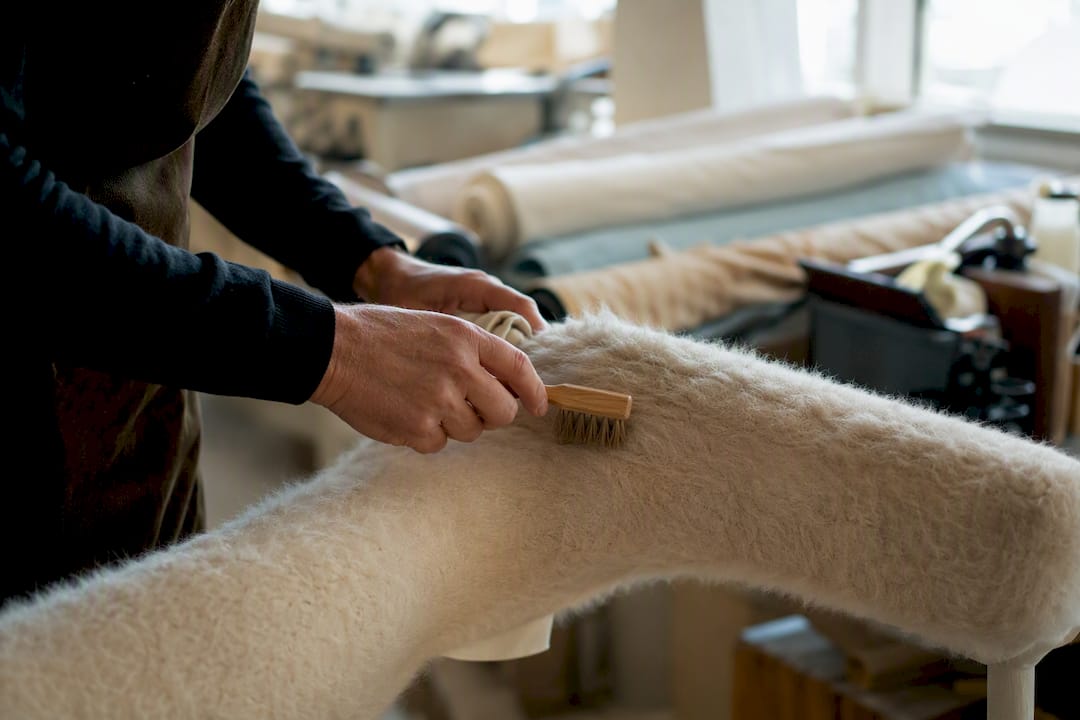
- Brush gently after vacuuming to realign the nap and keep the sheen even.
- Blot spills immediately with a clean, dry cloth. Never rub, since rubbing pushes liquid deeper into the pile and can flatten it.
- Test cleaners on a hidden seam before using any water or solvent-based spot cleaner. The right choice depends on your fabric’s backing and fiber blend, so check the cleaning guidance for mohair and cotton velvet that came with your fabric or ask your supplier directly.
- Revive crushed pile with a light steam pass and a soft brush, working in short sections so you never oversaturate the fabric.
Pro Tip: Keep a soft-bristle clothes brush near the sofa. A 30-second brush after guests leave prevents the kind of pile flattening that eventually needs professional restoration.
Call in a professional upholstery cleaner for set-in stains, pet accidents, or any spill you didn’t catch right away. Tell them upfront that the piece is mohair, since that changes which solvents and drying methods they’ll use. Long-pile mohair in particular often carries a dry-clean-only recommendation for anything beyond a light spot treatment.
How Do You Choose the Right Mohair for Your Project?
A good mohair choice starts with a checklist, not a color swatch.
Confirm these specs before you buy:
- Fiber content (100% mohair vs. blend)
- Backing type and construction
- Martindale or double-rub rating
- Lightfastness rating
- Cleaning code (W, S, or WS)
- Fabric width and weight
Then test your top swatches at home:
- View each swatch in your room’s actual lighting, both daytime and lamp light, since mohair’s sheen shifts dramatically under different sources.
- Rub the swatch firmly with your palm to see how quickly the pile recovers.
- Sit on or press the swatch against your current furniture to judge feel against your other fabrics.
- If it’s safe for the fiber content, try a small steam test on a corner to see how the pile responds.
Think through your household before you commit yardage. Pets and kids call for a higher Martindale and a tighter pile. A sunny room calls for strong lightfastness. And decide early whether you want a glossy, formal sheen or a softer matte finish, since that decision affects which mohair construction you should be shopping for. Before ordering, ask your supplier about lead times, minimum yardage, and return policy on cut fabric. Resources like selecting upholstery fabric walk through the exact questions to bring to that conversation.
Where Can You Buy Mohair Upholstery Fabric by the Yard?
Order at least two or three swatches before committing to yardage. Mohair’s color and sheen can look completely different under your living room lamp than they did on a screen or in a showroom, so testing swatches under your own lighting is the single best safeguard against an expensive mistake.
When you place your order, ask about:
- Lead times for cut yardage, especially for imported or specialty mohair.
- Yardage rounding policies, since most mills sell in fixed increments, not exact measurements.
- Sample and return policies on cut goods, which are often final sale.
- Backing and cleaning code confirmation, along with a written specification sheet for the exact bolt you’re ordering.
Beautifulwindowselgin sells upholstery fabrics by the yard, including mohair and mohair-blend options, and offers swatches and design consultations alongside nationwide shipping. That combination matters most for mohair specifically: a quick conversation with a specialist before you order can catch a backing or pile mismatch that a product photo never would.
Why Trust Beautifulwindowselgin for Your Mohair Fabric Search?
Beautifulwindowselgin specializes in premium textiles for home décor, serving homeowners, interior designers, drapery workrooms, and DIY enthusiasts across the country. The site’s curated fabric selection includes upholstery-grade textiles alongside jacquard satin, embroidered fabrics, and decorative accents, all sold by the yard with nationwide shipping.
That range matters when you’re shopping for mohair specifically, since:
- Design consultations help you match pile type and backing to your actual furniture and traffic level.
- Swatch ordering lets you test sheen and feel before committing to full yardage.
- Custom drapery and installation guidance extend past the fabric sale, useful if your mohair project includes coordinating window treatments.
- A checklist for fabric orders gives buyers a clear reference before they finalize any upholstery purchase.
The guidance in this article was compiled by Marrion for Beautifulwindowselgin.
Key Takeaways
Mohair delivers commercial-grade durability and a luster no synthetic fabric matches, but only when the Martindale rating and backing are checked before purchase, not after.
| Point | Details |
|---|---|
| Verdict on suitability | Mohair works well for formal seating and accent pieces; pick performance-grade constructions for high-traffic homes. |
| Match pile type to use | Short-pile mohair velvet suits daily-use furniture; long-pile mohair suits lower-contact accent pieces. |
| Confirm abrasion rating | Request 25,000+ double rubs for family sofas and 30,000+ for commercial-grade needs. |
| Clean gently and often | Vacuum weekly, blot spills immediately, and call a professional for set-in stains. |
| Order swatches first | Beautifulwindowselgin offers mohair swatches, design consultations, and nationwide shipping for confident buying. |
Where This Guide’s Information Comes From
Product spec pages confirm Martindale figures and cleaning codes directly, so treat listings from mills and specialty retailers as your first checkpoint. The George Smith mohair collection, Joseph Noble’s Museum Mohair line, and care guidance from Fleming & Howland each cover a different piece of the puzzle, from performance testing to daily maintenance.
An Editorial Take on Mohair’s “Durable Luxury” Reputation
The conventional advice on mohair treats it as a single category, as if one care routine and one durability expectation applies across the board. That’s the gap I’d push back on. A 20,000-Martindale short-pile mohair on a cotton backing and an 80,000-rated long-pile mohair velvet are different products solving different problems, and treating them the same is how buyers end up disappointed with a fabric that was never wrong for their space, just wrong for their traffic pattern.
What gets overrated is the price tag as a proxy for performance. What gets underrated is the backing. Buyers fixate on pile height and sheen, but the backing construction determines how the fabric holds up to years of sitting, stretching, and cleaning. My advice: request the spec sheet before you fall in love with the swatch. Ask what’s behind the mohair, not just what’s on top of it. That single question separates a fabric that ages beautifully from one that needs replacing in three years.
— Marrion
Get Mohair Fabric and Expert Guidance from Beautifulwindowselgin
Beautifulwindowselgin gives you something most fabric sites don’t: a real person to talk to before you cut into a bolt of mohair. Instead of guessing at pile type or backing from a product photo, you can request swatches, ask a specialist about your specific furniture and traffic level, and order the exact yardage your project needs, all shipped nationwide.
If you’re ready to see mohair and complementary upholstery textiles in person, browse upholstery and drapery fabric by the yard or explore the full range of upholstery fabric options available for consultation and swatch requests. Whether you’re recovering a single accent chair or outfitting a full drapery-and-upholstery project, request your swatches today and get a specification sheet in hand before you commit to yardage.
Sources
- Mohair Fabric | Luxury Upholstery Fabrics | George Smith
- 611 Museum Mohair | High Performance Upholstery Velvet … | Joseph Noble
- Caring for Mohair and Cotton Velvet Upholstery
- An introduction to upholstery fabrics — Lorfords
Recommended
- Upholstery Fabric Types: A Practical Guide for 2026 – Fabric Store in Columbia, SC | Drapery Making Services
- Upholstery Material Checklist: Your Complete Fabric Guide – Fabric Store in Columbia, SC | Drapery Making Services
- Top Upholstery Fabric Brands: What to Look For and Where to Buy – Fabric Store in Columbia, SC | Drapery Making Services
- Tips for Selecting Upholstery Fabric: A Practical Guide – Fabric Store in Columbia, SC | Drapery Making Services