

How to Identify High Quality Fabric: A Practical Guide
Table of Contents
- How to Identify High Quality Fabric: Start With Your Senses
- Your Fabric Quality Checklist: 8 Checks Before You Buy
- How to Identify Fabric Types by Fiber Content
- How to Test Fabric Durability: Pilling, Abrasion, and Seam Strength
- Fabric Weight and Drape: Matching GSM to Your Project
- Care, Shrinkage, and Colorfastness: What Labels Don't Tell You
- Conclusion: Build Confidence With Every Fabric Purchase
- Frequently Asked Questions
Last Updated: October 9, 2026
How to Identify High Quality Fabric: Start With Your Senses
Learning how to identify high quality fabric starts with two checks you can do in seconds: how it feels in your hand and how it behaves against light. At Beautiful Windows Elgin, we handle designer fabrics daily, and these two tests catch more problems than any label claim.
High quality fabric is a textile with an even weave, consistent yarn, and a hand feel that matches its fiber content. It holds its shape, drapes well, and resists pilling and wear.
Here is what most guides miss. A soft fabric is not automatically a good one. Softness can be added with finishes that wash out.
The Hand Feel Test
Rub the fabric between your thumb and fingers. Quality fabric feels dense and smooth, never thin or slick.
Check these signals:
- Texture: even, with no rough patches or slubs
- Weight: substantial for its type, not flimsy
- Drape: falls in soft folds instead of standing stiff
- Recovery: springs back when you squeeze it
A cheap polyester can feel silky in the store and pill within weeks.
The Light Test for Opacity and Density
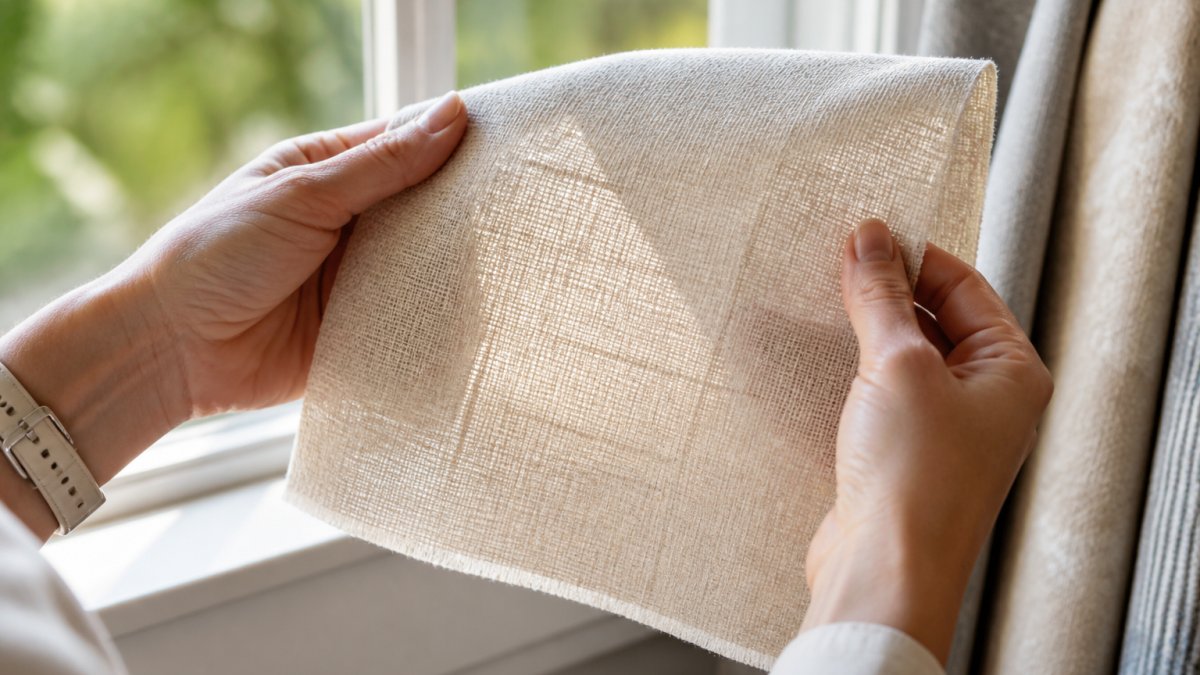
Hold the fabric up to a window or lamp. Thin spots and uneven weave appear instantly as bright patches, while a well-made cotton or linen shows an even grid of threads with no gaps. Sheer fabrics like voile are meant to be translucent, so match the result to the fabric type, not an absolute standard.
Your Fabric Quality Checklist: 8 Checks Before You Buy
Use this fabric quality checklist before you commit to yardage. It takes two minutes and saves returns.
| Check | What to Look For | Red Flag |
|---|---|---|
| Hand feel | Dense, even, smooth | Thin or slick |
| Light test | Even weave, no gaps | Bright thin spots |
| Crumple test | Springs back smooth | Deep set creases |
| Yarn consistency | Uniform thickness | Slubs and lumps |
| Thread count | Balanced warp and weft | Visible gaps |
| Seam construction | Tight, straight stitching | Loose or wavy seams |
| Pilling risk | Tight surface fibers | Fuzzy, loose surface |
| Color consistency | Even dye across the roll | Streaks or blotches |
The Crumple Test for Wrinkle Recovery
Squeeze a corner of the fabric in your fist for five seconds, then release. Good cotton and linen blends relax most creases within a minute; fabrics that stay deeply creased will look tired on curtains, upholstery, or garments. Pure linen wrinkles by nature, so judge it against its own fiber, not against polyester.
Yarn Consistency, Thread Count, and Weave Structure
Look closely at the weave. You should see a regular grid where warp threads run lengthwise and weft threads cross them.
Uneven yarn thickness, called slubs, signals lower-grade spinning. Thread count matters, but only alongside yarn quality. A high count of thin, weak yarn is worse than a moderate count of strong yarn.
How to Identify Fabric Types by Fiber Content
Fiber content drives how a fabric wears, washes, and ages, so judging quality means applying criteria specific to each fiber. Check the label first, then confirm with your senses. Natural fibers breathe and age gracefully; synthetics resist wrinkles and hold color, but can pill and trap heat.
Cotton: Staple Length and Ply Matter Most
Cotton quality hinges on staple length. Long-staple cotton (like Pima or Egyptian) has fewer fiber ends poking out of the yarn, so it pills less, feels smoother, and grows softer with washing; short-staple cotton feels rougher and pills faster.
How to check: Look for a matte surface with a slight luster, then rub the fabric, long-staple cotton sheds very few loose fibers.
Wool: Crimp, Elasticity, and Lanolin
Wool quality depends on crimp (the natural wave in the fiber), elasticity, and lanolin content. Fine wool like Merino has tight crimp, feels soft against skin, and springs back when stretched; coarse wool feels scratchy and has less crimp.
How to check: Squeeze a handful. Good wool feels warm and springy, not stiff or brittle, and recovers its shape immediately. Untreated wool has a faint lanolin scent; a chemical or plasticky smell means it may be heavily treated or blended with synthetics.
Linen: Slubs, Strength, and Crease Behavior
Linen is made from flax fibers, which are naturally long and strong. Quality linen has a crisp, cool hand and a visible slub texture, those thick-and-thin variations are a sign of natural fiber, not a defect.

How to check: Crumple it. Pure linen wrinkles sharply and stays creased, which is normal, but it should not feel brittle. Good linen softens with handling; if it feels like paper, it may be over-sized or low-grade.
Silk: Weight, Sheen, and Snag Resistance
Silk quality is measured in momme (a unit of weight); higher momme means denser, more durable silk. Good silk has a deep, natural sheen that shifts with the light, feels smooth and cool, and drapes fluidly.
How to check: Rub the surface gently with a fingernail, low-quality silk snags easily, while good silk resists light abrasion. Also check for even dyeing, since silk takes dye unevenly if the process is rushed.
Synthetics: Abrasion Ratings and Pilling Tendency
Synthetics like polyester and nylon are hard to judge by touch alone, since softness can be added with finishes. Instead, ask about abrasion resistance ratings (like Martindale or Wyzenbeek double rubs) and pilling tests.
How to check: Rub the fabric against itself, if it fuzzes quickly, it will pill. Look for tight, uniform yarns, since loose or hairy surfaces pill fast. For apparel, stretch a small area and release: good synthetics snap back, poor ones stay stretched.
Blends: What the Percentages Tell You
Blends combine fibers to balance cost and performance. A cotton-poly blend wrinkles less than pure cotton but pills more easily over time, and the first fiber listed on the label makes up the highest percentage.
How to check: Ask what the blend is designed to do. A 60/40 cotton-poly is common for easy-care shirts, while a 95/5 cotton-spandex adds stretch. High synthetic percentages mean more pilling and less breathability; a dominant natural fiber means more wrinkling but better comfort.
How to Test Fabric Durability: Pilling, Abrasion, and Seam Strength
Testing fabric durability comes down to three things: pilling, abrasion resistance, and seam construction. At-home checks are clues, not proof, standardized lab tests give you numbers you can compare across fabrics.
Yorkshire 6.7 oz Natural 100% Linen| White Color —Sold by the Yard →
Pilling: The At-Home Rub Test and What It Misses
Rub the surface briskly with your thumb. If loose fibers ball up, the fabric will pill, but that test does not tell you how it will pill after 20 washes.
Lab tests rub fabric in a figure-eight pattern until pills form, rated 1 to 5. A rating of 4 or higher is good for apparel and expected for upholstery.
Abrasion Resistance: Double Rubs and Real-World Limits
Check abrasion resistance by rubbing the fabric against itself; a fabric that fuzzes quickly will wear thin at stress points.
Common benchmarks for double rubs are often used to indicate durability.
Our Symone Blue Embroidered Voile Lace(https://beautifulwindowselgin.com/products/symone-blue-embroidered-voile-lace-100-cotton-floral-fabric-54-wide) carries a 5,000 double rub rating, which suits light upholstery and decorative panels.

One limitation: double rub ratings are measured in a lab, not in your living room. Sun exposure, cleaning products, and pets can shorten fabric life.
Seam Strength: Stitching, Thread, and Stitch Density
Seam construction matters just as much as the cloth. Look for tight, straight stitching with no puckering. Weak seams fail long before the fabric does.
Check these details: stitch density, thread type, and seam finish.
For upholstery, consider different seam types.
What At-Home Tests Cannot Tell You
Touch and rub tests are fast filters, not lab results. They cannot measure colorfastness to light, dimensional stability after washing, or long-term abrasion. For those, you need standardized tests:
- Colorfastness to light: AATCC 16 (rates fading on a 1 to 5 scale)
- Shrinkage: AATCC 135 (measures dimensional change after home laundering)
- Tear strength: ASTM D2261 (measures force needed to tear fabric)
Most shoppers will not run these tests, but you can ask a retailer for results or look for third-party certifications. If a seller cannot provide basic durability data, treat that as a red flag.
Fabric Weight and Drape: Matching GSM to Your Project
Fabric weight and drape decide whether a project looks polished or homemade. Weight is measured in GSM, or grams per square meter, and it tells you how a fabric will hang.
Lightweight fabrics under about 100 GSM drape softly and suit sheers and linings. Midweight fabrics around 150 to 250 GSM work for most drapery and apparel.
Our Lou Cotton Voile(https://beautifulwindowselgin.com/products/lou-cotton-lining-voile-material-ivory-color-58-sold-by-the-yard) sits at 70 GSM, making it ideal for linings and delicate sheers at $26.99 per yard.

Match GSM to intended use:
- Sheer curtains and linings: 50-100 GSM
- Dresses and blouses: 100-180 GSM
- Drapery panels: 180-280 GSM
- Upholstery: 300 GSM and up
Care, Shrinkage, and Colorfastness: What Labels Don't Tell You
Care instructions cover washing, but they rarely mention shrinkage or colorfastness. Those two factors cause most fabric disappointments.
Natural fibers shrink unless pre-washed. Cotton can lose length in a hot wash, and linen relaxes over time. Always pre-wash a swatch before cutting yardage for a project.
Colorfastness matters for drapery and upholstery exposed to sunlight. Rub a damp white cloth on the fabric; if dye transfers, expect fading.
Buy all your yardage from one dye lot whenever possible.
Conclusion: Build Confidence With Every Fabric Purchase
Every fabric purchase gets easier once you know what to check.
When you want fabrics that already pass those checks, Beautiful Windows Elgin curates designer fabrics sold by the yard with nationwide shipping, plus custom drapery services when you want the work done for you.
Select your Fabric and start your next project with material you can trust.
Frequently Asked Questions
How can I tell if a shirt is made from high-quality fabric?
Check the hand feel first. High quality fabric feels smooth and substantial, not thin or scratchy. Hold it up to light to check opacity; if you can see clear outlines through it, the weave is likely loose. Crumple a small section in your fist and release it. Quality cotton and wool recover from wrinkles within seconds, while cheap blends stay creased. Also examine the seams and stitching for even, tight construction, which signals better overall garment longevity.
Does a higher thread count always mean better fabric?
No. Thread count measures the number of warp and weft threads per square inch, but manufacturers can inflate it by counting multi-ply yarns. A 400-thread-count fabric made from long-staple cotton can outperform a 1,000-thread-count sheet made from short, weak fibers. Focus on fiber quality, yarn consistency, and weave density instead. For bedding and apparel, thread count between 200 and 400 with single-ply yarns is a reliable quality indicator.
What fabric qualities matter most for curtains and upholstery?
For curtains, fabric weight and drape matter most. Medium to heavy fabrics like linen blends and cotton voile hold their shape and hang beautifully. Upholstery needs abrasion resistance; look for fabrics with a double rub count of at least 15,000 for residential use. Colorfastness is also critical since sunlight will fade inferior dyes quickly. Breathability and shrinkage control round out the essentials for long-lasting home decor projects.
How do I check fabric for defects before buying it?
Unroll a yard or two and inspect it under good lighting. Look for slubs, pulls, or thin spots in the weave. Run your hand across the surface to feel for uneven texture or skipped yarns. Check the selvage edges for tightness and consistency. Hold the fabric against a light source to spot pinholes or weak areas. If you're buying online, order a sample first and ask about the return policy, since most cut yardage is non-returnable.