


Custom Bedding Fabric Sourcing Guide for 2026
Table of Contents
- Why Custom Bedding Fabric Sourcing Starts With the Right Questions
- Choosing the Best Fabric for Bedding: Weave, Weight, and Feel
- How to Calculate Fabric Yardage for Bedding Without Overbuying
- Fabric Supplier Questions to Ask Before You Place an Order
- Why Bedding Fabric Samples Save You From Costly Mistakes
- Durability, Care, and Cost: What Actually Decides the Fabric
- Conclusion
- Frequently Asked Questions
Last Updated: October 15, 2026
Why Custom Bedding Fabric Sourcing Starts With the Right Questions
Most people begin a custom bedding fabric sourcing guide by browsing colors, then panic when the yardage math doesn't work. Homeowners, DIY sewers, and interior designers order designer fabric by the yard for projects of every size. The fix is simple: answer four questions before you look at a single swatch.
What size is the finished piece? What weave suits the climate and the sleeper? How wide is the fabric roll? Who is actually producing the goods, and what do they guarantee?
A custom bedding fabric sourcing guide is a documented process for matching fiber, weave, width, and supplier terms to a specific bed before money changes hands. It exists because bedding is the one sewing project where a wrong choice is expensive to undo. A duvet cover takes five to eight yards; a king sham set takes three to four more. Order the wrong weight and you've bought yardage you can't return.
The questions come first. Everything else follows.
Choosing the Best Fabric for Bedding: Weave, Weight, and Feel
The best fabric for bedding balances three variables: fiber content, weave structure, and fabric weight measured in grams per square meter. Fiber decides how the fabric feels against skin. Weave decides how it drapes and how long it lasts. Weight decides whether it sleeps cool or warm.
Get those three right and the color almost picks itself.
Natural Fibers: Cotton, Linen, and Silk
Cotton is the default for good reason. Long-staple varieties like Egyptian and Pima produce a smoother, stronger yarn that resists pilling far better than short-staple alternatives. Percale weaves feel crisp and breathable; sateen weaves feel smoother and slightly heavier.
Linen is the warm-weather choice. It breathes exceptionally well, gets softer with every wash, and has a relaxed texture that reads intentional rather than sloppy. The trade-off is wrinkling, and no amount of ironing changes that permanently.
Silk is the luxury option for pillowcases and duvet covers. It reduces friction on hair and skin, which is why so many people seek it out. It also demands gentle washing and hates direct sunlight.
Blends and Performance Weaves
Blends exist to solve problems single fibers can't. A cotton-linen blend keeps linen's texture while reducing shrinkage. A cotton-polyester blend adds wrinkle resistance for guest rooms and rentals where laundering is frequent.
Performance weaves include brushed microfiber, which feels soft and costs less; bamboo-derived viscose, which wicks moisture; and Tencel lyocell, which regulates temperature well and drapes heavily. Each has a place. None is universally best.
How to Calculate Fabric Yardage for Bedding Without Overbuying
Fabric yardage for bedding equals the finished dimensions plus seam allowance plus pattern repeat, divided by fabric width, then rounded up to the nearest quarter yard. That formula handles every piece, from a pillowcase to a full duvet cover.
Work through it in order:
- Measure the finished dimensions of the piece, not the mattress.
- Add half an inch to one inch of seam allowance on every seamed edge.
- For patterned fabric, add one full vertical repeat per panel and one horizontal repeat per width.
- Divide total width needed by the fabric's usable width, then round up to a whole number of panels.
- Multiply panels by panel length, convert to yards, and round up to the next quarter yard.
A standard pillowcase needs roughly one yard.
| Bedding Piece | Typical Yardage (44" fabric) | Typical Yardage (54" fabric) |
|---|---|---|
| Standard pillowcase | 1 yard | 1 yard |
| Queen duvet cover | 5-6 yards | 3.5-4 yards |
| King duvet cover | 7-8 yards | 4.5-5.5 yards |
| Queen bed skirt | 4-5 yards | 3-4 yards |
Buy the extra quarter yard.
Fabric Supplier Questions to Ask Before You Place an Order
Ask about dye lot, return policy, and lead time before you commit, because those three answers determine whether your project succeeds. Everything else is secondary.
Run through this list with every fabric supplier you contact:
- Is this a stock item or a special order?
- Can you ship all my yardage from a single dye lot?
- What is your return policy on cut yardage?
- How long until the order ships?
- Do you offer samples before purchase?
- Is the fabric pre-shrunk or will it shrink after washing?
- What is the actual usable width, excluding selvage?
- Can you hold additional yardage if I need more later?
The dye lot question matters most. Two rolls of the same colorway from different production runs can read noticeably different under natural light, and no screen corrects for that.
Small upholstery shops and workrooms should also ask whether the supplier can handle repeat orders consistently. A one-time purchase is easy; a supplier who can match a fabric six months later is worth keeping.
Why Bedding Fabric Samples Save You From Costly Mistakes
Order samples first. A swatch costs a fraction of a yard and eliminates the single most common source of regret in custom bedding: color that doesn't match what appeared on screen.
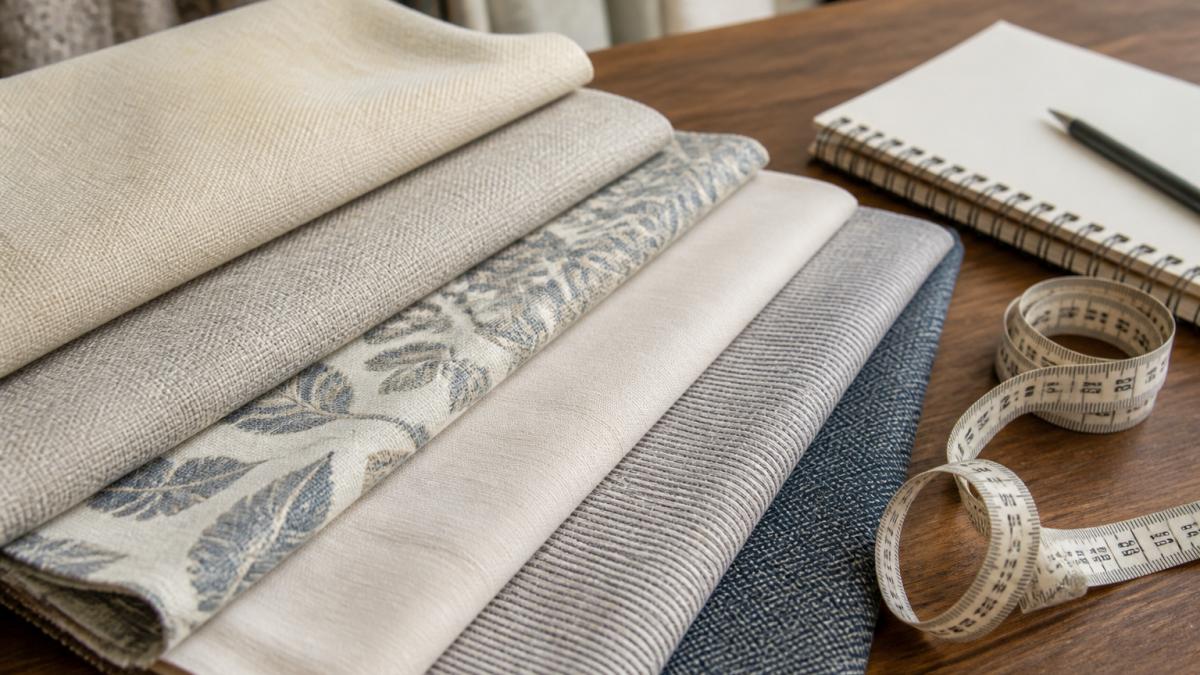
Screens vary wildly. A dusty rose on a phone can read as salmon on a laptop and mauve under a bedroom lamp. Physical swatches let you check the fabric in the actual room, under the actual lighting, against the actual wall color.
Samples also let you feel the hand of the fabric before committing. Weight, drape, and texture don't translate through a photograph. A fabric that looks substantial online can arrive feeling thin.
Durability, Care, and Cost: What Actually Decides the Fabric
Durability comes down to fiber length, weave density, and thread count, in that order. Cost tracks those same three factors. Care requirements track the fiber itself.
Long-staple cotton outlasts short-staple cotton because longer fibers create fewer exposed ends that fray and pill. Denser weaves resist abrasion better than loose ones. Thread count matters, but only up to a point; beyond roughly 400, higher numbers often reflect multi-ply construction rather than genuinely finer yarn.
Care is where budgets quietly shift. Linen and silk require gentler cycles or hand washing. Cotton and performance blends handle standard machine washing. If you're outfitting a rental or a guest room, choose a fabric that survives frequent laundering without special handling.
For designers sourcing for clients, durability carries a second cost: reputation. A fabric that pills after three months reflects on the specification, not the client's care habits.
Conclusion
Sourcing custom bedding fabric is a sequence, not a search. Answer the sizing and use questions, match fiber and weave to the sleeper, calculate yardage with the actual fabric width, vet your supplier, and order swatches before you commit to yardage.
That sequence is the difference between bedding that looks right for a decade and bedding you replace in a year.
At Beautiful Windows Elgin, we stock designer fabrics by the yard with nationwide shipping and offer custom drapery services for projects that need professional fabrication. If your bedding project grows to include window treatments, our embroidered fabric for custom curtains pairs beautifully with coordinating bedding, and our workroom can build Curtain Panels to match. Browse our Shop fabric collection to order swatches, or select your fabric and let our workroom handle the construction.
Frequently Asked Questions
What is the best fabric for custom bedding?
There is no single winner, but long-staple cotton and linen blends handle daily washing best. Cotton percale feels crisp and holds up to repeated laundering, while linen breathes well and softens over time. For bedding that gets heavy use, look for a tight weave and a thread count between 200 and 400. Very high thread counts often mean thinner yarns, not better quality. Match the fabric to how you sleep and how often you wash.
How do I choose fabric for custom bedding?
Start with the practical details: how the bedding will be washed, whether pets or kids share the bed, and the room's color palette. Then weigh feel against durability. A brushed cotton is soft but pills faster than a plain weave. If you are unsure, order bedding fabric samples first and drape them over the bed in daylight. The color and texture you see on a screen rarely match what arrives in the mail.
How much fabric do I need for custom bedding?
Measure the mattress width, length, and drop, then add seam allowance and a hem allowance to each panel. Pattern repeat changes the amount needed. If the print has a large repeat, add one full repeat per cut panel. Always round up rather than down, since matching dye lots later is difficult.
What should I ask a fabric supplier before ordering?
Ask about dye lot consistency, whether the fabric is pre-shrunk, the exact width in inches, and the care instructions. Confirm the return policy for cut yardage, since most suppliers cannot resell it. Ask how the fabric ships and whether it arrives folded or on a roll. If you are ordering for a client project, request a written lead time. These fabric supplier questions prevent most ordering problems before they start.
Can I order fabric samples before placing a custom bedding order?
Yes, and you should. Samples let you check color in your own lighting, feel the weight, and test how the fabric drapes. Many suppliers offer swatch sets for a small fee that is often credited toward a later order. Compare samples against your existing bedding and wall color. A sample that looks right on a screen can read completely differently once it is in the room.
What is the difference between made-to-order bedding and ready-made bedding?
Ready-made bedding comes in standard sizes and is available immediately, but it rarely fits unusual mattress depths or custom dimensions. Made-to-order bedding is cut to your measurements, so it fits properly and lets you choose the exact fabric, trim, and finish. The tradeoff is lead time. For odd-sized beds or a specific design vision, made-to-order is usually worth it.
Ready to start your next bedding project? Select your Fabric at Beautiful Windows Elgin and get designer yardage shipped to your door, backed by our workroom's custom drapery expertise.