


Curtain Installation Cost: What U.S. Homeowners Pay in 2026
Most homeowners pay between $50 and $500 per window for professional curtain installation, with custom drapery running $300 to $4,000 per window once fabric and motorization enter the picture. Hiring a pro makes the most financial sense for heavy fabric, vaulted ceilings, or motorized track, since a botched anchor or a crooked bracket costs more to fix than it would have cost to do right the first time. If you just need standard panels on drywall, doing it yourself can often be more cost-effective. The breakdowns below show exactly where your money goes.
TL;DR:
- Larger projects with motorized or heavy drapery can cost between $1,500 and $5,000 per window, factoring in height, weight, and electronics.
- Wall type, span length, ceiling height, and motorization significantly influence installation costs and complexity.
- Itemized quotes are essential to avoid hidden fees, especially for hardware, materials, and disposal, which vary widely in price.
- Hiring a specialist or full-service provider typically ensures longer-lasting installation and reduces the risk of costly repairs.
- Proper measurement, hardware pairing, and upfront planning can save hundreds of dollars and prevent common installation mistakes.
Table of Contents
- What Is a Typical Curtain Installation Cost per Window?
- What’s Included in the Cost to Install Curtains?
- How Much Does It Cost to Hang Curtains for Different Project Sizes?
- What Factors Affect Drapery Installation Cost the Most?
- How Do Installers Charge for Curtain Hanging?
- How Can You Lower Your Curtain Installation Budget?
- How Long Does Curtain Installation Take?
- Measurement and Hardware Tips That Prevent Costly Mistakes
- Does Curtain Installation Ever Require Permits or Structural Work?
- Do Curtain Installers Offer Warranties?
- What Pricing Red Flags Should You Watch for When Hiring an Installer?
- Why Correct Installation Costs More Upfront but Saves You Money Later
- Get a Custom Drapery Quote from Beautiful Windows Elgin
- Where These Cost Figures Come From
- Sources
What Is a Typical Curtain Installation Cost per Window?
The national numbers vary depending on which calculator you check, but they cluster in a predictable band. HomeWyse’s cost model puts a typical curtain hanging job at roughly $254 to $472 per curtain once you combine materials and basic labor. That figure sits on the higher end because it assumes a full-service install with hardware included, not just a rod thrown up on two brackets.
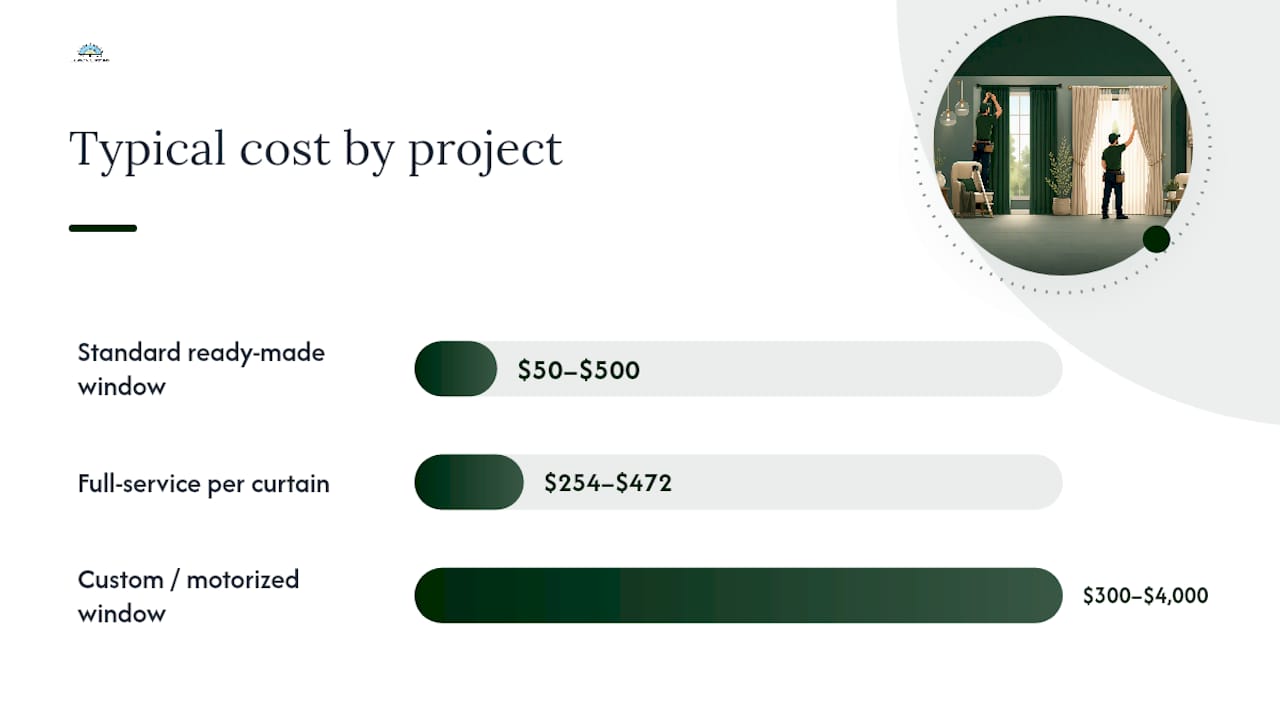
HomeGuide’s data draws the line more broadly: $50 to $500 per window for standard installed curtains, and $300 to $4,000 per window once you move into custom drapery with full installation. That upper range covers floor-to-ceiling silk panels with motorized tracks, not the kind of job most renters are booking.
LatestCost’s guide narrows the focus to rod installation specifically, estimating materials around $30 to $60 and labor at $50 to $110 an hour, with typical project totals landing between $120 and $520 for a standard job. That’s a useful anchor if you already own your curtains and just need someone to hang them.
Here’s how the numbers stack up across project types:
| Project scope | Typical cost range | What’s included |
|---|---|---|
| Single standard window, ready-made panels | $50–$260 | Rod, brackets, basic labor |
| Three-window bundle, midrange hardware | $300–$900 | Rods, mounting, minor anchor work |
| Custom drapery, one window | $300–$1,500 | Fabric, lining, professional hanging |
| Motorized track, one window | a high range | Motor, track, wiring, programming |
The spread is wide because “curtain installation” covers everything from a $12 tension rod in a rental to a motorized silk panel system in a two-story great room. Knowing which category you fall into before you call an installer keeps the conversation grounded.
What’s Included in the Cost to Install Curtains?
A quote that just says “$400” tells you almost nothing. Ask for a line-item breakdown, because that’s where the real comparison happens.
- Materials: Off-the-shelf panels run $15 to $80 each; custom fabric with lining can run $50 to $300+ per yard depending on the textile.
- Hardware: Basic rods and brackets cost $10 to $60; decorative rods, tracks, and motorized systems climb to $150 to $800 or more.
- Labor: Installers typically charge per window ($45 to $250, per HomeGuide) or by the hour, with many charging a trip minimum regardless of job size.
- Anchors and mounting hardware: Drywall anchors add a few dollars; masonry or brick mounting can add $20 to $60 per window because it requires drilling and specialty fasteners, per HomeWyse’s data.
- Delivery and disposal fees: Custom orders often carry a delivery charge, and removal of old hardware sometimes shows up as a separate line.
- Sales tax and markup: If you’re working through a general contractor or design firm rather than booking direct, expect a markup on materials, sometimes 10% to 20%.
That last point matters more than people expect. A drapery shop selling you fabric and installation directly usually beats a contractor who’s subcontracting the same job and adding a margin on top. If you’re comparing quotes, ask who’s actually doing the measuring and hanging, not just who’s invoicing you.
How Much Does It Cost to Hang Curtains for Different Project Sizes?
Real budgets look different depending on scope. Here are three sample estimates built from the ranges above, useful as a starting point when you’re getting your own quotes.
-
A single 6 to 8 foot window with a standard rod. Expect $80 to $260 total: ready-made panels around $30 to $80, a basic rod and brackets around $20 to $50, and labor around $50 to $130 for a job that typically takes under an hour.
-
Three midrange windows bundled into one visit. Total costs usually land between $350 and $900. Bundling saves money because most installers waive or reduce the trip minimum after the first window, and buying matching hardware in a set often costs less per unit than three separate purchases.
-
Tall ceilings, heavy drapery, and a motorized track. This is where costs jump. Custom lined fabric alone can run $200 to $600 per window, motorized hardware adds $600 to $2,500+, and labor increases because taller installs often need a lift or a second technician. Total project costs of $1,500 to $5,000 for a single statement window aren’t unusual once you add wiring and programming for smart-home integration.
The gap between estimate one and estimate three isn’t really about the curtains. It’s about height, weight, and electronics, which brings us to what actually drives the price up or down.
What Factors Affect Drapery Installation Cost the Most?
Four variables move the number more than anything else, and understanding them helps you spot an inflated quote before you sign off on it.
- Wall and ceiling material. Drywall with studs nearby is the cheapest surface to mount into. Masonry, tile, or plaster requires special anchors and slower drilling, adding $20 to $60 per window according to HomeWyse.
- Span length and rod strength. A rod spanning more than 8 feet often needs a center support bracket to prevent sagging, which adds hardware and labor time.
- Ceiling height. Anything above a standard 8-foot ceiling may require a ladder, scaffolding, or a second installer for safety, which shows up as extra labor time or a flat surcharge.
- Motorization and custom finishes. Motorized tracks, remote programming, and smart-home integration are the single biggest premium items on the list, often adding several hundred to a few thousand dollars per window.
Pro Tip: Ask your installer whether they’re mounting into a stud or using a load-rated toggle anchor for heavy drapery on drywall. Skipping this step is the most common cause of a bracket pulling out of the wall within the first year.
How Do Installers Charge for Curtain Hanging?
Pricing models vary by installer type, and knowing the difference helps you avoid overpaying for a job that doesn’t need a specialist.
Some installers charge a flat rate per window, which works in your favor if the job is straightforward. Others bill hourly, often $50 to $110 per hour based on LatestCost’s regional averages, which can work against you if the job runs long. Many charge a trip minimum, typically $75 to $150, regardless of how small the job is, so bundling multiple windows into one visit is almost always the better deal.
As for who to hire:
- A handyman is usually the cheapest option and fine for standard rods on drywall, but often lacks experience with motorized systems or heavy custom drapery.
- A window-treatment specialist costs more but brings the right anchors, levels, and experience for tricky spans and tall ceilings.
- A drapery shop or fabric retailer offering installation (Beautiful Windows Elgin among them) often bundles measurement, fabrication, and hanging into one service, which reduces the finger-pointing if something doesn’t fit right.
Before booking anyone, ask these questions: Is there a measurement fee, and is it credited toward the job if you book? Is hardware included in the quote or billed separately? Is there a warranty on the labor? Who handles cleanup and disposal of old hardware? A vague answer to any of these is worth pausing on.
How Can You Lower Your Curtain Installation Budget?
A few practical moves shave real money off the total without cutting corners that matter.
- Bundle every window into a single visit to avoid paying multiple trip minimums.
- Choose standard sizes when possible; custom widths and lengths add fabrication time and cost.
- Pick midrange hardware over premium decorative rods unless the room is a design focal point.
- Do the safe DIY tasks yourself, like unpacking and pressing new panels, and leave stud-finding, drilling, and motor wiring to a professional.
That last point about pressing panels isn’t cosmetic. Fabric that arrives folded needs to relax before it hangs correctly, and a few minutes with a steamer saves an installer from charging you to fix pleats that look uneven on day one.
| Savings tactic | Typical impact |
|---|---|
| Bundling 3+ windows in one visit | Saves one or two trip minimums, often $75–$150 each |
| Standard sizes over custom | Avoids 15–30% custom fabrication upcharge |
| Midrange hardware | Cuts hardware spend by roughly half vs. premium decorative rods |
| Cheap plastic anchors on heavy drapery | Often triggers a repeat service call within a year |
That last row matters more than people expect. A $3 plastic anchor holding a 12-pound drapery panel is a false economy. It fails, the bracket rips out, and you’re paying for a second visit plus wall repair, which erases whatever you saved.
How Long Does Curtain Installation Take?
A measurement visit typically runs 20 to 45 minutes and sometimes carries a small fee, often credited back if you book the installation. Ready-made panels can be installed the same week; custom drapery usually requires a lead time of 2 to 6 weeks depending on fabric availability and fabrication schedules.
On-site installation itself moves quickly for standard jobs:
- A single standard window: 30 minutes to 1 hour.
- A three-window bundle: 1.5 to 3 hours total.
- Tall ceilings or motorized track: 2 to 4+ hours, sometimes requiring two technicians, based on the labor rule of thumb used across industry cost guides.
Booking measurement and installation in the same appointment window, when the installer allows it, cuts down on scheduling gaps between ordering and hanging.
Measurement and Hardware Tips That Prevent Costly Mistakes
The single most common reason a curtain project runs over budget is a measurement mistake, and it’s almost always avoidable. Panels that are too short for proper stackback, or a rod mounted too close to the window frame, force a redo that costs as much as the original install. The fix is simple: measure rod width at least 4 to 8 inches beyond the window frame on each side, and mount the rod height high enough that the panel breaks just above the floor rather than dragging or floating.
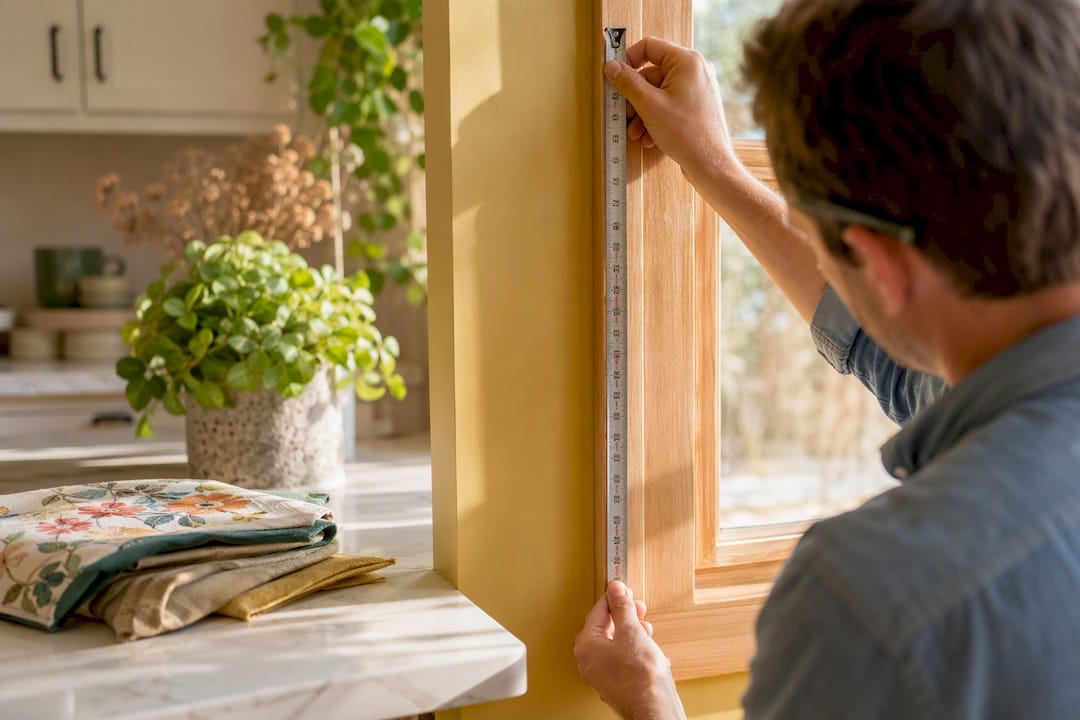
Hardware pairing matters just as much as the measurement itself. Heavy linen or blackout-lined drapery needs a rod rated for the weight and, on drywall, a toggle anchor or stud mount rather than a standard plastic anchor. Get this pairing wrong and you’re looking at a bracket that pulls loose within months, not years.
One step worth the extra time: order fabric samples before committing to a full custom order. It adds a few days to your timeline, but it prevents the far more expensive mistake of receiving yards of fabric that look different under your room’s actual light. For hands-on measurement guidance, our step-by-step guide to measuring windows walks through the exact process we use with clients before any custom order goes into production. Heavier fabric also benefits from professional steaming after installation, a step that relaxes seams so pleats hang evenly, which is part of why full-service installs often outperform a rushed DIY hang.
Does Curtain Installation Ever Require Permits or Structural Work?
For the overwhelming majority of residential curtain and drapery projects, no permit is required. Mounting a rod into drywall, wood trim, or standard masonry falls under routine home improvement, not construction work that triggers local building code review.
The exception is when a project moves beyond simple mounting into structural modification, most commonly with motorized systems that require new electrical wiring or dedicated circuits. If a motorized track needs a new outlet or hardwired connection rather than running off an existing plug, that portion of the work may require an electrician and, depending on your municipality, a basic electrical permit. Ceiling-mounted tracks in homes with plaster or older lath-and-plaster walls sometimes need minor structural reinforcement, like adding a mounting board, before hardware can be safely installed.
For a standard project, total cost stays within the $50 to $500 per window range discussed earlier. Add motorization with new wiring, and total project costs (including any electrical work) can climb toward $1,000 to $5,000 depending on the scope. If you’re unsure whether your project crosses that line, ask your installer directly during the measurement visit, before fabrication begins, since retrofitting electrical work after drapery is installed costs more than planning for it upfront.
Do Curtain Installers Offer Warranties?
Warranty coverage on curtain installation varies widely by provider, and it’s worth asking about directly rather than assuming it’s included. Labor warranties, when offered, typically cover 30 to 90 days and guarantee that hardware stays mounted and functions correctly. Some full-service drapery providers extend that further, particularly on custom orders where fabrication and installation are handled by the same company.
Hardware itself often carries a separate manufacturer’s warranty, distinct from the installer’s labor guarantee. A motorized track motor, for example, might carry a one- to three-year manufacturer warranty on parts, while the installer only guarantees their own workmanship for a shorter window. Reading the fine print matters here: a warranty that only covers “defects in hardware” won’t help you if a bracket was mounted into the wrong part of the wall.
Custom drapery work benefits from an added layer of accountability when the same company that measures, fabricates, and installs the panels stands behind the whole process rather than passing responsibility between a fabric retailer, a seamstress, and a separate installer. If a mistake happens, there’s one point of contact instead of three companies pointing fingers at each other. Before hiring, ask specifically what’s covered, for how long, and whether the warranty transfers if you sell or move.
What Pricing Red Flags Should You Watch for When Hiring an Installer?
A few patterns show up again and again in complaints about curtain and drapery installation, and knowing them upfront saves you from an unpleasant surprise on invoice day; for detailed advice, see our accurate UK measuring guide.
The biggest one is a quote with no line items. If an installer gives you a single number with no breakdown of materials, hardware, and labor, you have no way to evaluate whether it’s fair or to negotiate individual pieces. Ask for an itemized estimate before you agree to anything.
Watch for a measurement fee that isn’t disclosed until after the visit, or one that isn’t credited toward the job if you book installation. Legitimate providers state this upfront. Also be wary of installers who push you toward the most expensive hardware option without asking about your actual wall type or fabric weight; a heavy blackout panel doesn’t need a premium decorative rod, but a low-end plastic bracket also won’t hold it.
Cash-only demands, no written estimate, and high-pressure “today only” discounts are classic signs of a fly-by-night operation rather than an established local business. Finally, check whether the quoted price includes disposal of your old hardware; some installers add this as a surprise fee after the job is already underway. A reputable installer puts all of this in writing before the first bracket goes up.
Why Correct Installation Costs More Upfront but Saves You Money Later
The temptation to go with the cheapest quote is understandable, but it’s usually the wrong call for anything beyond a basic rental panel. I’ve seen the pattern play out consistently across custom drapery projects: the installs that hold up for a decade are the ones where someone took the time to find a stud, choose the right rod weight, and measure for proper stackback before a single hole was drilled.
At Beautiful Windows Elgin, we work with clients across custom drapery and upholstery projects every week, and the jobs that come back for repairs almost always trace to a shortcut taken at the start, not a flaw in the fabric itself. Paying for correct installation the first time isn’t an upsell. It’s the difference between drapery that lasts fifteen years and drapery that needs a second service call before the first winter is over.
— Marrion
Get a Custom Drapery Quote from Beautiful Windows Elgin
Beautiful Windows Elgin is the alternative to piecing together fabric, hardware, and installation from three separate vendors: you get design consultation, custom fabrication, and installation guidance from one team based in Columbia, SC, rather than passing your project between a fabric shop, a hardware store, and an independent installer.

We stock a curated range of designer textiles by the yard, including drapery-weight fabrics suited to lined panels and heavier installs, plus upholstery and decorative textiles for the rest of the room. Every custom order starts with accurate measurements; our measurement resource page walks you through what we need before we cut a single yard, and we ship fabric samples nationwide so you can check color and weight in your own light before committing. Request a fabric sample or book a design consultation through our site to get a quote scoped to your actual windows, not a national average.
Where These Cost Figures Come From
The ranges throughout this guide draw on national cost calculators built specifically to track home-service pricing. HomeWyse’s calculator provided the per-curtain cost model combining materials and basic labor. HomeGuide’s cost breakdown supplied the standard-versus-custom drapery split and the materials-versus-labor component figures. LatestCost’s installation guide supported the hourly labor rates and per-window project totals used throughout.
For readers checking whether local labor costs run above or below the national averages here, BLS occupational wage data offers a way to compare installer pay by region and metro area. All three calculators update periodically, and none of them can account for your specific wall type, ceiling height, or fabric choice, so treat every figure in this guide as a planning range rather than a locked-in quote. Local labor rates, particularly in dense urban markets versus rural areas, remain the biggest variable no national calculator can fully capture.
Sources
- Cost to Hang Curtains - 2026 Cost Calculator (Customizable)
- How Much Do Curtains Cost? (2026)
- Curtain Rod Installation Cost: Price Ranges and Budget Guide for U.S. Buyers 2026 – LatestCost
- Bls
Recommended
- DIY Curtain & Drapery Installation Guide – Fabric Store in Columbia, SC | Drapery Making Services
- Why choose custom curtains for your Southeastern home – Designer Fabrics by the Yard | Drapery Making Services
- Curtain Installation Guide: Achieve Perfect Window Dressing – Shop Designer Fabrics by the Yard | Curtains & Drapery
- Step-by-step curtain installation: the complete DIY guide – Fabric Store in Columbia, SC | Drapery Making Services