


Source drapery fabrics for custom window treatments 2026
Choosing the right drapery fabric transforms a room, but navigating fiber types, weights, and performance features often overwhelms interior designers and DIY enthusiasts alike. You want fabrics that deliver the perfect balance of light control, durability, and style without sacrificing maintenance ease or budget. This guide walks you through understanding fabric properties, assessing your project needs, sourcing quality materials, and avoiding common pitfalls so you can confidently select fabrics for custom window treatments and upholstery projects in 2026.
Table of Contents
- Understanding Fabric Types And Their Impact
- Assessing Your Project Needs Before Sourcing Fabrics
- How To Source High-Quality Drapery Fabrics Effectively
- Common Mistakes When Sourcing Drapery Fabric And How To Avoid Them
- Explore Premium Drapery Fabrics And Supplies
Key takeaways
| Point | Details |
|---|---|
| Fabric choice affects ambiance | Selecting the right fabric impacts light control, durability, and room mood. |
| Consider fiber and weight | Fiber type and fabric weight determine drape, maintenance, and performance. |
| Layering offers flexibility | Combining sheers with heavier fabrics provides privacy and design versatility. |
| Upholstery fabric differs | Upholstery materials are heavier and sturdier than typical drapery fabrics. |
| Performance fabrics resist wear | Stain-resistant and durable fabrics suit busy households with children or pets. |
Understanding fabric types and their impact
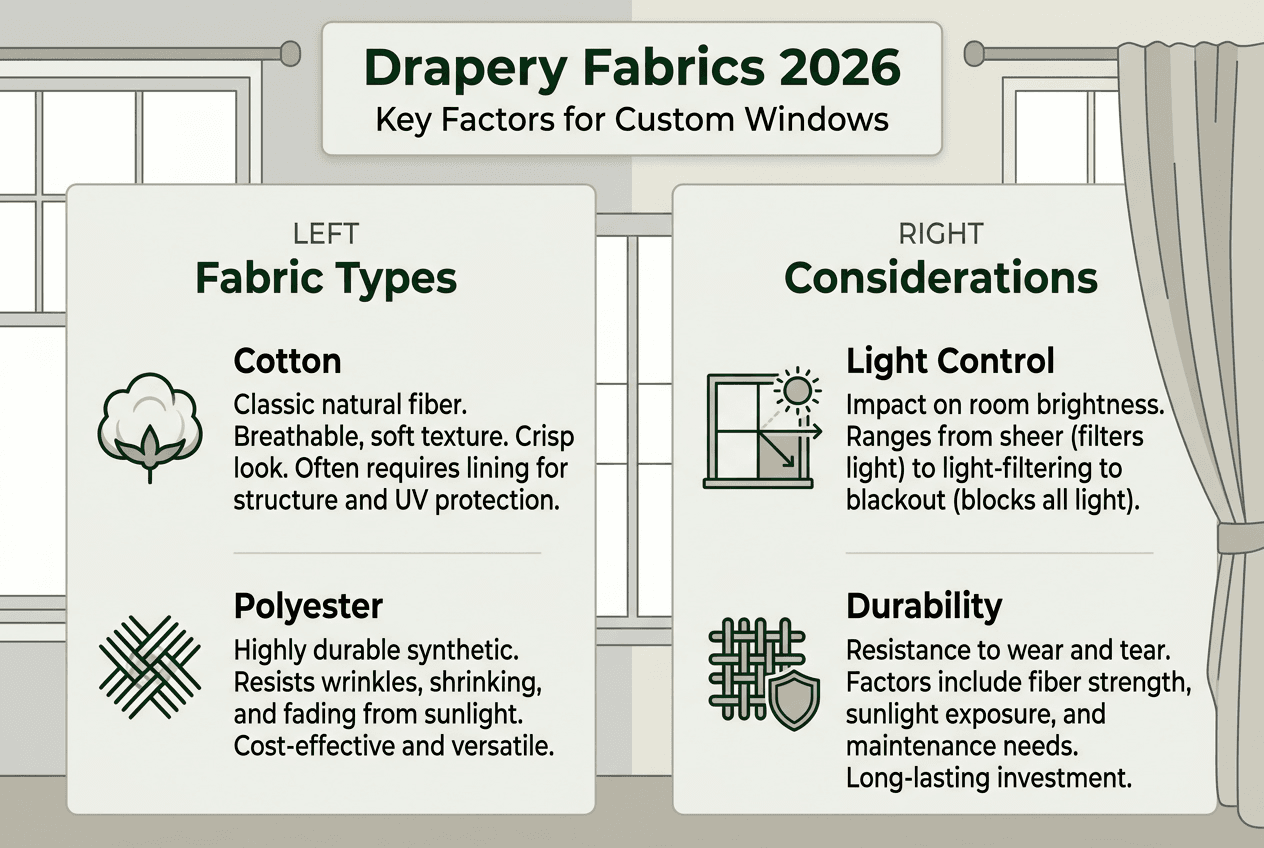
Fabric composition and weight shape how your window treatments look, feel, and perform over time. Natural fibers like cotton, linen, and silk offer breathability and timeless appeal but may fade faster under direct sunlight. Cotton drapes beautifully and accepts dye well, making it versatile for prints and solids. Linen delivers a relaxed, textured aesthetic but wrinkles easily. Silk adds luxury and sheen yet requires gentle care and professional cleaning.
Synthetic fibers such as polyester and rayon provide durability and color retention at lower costs. Polyester resists fading and maintains shape, ideal for high-traffic areas or sunny exposures. Rayon mimics silk’s drape and sheen while remaining more affordable and easier to maintain. Blends combine natural and synthetic fibers to balance aesthetics with practicality, offering wrinkle resistance and easier cleaning.
Fabric weight significantly impacts drape and structure in drapery. Lightweight fabrics (under 150 GSM) include voiles and sheers that filter light gently and create airy, flowing curtains. Medium-weight fabrics (150-300 GSM) encompass cotton sateen and linen blends suitable for everyday drapes with moderate light control. Heavyweight fabrics (over 300 GSM) like velvet and brocade provide maximum privacy, insulation, and structured drapes.
| Fabric Type | Fiber Content | Weight Category | Light Control | Maintenance |
|---|---|---|---|---|
| Voile | Cotton/Polyester | Lightweight | Filters light softly | Machine washable |
| Linen | Natural flax | Medium | Moderate privacy | Dry clean or gentle wash |
| Velvet | Cotton/Silk blend | Heavyweight | Blocks light fully | Dry clean only |
| Cotton Sateen | 100% Cotton | Medium | Good light filtering | Machine washable |
| Polyester Blend | Synthetic | Medium to Heavy | Adjustable by weave | Easy care, machine wash |
The selection of drapery fabric significantly impacts light control, privacy, and the overall aesthetic of a room. Heavier fabrics create formal, dramatic spaces while lighter materials evoke casual, breezy vibes. Fabric composition affects durability and maintenance requirements, so matching fiber and weight to your lifestyle ensures long-term satisfaction.
Pro Tip: Match fabric weight to curtain style for best hang and look. Lightweight fabrics suit gathered or pleated sheers, while heavyweight materials work best for tailored panels or grommet-top drapes. For more detailed guidance, explore choosing the right fabric for drapery and review the drapery fabric selection guide for custom window projects. Learn more about drapery fabric essentials to deepen your understanding.
Assessing your project needs before sourcing fabrics
Defining your project requirements guides fabric selection and prevents costly mistakes. Start by evaluating room function and desired ambiance. Bedrooms demand privacy and light blocking, making blackout linings or heavyweight fabrics essential. Living rooms benefit from layered treatments combining sheers for daytime light and heavier drapes for evening privacy. Kitchens and bathrooms require moisture-resistant, easy-care fabrics that withstand humidity and frequent cleaning.
Consider the room’s function and the desired ambiance when choosing drapery fabric. Lifestyle factors influence fabric performance needs. Households with children or pets benefit from stain-resistant, durable fabrics like performance polyester or treated cotton blends. Sunlight exposure affects color retention, so south-facing windows require fade-resistant materials or UV-protective linings. High-traffic areas need fabrics that resist wear and maintain appearance despite frequent use.
Ask yourself these questions before shopping:
- What level of light control do I need (sheer, filtered, or blackout)?
- How much privacy is required during day and night?
- Will the fabric face direct sunlight or moisture?
- Do I need stain resistance or easy-care options?
- What is my budget per yard, including linings and trims?
- Am I prioritizing aesthetics, function, or both equally?
Choosing the right fiber is crucial for comfort and wear. Layering sheers with heavier fabrics offers flexibility, allowing you to adjust light and privacy throughout the day. Sheer underlayers filter harsh sunlight while preserving views, and opaque outer drapes provide full coverage when closed. This approach suits living spaces where lighting needs shift from morning to evening.

Consider your lifestyle and fabric performance needs like stain resistance and durability. Performance fabrics treated with stain repellents or woven from solution-dyed fibers maintain appearance despite spills and wear. These materials suit families, pet owners, and high-use areas where traditional fabrics might show damage quickly.
Pro Tip: Prioritize functionality before aesthetics for lasting satisfaction. A beautiful fabric that fades, stains, or requires constant care becomes a frustration rather than a design asset. Balance your vision with practical performance to ensure your window treatments deliver value for years.
Explore drapery fabrics for noise reduction and energy savings to understand how fabric choices impact comfort beyond aesthetics. Review choosing curtain fabrics for style and function for additional insights. Learn more about selecting fabric for room ambiance and fabric performance considerations to refine your criteria.
How to source high-quality drapery fabrics effectively
Sourcing quality fabrics requires research, sample evaluation, and strategic ordering. Follow these steps to ensure you select materials that meet your project needs and budget.
-
Research reputable fabric suppliers and manufacturers online and locally. Check reviews, portfolio galleries, and product descriptions to assess quality and selection. Local showrooms let you touch fabrics in person, while online retailers offer broader inventories and competitive pricing.
-
Order swatches or fabric samples for in-hand evaluation of texture, weight, and color. Swatches reveal how fabric drapes, reflects light, and coordinates with existing decor. Most suppliers offer samples for a small fee or free with purchase commitments.
-
Compare fabric options using a structured approach. Create a comparison table listing fiber content, weight, light control, care requirements, and cost per yard. This side-by-side analysis highlights trade-offs and clarifies which fabrics align best with your project criteria.
-
Consider shipping policies, minimum yardage, and lead times. Some suppliers require minimum orders of 3-5 yards, while others sell by the yard. Shipping costs and delivery timelines impact project budgets and schedules, especially for custom drapery workrooms with tight deadlines.
-
Make informed decisions based on your project needs checklist from the prior section. Cross-reference fabric characteristics against your light control, durability, maintenance, and aesthetic requirements. Prioritize fabrics that satisfy the most critical needs first, then refine based on secondary preferences.
Beginners often overlook fabric weight and structure, focusing only on color and print. Weight determines how fabric hangs and whether it suits your intended application. A lightweight cotton might look beautiful as yardage but lack the body needed for tailored drapes.
Drapery fabrics are largely composed of medium-weight materials suitable for curtains and upholstery. Understanding this baseline helps you identify fabrics that perform well for window treatments versus those better suited for pillows or other decor.
| Fabric Option | Fiber | Weight | Light Control | Care | Cost per Yard |
|---|---|---|---|---|---|
| Cotton Voile | Cotton | Lightweight | Sheer | Machine wash | $12-$18 |
| Linen Blend | Linen/Poly | Medium | Moderate | Dry clean | $20-$30 |
| Velvet | Cotton/Silk | Heavyweight | Blackout | Dry clean | $40-$60 |
| Performance Polyester | Polyester | Medium | Adjustable | Machine wash | $15-$25 |
Pro Tip: Always request fabric durability and care information from suppliers. Ask about colorfastness ratings, abrasion resistance, and recommended cleaning methods. This information prevents surprises and ensures your fabric choice aligns with maintenance expectations.
For reliable sourcing, visit choosing the right fabric for drapery and check custom drapery workrooms timeline to understand lead times for 2026 projects.
Common mistakes when sourcing drapery fabric and how to avoid them
Avoiding frequent sourcing errors saves time, money, and frustration. Recognizing these pitfalls helps you make smarter fabric choices from the start.
Beginners often overlook the importance of fabric weight and structure, focusing solely on color and print. A stunning pattern loses impact if the fabric lacks the drape or body needed for your curtain style. Weight mismatches result in limp panels, poor light control, or excessive bulk that overwhelms the window.
Ignoring fiber care requirements leads to damaged fabrics and costly replacements. Silk drapes that require dry cleaning become expensive to maintain, while cotton blends might shrink if improperly laundered. Always verify care instructions before purchasing and confirm you can meet those requirements.
Neglecting test samples risks ordering yards of fabric that disappoints in person. Colors shift under different lighting, textures feel different than photos suggest, and weights vary from expectations. Ordering swatches eliminates guesswork and ensures the fabric matches your vision.
Focusing only on price without evaluating quality compromises project outcomes. Cheap fabrics may fade quickly, fray at seams, or lack the durability needed for long-term use. Balance cost with performance to ensure your investment delivers lasting value.
Avoid these mistakes with actionable strategies:
- Always order and evaluate fabric samples before committing to yardage.
- Verify fiber content, weight, and care instructions with suppliers.
- Test fabric drape by hanging samples over a rod or panel.
- Assess color accuracy in natural and artificial lighting.
- Confirm minimum order quantities and return policies upfront.
- Prioritize performance features aligned with your lifestyle needs.
Beginners often overlook the importance of fabric weight and structure, focusing solely on color and print. This oversight results in window treatments that fail to perform as expected, compromising both aesthetics and function.
For additional guidance, review the curtain fabric selection guide 2026 and explore common fabric sourcing mistakes to refine your approach.
Explore premium drapery fabrics and supplies
Now that you understand fabric types, project needs, and sourcing strategies, you can shop with confidence. Beautiful Windows Elgin offers high-quality drapery and upholstery fabrics tailored for custom projects, from lightweight sheers to heavyweight velvets. Browse premium fabrics by the yard, including performance materials designed for durability and easy care.

Whether you need waterproof canvas fabric for outdoor furniture or elegant polyester blend french teal fabric for interior drapes, our curated selection supports your 2026 design goals. Visit the Beautiful Windows Elgin shop to explore fabrics that combine beauty with performance, backed by expert guidance and reliable service.
FAQ
How do I know what drapery fabric weight is best for my project?
Lightweight fabrics suit flowing sheers and casual treatments that filter light gently. Heavier fabrics work better for tailored drapes, upholstery, and applications requiring structure and privacy. Consider your desired drape, room use, and light control needs when selecting weight.
Can I use upholstery fabrics for window treatments?
Yes, upholstery fabric offers durability and thickness ideal for structured curtains, valances, and cushions. However, it is heavier and less flowing than typical drapery fabric, so it works best for tailored styles rather than gathered or pleated treatments.
What should I ask a supplier before buying drapery fabric?
Inquire about fiber content, weight, lightfastness, care instructions, and minimum order quantities. Request fabric samples to evaluate texture, drape, and color accuracy in person. Confirm shipping costs, lead times, and return policies to avoid surprises.
How can I test fabric samples before purchasing?
Check fabric drape by hanging samples over a curtain rod or panel mount to simulate the finished look. Assess color in different lighting conditions, including natural daylight and evening artificial light. Test texture and weight by hand to ensure it matches your expectations for the project.
Recommended
- How to Choose the Right Fabric for Drapery – Shop Designer Fabrics by the Yard | Curtains & Drapery
- Role of drapery fabrics: Cut noise by 70% & save energy – Designer Fabrics by the Yard | Drapery Making Services
- Custom window treatments 2026: style meets smart function – Designer Fabrics by the Yard | Drapery Making Services
- 7 Essential Window Treatment Fabric Tips for Homeowners – Shop Designer Fabrics by the Yard | Curtains & Drapery