


What Is the Role of Header Types in How Curtains Hang?
A curtain header controls how a panel hangs, how it opens, and how much glass it shows once the curtains are pulled back. The header you choose also decides which hardware you need and how formal or casual the finished window looks.
- Pencil pleat — versatile, works on tracks or poles
- Pinch pleat — tailored, formal look
- Wave (ripple fold) — smooth glide, lowest stackback
- Eyelet (grommet) — casual, pole-only
- Rod pocket or tab top — relaxed, budget-friendly DIY style
Heading tape is what makes most of these adjustable. A single tape can be gathered to different widths to create pencil pleats or pinch pleats, which is why it remains the most flexible construction method in both retail and custom drapery work.
Key Takeaways
Header type determines hardware compatibility, stackback, and how a curtain operates, so choosing it correctly before buying fabric or hardware prevents costly rework.
| Point | Details |
|---|---|
| Match header to hardware | Eyelets need a pole, wave needs a specialized track; confirm compatibility before ordering. |
| Set fullness first | Most pleated headers look best at 1.5 to 2.5 times fullness; wave runs tighter around 1.8 to 2 times. |
| Consider stackback | Wave stacks tightest; pencil and pinch pleat cover more glass when open. |
| Test with a sample and mock-up | A small pleat mock-up reveals drape and fullness better than a photo ever will. |
| Get help for complex jobs | Beautifulwindowselgin offers fabric samples, made-to-measure sewing, and installation guidance for wave, pinch, and pencil pleat projects. |
Table of Contents
- The Role of Header Types: A Guide to the Main Styles
- How Does Header Choice Affect Function, Not Just Looks?
- How Do You Choose a Header by Room, Fabric, and Hardware?
- How Does Heading Tape Work, and When Should You Sew Instead?
- What Installation Checks Protect the Header’s Performance?
- Who’s Behind This Guide, and What Services Support Your Project?
- Why Most Header Advice Skips the Part That Actually Matters
- Sources
The Role of Header Types: A Guide to the Main Styles
Every header style has its own silhouette, and recognizing that silhouette is the fastest way to shortlist what will work in your space.
Pencil pleat gathers fabric into tight, even rows that resemble a row of pencils standing on end. It’s highly versatile and works with either a track or a pole, and you can adjust the gathering cord to change fullness on the fly.
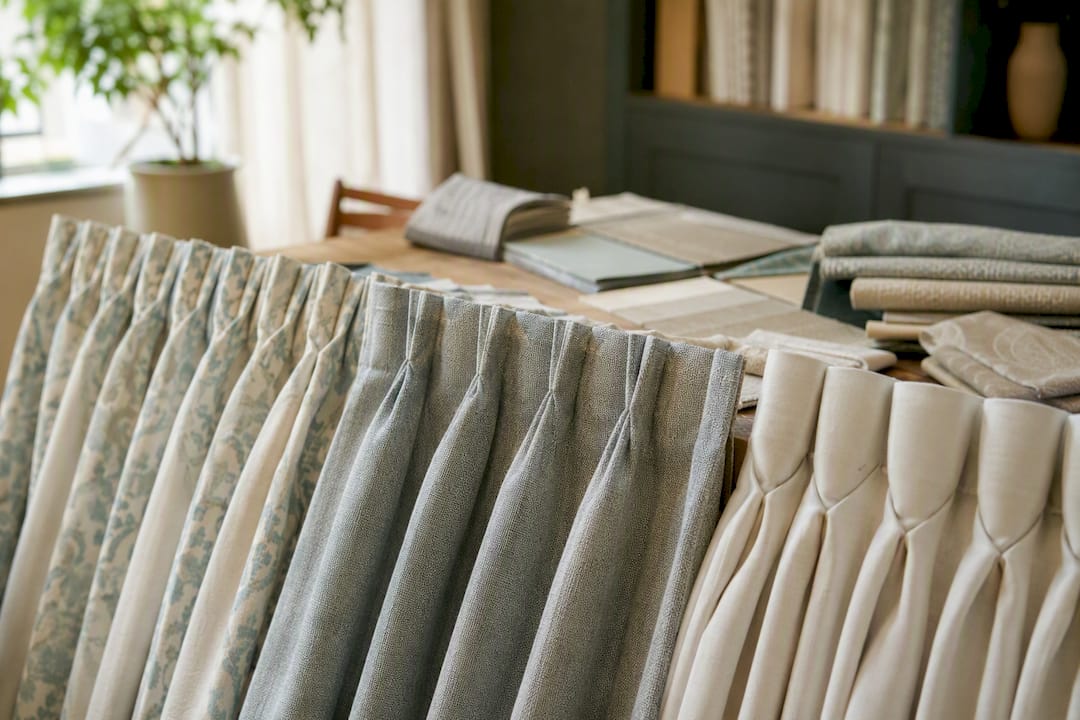
Pinch pleat groups fabric into crisp double or triple folds stitched at the base. It creates a tailored, permanent pleat favored in formal, high-end rooms.
Goblet pleats look like pinch pleats but are padded at the top to hold an open, cup-like shape. This is a decorative header, best kept still rather than drawn daily.
Box pleat folds fabric into flat, structured squares. It suits tailored, traditional interiors and generally hangs from a track.
Euro (tailored) pleat is a flatter, more minimal pinch pleat, usually mounted close to the pole for a clean, modern line.
Wave (ripple fold) requires a specialized track and glider system to produce a continuous, contemporary S-curve.
Eyelet (grommet) curtains use metal rings that thread directly onto a pole and are generally pole-only, not compatible with standard tracks.
Rod pocket and tab top slide straight onto a pole with no hardware beyond the fabric itself, giving a soft, informal look popular for cafe curtains and casual rooms.
How Does Header Choice Affect Function, Not Just Looks?
Fullness is the ratio of flat fabric width to finished track or pole width, and it’s the single number that determines how a header behaves. Most pleated headers look their best at a moderate to high level of fullness suitable for their style, while wave systems typically run at a tighter fullness level due to the specialized track spacing the folds for you.
- Pencil pleat and pinch pleat can stack up bulkier when open, covering more glass at the sides.
- Wave offers the neatest stackback of the common styles, which matters most on wide spans and floor-to-ceiling glazing.
- Eyelet curtains glide smoothly along a pole but don’t stack as tightly as wave.
- Taped headers (pencil, some pinch) can be redrawn and adjusted; sewn pinch and goblet pleats hold their shape permanently but resist easy resizing later.
Different header styles pack back differently on the pole or track. Wave delivers the tightest stackback of the mainstream options, while pencil pleat and pinch pleat, being bulkier by nature, leave less window exposed when the panels are open. That single difference often decides which header a homeowner picks for a wall of patio doors versus a small bedroom window.
Lining adds another layer to the equation. A heavier interlined pinch pleat blocks more light and holds its shape better over time, but it also adds weight that a lightweight pole or track may not be rated to carry.
How Do You Choose a Header by Room, Fabric, and Hardware?
Matching a header to its room starts with how the space gets used, not how the fabric looks on the bolt.
- Bedrooms and light-sensitive rooms call for pencil pleat or pinch pleat with a blackout lining, since both styles pack tightly enough to limit light leakage at the edges.
- Living areas and formal rooms suit pinch pleat, goblet, or box pleat, where the structured folds read as tailored and intentional.
- Wide spans and patio doors favor wave for its low stackback and smooth glide, especially when the opening gets used daily.
- Casual spaces (kitchens, cafe-style windows, guest rooms) work well with eyelet, rod pocket, or tab top for an easy, unfussy finish.
Fabric weight decides just as much as the room does. Crisp mid-weight cottons and linens hold pinch and box pleats cleanly, while soft, drapey fabrics like sheers or lightweight linens tend to look better relaxed, in pencil pleat or rod pocket. Heavy jacquards and upholstery-weight textiles need sturdy tape and reinforced hooks to carry their own weight without sagging.
Before cutting anything, confirm your hardware: pole diameter, the carrier type on your track, and whether a wave system’s proprietary track is required. Measure the window first, order a fabric sample to check hand and drape, then build a small mock-up of the pleat before committing to yardage.
Pro Tip: If you’re torn between two header styles for the same window, sew a 12-inch mock header in your chosen fabric first. A quick mock-up reveals fullness and drape far more honestly than picturing it in your head.
For wide spans, heavy interlined fabric, or anything involving a wave track, made-to-measure and professional installation are worth the cost. Ready-made curtains tend to favor eyelet and pencil pleat precisely because those styles are easier to hang off the shelf, while wave and precision pinch pleat almost always require made-to-measure work.
How Does Heading Tape Work, and When Should You Sew Instead?
Heading tape is a strip sewn across the top of the panel that carries pockets and rows for curtain hooks. That structure is what lets one tape create pencil pleats or pinch pleats, depending on how tightly you draw the gathering cords and how you space the hooks.
- Standard multi-pocket tape suits pencil pleat and simpler pinch pleat work.
- Wave systems need a purpose-built tape matched to their specific track and glider spacing. Standard tape will not create a proper wave.
- Tape placement matters more than most sewists expect: set it too high or too low on the panel and pleat depth shifts, throwing off the whole hang.
- Hook style must match both the tape and the hardware. Mismatched hooks are a common cause of uneven curtains.
Tape earns its keep on adjustability. You can redraw a taped pencil pleat wider or narrower as needs change. Placing tape incorrectly or choosing the wrong hook is one of the most common construction mistakes, and it can visibly alter pleat depth and hanging evenness. A permanent sewn pleat, like a fixed pinch or goblet, still wins where you want a crisp, unchanging pleat that never needs adjusting again.
What Installation Checks Protect the Header’s Performance?
A header style only performs the way it’s supposed to if the installation supports it.
- Measure stackback space on each side of the window, allowing enough clearance so the header type’s typical bulk doesn’t cover glass you want exposed.
- Set mounting height with the header in mind; wave and eyelet headers sit close to the pole, while pinch and goblet pleats often need a slightly higher mount to clear the pole visually.
- Space carriers evenly and match hooks to the header style so panels glide without catching.
- Call in an installer for long drops, heavy interlined fabric, or pattern-matched panels, where a small error is costly to redo.
Getting the measurements right up front avoids most of the headaches that show up after the curtains are hung.
What Mistakes Should You Avoid When Picking a Header?
A handful of errors account for most disappointing results:
- Hanging eyelets on a track (they need a pole) or trying to run wave on a standard pole instead of its dedicated track.
- Guessing at fullness or stackback instead of measuring, which leaves panels either skimpy or crowding the window frame.
- Choosing a crisp pleat for a fabric with too much drape, or a relaxed header for a stiff fabric that won’t fold naturally.
- Skipping the fabric sample and lining decision, then discovering the blackout or light-filtering performance isn’t what the room needed.
Who’s Behind This Guide, and What Services Support Your Project?
This guide draws on Marrion’s hands-on experience with curtain headers, fabric behavior, and drapery construction.
Beautifulwindowselgin backs that expertise with practical services:
- Fabric samples so you can test drape and hand before committing to yardage.
- Made-to-measure sewing for pinch, pencil, and wave-capable headers.
- Design consultation to match header style to fabric and hardware.
- Nationwide shipping and installation guidance for a smoother hang.
Why Most Header Advice Skips the Part That Actually Matters
Most guides treat header selection as a style quiz: pick the look you like, done. That’s backward. The fabric and the hardware decide what a header can actually do; the look is what’s left over once those constraints are satisfied.
The gap I see most often is homeowners falling in love with a pinch pleat photo, then discovering their lightweight sheer won’t hold the fold, or their pole isn’t rated for the added weight of interlining. Conventional advice rarely warns you that wave, for all its sleek stackback, demands a proprietary track you can’t swap out later. That’s a real commitment, not a cosmetic choice.
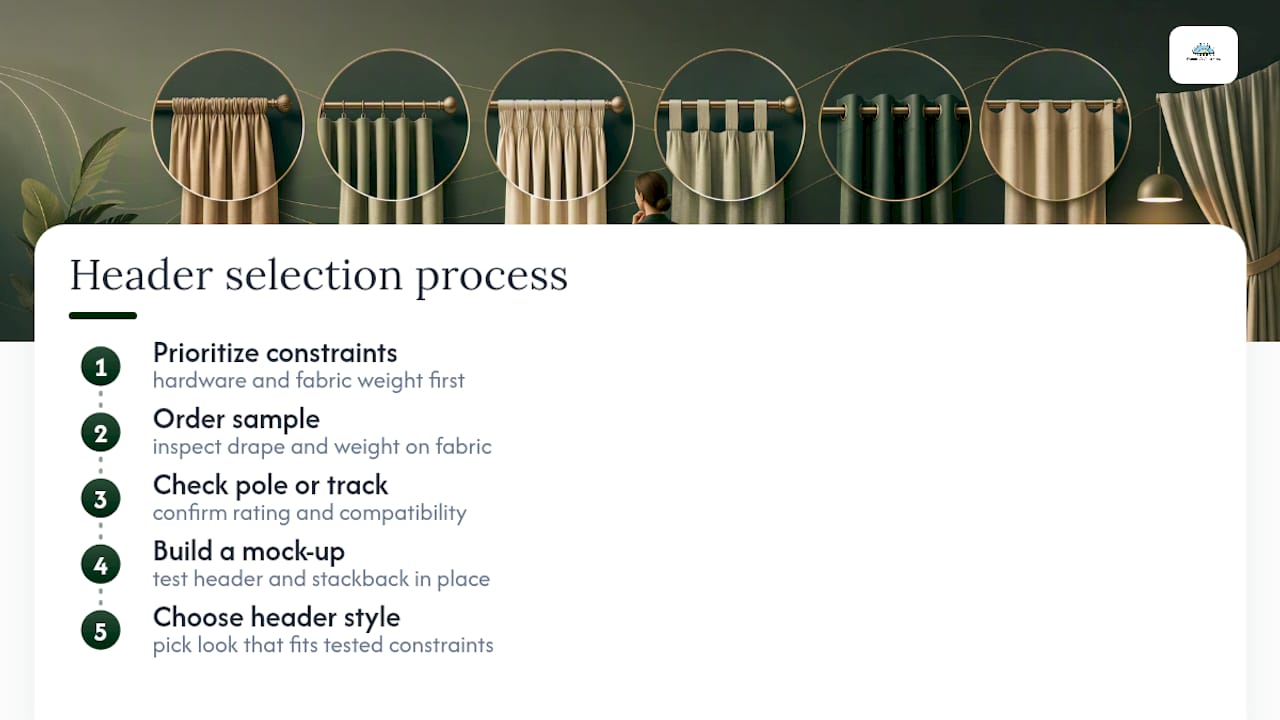
If you take one thing from this guide, prioritize hardware and fabric weight before aesthetics. Order the sample. Check the pole or track. Build the mock-up. The header style you land on after that process will look better and function better than one chosen from a catalog photo alone. That’s the difference between a curtain that gets redrawn happily every day and one that fights you at the pole.
— Marrion
Get Fabric Samples and Custom Sewing for Your Header Style
Beautifulwindowselgin gives you what most fabric retailers skip: samples you can actually pleat-test before ordering yardage, plus made-to-measure sewing for pinch, pencil, and wave-capable headers built to your exact window.
Whether you’re a drapery workroom sourcing yardage or a homeowner sewing your first pencil pleat, start with a sample. Browse the upholstery and drapery fabric collection to check hand and drape against the header style you’ve chosen, or review the fabric FAQs if you’re ordering for the first time. Once your fabric is confirmed, request a design consultation to lock in fullness, hardware, and construction before cutting a single yard.
Sources
- Which Curtain Heading Should You Specify? A Trade Buyer’s Guide
- The Complete Guide to Drapery Headers: 13 Styles Explained — JJones Design Co.
- Taped Curtains: What They Are and How to Choose and | Bash
- The Complete 2026 Guide to Curtain Headings with Examples | DotcomBlinds
Recommended
- What is curtain heading? A complete guide for stylish windows – Fabric Store in Columbia, SC | Drapery Making Services
- Curtain Installation Guide: Achieve Perfect Window Dressing – Shop Designer Fabrics by the Yard | Curtains & Drapery
- Step-by-step curtain installation: the complete DIY guide – Fabric Store in Columbia, SC | Drapery Making Services
- DIY Curtain & Drapery Installation Guide – Fabric Store in Columbia, SC | Drapery Making Services