


Decorating Tips for DIY Enthusiasts on a Budget
Paint, lighting, and textiles change a room faster than anything else you can buy. Paint resets the entire color story in a weekend. Swapping bulbs for warm LEDs shifts a space from clinical to inviting in minutes. New textiles, especially curtains, add scale, softness, and finish that furniture alone can’t deliver. These three moves outperform new furniture or accessories because they touch every surface in the room at once. For the textile side of this equation, Marrion and the team at Beautifulwindowselgin have spent years helping homeowners size and choose fabric that actually elevates a space.
- Paint resets color and mood across the whole room
- Lighting changes how expensive or cozy a space feels
- Textiles add texture, softness, and a finished, custom look
Key Takeaways
Paint, lighting, and textiles deliver the fastest visual return on a decorating budget, and sequencing them in that order prevents wasted spending.
| Point | Details |
|---|---|
| Follow the spending order | Paint first, lighting second, textiles third, before furniture or accessories. |
| Swap bulbs immediately | Warm 2700K to 3000K LEDs cost $15-$30 and make a room feel warmer instantly. |
| Size curtains correctly | Hang rods 6-12 inches above the frame and 3-6 inches past each side for a taller look. |
| Mount heavy items into studs | Find a stud first, and use rated anchors only when a stud isn’t available. |
| Consider custom drapery | Beautifulwindowselgin offers fabric samples, measurement guidance, and custom drapery for windows that don’t fit ready-made panels. |
Table of Contents
- 20 Weekend Decorating Tips for DIY Enthusiasts
- Where to Spend First: The Budget Decor Hierarchy
- Room-by-Room Decorating Tips That Actually Work
- Basic Tools and Materials Every DIY Decorator Needs
- Fabric and Drapery Tips From Marrion
- Three Weekend Projects to Build DIY Confidence
- Sourcing Affordable and Sustainable Decorating Materials
- Seasonal Decorating Ideas That Adapt as You Go
- Making Trends Work With Your Personal Style
- Skip the DIY Curtain Guesswork With Beautiful Windows Elgin
- Sources
20 Weekend Decorating Tips for DIY Enthusiasts
You don’t need a full Saturday to make a room look different. Most of these take an afternoon, cost under $50, and use tools you likely already own.
- Paint one accent wall (a few hours, costs typical for a gallon of paint)
- Swap all bulbs to warm 2700K LEDs (30 minutes, $15-$25 for a pack)
- Apply peel-and-stick wallpaper to a small focal wall (3 hours, $25-$60)
- Repaint kitchen cabinet hardware or swap it entirely (2 hours, $20-$40)
- Hang curtains higher and wider than the window frame, which can be done in about an hour and at no cost if reusing rods
- Add a floating shelf above a couch or bed, a project doable in a couple of hours with modest expense
- Paint mismatched glass jars for cheap catch-all storage, requiring about an hour and low cost
- Upgrade a thrift-store frame with spray paint, a budget-friendly option taking about an hour
- Layer a small rug over wall-to-wall carpet for texture, which can be done quickly with a reasonably priced rug
- Add a peel-and-stick tile backsplash in the kitchen, a project taking several hours and moderate cost
- Regroup existing decor into a tighter, intentional cluster (1 hour, $0)
- Swap a shower curtain for a fabric one with a coordinating liner, a simple and affordable update
- Add battery LED strip lights under cabinets, an easy lighting upgrade with modest cost
- Reupholster a single dining chair seat, a project taking several hours requiring affordable fabric
- Hang a large mirror to bounce light in a small entry, which can be done quickly with a reasonably priced mirror
- Paint a striped or geometric pattern on one wall, a more involved project with moderate material costs
- Add closed baskets to hide clutter on open shelving, a quick and inexpensive organizing solution
- Repot houseplants into matching containers, a simple project with modest container costs
- Slipcover a tired sofa cushion using leftover fabric, a relatively quick, low-cost project
- Rehang art at eye level, spending about half an hour with no material cost
Pro Tip: Pick the one project on this list that scares you least and finish it before starting a second. Momentum from a small, completed win carries you through the bigger projects later.
Where to Spend First: The Budget Decor Hierarchy
Not every dollar you spend on a room delivers the same visual return. The smartest budget decor strategy follows a specific order: paint and color first, lighting second, textiles third, then furniture editing, art, and accessories last. This sequence works because each tier changes a larger percentage of what your eye actually registers when it enters a room.
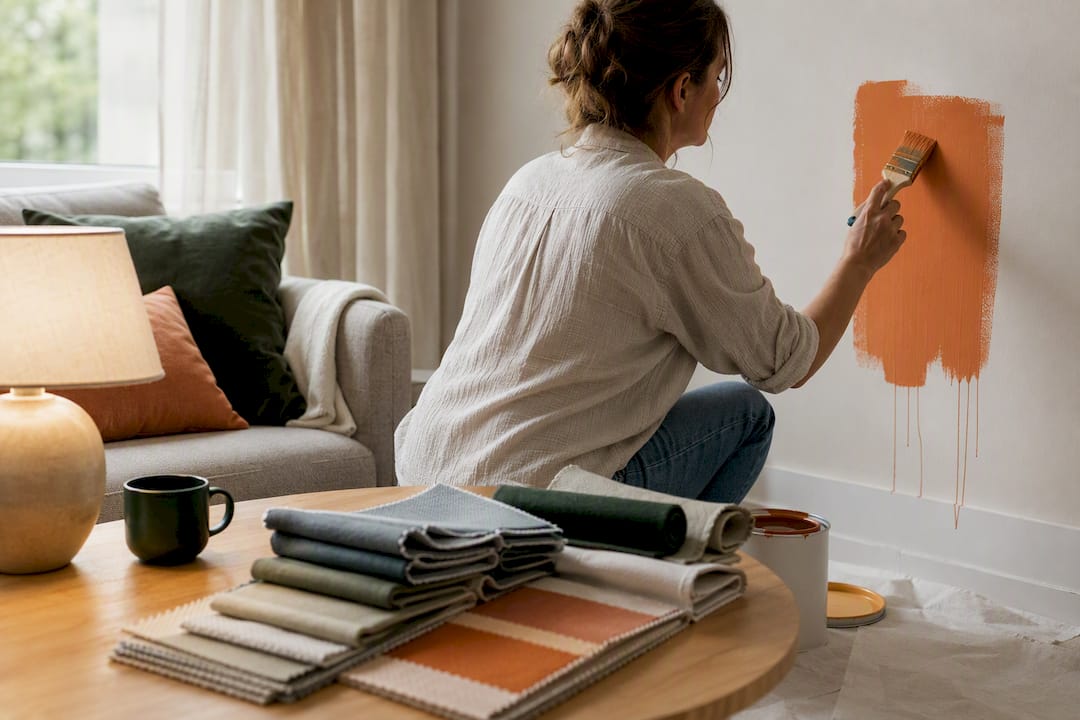
Paint and color changes are the top priority because they affect every wall at once, and a gallon runs $30 to $50 with strong DIY potential. Lighting comes next: replacing cool white bulbs with warm 2700K to 3000K LEDs costs $15 to $30 and makes a space feel warmer and more expensive almost instantly. Textiles, meaning curtains, rugs, and pillow covers, come third because they soften hard surfaces and add color without a big commitment.
These three categories alone can transform a room affordably in many cases, according to Daily Decor Lab’s tiered budget guide.
- Skip new furniture until the paint, light, and textile layers are done
- Editing what you already own often beats buying something new
- Save wall art and small accessories for last, once the bones of the room work
Room-by-Room Decorating Tips That Actually Work
Living room: Size your rug so all four legs of the main seating sit on it, and layer at least three light sources (overhead, table, and floor) instead of relying on one ceiling fixture. Float furniture away from walls when the room allows it; a few inches of breathing room makes a space feel considered rather than cramped.
Bedroom: Skip a headboard entirely and hang a large piece of fabric or art behind the bed as a stand-in. Layer bedding in at least three textures, and add a small task light on each nightstand so lamps don’t compete with overhead fixtures.
Kitchen: Peel-and-stick backsplash tile handles rental kitchens well, and swapping cabinet hardware changes the whole look for under $50. Decide early what stays visible on open shelves versus what gets hidden in cabinets. Cluttered open shelving reads as messy fast.
Bathroom: A new fabric shower curtain and liner cost less than $40 and change the whole room’s tone. Peel-and-stick tile works for accent walls here too, though it holds up better outside constant splash zones.
Entry and small spaces: A mirror opposite the door bounces light and makes a tight hallway feel bigger. Slim console tables and multi-use furniture, like a storage bench, do double duty where square footage is tight.
Basic Tools and Materials Every DIY Decorator Needs
A handful of reliable tools prevent most mid-project stops. Keep these on hand before you start your first weekend project.
- Stud finder for anything getting mounted to a wall
- Level for shelves, art, and curtain rods
- Cordless drill with mixed bits for hardware swaps and mounting
- Painter’s tape and drop cloths for clean paint lines
- Angled sash brush and small roller for trim and accent walls
- Rated wall anchors for spots without a stud
- Utility knife and smoothing tool for peel-and-stick projects
- Tape measure and painter’s chalk for layout and spacing
- Warm-white LED bulbs (2700K to 3000K) as a default replacement stock
Choose an eggshell or satin sheen for most walls since it wipes clean without showing every roller mark. Peel-and-stick products are excellent for rentals and accent walls but wear faster in high-moisture or high-traffic spots. Always wear a dust mask when sanding and keep windows open while paint cures.
Fabric and Drapery Tips From Marrion
Curtains do more heavy lifting than almost any other decorating move, and getting the sizing right is what separates a finished room from an unfinished one. Hang your rod six to twelve inches above the window frame and extend it three to six inches past each side. This single adjustment makes ceilings read taller and lets curtains puddle naturally without blocking light.
Ready-made panels work fine for standard windows, but custom drapery earns its cost on oversized windows, unusual widths, or rooms where you want a specific fabric weight and lining. Repeating one fabric pattern across pillows, a curtain panel, and a small accent chair ties a room together without buying all-new furniture, a trick echoed in Cricut’s guide to personalized DIY decor.
- Use two panels minimum per window for full coverage
- Measure width and height before shopping, not after
- Repeat a print in small doses rather than matching everything exactly
Pro Tip: If you’re nervous about committing to a bold pattern, start with a throw pillow before moving to curtains. It’s the cheapest way to test a fabric in your actual light. Beautifulwindowselgin’s drapery fabric selection guide walks through weight and lining choices in more depth.
Three Weekend Projects to Build DIY Confidence
Start with one of these and finish it before moving to anything bigger.
- Floating shelf (2-3 hours, $20-$40): Find a stud, mark level, mount bracket, test weight before loading books or plants.
- Painted accent wall (4-5 hours, $30-$50): Tape edges, apply two coats, remove tape while paint is slightly tacky.
- Textured canvas art (1-2 hours, $15-$25): Layer acrylic paint with a palette knife on cheap canvas for instant abstract art.
Beginner DIYers build real confidence fastest by finishing one small project completely rather than starting several at once.
Prep and Safety Checks That Save DIY Projects
Test every paint or peel-and-stick product on a hidden scrap first. Use a stud finder before mounting anything heavy, and drive at least one screw into a stud whenever possible. When studs aren’t available, choose anchors rated for the actual load and test gently before hanging.
Pro Tip: Wear a dust mask when sanding and keep a window cracked while paint or adhesive cures, even in small rooms.
Sourcing Affordable and Sustainable Decorating Materials
Budget-friendly and sustainable decorating aren’t opposing goals. Secondhand shops, estate sales, and online marketplaces routinely carry solid wood furniture and frames at a fraction of retail cost, and refinishing them with paint or new fabric extends their life instead of adding to landfill volume. Look for pieces with good bones (sturdy joints, real wood) rather than surface finish. Finish is the easiest thing to fix yourself.
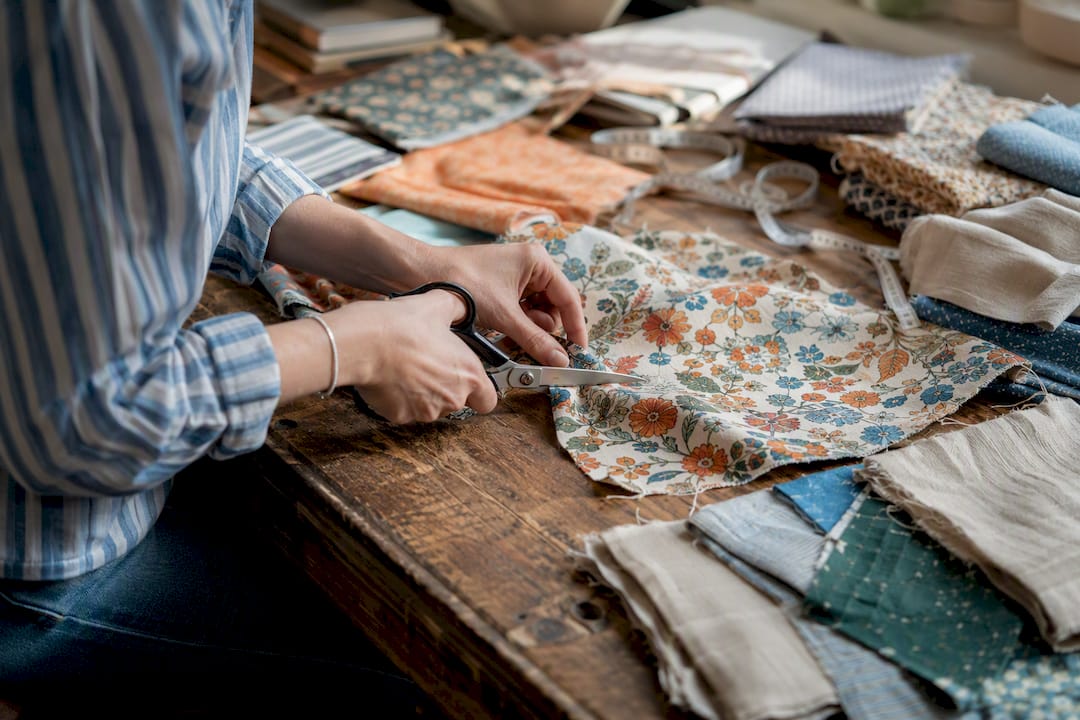
Fabric remnants and mill-end bins are worth checking before buying full yardage for small projects like pillow covers or seat cushions. Buying fabric by the yard rather than pre-made items also cuts waste, since you purchase closer to the exact amount a project needs instead of returning or discarding excess from a finished product. Natural fibers like cotton and linen tend to hold up longer than cheap synthetic blends, which matters more for cost-per-use than the sticker price alone.
For paint, ask if your municipality runs a paint reuse program. Many recycle or resell leftover latex paint at a steep discount, which works well for accent walls or small furniture projects where color matching isn’t critical. When shopping new, buying the correct quantity the first time (measure twice) avoids half-used cans sitting in a garage for years.
Local salvage yards and habitat restore-style shops are also worth a stop for hardware, trim, and even fabric remnants pulled from renovation projects, often priced well below big-box retail.
Seasonal Decorating Ideas That Adapt as You Go
A room that only looks good in one season isn’t finished, it’s just decorated for right now. Building in adaptability means choosing a neutral base (wall color, larger furniture, curtain fabric) and rotating smaller, cheaper layers as the seasons change.
Swap out throw pillow covers, table runners, and a few accessories for each season instead of buying entirely new decor four times a year. A neutral curtain paired with seasonal pillow covers gives you fall oranges, winter blues, or spring greens without touching the big-ticket textile. Layer in seasonal scent, texture (chunky knit throws in winter, linen in summer), and a rotating small plant or floral arrangement near the entry.
Lighting also shifts by season. Warmer, dimmer light suits shorter winter days, while brighter task lighting near a reading nook helps in summer when natural light runs later into the evening. If you already installed warm LED bulbs as part of your budget decor plan, you’re most of the way there already; a dimmer switch is the next cheap upgrade worth considering.
Keep a small bin of seasonal decor separate from your everyday pieces so swaps take twenty minutes, not an afternoon of digging through storage.
Making Trends Work With Your Personal Style
Trends move fast, and chasing every one of them gets expensive and makes a room feel disjointed. The better approach: treat trends as an accent layer, not the foundation. A trending color or pattern shows up well in a $15 pillow cover or a single painted wall, but keep bigger investments (curtains, larger furniture, wall color) closer to a palette you’ll still like in five years.
Editing matters here as much as adding does. Removing one item from a cluttered shelf or wall often changes how a room reads more than adding a new trendy accessory would. Before buying into a trend, walk the room and ask what could come out, not just what could go in.
Repetition builds a personal style faster than any single statement piece. Repeating a color, a fabric print, or a material (brass hardware, matte black fixtures) three or four times across a room reads as intentional, while one bold piece surrounded by mismatched neutrals reads as random. Design pros lean on this idea constantly: tie a room together with a repeated element rather than trying to match every single piece.
A Fabric-First Finishing Trick From Marrion
My favorite quick trick: buy one extra half-yard of your curtain fabric and use it to cover a single throw pillow. That small repeat ties a whole room together. For more, read Beautifulwindowselgin’s guides on decorative textile tips and patterned curtain panels.
— Marrion
Skip the DIY Curtain Guesswork With Beautiful Windows Elgin
If you’ve read this far and decided curtains are where you want to invest real effort, you have two paths: ready-made panels or a custom order sized exactly to your window. Beautifulwindowselgin exists for readers who want the second option without the trial and error of cutting and hemming fabric yourself.

Beautifulwindowselgin, based in Columbia, SC, sells designer fabric by the yard, including jacquard satin, embroidered, and upholstery textiles, alongside full custom drapery services with design consultation and installation guidance. That means you can order a fabric sample before committing, use the site’s window treatment measurement guide to get your sizing right the first time, and skip the guesswork that trips up most first-time curtain projects. Renovation partners like One Day Doors & Closets cover other low-cost refresh options if you’re tackling doors or closets in the same weekend. Ready to move past ready-made panels? Request fabric samples or a design consultation through Beautifulwindowselgin to get your window measured and quoted for custom drapery.
Sources
- The complete guide to personalised diy home decor | Cricut
- Budget home decor: the complete DIY decorating guide for every room | Daily Decor Lab
- Easiest DIY floating shelves | Anika’s DIY Life
- Quick, easy home decorating ideas | House Beautiful
Recommended
- Decorative Textiles: Transform Your Space with Style – Fabric Store in Columbia, SC | Drapery Making Services
- Step-by-step curtain installation: the complete DIY guide – Fabric Store in Columbia, SC | Drapery Making Services
- Decorative fabric options: a guide for homeowners – Fabric Store in Columbia, SC | Drapery Making Services
- Window decor terms every homeowner should know – Fabric Store in Columbia, SC | Drapery Making Services