


Drapery workrooms 2026: 6-8 week custom projects explained
Many homeowners and designers think drapery workrooms are just sewing shops where curtains get hemmed. That’s far from the truth. These specialized facilities combine expert craftsmanship, detailed consultation, and full project management to deliver custom window treatments that transform spaces. Understanding what drapery workrooms actually do helps you make informed decisions about your window treatment projects. Custom drapery projects typically take 6 to 8 weeks from consultation to installation, underscoring the importance of understanding the process.
Table of Contents
- Introduction To Drapery Workrooms
- Craftsmanship And Operations In A Drapery Workroom
- Customization Options And Quality Standards
- Project Timelines And Collaboration With Designers And Homeowners
- Common Misconceptions About Drapery Workrooms
- Choosing And Working With A Drapery Workroom
- Summary And Practical Application
- Frequently Asked Questions About Drapery Workrooms
Key takeaways
| Point | Details |
|---|---|
| Comprehensive service | Workrooms handle everything from initial design consultation through final installation. |
| Expert production | Skilled artisans use batch processing and quality control to ensure consistent, high-quality results. |
| Timeline expectations | Standard custom projects require 6 to 8 weeks to complete all phases properly. |
| Extensive customization | Options include fabric selection, pleat styles, lining choices, and motorization integration. |
| Professional coordination | Workrooms manage hardware selection and serve both designers and individual homeowners. |
Introduction to drapery workrooms
A drapery workroom is a specialized facility dedicated to fabricating custom window treatments from start to finish. These workrooms produce draperies, valances, Roman shades, and other soft furnishings tailored to your exact specifications. Unlike retail stores that sell ready-made options, workrooms focus on personalized design and precision construction.
Skilled artisans collaborate closely throughout the entire process. They handle fabric selection, pattern matching, cutting, sewing, and finishing with meticulous attention to detail. This collaborative approach ensures every element aligns with your design vision and functional requirements.
Workrooms support projects beyond what standard retail channels can offer:
- Custom sizing for non-standard windows including arched, angled, or oversized openings
- Specialized fabrics requiring expert handling such as silks, velvets, or embroidered textiles
- Complex construction techniques like hand-sewn pleats or multi-layer Roman shades
- Coordinated soft furnishings including matching pillows, bedding, or upholstery
This level of personalized service makes workrooms essential partners for achieving truly custom window treatments that enhance both aesthetics and function.
Craftsmanship and operations in a drapery workroom
What separates drapery workrooms from ordinary sewing operations is their systematic approach to quality and efficiency. Every workroom develops specialized processes that maximize craftsmanship while managing complex production schedules.
Collaborative fabric handling forms the foundation of quality workroom operations. Multiple skilled workers coordinate on physically demanding tasks. Batching of physically demanding tasks like fabric cutting and tabling improves quality and efficiency by coordinating skilled workers. This team approach prevents individual fatigue errors and maintains consistent standards across large fabric runs.
Batch processing revolutionizes production efficiency. Rather than one person completing an entire drapery panel from start to finish, workrooms organize tasks by specialty. One team handles cutting, another manages pattern matching, and experts focus on complex sewing operations. Batch processing of fabric handling tasks significantly increases efficiency and reduces production errors compared to single-task workflows.
Specialized sewing techniques ensure durability:
- Double-turned hems with weighted corners for proper hanging
- Reinforced header construction to support pleating hardware
- French seams on sheer fabrics to hide raw edges
- Bar tacks at stress points to prevent tearing
Quality control happens at multiple checkpoints. Fabric gets inspected upon arrival for flaws. Measurements get verified before cutting. Finished panels get hung and steamed to check for alignment issues. This multilayer inspection system catches problems before installation.
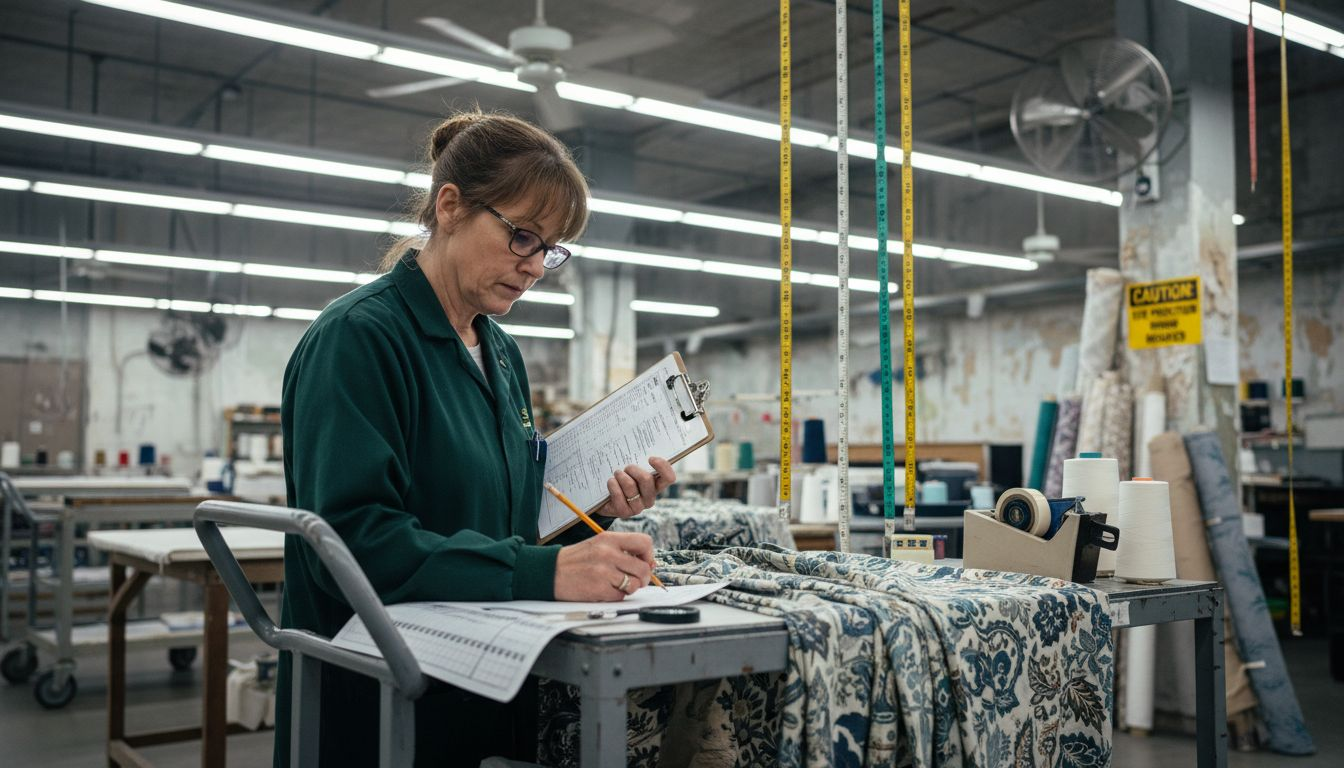
Pro Tip: When evaluating a workroom, ask about their workroom operations and batch processing systems. Workrooms using coordinated batch methods typically deliver more consistent results than those relying on individual seamstresses working in isolation. Request to see their workspace during production to observe their quality standards firsthand.
Coordination between professional drapery consultations and production teams ensures your design vision translates accurately into finished products.
Customization options and quality standards
Customization separates good window treatments from exceptional ones. Drapery workrooms offer extensive options that let you tailor every aspect to your specific needs and aesthetic preferences.
Fabric and lining choices provide the foundation for customization. Workrooms source designer textiles ranging from lightweight sheers to heavy velvets. Many accept Customer’s Own Material (COM), letting you bring fabrics you’ve selected elsewhere. Lining options include blackout for bedrooms, thermal for energy efficiency, or simple cotton for decorative panels. Interlining adds body and insulation for luxury applications.
Pleat styles dramatically affect both appearance and function:
- Pinch pleats create classic, formal elegance with crisp folds
- Goblet pleats offer rounded, sophisticated volume
- Ripple fold provides modern, continuous waves
- Euro pleats deliver tailored, streamlined aesthetics
Motorized drapery integration brings convenience to custom treatments. Workrooms coordinate with automation specialists to incorporate motorized tracks and smart home systems. You can program draperies to open with sunrise or close for privacy at preset times.
Precision finishing ensures proper installation. Each panel gets labeled with room location and positioning. Workrooms fold panels carefully to prevent creasing during transport. Quality packaging protects finished treatments until installation day.
| Pleat Style | Key Features | Best Use Cases |
|---|---|---|
| Pinch Pleat | Classic structured folds, durable header | Traditional formal spaces, dining rooms |
| Ripple Fold | Continuous flowing waves, minimal stacking | Modern spaces, floor-to-ceiling windows |
| Goblet Pleat | Rounded cylindrical shape, luxurious appearance | Master suites, upscale living areas |
| Euro Pleat | Flat tailored front, hidden pleating | Contemporary interiors, clean aesthetics |
Pro Tip: When choosing drapery fabric, consider how natural light affects different textiles throughout the day. Request small swatches to test in your actual space at various times before committing to full yardage. Colors and patterns can look dramatically different under natural versus artificial lighting.
Project timelines and collaboration with designers and homeowners
Understanding realistic timelines prevents frustration and helps you plan effectively. Custom drapery projects require patience, but the results justify the wait.
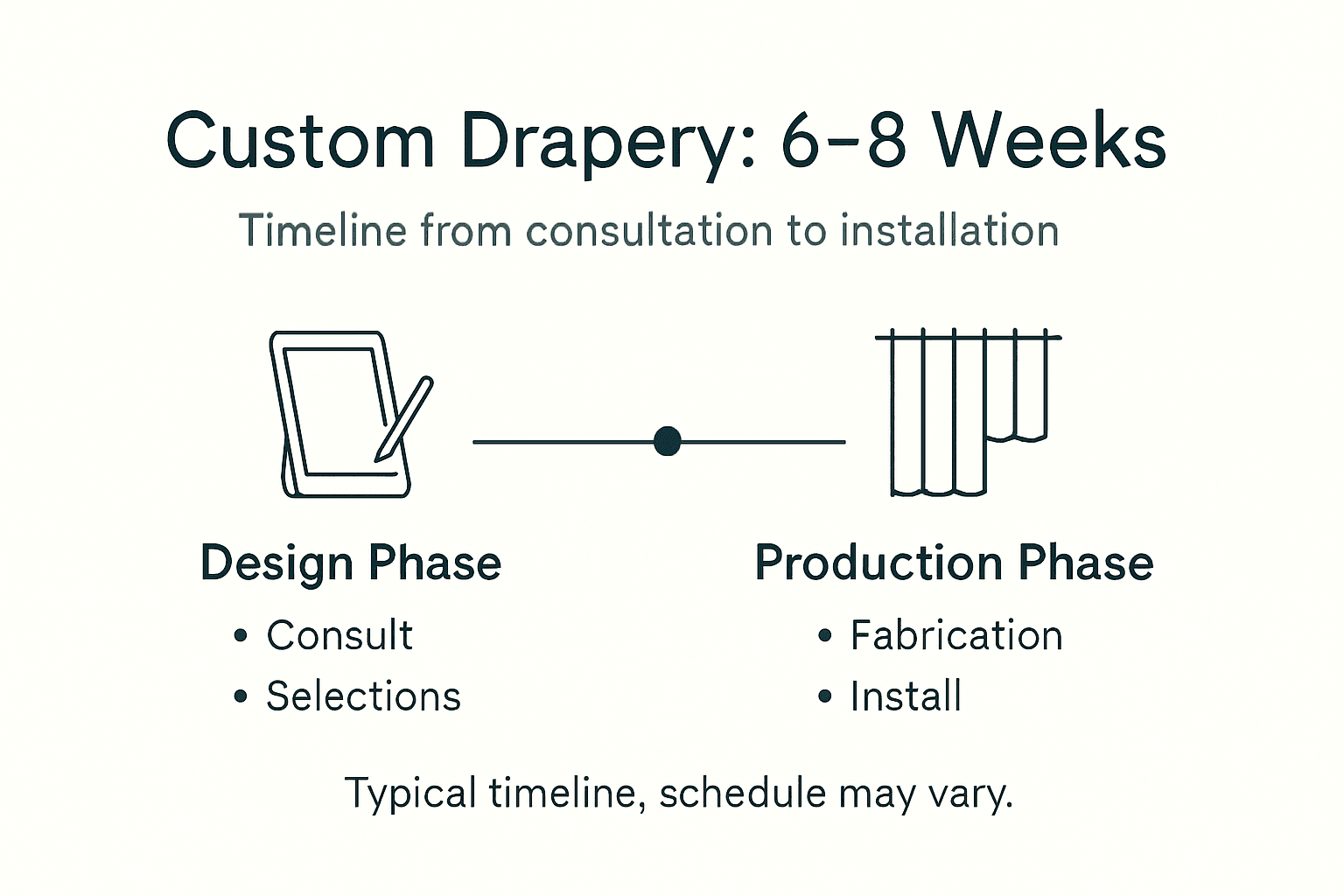
The common timeline spans 6 to 8 weeks from initial consultation through final installation. This duration accounts for proper measurement, fabric ordering, production, and quality assurance. Rushing this process compromises quality and increases error risk.
A phased workflow ensures nothing gets overlooked:
- Initial consultation to discuss design vision, measure windows, and review fabric options (1-2 hours onsite)
- Proposal review and fabric selection with detailed pricing and timeline confirmation (3-5 days)
- Fabric ordering and receiving, including inspection for flaws or color variations (1-2 weeks)
- Pattern development and cutting with precise attention to repeats and grain lines (2-3 days)
- Production including sewing, finishing, and quality control inspections (2-3 weeks)
- Final pressing, folding, and packaging with clear installation instructions (1-2 days)
- Professional installation with hardware mounting and final adjustments (4-6 hours per room)
Close collaboration manages expectations throughout. Workrooms provide progress updates at key milestones. They confirm fabric arrival, share production start dates, and schedule installation appointments well in advance. This communication prevents surprises and builds confidence.
Effective communication practices include photo documentation of windows, detailed notes on style preferences, and clear discussion of budget parameters. When everyone understands priorities and constraints upfront, projects flow smoothly from concept to completion.
Professional drapery consultations establish this foundation for success. Consultants document everything precisely, minimizing miscommunication later. They also educate clients about realistic possibilities given window configurations and architectural constraints.
Understanding benefits of drapery fabrics helps you make informed choices during the consultation phase about both aesthetics and performance features.
Common misconceptions about drapery workrooms
Several myths persist about what drapery workrooms can and cannot do. Clearing up these misconceptions helps you approach custom projects with accurate expectations.
Workrooms provide comprehensive project management, not just sewing services. They coordinate measurements, hardware selection, fabric sourcing, production, and installation. This end-to-end approach means you work with one team throughout rather than juggling multiple vendors.
Many workrooms gladly accept Customer’s Own Material (COM). If you’ve found the perfect fabric elsewhere or received a special textile as a gift, quality workrooms can fabricate treatments using your material. They’ll assess the fabric first to ensure it’s suitable for your intended application.
Custom work inherently takes longer than ready-made options. That 6 to 8 week timeline reflects the careful attention required for quality results. Workrooms rarely offer rush services because shortcuts compromise craftsmanship. Planning ahead prevents disappointment.
Common misconceptions workrooms address regularly:
- Workrooms only serve professional designers (most welcome individual homeowners)
- Custom treatments cost exponentially more than retail (prices vary but offer better value long term)
- All workrooms provide identical quality (craftsmanship levels differ significantly)
- Hardware installation is separate (many workrooms coordinate or provide installation)
- Alterations are impossible once completed (minor adjustments are usually possible)
Workrooms coordinate hardware as part of comprehensive service. They recommend appropriate rods, brackets, and mounting systems based on window size, treatment weight, and desired functionality. Some maintain relationships with preferred hardware suppliers to streamline this process.
Both interior designers and individual homeowners benefit from workroom services. While designers often maintain ongoing relationships with trusted workrooms, homeowners can access these same services directly. Workrooms appreciate educated clients who understand quality and value craftsmanship.
Learning about custom window treatment benefits helps you appreciate why custom approaches outperform ready-made alternatives. Reviewing fabric selection guidelines prepares you for productive initial consultations.
Choosing and working with a drapery workroom
Selecting the right workroom makes the difference between frustration and satisfaction. Several factors deserve consideration when evaluating potential partners for your custom project.
Craftsmanship quality indicators reveal workroom standards before you commit. Examine sample work for consistent stitching, properly aligned patterns, and clean finishing details. Inspect corners and hems where shortcuts often appear. Quality workrooms proudly display portfolio examples and welcome questions about techniques.
Experience with diverse fabrics and styles matters significantly. Some workrooms specialize in traditional formal treatments while others excel at modern minimalist designs. Ask about their experience with your preferred aesthetic and fabric types. Workrooms comfortable with various styles adapt better to your specific vision.
Key selection criteria for workroom evaluation:
- Portfolio demonstrating range and quality of completed projects
- Clear communication about timelines, costs, and process expectations
- Transparent pricing structure with detailed proposals before work begins
- References from recent clients willing to share experiences
- Willingness to collaborate and incorporate your input throughout
Communicate timelines and customization details explicitly. Discuss any hard deadlines upfront, like moving dates or special events. Share photos of your space, furniture, and existing decor to provide context. The more information workrooms have initially, the better they can meet your needs.
Maintain ongoing updates throughout production. Check in at reasonable intervals without micromanaging. Workrooms appreciate engaged clients who ask thoughtful questions. If concerns arise, address them promptly rather than waiting until installation.
Pro Tip: Visit the workroom facility if possible before committing to a project. Observe their organization, cleanliness, and workflow systems. A well-organized workspace with clearly defined production areas typically indicates professional operations and reliable quality control. Don’t hesitate to ask about their approach to handling fabric flaws or addressing client concerns when they arise.
Professional drapery consultations provide opportunities to assess workroom communication style and expertise before proceeding with full production.
Summary and practical application
Drapery workrooms offer far more than basic sewing services. They provide comprehensive custom window treatment solutions from initial design through final installation. Understanding their role, processes, and capabilities helps you make informed decisions about your projects.
Key insights to remember:
- Workrooms combine expert craftsmanship with systematic production methods for consistent quality
- Customization options extend from fabric selection through pleat styles, linings, and motorization
- Realistic timelines of 6 to 8 weeks allow proper attention to measurement, production, and quality control
- Collaboration between clients, designers, and workrooms ensures expectations align with results
- Selecting experienced workrooms with strong communication practices prevents common pitfalls
Apply this knowledge by taking practical next steps. Schedule consultations with reputable local workrooms to discuss your project needs. Bring photos, measurements, and inspiration images to these meetings. Ask detailed questions about their processes, timelines, and quality standards.
Research fabric options before consultations so you arrive with informed preferences. Understand your budget parameters and communicate them clearly. Request detailed proposals that break down costs for materials, labor, and installation separately.
Plan projects well ahead of desired completion dates. That 6 to 8 week timeline assumes no complications. Building buffer time prevents stress if minor adjustments become necessary. Custom window treatments represent significant investments in your home’s aesthetics and function, so patience during the process pays long-term dividends.
Discover quality custom fabrics and consult experts at Beautiful Windows Elgin
Ready to transform your space with custom window treatments? Beautiful Windows Elgin connects you with the expertise, fabrics, and services you need for successful projects.
Explore comprehensive resources on custom drapes benefits to understand how personalized treatments elevate your interior design. Access professional guidance through our detailed fabric selection guide covering everything from fiber content to pattern coordination.
Shop our extensive collection of designer fabrics by the yard, perfect for custom drapery projects. We offer cotton, embroidered, jacquard satin, and specialty textiles suitable for any aesthetic. Request samples to test colors and textures in your actual space before committing to full yardage.
Visit Beautiful Windows Elgin to explore our full range of products and services supporting your custom window treatment journey.
Frequently asked questions about drapery workrooms
What types of window treatments can a drapery workroom create?
Drapery workrooms fabricate draperies, curtains, valances, Roman shades, Austrian shades, and coordinating soft furnishings like pillows and cornices. They handle both simple panel designs and complex layered treatments combining sheers, blackout linings, and decorative top treatments.
How long does a typical custom drapery project take from start to finish?
Most custom drapery projects require 6 to 8 weeks from initial consultation through final installation. This timeline includes measurement verification, fabric ordering, production, quality control, and professional installation. Complex projects with specialty fabrics or intricate designs may require additional time.
Can I use my own fabric with a drapery workroom?
Yes, many workrooms accept Customer’s Own Material (COM) for custom fabrication. They’ll inspect your fabric first to verify it’s suitable for your intended application and has sufficient yardage including pattern repeats. Some workrooms charge slightly different rates for COM projects versus fabric they source directly.
Do drapery workrooms handle installation too?
Most professional workrooms either provide installation services directly or coordinate with trusted installation partners. They ensure hardware gets mounted properly and treatments hang correctly with appropriate clearances. This coordinated approach prevents the frustration of purchasing treatments that don’t install as expected.
How do I communicate design preferences to a custom workroom?
Bring photos of your space, inspiration images showing styles you like, fabric swatches if available, and detailed window measurements to your consultation. Discuss functional requirements like light control, privacy needs, and operational preferences. Clear communication about budget parameters helps workrooms recommend appropriate options within your constraints.
Recommended
- What Is Custom Drapery and Why It Matters – Shop Designer Fabrics by the Yard | Curtains & Drapery
- Pro Drapery Consultations Cut Errors 50% & Boost Style – Shop Designer Fabrics by the Yard | Curtains & Drapery
- Why Use Custom Drapes: Enhanced Comfort and Style – Shop Designer Fabrics by the Yard | Curtains & Drapery
- Role of drapery fabrics: Cut noise by 70% & save energy – Designer Fabrics by the Yard | Drapery Making Services