


Your Complete Fabric Maintenance Workflow Guide
A reliable fabric maintenance workflow follows this sequence: specify fabric by cleaning code and durability rating, prevent damage through placement and protection, maintain a routine vacuuming and rotation schedule, respond immediately to spills with a staged spot protocol, deep clean by fiber type, document every step, and escalate to an IICRC S300-certified professional when contamination exceeds home methods.
Quick-reference checklist for homeowners, upholsterers, and drapery workrooms:
- Confirm the cleaning code (W, S, WS, or X) before any treatment
- Vacuum upholstery regularly; dust window treatments regularly
- Blot spills immediately; never rub
- Pretest any cleaner in a hidden area before applying to the face
- Rotate loose cushions regularly to distribute wear
- Log the fabric content, cleaning code, and care history for every piece
- Call an IICRC-certified firm for biological contamination, smoke, or set-in browning
- For Sunbrella and Crypton performance fabrics, follow manufacturer rinse steps exactly
- Source fabrics with maintenance in mind; Beautifulwindowselgin carries designer upholstery and drapery textiles with documented care specifications
Key Takeaways
A complete fabric maintenance workflow runs from specification through documentation, with cleaning code and fiber type governing every step in between.
| Point | Details |
|---|---|
| Specification is step one | Choosing fabric by cleaning code and durability rating for the intended location reduces total lifecycle maintenance. |
| Cleaning codes govern every decision | W, S, WS, and X codes determine whether water, solvent, or only dry methods are safe for spot treatment and routine care. |
| Routine beats intensive | Weekly vacuuming and cushion rotation prevent embedded soil that no deep clean can fully reverse. |
| Rinse after every wet treatment | Detergent residue left in the weave attracts new soil; rinsing is as important as the cleaning step itself. |
| Beautifulwindowselgin | Carries designer drapery and upholstery fabrics with documented care specifications, fabric samples, and custom drapery services nationwide. |
Table of Contents
- How fabric specification reduces your long-term maintenance burden
- What cleaning codes W, S, WS, and X actually mean for your workflow
- A practical material maintenance schedule you can adapt by room
- Step-by-step spot and stain response
- Cleaning methods by fabric content
- Upholstery-specific workflow steps
- Handling, cleaning, and rehanging window treatments safely
- When to call a professional cleaner
- Tools and supplies for home and workroom maintenance
- Storage, transport, and basic repairs
- Recordkeeping that protects your investment
- A note from Marrion on what actually goes wrong in the workroom
- Beautifulwindowselgin carries fabrics built for long-term care
- Sources
How fabric specification reduces your long-term maintenance burden
Maintenance begins at the point of purchase. According to the ACT guide to textile specification, design professionals consistently recommend specifying durable, low-maintenance fabrics for high-light and high-traffic zones to reduce lifecycle upkeep. Choosing the wrong fabric for a south-facing window or a pet-heavy living room creates a maintenance problem that no cleaning schedule fully solves.
Performance finishes change the equation. Solution-dyed acrylics like Sunbrella resist UV fading and mildew because the color is locked into the fiber rather than applied to its surface, which means routine cleaning stays simple: mild soap, thorough rinse, air dry. Crypton fabrics carry a moisture barrier and antimicrobial finish that allows most spills to be wiped from the surface before they penetrate the weave. Both finishes reduce how often deep cleaning is needed. You can read more about matching fabric durability to room conditions before committing to a textile.
Preventive measures at purchase extend the interval between professional cleanings. Fabric protectors coat fibers and give you more time to blot a spill, though the IICRC consumer tip sheet notes they are not impervious and wear off with abrasion. Slipcovers on high-contact pieces, washable components where the design allows, and placement away from direct sun or moisture sources all reduce the total care load before a single cleaning product is opened.
Pro Tip: When specifying for a client, note the cleaning code on the purchase receipt and attach it to the fabric sample card. That one step prevents misidentification months later when a spill happens.
What cleaning codes W, S, WS, and X actually mean for your workflow
Cleaning codes are the manufacturer’s shorthand for safe cleaning methods, and they govern every decision in the textile care process. The AHFA Fabric Standards and Guidelines define the four codes as follows:
- W (Water-based): Use water-based cleaning agents only. Foam or low-moisture extraction with a water-based upholstery cleaner is appropriate. Avoid solvent-based products.
- S (Solvent-only): Use water-free, dry-cleaning solvents only. Water causes spotting, shrinkage, or browning on these fabrics. Pretest in a hidden area; work in a ventilated space.
- WS (Water or Solvent): Either method is acceptable. Start with the gentler water-based approach; escalate to solvent if the stain resists.
- X (Vacuum or brush only): No liquid cleaners of any kind. Dry soil removal is the only safe method. Professional dry extraction is the escalation path, not wet cleaning.
The code changes your entire spot-treatment sequence. An X-coded fabric means any liquid, including plain water, risks permanent damage. An S-coded fabric means the standard “blot with a damp cloth” advice is wrong. Check the tag before you reach for anything.
A practical material maintenance schedule you can adapt by room
Routine upkeep is the single most effective way to reduce deep-cleaning frequency. The Designtex cleaning manual lists regular vacuuming, prompt spot treatment, and cushion rotation as the primary maintenance steps for extending fabric life.
Frequency matters more than intensity. A sofa vacuumed weekly with an upholstery attachment accumulates far less embedded grit than one cleaned thoroughly every three months. Grit acts as an abrasive against fiber, and no deep clean reverses that wear once it occurs.
Daily (high-use rooms): Quick vacuum or lint-roll high-contact surfaces. Blot any spill immediately.
Weekly: Full upholstery vacuum with a soft-brush attachment, cushion rotation and flipping, dusting of drapery panels and blinds, and a visual spot check for new stains.
Monthly to quarterly: Steam-freshen or low-moisture clean washable items. Inspect seams, piping, and arm covers for early wear. Apply or reapply fabric protector if the last professional cleaning was more than six months ago.
Annually: Schedule a professional deep clean for high-use upholstered pieces. Re-evaluate fabric placement relative to sun exposure. Per Wirecutter’s curtain care guidance, draperies in dusty or humid homes benefit from a yearly check, while low-traffic guest rooms may only need deep cleaning every several years.
Adjust the maintenance schedule to be more frequent for homes with pets, children, or high humidity, and less frequent for guest rooms or display pieces with minimal contact.
Step-by-step spot and stain response
Speed and sequence prevent permanent damage. Follow these steps in order:
- Remove excess material. Lift solids with a spoon or dull knife; blot liquids with a clean white cloth. Never rub.
- Identify the stain class: water-based (coffee, juice), oil-based (grease, butter), or unknown.
- Check the cleaning code before selecting any product.
- Pretest your chosen cleaner in a hidden seam or hem area. Wait two minutes and check for color transfer or distortion.
- Apply the cleaner sparingly. Work from the outer edge toward the center to avoid spreading the stain into a ring.
- Blot, do not scrub. Repeat with a fresh section of cloth each pass.
- Rinse with clean water (W or WS codes only) or a neutralizing rinse per the manufacturer’s instructions. The Pallas Textiles upholstery guide emphasizes that failure to rinse leaves detergent residue that attracts new soil.
- Dry thoroughly with a fan or open window. Never apply heat before the stain is fully removed.
| Stain | First-line treatment | Escalation trigger |
|---|---|---|
| Coffee | Cold water blot; W-code foam cleaner | Color remains after two passes |
| Grease/butter | Dry absorbent powder first; S-code solvent | Oil spreads or soaks through to backing |
| Ketchup | Lift solids; cold water blot | Tannin sets after drying |
| Ink | 91% isopropyl on lint-free cloth; blot only | Ink spreads or fabric distorts |
For food stain chemistry and treatment steps by stain type, this stain removal reference provides useful supplemental detail.
Cleaning methods by fabric content
The workflow adapts significantly by fiber. Refer to the upholstery fabric types guide for a full breakdown of fiber families and their recommended uses.
- Solution-dyed acrylics (Sunbrella): Mild soap and water, rinse thoroughly, air dry. For mildew, the manufacturer recommends a diluted bleach solution followed by a complete rinse. The solution-dyed construction means color is stable, but residue left in the weave will attract soil.
- Crypton performance fabrics: Wipe common spills from the surface with a damp cloth. For deeper cleaning, follow the manufacturer’s recommended dilution and rinse steps. The moisture barrier resists penetration but does not eliminate the need to rinse cleaning agents.
- Cotton and linen: Prone to shrinkage and browning when over-wet. Use low-moisture methods and cold water. Test for colorfastness before any wet treatment.
- Silk: Water causes permanent water marks on many silk weaves. S-code or professional dry cleaning is the standard approach. Never steam silk upholstery without confirming the manufacturer’s guidance.
- Wool: Sensitive to heat and alkaline cleaners. Use pH-neutral, wool-safe products and minimal moisture. Hot water causes irreversible felting.
- Leather and vinyl: Wipe with a damp cloth and a pH-neutral cleaner. Avoid acetone, undiluted bleach, and abrasive pads. Condition leather periodically; vinyl requires no conditioning but should not be cleaned with solvent-based products.
The IICRC consumer tip sheet warns that color loss, shrinkage, and browning are common outcomes when natural fibers are cleaned with the wrong method or excess moisture.
Upholstery-specific workflow steps
Upholstered pieces require a consistent order of operations to avoid backing damage and fit problems.
- Rotate and flip loose seat and back cushions weekly to distribute compression and soil evenly.
- Inspect seams, piping, and welting monthly for early fraying. A small seam repair costs far less than reupholstering a panel.
- Do not remove zippered cushion covers for separate machine washing. Per NMSU Extension guidance, this frequently causes shrinkage or backing distortion that prevents the cover from reseating correctly. Clean assembled units according to the cleaning code.
- For extraction cleaning (W or WS codes), use low-moisture equipment and rinse thoroughly. The IICRC S300 standard stresses that incomplete rinsing leaves detergent residue that accelerates re-soiling.
- For S-code pieces, dry-extraction or solvent-based spot treatment is the appropriate method. Avoid any water-based foam.
Pro Tip: Place washable arm covers and headrest covers on high-contact zones. They intercept the heaviest soil and can be laundered separately without touching the upholstery itself.
Handling, cleaning, and rehanging window treatments safely
- Before removing panels, support the rod with one hand while loosening the fabric. Per Wirecutter, single-anchor overload from unsupported weight can pull brackets from the wall.
- Check the care label. Unlined cotton or polyester panels often tolerate a gentle machine cycle in a mesh bag with cold water. Lined panels, silk, and embroidered textiles generally require dry cleaning or professional low-moisture treatment.
- For tumble drying, use the air-fluff or no-heat setting and remove panels while still slightly damp.
- Rehang damp panels and allow them to hang-dry in place. Gravity smooths most wrinkles without ironing.
- Steam is preferable to a hot iron for most drapery fabrics. Hold the steamer two to three inches from the face and work top to bottom.
- Check all rings, hooks, and brackets on rehanging. Tighten any loose hardware before reloading the full panel weight.
When to call a professional cleaner
Some conditions exceed what home methods can safely address. Escalate to an IICRC-certified firm when you encounter:
- Set-in browning or cellulosic wicking that returns after drying
- Urine, blood, or other biological contamination
- Smoke or persistent deep odors (specialist guidance on smoke odor removal from upholstery covers this in detail)
- Extensive soaking from flooding or a burst pipe
- Structural cushion damage or foam breakdown
When vetting a firm, ask specifically about their S300-based procedures for soil suspension and rinsing, proof of insurance, and whether they carry IICRC certification. A firm that cannot explain their rinsing protocol is a firm that may leave residue that re-soils faster than the original fabric. Also confirm that any treatment they plan to use is consistent with the manufacturer’s care instructions. Home remedies or unauthorized cleaning methods can void a fabric warranty.
Tools and supplies for home and workroom maintenance
- Vacuum with a soft-brush upholstery attachment
- Soft-bristle dry brush for X-coded fabrics
- Lint-free white cloths (avoid colored cloths that may transfer dye)
- Spray bottles for controlled cleaner application
- Low-alkaline, pH-neutral upholstery cleaner
- 91% isopropyl alcohol for targeted ink and adhesive spots
- Dry absorbent powder (cornstarch or commercial equivalent) for fresh oil stains
- Pretest swabs and a small hidden-area test protocol before any treatment
Wear nitrile gloves when working with solvent-based cleaners, and ventilate the room. Never mix a bleach-based product with an ammonia-based one. After any cleaning agent, rinse the area with clean water (on W or WS codes) and dry completely before use.
Storage, transport, and basic repairs
Store finished fabric pieces and yardage in a climate-controlled space, away from direct light and humidity fluctuations. Roll fabric with acid-free tissue rather than folding; folding high-pile weaves like velvet or jacquard creates permanent crease lines. The AHFA standards provide roll-direction and handling tolerances that prevent shading and pattern distortion on installation. Label each roll with fiber content, cleaning code, and direction of lay.
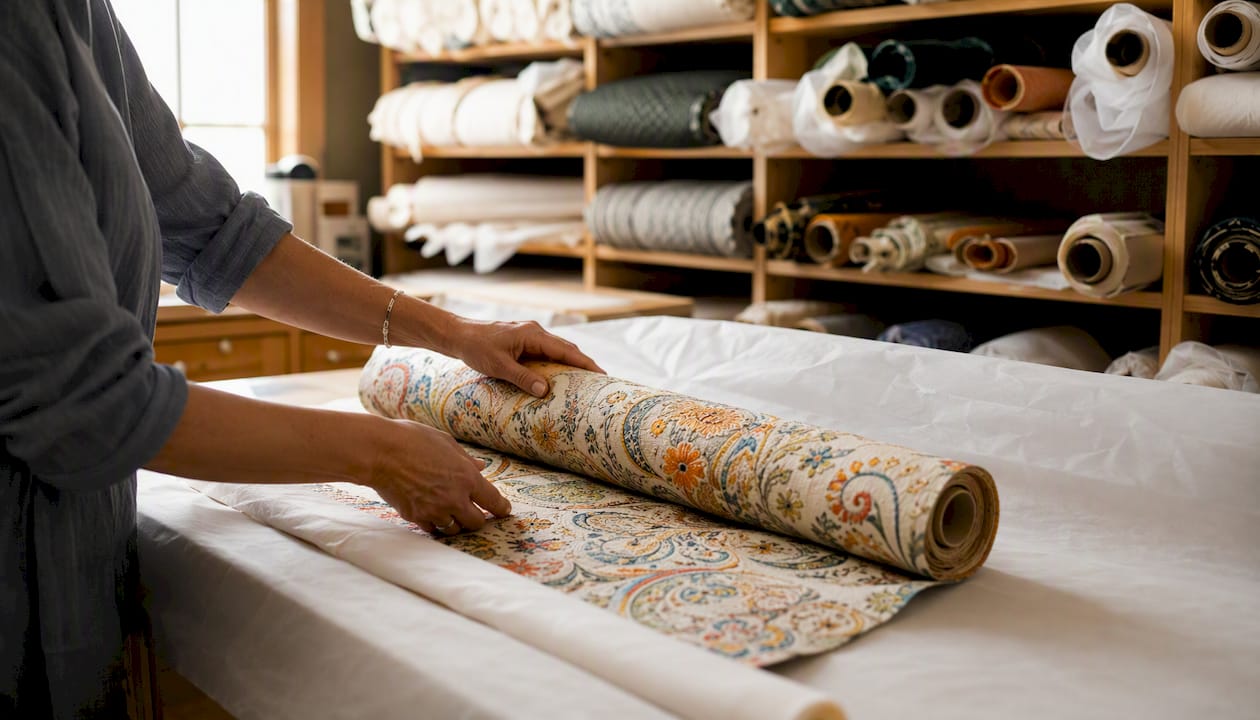
For finished upholstered pieces, basic in-house repairs include seam re-stitching, reattaching trim or gimp, and small patching with matching fabric. Structural repairs, such as repairing a broken frame or replacing foam, belong with a professional workroom. Address structural issues before aesthetic ones; a beautifully patched fabric on a failing frame will fail again quickly. Photograph the piece before and after any repair for warranty and insurance documentation.
Recordkeeping that protects your investment
Consistent documentation reduces errors and supports warranty claims. For each piece, record:
- Fiber content and cleaning code
- Date and method of last professional cleaning
- Fabric protector applied (product name, date, and who applied it)
- Any documented stains, their treatment, and outcome
- Repair history with dates and description
For workrooms, attach a small non-damaging label to the hem or lining seam with the cleaning code and fiber content. Adhesive labels on storage sleeves work for yardage. A simple spreadsheet or a dedicated home-maintenance app covers most homeowner needs. These records also help you schedule the next professional cleaning and demonstrate proper care if a manufacturer warranty claim becomes necessary.
A note from Marrion on what actually goes wrong in the workroom
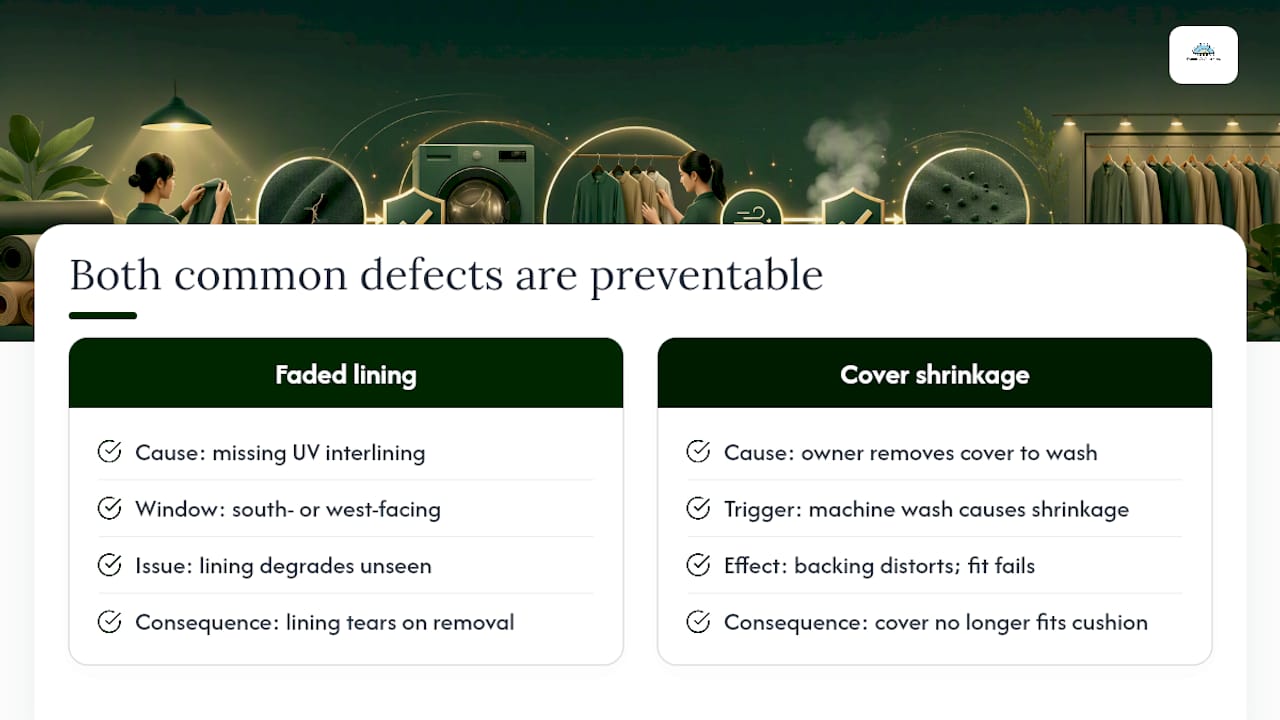
The two problems that appear most often in a drapery workroom are sun-faded linings and zippered cover shrinkage, and both are almost entirely preventable. Faded linings happen when a panel is specified without a UV-protective interlining for a south- or west-facing window. The face fabric looks fine for years while the lining degrades behind it, and by the time the client notices, the lining has weakened enough to tear on removal. The workflow fix is simple: note the window orientation at specification and select a lining weight accordingly. The role of fabric in window treatments covers lining and sun-control selection in practical terms.
Zippered cover shrinkage is almost always the result of a well-meaning homeowner removing the cover to machine wash it separately. The cover shrinks slightly, the backing distorts, and the cover no longer fits the cushion cleanly. The assembled-unit cleaning rule exists precisely to prevent this. When a custom drapery job includes upholstered cornices or window seats, the care instructions go on a label sewn into the lining seam at installation. That one label prevents the most common call-back.
Beautifulwindowselgin carries fabrics built for long-term care
Selecting a fabric with a documented cleaning code and a performance finish is the single decision that makes every subsequent step in this workflow easier. Beautifulwindowselgin offers designer drapery fabrics by the yard, including upholstery-weight textiles with care specifications, alongside custom drapery services with design consultation and nationwide shipping. Whether you need fabric samples to confirm a cleaning code before committing, or a custom panel made to your exact window measurement, the process starts with a single order.
For readers ready to move from maintenance planning to fabric selection, the upholstery and drapery fabric collection covers both categories in one place. Order samples, confirm care specifications, and book a measurement consultation directly through the site.
Sources
- IICRC S300 Consolidated Draft Standard (public review)
- Designtex cleaning manual
- ACT guide to textile specification
- AHFA Fabric Standards and Guidelines
- Care for Fabric Home Furnishings (NMSU Extension)
- How to Clean Curtains, Blinds, and Shades | Reviews by Wirecutter
- Upholstery maintenance and cleaning guide (Pallas Textiles)
Recommended
- Upholstery Fabric Checklist: A Practical Guide – Fabric Store in Columbia, SC | Drapery Making Services
- Upholstery Fabric Checklist: A Practical Guide for Homeowners – Fabric Store in Columbia, SC | Drapery Making Services
- Upholstery Fabric Workflow: A Step-by-Step Guide – Fabric Store in Columbia, SC | Drapery Making Services
- Tips for Selecting Upholstery Fabric: A Practical Guide – Fabric Store in Columbia, SC | Drapery Making Services