


Curtain Fabric Guide 2026: Styles That Last Longer
Choosing curtain fabrics feels overwhelming when you’re juggling aesthetics, durability, and practical function. You want curtains that look stunning, block light when needed, and survive daily wear without constant upkeep. This guide walks you through fabric types, step-by-step selection strategies, and maintenance tips to help you confidently pick curtain fabrics that deliver both style and longevity.
Table of Contents
- Introduction To Curtain Fabrics
- Prerequisites: What You Need Before Selecting Fabric
- Step-By-Step Fabric Selection Process
- Tradeoffs And Fabric Types Comparison
- Safety, Allergy, And Maintenance Considerations
- Common Mistakes And Troubleshooting
- Implementation Timeline And Expected Outcomes
- Summary And Final Recommendations
- Explore Designer Fabrics And Custom Drapery Solutions
- Frequently Asked Questions
Key Takeaways
| Point | Details |
|---|---|
| Prerequisites matter | Accurate window measurements and fabric samples improve selection confidence by 65%. |
| Heavier fabrics boost insulation | Jacquard satin reduces heat transfer by up to 30% but costs about 25% more than lightweight cotton. |
| Follow a step-by-step process | Assess function first, then match fabric weight, evaluate maintenance needs, and confirm safety features. |
| Avoid common mistakes | Ignoring room conditions and skipping samples causes mismatches, but checklists prevent these errors. |
| Expect realistic timelines | Custom orders take 4 to 6 weeks, with measurable gains in light control and fabric durability. |
Introduction to Curtain Fabrics
Understanding the basics of curtain fabrics sets you up for smarter choices. Cotton offers breathability and versatility, making it a favorite for living spaces. Polyester delivers durability and stain resistance, ideal for high-traffic rooms. Jacquard satin brings elegance with its rich texture and heavier weight, providing superior insulation.
Fabric weight, measured in ounces per square yard (oz/yd²), determines how well curtains drape and insulate. Weave patterns affect texture and light filtering, while opacity controls privacy levels. Drapability refers to how gracefully fabric hangs, influenced by weight and fiber content.
Your common curtain fabric types directly impact function and style. Heavier fabrics like jacquard satin block light and reduce noise, making them perfect for bedrooms. Lighter cottons let natural light through, creating airy, casual spaces. Consider these fabric characteristics when matching curtains to specific room needs:
- Cotton breathes well and suits moderate climates but may need lining for full light control.
- Polyester resists fading and moisture, extending lifespan in sunny or humid spaces.
- Jacquard satin adds luxury and insulation, though it requires professional cleaning.
- Blended fabrics combine benefits, offering easier care with enhanced durability.
Each fabric choice affects your curtain’s performance. Cotton works for relaxed, everyday settings. Polyester handles wear and tear without fuss. Jacquard satin elevates formal spaces with its weight and sheen, delivering measurable insulation benefits.
Pro Tip: Hold fabric samples near your window in natural light to see true colors and how they interact with your room’s lighting throughout the day.
Prerequisites: What You Need Before Selecting Fabric
Before diving into fabric options, gather essential information to avoid costly mistakes. Preparation ensures your curtain project starts on solid ground.
Start by ordering essential preparation for fabric selection samples. Swatches reveal texture, weight, and true color under your home’s lighting. Digital images rarely capture fabric accurately, so physical samples prevent disappointment.
Measure your windows precisely. You’ll need width, length, and mounting height to calculate yardage and fullness. Fullness, typically 1.5 to 2.5 times window width, determines how curtains gather and drape. Accurate measurements prevent shortages or excess fabric.
Assess your room conditions systematically:
- Note natural light exposure. South-facing windows need heavier fabrics to manage intense sunlight.
- Check humidity levels. Bathrooms and kitchens require moisture-resistant materials.
- Consider room use frequency. High-traffic areas benefit from durable, easy-care fabrics.
- Evaluate existing décor colors and textures to ensure fabric complements your style.
Understand your cleaning capabilities before committing to fabric. Busy households need machine-washable options. Formal spaces with occasional-use curtains can accommodate dry-clean-only jacquard satin. Fabric tips for homeowners emphasize matching fabric care to your lifestyle, not aspirations.
Pro Tip: Always measure twice and request multiple fabric samples to compare colors in natural light. This simple step increases selection satisfaction by helping you visualize the final look.
Step-by-Step Fabric Selection Process
With prerequisites complete, follow this logical sequence to select curtain fabric that truly fits your needs.
Start by assessing functional requirements. Ask yourself: Do I need blackout, light filtering, or sheer? Bedrooms demand privacy and darkness, pointing toward heavier, opaque fabrics. Living rooms often benefit from light-filtering materials that maintain privacy while letting daylight in. Kitchens need moisture resistance and easy cleaning.
Next, match fabric weight and texture to your window size and desired aesthetic. Large windows handle heavier fabrics without looking overwhelming. Smaller windows look better with lighter materials that don’t crowd the space. Choosing the right fabric for drapery requires balancing visual weight with practical drape.
Follow these selection steps in order:
- Define your primary goal: light control, insulation, privacy, or decorative impact.
- Narrow fabric options based on room conditions and window size.
- Compare maintenance requirements against your available time and cleaning preferences.
- Verify safety features like fire retardancy if regulations or personal concerns apply.
- Test shortlisted fabrics with samples in your space before finalizing.
Evaluate maintenance demands honestly. Cotton and polyester blends often machine wash, saving time and money. Jacquard satin requires professional cleaning, adding recurring costs. Busy families with children or pets should prioritize stain-resistant, washable options over high-maintenance luxury fabrics.
Confirm safety features where needed. Commercial spaces, nurseries, and some residential settings benefit from fabrics meeting NFPA 701 fire retardancy standards. The impact of fabric on style and function extends beyond aesthetics to practical safety considerations.
Pro Tip: Start with purpose first, like blackout for bedrooms, then narrow fabric options accordingly. This approach prevents getting lost in choices and keeps you focused on what matters most for each space.
Tradeoffs and Fabric Types Comparison
Every curtain fabric presents unique advantages and limitations. Understanding these tradeoffs helps you make informed decisions aligned with your budget and lifestyle.
Cotton offers versatility and moderate pricing, breathing well in most climates. It accepts dyes beautifully, providing rich color options. However, cotton provides less insulation than heavier alternatives and may fade with prolonged sun exposure. It works best with lining for enhanced functionality.
Polyester stands out for durability and low maintenance. It resists wrinkles, stains, and moisture better than natural fibers. The cost stays budget-friendly, making it accessible for large window projects. The downside? Polyester can trap dust and static, requiring regular vacuuming. Its synthetic sheen may not suit every décor style.
Jacquard satin fabrics cost approximately 25% more than lightweight cotton but deliver elegance and superior insulation. The heavier weight drapes luxuriously and blocks light effectively. Professional cleaning adds to lifetime costs, and the weight requires sturdy hardware. Yet for formal spaces prioritizing appearance and energy efficiency, jacquard satin justifies the investment.
Here’s how comparing curtain fabrics breaks down:
| Fabric Type | Cost Range | Maintenance | Durability | Best Use |
|---|---|---|---|---|
| Cotton | Moderate | Machine wash or dry clean | 5 to 7 years | Living rooms, casual spaces |
| Polyester | Low to moderate | Machine wash | 7 to 10 years | High-traffic areas, humid rooms |
| Jacquard Satin | High | Professional dry clean only | 7 to 12 years with care | Formal rooms, bedrooms needing insulation |
| Linen | Moderate to high | Dry clean or gentle wash | 6 to 8 years | Relaxed, textured aesthetics |
“The fabric you choose shapes not just appearance but long-term satisfaction. Balance initial cost against maintenance demands and expected lifespan to find your sweet spot.”
Weigh these factors carefully. A lower upfront cost with higher maintenance frequency might exceed the total expense of pricier, low-maintenance fabric over time. Consider your priorities: Do you value easy care over luxury appearance? Is energy efficiency worth the premium for heavier materials?
Safety, Allergy, and Maintenance Considerations
Selecting curtain fabric involves more than aesthetics and function. Safety standards, health factors, and proper care ensure your investment performs well long-term.
NFPA 701 fire retardancy standards apply to curtain fabrics in commercial settings and some residential applications. If you’re outfitting a rental property, nursery, or public space, verify your fabric meets these requirements. Many manufacturers treat fabrics for fire resistance, but always confirm before purchasing.
Allergy sufferers should pay attention to fabric texture and fiber content. Tightly woven, smooth fabrics collect less dust and allergens than heavily textured materials. Polyester and treated cotton resist mold and mildew better than untreated natural fibers. Regular cleaning keeps allergen buildup minimal, protecting respiratory health.
Maintenance requirements vary significantly by fabric maintenance and safety type:
- Cotton and polyester blends often machine wash, simplifying routine care.
- Jacquard satin demands professional dry cleaning to preserve texture and appearance.
- Linen typically requires gentle washing or dry cleaning to prevent shrinkage.
- All fabrics benefit from regular dusting or gentle vacuuming to remove surface particles.
Humid environments like bathrooms and coastal homes need mildew-resistant fabrics. Look for synthetic options or treated natural fibers that resist moisture damage. Untreated cotton and linen can develop mold quickly in damp conditions, shortening lifespan and creating health hazards.
Establish a cleaning schedule based on fabric type and room use. High-traffic spaces may need monthly vacuuming and annual deep cleaning. Formal rooms with occasional use can stretch to biannual care. Following manufacturer guidelines prevents damage and maintains appearance, extending your curtains’ functional life.
Proper maintenance directly impacts fabric longevity. Neglecting cleaning accelerates wear, fading, and deterioration. Investing a few minutes monthly in basic upkeep preserves your curtains’ beauty and performance for years.
Common Mistakes and Troubleshooting
Even with careful planning, fabric selection can go wrong. Recognizing frequent errors helps you avoid frustration and wasted money.
Choosing fabric weight incorrectly tops the mistake list. Too light, and curtains look skimpy and drape poorly. Too heavy, and they overwhelm small windows or strain hardware. The ideal range for most residential applications sits between 8 and 12 oz/yd². This weight provides good drape without excessive bulk.
Ignoring room conditions causes multiple problems. Placing fade-prone fabrics in sun-drenched south-facing windows leads to rapid color loss. Using non-moisture-resistant materials in humid spaces invites mildew and musty odors. Assess light exposure, humidity, and temperature fluctuations before finalizing fabric choices.
Skipping sample orders ranks among the costiest mistakes. Digital images distort colors and fail to convey texture or weight. Ordering yards of fabric based solely on online photos often results in disappointment. Physical samples let you test fabrics in your actual lighting, compare options side by side, and feel the material quality.
Overlooking cleaning instructions accelerates fabric damage:
- Machine washing dry-clean-only fabrics causes shrinkage and distortion.
- Using harsh chemicals on delicate fibers breaks down material integrity.
- Ignoring colorfastness warnings leads to dye bleeding and permanent stains.
- Skipping regular dusting allows grime buildup that embeds in weave.
Another common error involves mismatching fabric style to room formality. Heavy jacquard satin looks out of place in casual family rooms. Sheer, lightweight cottons fall flat in formal dining spaces. Align fabric elegance with room purpose and décor style for cohesive design.
Pro Tip: Use a fabric selection checklist to keep track of key factors like weight, maintenance, room conditions, and safety requirements. This prevents overlooking critical details that could derail your project.
When problems arise, troubleshoot systematically. If curtains sag, the fabric may be too heavy for existing hardware. If they look stiff, insufficient fullness or overly crisp material could be the culprit. Address common curtain fabric mistakes early by reviewing each decision against room needs and fabric specifications.
Implementation Timeline and Expected Outcomes
Understanding project timelines and anticipated results helps you plan effectively and set realistic expectations.
Custom curtain fabric orders typically require 4 to 6 weeks from selection to installation. This includes fabric sourcing, fabrication, and any custom finishing like lining or trim. Ready-made options ship faster but offer less customization. Plan accordingly if you’re working toward a specific deadline like a holiday or event.
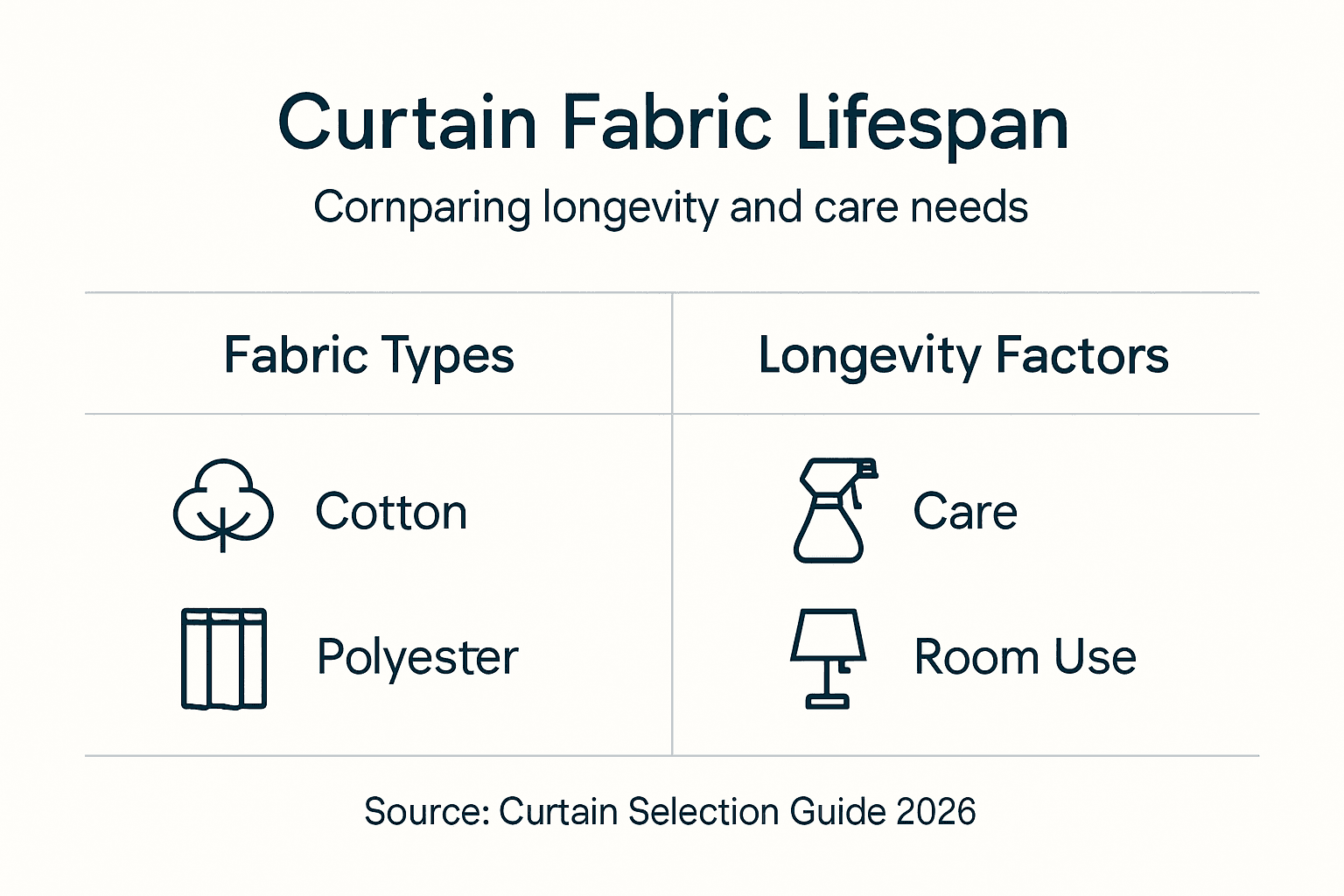
Fabric longevity varies by material and care quality:
| Fabric Type | Expected Lifespan | Key Longevity Factors |
|---|---|---|
| Polyester | 7 to 10 years | Fade resistance, durability, low maintenance needs |
| Cotton | 5 to 7 years | Regular cleaning, sun protection, proper lining |
| Jacquard Satin | 7 to 12 years | Professional cleaning, minimal sun exposure, quality hardware |
| Linen | 6 to 8 years | Gentle care, humidity control, limited direct sunlight |
Expect measurable improvements in specific areas based on your fabric choice. Blackout materials can reduce incoming light by 95% or more, dramatically improving sleep quality. Heavier fabrics noticeably dampen outside noise, creating quieter indoor spaces. Insulating materials lower heating and cooling costs by reducing thermal transfer through windows.
Budget for both initial fabric costs and ongoing maintenance. Cotton and polyester keep expenses low with machine washing. Jacquard satin’s professional cleaning adds $50 to $100 annually depending on curtain size. Factor these recurring costs into your total investment calculation.
Performance outcomes depend on proper installation and care. Even premium fabric underperforms with inadequate fullness or improper mounting. Follow best practices for hanging and maintain cleaning schedules to maximize your return on investment.
Timeline variations occur based on fabric availability and customization complexity. Standard materials in common colors ship fastest. Specialty weaves, custom dyeing, or intricate patterns extend lead times. Communicate timeline needs clearly with suppliers to avoid delays.
Summary and Final Recommendations
Successful curtain fabric selection combines preparation, informed choices, and realistic expectations. Review this checklist before finalizing your decision.
Ensure you’ve completed all prerequisites:
- Accurate window measurements including width, length, and mounting height.
- Ordered and evaluated fabric samples in your home’s natural lighting.
- Assessed room conditions for light exposure, humidity, and use frequency.
- Determined cleaning capabilities and maintenance commitment level.
- Verified budget for both initial purchase and ongoing care costs.
Follow the step-by-step selection approach balancing function, style, maintenance, and safety. Start with your primary goal whether light control, insulation, or aesthetic impact. Narrow options based on room-specific needs. Evaluate maintenance demands against your lifestyle honestly. Confirm safety features if required.
Avoid common mistakes by reviewing room environment thoroughly and ordering physical samples. Never rely solely on digital images for color or texture decisions. Match fabric formality to room purpose. Stay within the 8 to 12 oz/yd² weight range for most applications unless specific needs dictate otherwise.
Plan for realistic timelines, expecting 4 to 6 weeks for custom orders. Budget for professional installation if needed, as proper hanging significantly affects final appearance and performance. Establish maintenance routines immediately to protect your investment.
Consult professionals when uncertain about technical specifications, custom requirements, or installation challenges. Expert guidance on final curtain fabric advice prevents costly errors and ensures long-term satisfaction.
Your curtain fabric choice impacts daily comfort, energy efficiency, and aesthetic enjoyment for years. Invest time in thoughtful selection now to avoid regret and replacement costs later. The right fabric elevates your space while delivering practical benefits that justify the effort.
Explore Designer Fabrics and Custom Drapery Solutions
Ready to transform your windows with quality fabrics that balance beauty and function? Beautiful Windows Elgin offers an extensive selection of designer curtain fabrics, from breathable cottons to elegant jacquard satins, all available for nationwide delivery.

Explore essential window treatment fabric tips to deepen your knowledge and refine your choices. Learn more about the role of fabric in window treatments to understand how material selection impacts your home’s comfort and style. Browse beautiful custom curtain fabrics that meet your specific needs, or schedule a consultation to discuss custom drapery projects tailored to your space. We’re here to help you make confident fabric selections that deliver lasting satisfaction.
Frequently Asked Questions
Which curtain fabric works best for humid rooms?
Choose mildew-resistant synthetic fabrics like polyester for superior performance in bathrooms, kitchens, and coastal homes. These materials resist moisture damage and mold growth better than untreated natural fibers. Avoid standard cotton and linen unless they’re specifically treated for moisture resistance, as they can develop mildew quickly in damp conditions.
How important is ordering fabric samples before purchasing curtains?
Ordering fabric samples increases satisfaction by 65% by letting you evaluate actual color, texture, and weight in your home’s lighting. Digital images rarely represent fabric accurately, leading to disappointment when full orders arrive. Physical samples prevent costly mistakes and help you confidently compare options side by side.
Can heavy fabrics like jacquard satin improve energy efficiency?
Yes, jacquard satin reduces heat transfer by up to 30% compared to lightweight alternatives, significantly improving insulation. This enhanced thermal performance lowers heating and cooling costs in bedrooms and formal spaces. The tradeoff involves higher initial cost and professional cleaning requirements, but energy savings and longevity often justify the investment.
What cleaning methods are recommended for different curtain fabrics?
Cotton and polyester blends typically machine wash for convenient home care. Jacquard satin requires professional dry cleaning to maintain its luxurious texture and prevent damage. Regular dusting and gentle vacuuming extend the life of all curtain fabric cleaning tips, regardless of material. Always follow manufacturer care labels to avoid shrinkage, color bleeding, or fiber damage.
Recommended
- 7 Essential Curtain Fabric Types List for Homeowners – Shop Designer Fabrics by the Yard | Curtains & Drapery
- How to Choose the Right Fabric for Drapery – Shop Designer Fabrics by the Yard | Curtains & Drapery
- Curtain Style Selection Process for Custom Drapery Success – Shop Designer Fabrics by the Yard | Curtains & Drapery
- Role of Fabric in Window Treatments– Impact on Style & Function – Shop Designer Fabrics by the Yard | Curtains & Drapery