


Why Choose Thermal Curtain Panels for Your Home
Thermal curtain panels are one of the most cost-effective upgrades a homeowner can make. They reduce annual HVAC energy use by 10–25%, with a typical payback period under two years. Windows account for a substantial portion of a home’s heating and cooling load, and well-fitted thermal panels address that loss directly by creating an insulating dead-air layer between the glass and the room.
Key reasons to choose thermal curtain panels:
- Energy savings: Cut heating and cooling costs with panels that reduce heat loss by 25–50% and lower annual HVAC energy use by 10–25%
- Sound dampening: Dense, multi-layer fabrics absorb outdoor noise for quieter bedrooms and living rooms
- Privacy: Thick construction provides a full visual barrier without sacrificing style
- Fast ROI: Panels typically cost $30–$150 each, with full-home sets running $200–$600 and annual HVAC savings of $50–$200
- Variety: Multi-layer, blackout, and reflective-backed types suit different climates and needs
- DIY-friendly: Standard hardware and straightforward installation make them accessible for most homeowners
Table of Contents
- Why thermal curtain panels improve home energy efficiency
- Sound dampening and privacy you will actually notice
- Realistic expectations: what thermal panels can and cannot do
- Choosing quality thermal curtain panels with Beautifulwindowselgin
- Cost comparison and value for money
- Maintenance tips that preserve thermal properties
- Beautifulwindowselgin: custom thermal drapery for your home
- Key Takeaways
Why thermal curtain panels improve home energy efficiency
The core mechanism is simple: thermal curtains create a dead-air space between the glass and the fabric that slows heat transfer through conduction, convection, and radiation. Well-installed curtains reduce heat loss substantially more than standard curtains. Multi-layer construction, often including a reflective backing, blocks solar heat gain in summer while retaining indoor warmth in winter. The role of fabric in energy efficiency is significant: denser weaves and insulating linings raise a window’s R-value from roughly R-1 to R-3–R-5 depending on thickness and fit.
Strategic use matters as much as the panel itself. Open curtains on sunny winter days to capture passive solar heat, then close them at dusk to trap warmth. In summer, keep them closed during peak sun hours.
Pro Tip: Magnetic edges and a pelmet at the top of the window reduce convective airflow and edge heat transfer by nearly 20%, a meaningful gain for minimal added cost.
Installation steps that maximize thermal performance:
- Hang panels as close to the window frame as possible
- Extend fabric past each side of the frame by at least 2–3 inches
- Use floor-length panels to prevent thermal siphoning at the base
- Overlap panels at the center to seal the gap
- Add a valance or pelmet to block warm air from escaping over the top
- Apply magnetic tape or hook-and-loop fasteners along the edges for a tighter seal
Sound dampening and privacy you will actually notice
The same dense, layered construction that insulates against heat also absorbs sound waves. Thick fabrics provide a complete visual barrier and reduce outdoor noise more effectively than standard curtains, making thermal panels particularly valuable in bedrooms or living rooms facing busy streets. The high-density foam and woven layers interrupt sound vibration before it reaches the interior, reducing the intrusion of traffic, neighbors, and ambient urban noise.
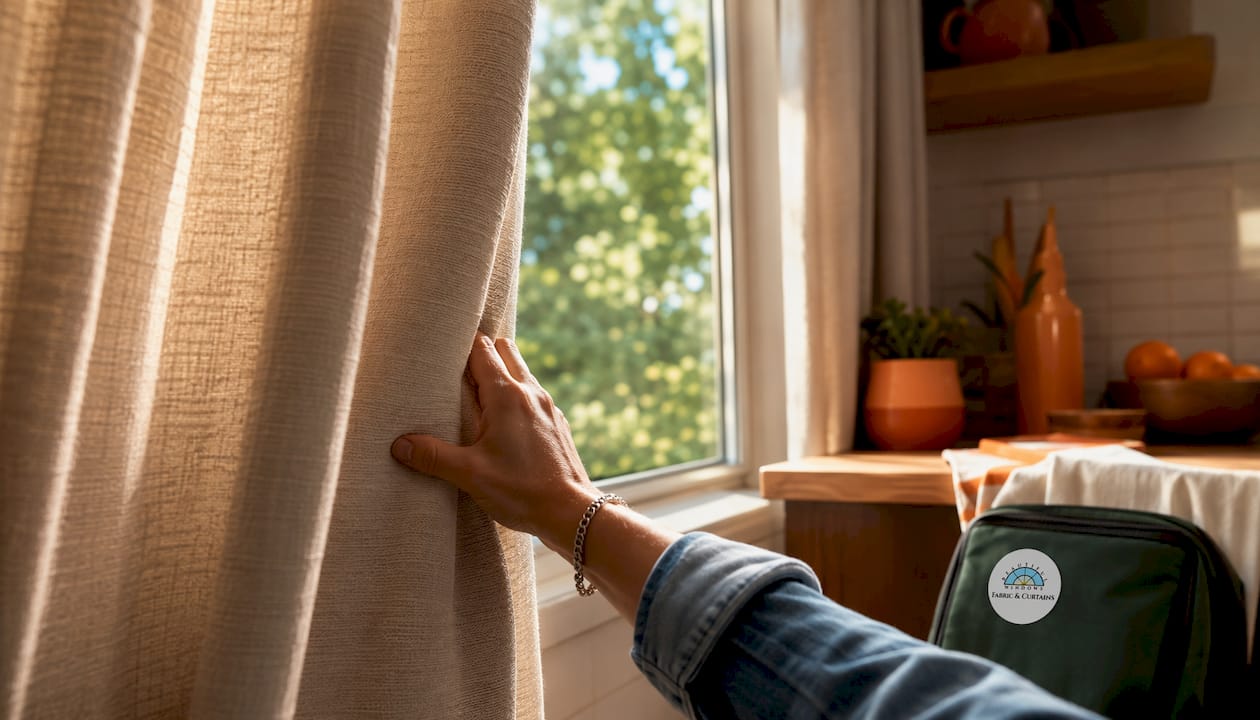
Privacy is equally straightforward. A properly fitted thermal panel covers the full window opening, leaving no gap at the sides or bottom where light or sightlines can pass through. For homeowners who also want exterior privacy solutions, privacy fencing paired with interior thermal panels creates a layered approach to both security and comfort.
Benefits at a glance:
- Reduced outdoor noise in sleeping and living areas
- Full visual privacy without the need for additional blinds
- Fewer drafts and temperature fluctuations near windows
- A more stable, comfortable indoor environment year-round
Realistic expectations: what thermal panels can and cannot do
Thermal curtains are a comfort layer, not a structural fix. They complement existing insulation but cannot compensate for broken window seals, significant air leaks in the building envelope, or missing wall insulation. Performance drops considerably when panels are too short, too narrow, or left open during peak heat-loss hours.
They are most impactful in older homes with single-pane or poorly sealed windows. In a home with high-performance triple-pane glazing, the incremental gain is smaller. Panels also block natural light and outdoor views when closed, which affects room brightness. Treating them as one component of an integrated thermal strategy, alongside weatherstripping, attic insulation, and HVAC maintenance, produces the best outcomes.
Choosing quality thermal curtain panels with Beautifulwindowselgin
Beautifulwindowselgin specializes in designer drapery fabrics and custom window treatments, offering homeowners access to professional-grade materials that standard retail options rarely match. Key advantages of working with Beautifulwindowselgin:
- Multi-layer fabrics with reflective backings and insulating linings for genuine thermal resistance
- Custom sizing to achieve the precise floor-to-ceiling, edge-to-edge coverage that drives performance
- Design consultations that match thermal function with the aesthetic of each room
- Measurement guidance to eliminate the fit errors that undermine insulating properties
- Nationwide shipping from Columbia, SC, with fabric samples available before committing
Selecting the right panel starts with accurate measurements. Beautifulwindowselgin’s window treatment measurement service ensures coverage is precise, which directly affects how much heat stays in or out.
Cost comparison and value for money
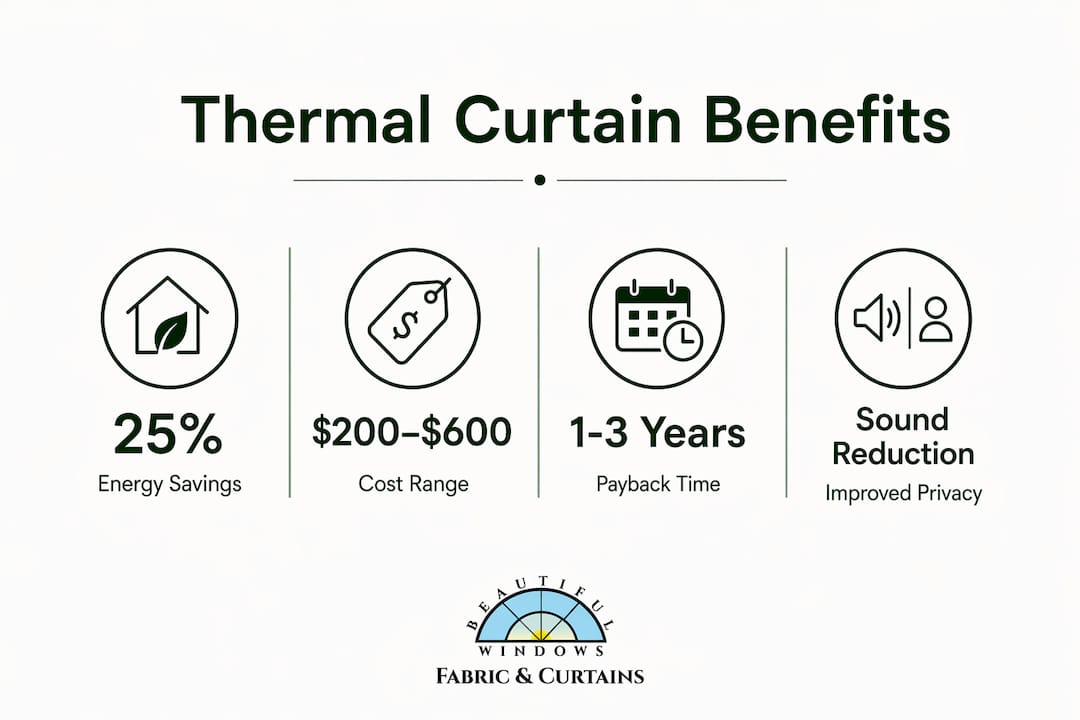
Individual panels run $30–$150, and a full home typically requires $200–$600 in total. Against estimated annual HVAC savings of $50–$200, the payback period lands between one and three years depending on climate, window count, and usage habits. Compared to window replacement, which can cost $300–$1,000 per window, thermal curtains deliver meaningful insulation gains at a fraction of the price. They also add no structural complexity and can be updated as design preferences change.
Maintenance tips that preserve thermal properties
Proper care keeps the insulating layers intact. Some panels are machine washable; others require dry cleaning, so always check the manufacturer’s label before washing. A light vacuum while the panels hang removes dust without stressing the fabric layers. Avoid wringing or high-heat drying, which can degrade foam cores and reflective backings. Inspect the edges and seams periodically for separation, as gaps there reduce thermal performance. With routine care, quality thermal panels maintain their properties for many years.
Beautifulwindowselgin: custom thermal drapery for your home
Homeowners who want thermal performance without sacrificing design quality have a clear option in Beautifulwindowselgin. Rather than choosing between a functional panel and an attractive one, you get both: designer drapery fabrics constructed with the weight, lining, and coverage needed to genuinely reduce energy costs. Beautifulwindowselgin ships nationwide and supports every order with fabric samples, measurement guidance, and design consultation.

Contact Beautifulwindowselgin to discuss your window dimensions, climate needs, and design preferences. The team will help you select fabrics and configurations that deliver real thermal results from the first season.
Key Takeaways
Thermal curtain panels reduce HVAC energy use by 10–25%, pay for themselves within one to three years, and deliver sound dampening and privacy alongside their insulating function.
| Point | Details |
|---|---|
| Energy savings | Thermal panels reduce annual HVAC energy use by 10–25%. |
| Cost and payback | Full-home sets cost $200–$600; annual savings of $50–$200 yield a payback of one to three years. |
| Fit determines performance | Floor-length panels with edge sealing and a pelmet reduce heat transfer by nearly 20% more than loosely hung curtains. |
| Multi-function value | Dense multi-layer fabrics provide sound dampening and full visual privacy alongside thermal insulation. |
| Beautifulwindowselgin | Offers custom-sized, designer-grade thermal drapery fabrics with measurement services and nationwide shipping. |
Recommended
- What Is a Patterned Curtain Panel? A Complete Guide – Fabric Store in Columbia, SC | Drapery Making Services
- Curtain lining: cut heat loss 40% and boost style – Fabric Store in Columbia, SC | Drapery Making Services
- What Is a Blackout Curtain Panel? A 2026 Guide – Fabric Store in Columbia, SC | Drapery Making Services
- What Is a Sheer Curtain Panel? A Homeowner’s Guide – Fabric Store in Columbia, SC | Drapery Making Services