


Velvet or Silk for Luxury Drapery: Which Fits Your Room
Quick Summary
The right choice between velvet and silk drapery depends on how a room is used, since velvet blocks more light and insulates better while silk offers sheen and a fluid, formal drape. Velvet suits bedrooms and libraries that need darkness and warmth, while silk suits dining rooms and entryways where soft light matters more. Silk needs more protection from sun.
- Velvet's dense pile blocks more light and adds more insulation than silk.
- Silk's natural protein fibers fade and weaken under UV light over time.
- Silk gives less privacy at night, so lining or layering helps when silhouettes show.
- Polyester velvet resists UV fading far better than natural silk velvet.
- Use velvet for bedrooms and silk for light-filled living areas, and check care codes first.
Table of Contents
- How Velvet and Silk Differ at a Glance
- Velvet Curtains: Pros and Cons
- Silk Curtains: Pros and Cons
- Light Control, Privacy, and Insulation Compared
- Sun Exposure, Care, and Long-Term Wear
- Luxury Curtain Fabrics Beyond Velvet and Silk
- Choosing the Right Fabric for Your Custom Drapery Order
- Frequently Asked Questions
Velvet or Silk for Luxury Drapery: Which Fits Your Room
Last Updated: November 15, 2026
Choosing between velvet and silk for luxury drapery comes down to how a room lives, not just how it looks, since the right velvet and silk drapery depends on light, privacy and daily use. Homeowners and interior designers often weigh the same trade-offs: velvet gives weight, insulation and a plush, dramatic finish, while silk gives sheen, fluid drape and a lighter, more formal feel. Both fabrics belong in luxury interiors, but they behave very differently once they hang at a window.
How Velvet and Silk Differ at a Glance
Velvet is a dense, pile-woven fabric with a soft surface that catches light in deep, shifting tones. Silk is a natural protein fiber with a smooth, lustrous surface and a fluid drape. The difference shows up first in weight: velvet hangs heavy and full, while silk falls lightly and reflects light.
Velvet often reads as cozy and enveloping, suited to libraries, bedrooms and formal living rooms that need warmth. Silk reads as bright and polished, suited to dining rooms, entryways and spaces where light and movement matter more than enclosure.
Velvet Curtains: Pros and Cons
The trade-offs are real. Velvet attracts dust and shows crush marks where it is folded or touched. It needs regular brushing and professional cleaning, and it does not suit rooms with heavy direct sun unless the fabric is chosen for fade resistance.
For a polyester velvet option, our Emerald Green Velvet Fabric by the yard is priced at $44.99 and is built for drapery and upholstery. Its listing gives a 60,000 double-rub rating. If you are planning a full window treatment, our embroidered-fabric-for-custom-curtains collection is another place to explore decorative options alongside plain velvet.
Silk Curtains: Pros and Cons
Silk's main strength is appearance. Its natural sheen and fluid drape look refined in formal rooms, and velvet and silk drapery in this fabric reads as high-end under lamplight.
Silk is more delicate than velvet. It is more vulnerable to sun damage, and it is usually cared for by dry cleaning or careful hand washing, depending on construction. Because it is lighter, it offers less insulation and less light blocking unless it is lined.
Many buyers choose a faux silk drapery fabric instead, since it captures the look with easier care. Our Burke Olive Green faux silk drapery fabric, at $45.99 per yard, blends 96% polyester with 4% cotton and is rated at 13,000 double rubs.
Light Control, Privacy, and Insulation Compared
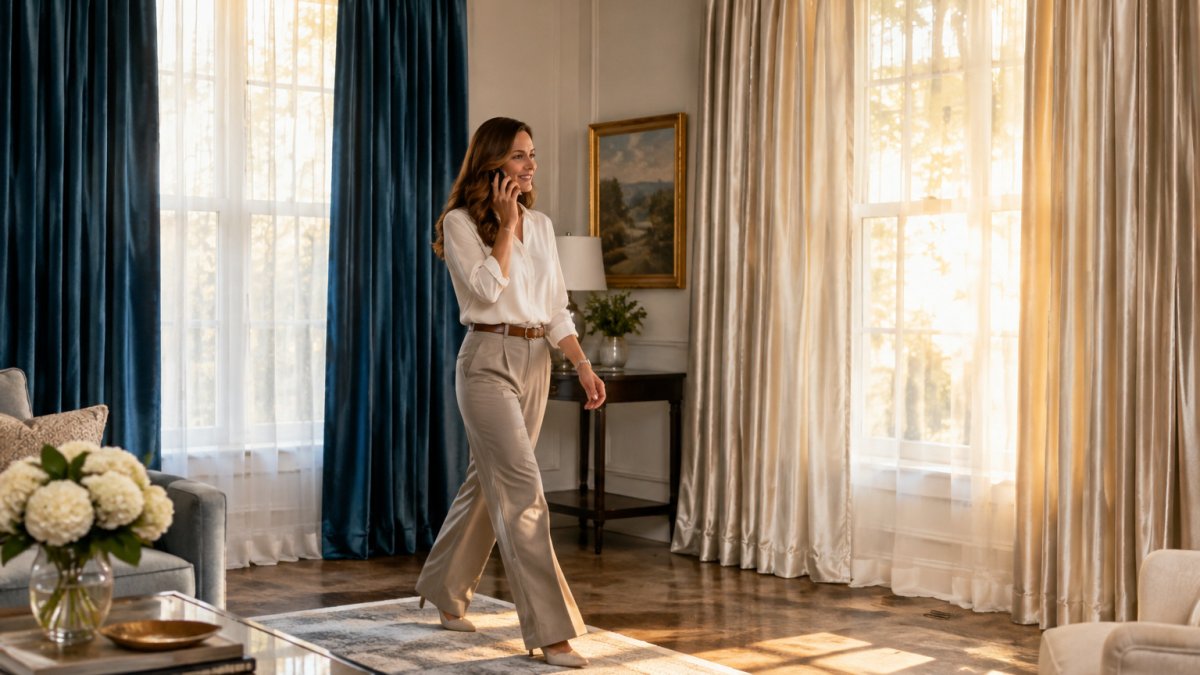
When it comes to light control, privacy, and insulation, velvet and silk behave very differently at the window. Velvet's dense pile is generally more light-blocking than lightweight silk. The table below summarizes the key differences, followed by a deeper look at each factor.
| Factor | Velvet | Silk |
|---|---|---|
| Light blocking | High (especially with lining) | Low to moderate (depends on lining and weight) |
| Privacy (day) | High due to opacity | Low unless lined or layered |
| Privacy (night) | High | Low to moderate; silhouettes may show |
| Insulation (thermal) | High; pile traps air | Low; lightweight and breathable |
| Draft reduction | Good | Minimal |
| Sound absorption | Moderate to high | Low |
For a bedroom that needs darkness for sleep, velvet or a lined silk-look fabric is the practical choice. For a living room where soft, filtered daylight is welcome, silk's luminosity is an asset.
Privacy. During the day, velvet's opacity provides reliable privacy. Silk, especially in lighter weights, may allow silhouettes to be visible from outside at night when interior lights are on. If privacy is a concern, silk curtains should be paired with a sheer or blackout lining, or used in rooms where evening privacy is less critical (e.g., a formal dining room that is not used after dark).
A note on lining. Both fabrics benefit from lining, but for different reasons. Velvet is often lined to add body and protect the pile from sunlight, while silk is lined to improve privacy, light blocking, and to protect the delicate fibers from UV damage. A common pattern among designers is to use a blackout lining with velvet in bedrooms and a lightweight cotton lining with silk in living areas to preserve drape.
Watch out: Do not assume that a heavy silk will block as much light as a medium-weight velvet. Weight and weave matter, but pile is the decisive factor for light blocking.
Sun Exposure, Care, and Long-Term Wear
Window orientation, glazing, and lining choices all influence how quickly a fabric will degrade. Velvet, especially in synthetic fibers, is more forgiving, but it has its own care requirements. This section explains how sunlight affects each fabric and outlines a practical care routine to extend the life of your drapery.
How sunlight damages silk. Silk is a natural protein fiber, and ultraviolet (UV) radiation breaks down its molecular structure. The result is fading, loss of tensile strength, and a dulled sheen. The damage is cumulative and irreversible. South- and west-facing windows receive the most direct sun in North America, and these exposures are the most punishing for silk. East-facing windows get gentler morning sun, while north-facing windows receive indirect light and are the safest for silk. If you live in a region with intense sun (e.g., the Southwest), even north-facing silk may fade over time.
How sunlight affects velvet. Velvet's vulnerability depends on fiber content. Natural silk velvet is as sensitive as silk fabric, but polyester velvet is highly resistant to UV fading. The pile also provides some self-shading, protecting the base cloth. However, prolonged direct sun can still cause color shift in lower-quality polyester velvets. Always check the colorfastness to light rating (often expressed on a scale of 1-5 or with a Blue Wool Scale rating) before purchasing.
Protective measures. The most effective way to protect silk is to block UV light. Options include:
- UV-filtering window film: Applied to the glass, it can block up to 99% of UV rays without significantly changing the view.
- Lined curtains: A tightly woven lining, especially one with a UV inhibitor, adds a layer of protection. Blackout linings offer the highest protection.
- Interlining: A flannel or bump interlining between the face fabric and lining adds bulk and UV protection.
- Window orientation: If you are building or renovating, consider placing silk drapery on north or east windows and reserving velvet for south and west exposures.
Care routines. Velvet and silk require different maintenance approaches.
Velvet:
- Vacuum gently with a soft brush attachment every few months to remove dust.
- Avoid brushing against the pile; crush marks can be steamed out, but repeated crushing damages the pile.
- Keep away from moisture; velvet can water-spot.
- Professional dry cleaning is recommended for deep cleaning, though some polyester velvets can be machine-washed on a gentle cycle (check the manufacturer's care code).
Silk:
- Dry clean only for most silk drapery, unless the manufacturer specifies otherwise.
- Dust regularly with a microfiber cloth or a vacuum on low suction with a mesh screen.
- Avoid direct sunlight; use window film or lining.
- Store silk curtains by hanging them (do not fold) to prevent creasing.
Watch out: Do not assume that a label saying "dry clean only" means the fabric is safe in direct sun. UV damage occurs regardless of cleaning method, so preventive measures are essential.
Luxury Curtain Fabrics Beyond Velvet and Silk
Velvet and silk are not the only options for a luxurious look. Faux silk drapery fabrics, embroidered textiles and textured designer solids can deliver a similar finish with different maintenance demands.
Our Vivid Yellow Dupioni Silk Fabric, at $46.99 per yard, offers a silk-style texture in a solid, bold colorway. It is manufactured to meet flammability ratings and is made of 95% polyester and 5% cotton. For upholstered pieces alongside your drapery, our Upholstery Fabric options can help carry the same tone into seating and accent chairs.
Choosing the Right Fabric for Your Custom Drapery Order
Start with the room. Choose velvet for insulation, darkness and warmth. Choose silk or a silk-look fabric for light, sheen and formal polish. Then check the specifications: fiber content, double-rub rating, colorfastness and cleaning code.
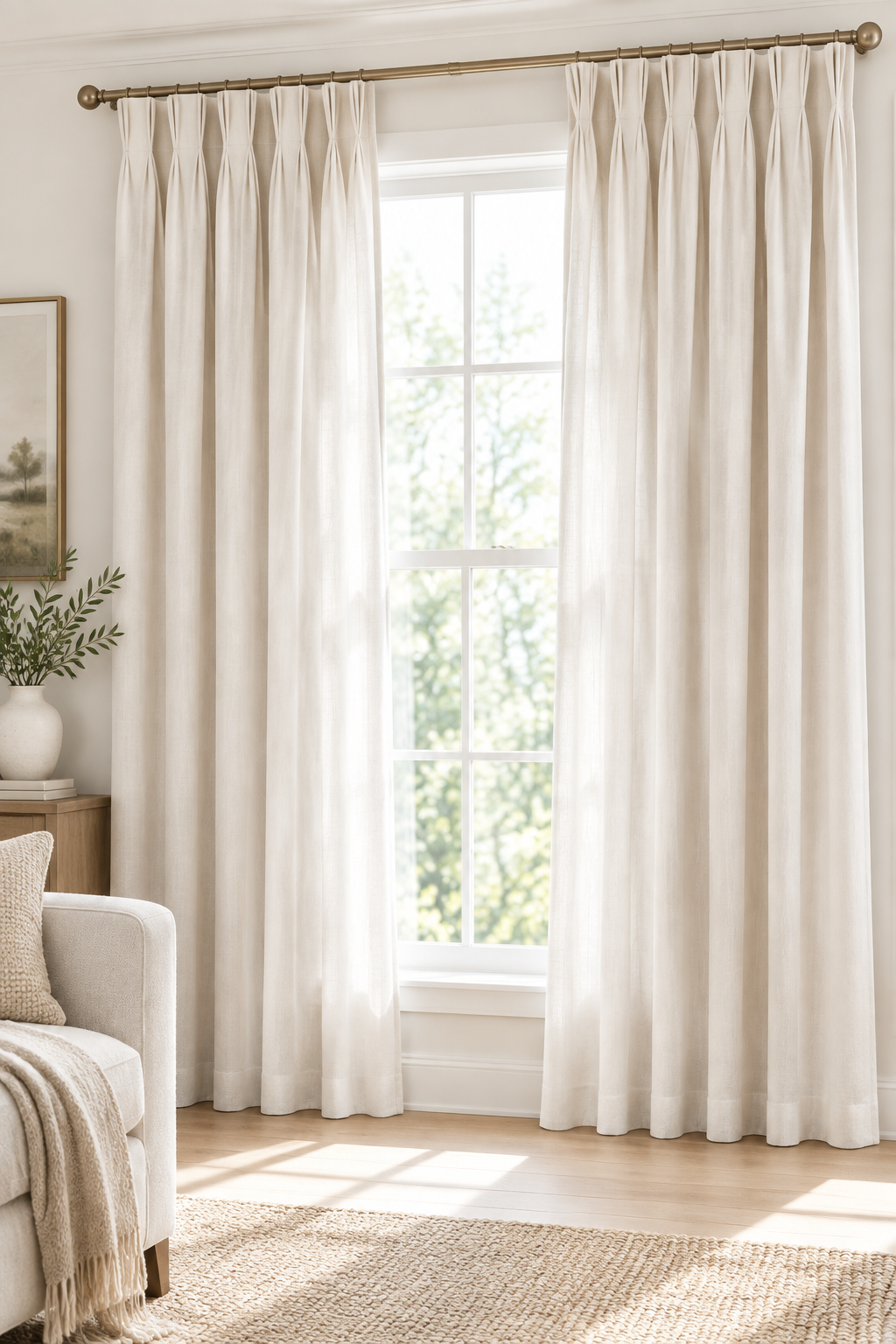
Before ordering, measure the window, decide on lining, and confirm how much yardage your design needs. Our fabrics are sold by the yard, so plan extra for pattern repeat and seams. If you prefer a finished look without sewing, our Cutain Panels are a practical route for pinch-pleat drapery.
Browse the full collection at Beautiful Windows Elgin to compare options for your next project.
Frequently Asked Questions
What is the most luxurious fabric for curtains?
Silk and velvet are the two fabrics most often called the most luxurious for drapery. Silk offers a fluid drape and a natural sheen, while velvet offers a dense, plush pile and strong light blocking. The better choice depends on the room: silk suits formal rooms with moderate light, and velvet suits rooms where you want warmth, quiet, and darkness. Either can be made up with a lining for added weight and insulation.
Do silk curtains fade in sunlight?
Yes. Silk is a natural protein fiber and is vulnerable to UV light, so south- and west-facing windows can fade and weaken silk over time. Lining the drapes and using a UV-filtering sheer behind them slows damage. The Emerald Green Velvet listed at $44.99 per yard is a polyester velvet with a 60,000 double-rub rating.
Are velvet curtains better for blocking light?
Generally, yes. Velvet's dense pile and weight block more light and reduce drafts better than most lightweight silks. Silk dupioni is more open in weave and lets more light through unless it is fully lined. For bedrooms or media rooms, a lined velvet panel usually performs better, while a lined silk panel is better suited to living spaces where you want the fabric to be seen.
Which fabric is easier to maintain for custom drapes?
The Burke Olive Green faux silk drapery fabric is sold at $45.99 per yard and carries a water-based cleaning code (W).
