


How fabric shapes your home's comfort and style
How fabric shapes your home's comfort and style becomes clear the moment you notice how texture, weight, and color influence the way a room feels.
TL;DR:
- Fabrics influence thermal regulation, acoustics, and overall comfort beyond just appearance.
- Durability is determined by double rub tests, guiding suitable fabric choices for different household uses.
- Choosing textiles based on function first enhances style, sustainability, and long-term satisfaction. Living room styled with fabric for home comfort in soft neutrals
Fabric is rarely the first thing that comes to mind when planning a room’s design. Most homeowners reach for paint swatches or furniture catalogs, treating textiles as the finishing touch rather than the foundation. That approach often leads to beautiful rooms that feel wrong—too cold, too loud, too stiff, or too short-lived. The truth is, textiles influence thermal regulation and acoustics alongside every visual impression a room makes. This guide breaks down fabric’s real roles in home decor, from the way curtains manage your energy bills to how a sofa fabric can outlast a lease.
Table of Contents
- How fabrics impact comfort and atmosphere
- Fabric durability: Choosing materials that last
- Decorative power: Fabrics as style changers
- Sustainability and health: The greener side of home fabrics
- Why thinking beyond color unlocks a whole new design world
- Want expert help with home fabrics?
- Frequently asked questions
Key Takeaways
| Point | Details |
|---|---|
| Comfort and control | Home fabrics regulate temperature, sound, and comfort while shaping atmosphere. |
| Durability matters | Choosing the right durability ensures your pieces look good and last longer. |
| Style transformation | Fabric choices quickly update your home’s mood with color, pattern, and texture. |
| Healthy, green options | Eco-friendly textiles and conscious maintenance benefit the environment and your family. |
How fabrics impact comfort and atmosphere
Now that we know fabric does more than match the paint, let’s look at how it shapes your everyday comfort.
Walk into a room that feels immediately warm and inviting, and you’re experiencing the cumulative effect of well-chosen textiles. It’s not magic. It’s a combination of materials, layering, and placement working quietly in the background. Fabric acts on your senses in ways that go far beyond what you see.
Thermal regulation is one of the most practical contributions fabric makes to a home. Heavy lined drapes reduce heat loss through windows during winter months, while lighter woven sheers diffuse sunlight without trapping warmth in summer. Understanding window treatments and comfort becomes especially important in rooms with large glass surfaces. A bare window is essentially an open portal for temperature transfer, and the right curtain fabric closes that gap in a meaningful way.
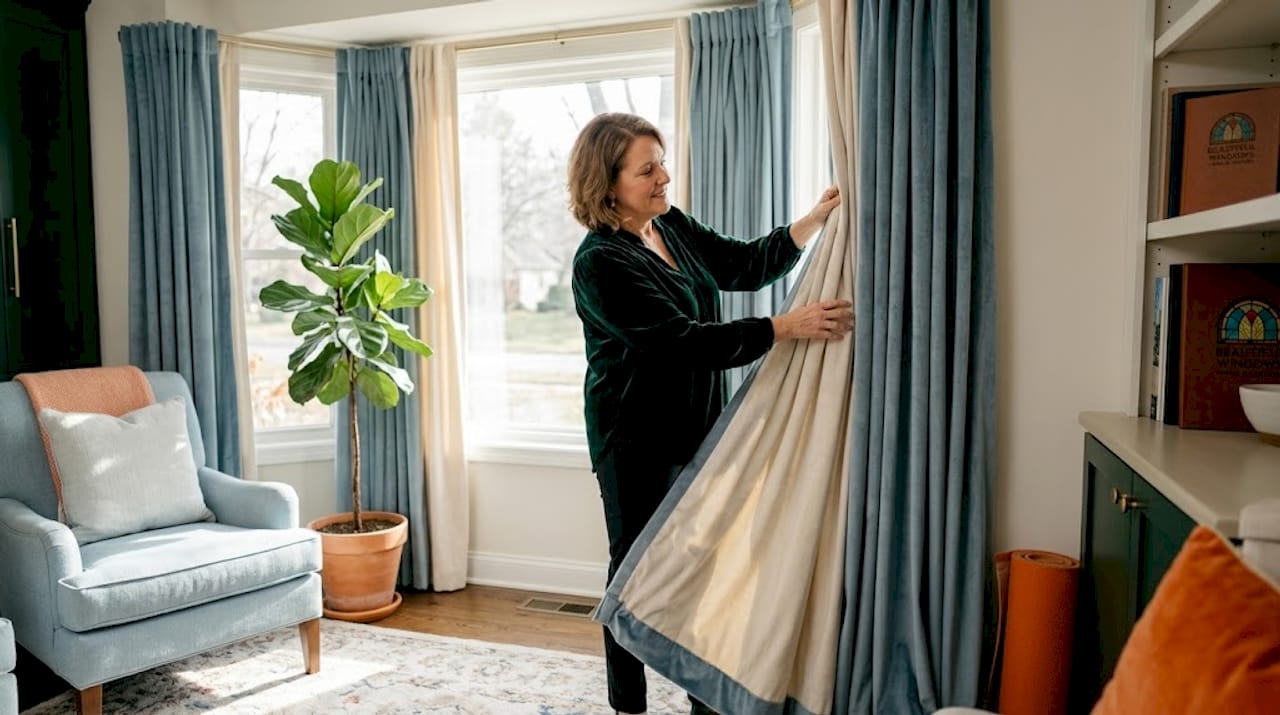
Acoustics are an equally overlooked function. Hard-surfaced rooms—tile floors, painted walls, uncovered windows—create echo and amplify noise. Upholstered furniture, area rugs, and layered curtains all absorb sound waves, reducing reverberation and creating a quieter, more settled atmosphere. This is why furnished apartments feel quieter than empty ones. The fabric is doing acoustic work constantly.
Here are the key ways textiles serve comfort functions in a room:
- Thermal curtains with thermal lining reduce heat transfer at windows, lowering heating and cooling costs
- Rugs anchor a room acoustically and add underfoot insulation on hard floors
- Upholstered furniture absorbs ambient sound and reduces echo in living areas
- Layered soft furnishings (throw pillows, blankets, layered curtains) add psychological warmth that affects how comfortable occupants feel
- Natural fiber textiles such as cotton, linen, and wool allow moisture and air to move, supporting better indoor air quality
“Fabrics contribute to indoor comfort and environmental control beyond decoration: they can influence thermal regulation and acoustics, and can also intersect with sustainability choices covering fiber type, longevity, and maintenance.”
The material type matters as much as the placement. Natural fibers like cotton and linen are breathable and less prone to off-gassing harmful compounds, which supports healthier indoor air. Synthetic fabrics like polyester are often more stain-resistant and easier to clean, but they lack the breathability of natural alternatives. Many of the best home textiles today blend both, pairing the durability of synthetics with the comfort of natural fibers.
Layering fabrics is one of the simplest ways to improve how a room feels. A single sheer curtain looks light and airy. Add a lined linen panel behind it and the room gains warmth, privacy, and an entirely different texture that catches light differently at different times of day. The same logic applies to upholstery: a linen sofa with a wool throw and a cotton cushion creates a depth of texture that a single fabric cannot achieve alone.
Fabric durability: Choosing materials that last
Beyond comfort, durability makes or breaks your experience with home fabrics. Let’s see how to make your investments last.
Choosing fabric by how it looks in a showroom is a common and costly mistake. The fabric that wins every compliment in the first month can be pilled, faded, or visibly worn within a year if it was chosen without regard for actual use demands. The home textile industry uses standardized abrasion tests precisely to take the guesswork out of this process.
The two most widely used tests are the Wyzenbeek test and the Martindale test. Both measure a fabric’s resistance to abrasion (rubbing), expressed in “double rubs.” One double rub equals one back-and-forth motion across the fabric’s surface. The higher the count, the more abrasion the fabric can withstand before showing visible wear. As a general guideline, durability ratings matched to real use determine whether a fabric performs for years or disappoints within months.
| Use Case | Recommended Double Rub Count | Examples |
|---|---|---|
| Decorative/light use | Under 9,000 | Accent pillows, bed canopies |
| Residential general use | 9,000 to 15,000 | Occasional chairs, guest rooms |
| Heavy residential use | 15,000 to 30,000 | Sofas, dining chairs |
| Commercial/heavy traffic | 30,000+ | Contract seating, high-use benches |
For an average household with active daily use, look for upholstery rated at 15,000 double rubs or higher. Homes with children, pets, or frequent entertaining should target 25,000 and above. Decorative pieces that see minimal contact can safely fall below those thresholds without sacrificing longevity.
When choosing upholstery fabrics, it’s also worth considering the weave structure. Tight, flat weaves like microfiber or canvas resist snags and abrasion better than loose or textured weaves like chenille or bouclé. That doesn’t mean you must avoid those beautiful textures entirely. It means placing them thoughtfully in lower-traffic spots where their visual impact is high but physical wear is low.
Pro Tip: If you’re unsure how a fabric will hold up at home, conduct a simple fingernail test. Press your fingernail firmly across the weave and release. If the threads shift noticeably and don’t recover, the fabric is likely too loosely woven for high-use furniture. Tightly woven fabrics will barely show displacement.
Fiber content plays a role in durability too. Wool is naturally resilient and holds its shape well. Cotton is comfortable but can fade with sun exposure unless treated. Nylon and polyester blends offer excellent abrasion resistance and are highly practical in active households. The most durable upholstery options often combine a natural fiber for feel with a synthetic component for structural strength.
Decorative power: Fabrics as style changers
With fundamentals covered, let’s look at the creative aspect—how fabric transforms how your rooms look and feel.
Color, texture, and pattern are the three levers that give fabric its design authority. Used well, they can expand a small room visually, make a high-ceilinged space feel more intimate, or shift a room’s mood entirely without a single drop of paint. This is fabric’s most visible role, and it’s the one most homeowners are somewhat familiar with. But there’s nuance here that most design shows skip over.
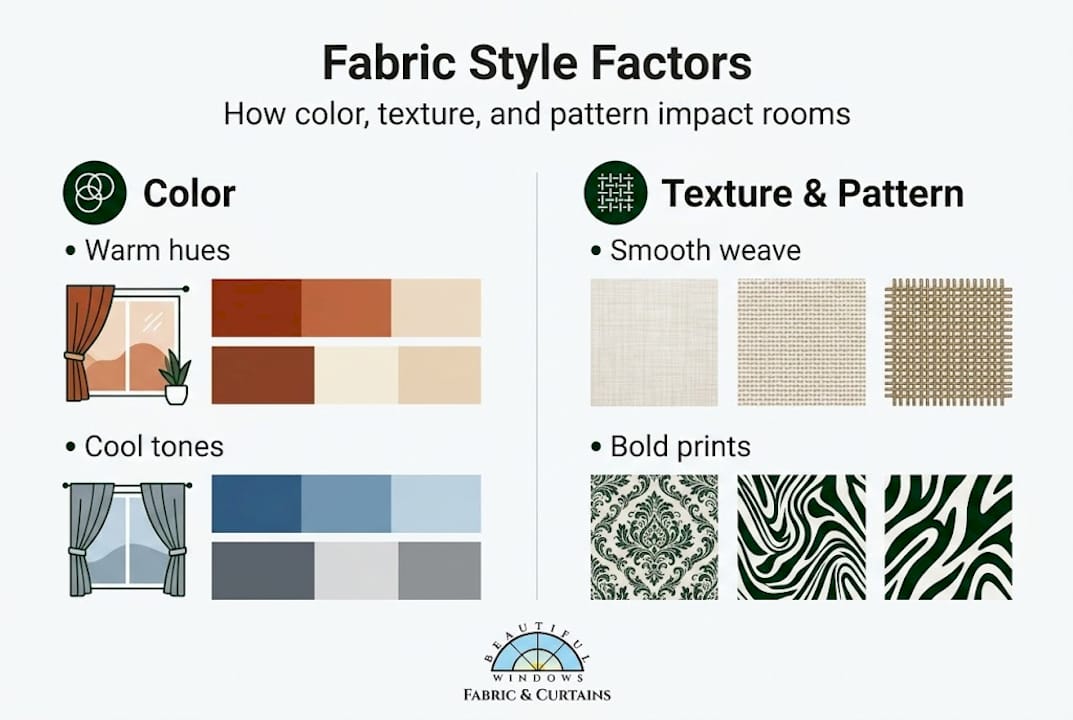
Color in fabric behaves differently than color on a wall. A navy blue wall feels bold and fixed. Navy velvet curtains carry that same richness but also introduce depth through the way the pile catches and reflects light differently at various angles. The same color reads softer in linen, crisper in cotton, and more luxurious in silk. Pattern works similarly. A geometric print on a tight cotton canvas creates visual energy. The same print on a loose-weave linen reads as more relaxed and casual.
Here’s how different drapery fabric types set a room’s tone:
- Sheer fabrics (voile, organza) filter light softly, create an airy and open feel, and suit contemporary or minimalist spaces
- Linen fabrics offer a relaxed, natural texture that reads as sophisticated without being formal; they work across most design styles
- Velvet adds richness, depth, and an immediately formal or luxurious atmosphere; excellent for traditional and maximalist aesthetics
- Blackout fabrics prioritize function while offering a tailored, structured look; useful in bedrooms and media rooms
| Fabric Type | Light Control | Visual Effect | Best Room |
|---|---|---|---|
| Sheer | Low | Airy, expansive | Living areas |
| Linen | Medium | Relaxed, natural | Any room |
| Velvet | High | Rich, formal | Dining, bedroom |
| Blackout | Complete | Clean, structured | Bedroom, media room |
Texture changes how a room feels under different lighting. Trending fabric styles often reflect shifts in this understanding, leaning toward materials that read well under both natural and artificial light. A jacquard weave, for instance, creates subtle dimensional patterns that shift visually as light moves across the surface, adding life to a window treatment without relying on bold color.
Pattern scale also matters. Large-scale patterns draw the eye and anchor a space but can overwhelm small rooms. Small repeating patterns are quieter and work well in multipurpose spaces. If you want to layer patterns confidently, start by varying the scale: one large-scale print, one medium geometric, and one small or solid texture rarely clash. For a fuller reference on the range of options available, reviewing essential curtain fabrics gives a clear starting point for understanding what each type offers stylistically and functionally.
Mixing fabrics is one of the most effective tools in a designer’s approach. Combining a structured, woven curtain with a soft velvet cushion and a jute rug creates contrast that feels intentional and layered rather than random. The key is ensuring that at least one element in each textile choice ties back to a shared color, weight, or finish already present in the room.
Sustainability and health: The greener side of home fabrics
Ready to get the most out of your fabric choices? Here’s how to balance planet, health, and lasting style.
The relationship between fabric and sustainability is more direct than most people realize. Every textile in your home was grown, processed, dyed, and transported before arriving at your door. The fiber type, the dyeing process, and how long the fabric lasts before it goes to landfill all contribute to its total environmental impact. Making informed choices here doesn’t require sacrificing quality or style.
Natural fibers such as cotton, linen, wool, and silk are biodegradable and generally produce fewer toxic byproducts than synthetics. Linen, made from the flax plant, is particularly efficient: it requires far less water than cotton and the entire plant is usable, producing minimal waste. Wool is naturally flame-resistant, highly durable, and biodegrades at end of life. However, natural fibers typically require more maintenance and may be more vulnerable to staining or fading.
Synthetic fibers like polyester, nylon, and acrylic are made from petroleum-based products, which gives them a higher carbon footprint at the manufacturing stage. On the other hand, they often last significantly longer than natural alternatives under high-use conditions, which offsets some of their environmental cost. A sofa upholstered in durable polyester blend that lasts fifteen years may have a lower lifetime footprint than one in untreated natural fiber replaced every five years.
Follow these steps to make more sustainable fabric choices at home:
- Look for recognized certifications such as OEKO-TEX Standard 100, which certifies that fabrics have been tested for harmful substances, or GOTS (Global Organic Textile Standard) for organically grown natural fibers.
- Choose quality over quantity by investing in fewer, better-made textiles that are built to last rather than replacing cheap options frequently.
- Select eco-friendly fabric choices appropriate for the room’s actual demands to avoid premature wear and disposal.
- Prioritize fabrics rated for your use level so the material doesn’t wear out ahead of its expected lifespan.
- Maintain textiles properly through regular cleaning and appropriate care to extend their useful life significantly.
As noted in textiles interior design guidance, sustainability choices intersect directly with fiber type, longevity, and maintenance practices, making those three factors the most practical starting points for any eco-conscious fabric decision.
Pro Tip: A simple way to extend the life of most home fabrics is to rotate soft furnishings seasonally. Cushion covers, throws, and even light curtain panels can be swapped between rooms or stored during peak sun exposure months to reduce fading and wear. This single habit can double the effective lifespan of your textiles with zero additional cost.
Why thinking beyond color unlocks a whole new design world
Most homeowners approach fabric selection the way they approach paint selection: they look for the color that excites them and stop there. It’s an understandable instinct. Color is immediate and emotional. But the most satisfied clients, the ones who revisit their choices with genuine pleasure years later, are those who started with function and built style on top.
The role of fabric function in window treatments illustrates this clearly. A curtain chosen purely for its pattern may look perfect on the first day and disappoint within a season if it doesn’t control light, hold its structure, or suit the room’s thermal needs. Starting with function—what does this fabric need to do?—actually narrows the field helpfully. Within that qualified set of options, the creative choices become more interesting because every option on the table genuinely works.
Designers achieve lasting results by layering style decisions on top of functional ones, not instead of them. When you know your sofa fabric needs 20,000 double rubs, you’re still free to choose between dozens of colors, textures, and patterns. You’ve simply eliminated the options that would have frustrated you. That’s not a creative constraint. It’s a cleaner creative space.
Want expert help with home fabrics?
If this guide has clarified how much fabric contributes to your home’s everyday experience, the next step is putting that knowledge to work with quality materials and expert support.
At Beautiful Windows Elgin, you’ll find a curated selection of designer fabrics sold by the yard, including jacquard satin, embroidered textiles, and premium upholstery options. Whether you’re refreshing a single room or outfitting an entire home, the site offers fabric samples, design consultations, and custom drapery installation guidance with nationwide shipping. You don’t have to navigate these decisions alone. Explore the full fabric selection and connect with experienced professionals who understand how form, function, and lasting quality work together.
Frequently asked questions
What is the most durable fabric for sofas and chairs?
The most durable upholstery fabrics carry high double rub counts of 15,000 and above, measured by standardized tests like Wyzenbeek, with heavy-use households benefiting from ratings of 25,000 or higher.
How do fabrics control temperature and noise in a room?
Heavier fabrics block sunlight and drafts, improving insulation, while upholstery, rugs, and lined curtains absorb sound waves that would otherwise echo across hard surfaces.
Which fabrics are best for allergy sufferers?
Natural fibers like cotton and linen are breathable and less likely to trap allergens, and as sustainability guidance notes, regular maintenance and proper fiber selection both contribute to healthier indoor environments.
What’s a quick way to tell if a fabric is eco-friendly?
Look for OEKO-TEX or GOTS certifications on the label, and consider fiber type and longevity as primary indicators of a fabric’s overall environmental impact rather than relying on marketing language alone.
Recommended
- Role of Fabric in Window Treatments– Impact on Style & Function – Shop Designer Fabrics by the Yard | Curtains & Drapery
- 7 Essential Curtain Fabric Types List for Homeowners – Shop Designer Fabrics by the Yard | Curtains & Drapery
- 7 Essential Window Treatment Fabric Tips for Homeowners – Shop Designer Fabrics by the Yard | Curtains & Drapery
- Trending curtain fabrics for stylish windows in 2026 – Fabric Store in Columbia, SC | Drapery Making Services
- beautifulwindowselgin.com
- the worven dwelling