


Best Fabric Types for Sewing Custom Bridal Gowns
Quick Summary
Satin, Mikado, crepe, tulle, organza, and lace are the most common fabrics for custom bridal gowns, and each suits different silhouettes. Satin and Mikado give structured bodices and sculpted skirts a clean shape, while crepe drapes softly for column styles. Choose the fabric that matches the structure your design needs before you buy.
- Satin suits structured bodices, fitted sheaths, and skirts needing a clean, sculpted line.
- Mikado is a heavier, firmly woven fabric that holds sculpted silhouettes well.
- Crepe drapes closely and suits bias-cut gowns and soft column silhouettes.
- Add a smooth lining such as habotai to hide seam allowances and help the gown slide on.
- Preshrink washable linings and buy 1/2 to 1 extra yard for a first gown.
Table of Contents
- How Fabric Choice Shapes a Custom Bridal Gown
- Satin and Duchesse Satin for Structured Bridal Gowns
- Mikado Fabric for Sculpted Silhouettes
- Crepe Wedding Dress Fabric for Soft, Fluid Lines
- Tulle, Organza and Lace for Overlays and Detail
- Bridal Material List: Lining, Underlining and Yardage Planning
- Choosing the Best Fabric for Your Wedding Dress Before You Cut
- Frequently Asked Questions
Best Fabric Types for Sewing Custom Bridal Gowns
Last Updated: November 14, 2026
Choosing the right fabric decides how a custom bridal gown drapes, holds its shape, and photographs on the day. Home sewers and professional designers often ask which fabric will do what a given gown needs. The answer depends on the silhouette you want, the seams you plan to build, and how much structure the design requires. Satin, Mikado, crepe, tulle, organza, and lace each behave differently, and the best choice matches the fabric to the gown.
How Fabric Choice Shapes a Custom Bridal Gown
Fabric choice sets the silhouette before the first seam is sewn. A stiff, structured fabric holds sculpted lines, while a fluid fabric follows the body and moves with the wearer. Bridal fabric guides commonly feature structured and lightweight options, including satin, Mikado, chiffon, crepe, organza, tulle, and lace. The Knot lists tulle, organza, silk satin, crepe, taffeta, Mikado, and Duchesse satin among the fabrics brides often encounter when browsing wedding dresses. The Knot's Wedding Gown Fabric 101 guide
Fabric selection depends on the desired silhouette and fabric behavior, not on one universally best material. Brides magazine describes crepe as a soft, gauzy, crinkled material that works best with soft silhouettes, which shows why a single fabric rarely suits every design. Brides guide to wedding dress fabrics
Eastern Michigan University's thesis on wedding-dress fabric testing examined cover factor, drape, abrasion, and colorfastness, all characteristics that shape how a fabric suits different dress styles. Eastern Michigan University thesis on wedding dress fabric analysis
Before you buy, decide which of these matters most: structure, flow, or texture. That single decision narrows the field faster than any list of fabric names.
Satin and Duchesse Satin for Structured Bridal Gowns
Satin is the go-to fabric for structured bridal gowns. Its smooth face and refined sheen give ballgowns and fitted bodices a polished finish. Duchesse satin adds more body, which makes it a strong choice for sculpted skirts and bodice seams.
Lily Off-White Bridal Satin Fabric by the Yard, priced at $27.99, offers a soft off-white tone and a satin sheen suited to bridal skirts and tailored bodices. Lily Off-White Bridal Satin Fabric by the Yard is sold by the yard, so you can order exact yardage for a full skirt.
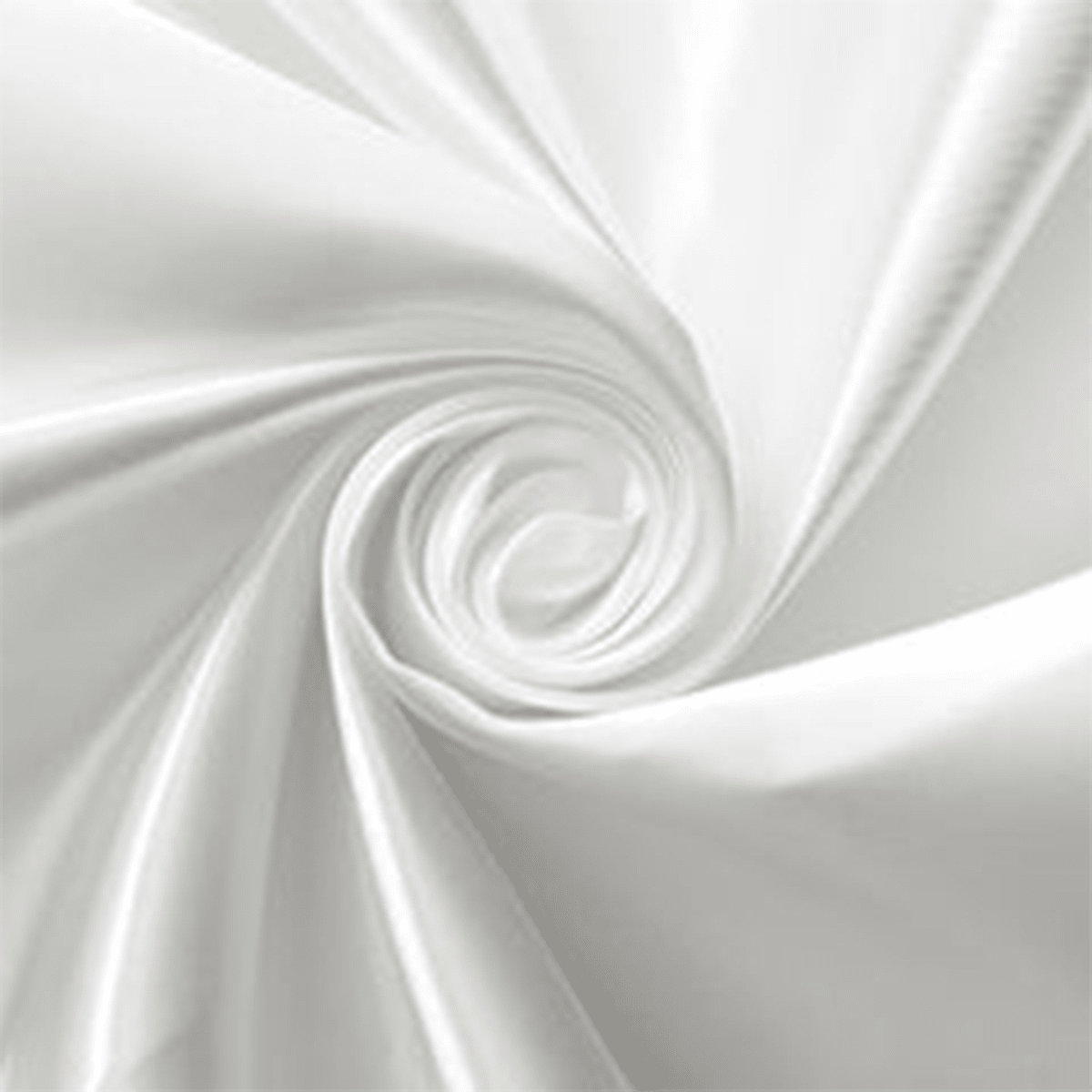
Best for: structured bodices, fitted sheaths, and skirts that need a clean, sculpted line.
Skip if: you want the soft, airy drape of a flowing gown, since satin can read stiff in large volumes.
For a similar satin look in a different tone, Mishia Pearl White Bridal Satin Fabric by the Yard is another option at $27.99.
Bridal satin and fabric prices per yard (USD)
Mikado Fabric for Sculpted Silhouettes
Mikado is a firmly woven, heavier-weight fabric generally known for holding structured shapes.
Construction notes for Mikado:
- Needle and thread: Most sewists find a universal or sharp needle in a 90/14 to 100/16 range handles Mikado cleanly, with a polyester or polyester-cotton blend thread that has some give. A too-fine needle tends to skip or deflect on the dense weave.
- Seam bulk: Mikado is thick, so plain seams on curved bodice lines can ridge. Grading seam allowances, trimming to about 3/8 inch on curves, and pressing over a tailor's ham keeps the line smooth. On very bulky intersections, consider a lapped or mock flat-felled seam rather than a plain seam.
- Pressing: Mikado responds well to steam but can shine or scorch under a hot iron. Press on the wrong side over a press cloth, and test a scrap first, because the sheen is easy to crush permanently.
- Interfacing: Because the fabric is already firm, lightweight interfacing is usually enough at necklines and armholes. Heavy interfacing can make a Mikado bodice board-stiff.
- Lining: A smooth lining such as habotai or a lightweight polyester lining helps the gown slide on and hides the seam allowances that Mikado's thickness makes hard to finish invisibly.
Crepe Wedding Dress Fabric for Soft, Fluid Lines
Crepe is a soft, slightly crinkled fabric that drapes closely. It suits bias-cut gowns, column silhouettes, and relaxed beach or garden styles. Because it has little structure, it shows every seam, so careful construction matters.
Best for: flowing column gowns and soft, romantic silhouettes.
Skip if: you need a structured bodice that holds its shape without boning or lining.
Tulle, Organza and Lace for Overlays and Detail
Overlays add texture and depth without changing the main silhouette. Tulle and organza work well as veils and layered skirts, while lace adds detail to bodices and sleeves.
White Polyester Petticoat Crinoline Net Fabric | 180 GSM, 58-60″ is priced at $18.99 per yard and is sold for petticoat and understructure projects.
For embroidered detail, the Symone Blue Embroidered Voile Lace is a 100% cotton option, but its blue tone suits casual or non-bridal projects better than a traditional gown. The Georgette Lace, Burgundy is priced at $42.99 per yard.
Pair overlays with a lining fabric so sheer layers do not show seams or skin.
Bridal Material List: Lining, Underlining and Yardage Planning
A complete bridal material list includes the outer fabric, lining, underlining, interfacing, and any structural layers such as crinoline or net. Each layer does a different job, and planning them together is what separates a gown that hangs cleanly from one that fights itself.
The layers, in plain terms:
- Outer fabric: the visible fashion fabric, whether satin, Mikado, crepe, lace, or organza.
- Lining: a smooth inner layer that protects the outer fabric, hides seam allowances, and helps the gown slide on. A lightweight habotai or polyester lining is common; choose a color close to the outer fabric so it does not shadow through.
- Underlining: a layer joined directly to the wrong side of the outer fabric before construction. It adds body to soft or sheer fabrics, stabilizes lace, and can reduce show-through. Underlining a crepe column with a lightweight silk or cotton batiste is a common way to add opacity without stiffness.
- Interfacing: fusible or sew-in support at necklines, armholes, waistlines, and button plackets. Match its weight to the fabric; heavy interfacing on a soft crepe will telegraph through.
- Structural layers: crinoline, net, or horsehair braid for skirt volume and hem support.
Yardage planning that actually works:
Start from the pattern's layout guide, then adjust for the fabric you bought rather than the fabric the pattern assumes. Most bridal patterns are drafted for 58/60-inch fabric, so a 45-inch lining or a 54-inch lace changes the layout and can push yardage up sharply.
- Full skirts and trains: these eat yardage fastest. A full ballgown skirt can require two to three times the yardage of a sheath in the same size, and a cathedral train adds length that may not fit across the fabric width at all.
- Nap and directional fabrics: satin, velvet, and any fabric with a pile or directional sheen must be cut in one direction. That rule alone can add 10 to 20 percent to yardage because you cannot flip pattern pieces to save space.
- Motif and repeat matching: lace and embroidered fabrics with large repeats need extra yardage so motifs can be centered on the bodice and matched at seams. Order enough to center the pattern, not just enough to cover the pieces.
- Shrinkage and mistakes: preshrink washable linings and underlinings, then add a buffer. Most sewists buy 1/2 to 1 extra yard beyond the pattern estimate for a first gown.
Width interacts with every one of these decisions. A 58/60-inch satin often cuts a full skirt more efficiently than a 45-inch lining, but the narrower lining may still be the right choice for cost and hand. Lay out the pattern pieces on paper at the fabric's actual width before you order, and note where the grainline falls.
Dye lots and color matching: bridal whites vary widely between bolts, and dye lots can shift even within the same product. Buy the outer fabric, lining, and any contrast fabric in one order when possible, and record the dye lot. If you must reorder, expect a visible difference and plan to keep the mismatched yardage in hidden areas such as underlinings or inner facings.
White Silky Habotai Clothing Lining Fabric |45" Wide, Sold by the Yard is priced at $14.99 and is 45 inches wide.
Choosing the Best Fabric for Your Wedding Dress Before You Cut
If you are sewing your first custom gown, start with a stable, forgiving fabric such as satin or a lightweight polyester. Save delicate crepe and sheer fabrics for later projects.
For the outer layer, Pearl White Bridal Satin Fabric by the Yard | Winter Frost 58/60 is a 100% polyester satin priced at $27.99, sold by the yard for full-length gowns.

Fabric choice is the foundation of a custom gown. Start with the silhouette, match the fabric to the structure you need, and plan your lining and yardage before you cut.
Frequently Asked Questions
What is the best fabric for a bridal gown?
There is no single best fabric for every bridal gown. Satin suits structured, polished designs, crepe suits soft and fluid silhouettes, and Mikado holds sculpted shapes. Match the fabric to the silhouette you want, the season and your sewing skill. Bridal satin and pearl satin from Beautiful Windows Elgin are listed at $27.99 per yard, and an off-white stretch taffeta is listed at $22.99 per yard.
Is Mikado a good fabric for a wedding dress?
Yes, Mikado is a good choice for wedding dresses that need a sculpted, structured shape, such as ball gowns and dramatic skirts. It is a firm, lustrous fabric that holds folds and volume well, but it is heavier and less forgiving to sew than satin.
What is the difference between satin, crepe and Mikado for bridal gowns?
Satin has a smooth, reflective surface and a fluid drape, which suits clean, sleek lines. Crepe is matte with a slightly crinkled texture and drapes softly, which suits flowing, understated gowns. Mikado is a heavier, structured fabric with a lustrous finish that holds its shape. In practice, satin works for fitted or A-line gowns, crepe for soft column and slip styles, and Mikado for sculpted ball gowns and bold volume.
How much fabric do I need to sew a custom wedding dress?
Yardage depends on the gown's length, width and skirt volume, so measure your design before ordering. Fabrics sold here are listed by the yard, and product widths are shown on each listing.
