

Upholstery Fabric Buying Process: A Homeowner's Guide
The upholstery fabric buying process follows a clear sequence: identify your fabric type, measure your furniture accurately, verify durability ratings, confirm care codes, and source from a reliable seller. Get any one of those steps wrong and you risk a fabric that pills after six months, a pattern that won’t align on a curved arm, or a yardage shortfall that delays your entire project. The good news is that each step is straightforward once you know what to look for.
Here is a quick-reference summary of what the full process involves:
- Understand fabric types and fiber content before anything else
- Measure your furniture and calculate yardage, including pattern repeat allowances
- Check durability ratings using the Martindale rub test as your primary benchmark
- Match fabric to your lifestyle: pets, children, sunlight exposure, and traffic level
- Verify cleaning codes (W, S, WS, or X) before committing to a purchase
- Confirm order details including dye lot, width, and lead time with your seller
- Source from a trusted supplier who offers samples and knowledgeable support
1. What fabric types and materials work best for upholstery?
Upholstery fabrics divide into three broad families: natural fibers, synthetic fibers, and blended constructions. Each has a distinct performance profile, and choosing between them starts with understanding what each one does well and where it falls short.
Natural fibers include cotton, linen, wool, and leather. Cotton is breathable and durable, but fades in direct sunlight unless treated. Linen resists pilling and soiling yet wrinkles easily and requires careful cleaning. Wool is naturally fire-resistant and holds its shape well, making it a reliable choice for formal or moderate-use pieces. Leather, one of the oldest upholstery materials, is measured in decades of use rather than rub counts and develops a refined patina over time.
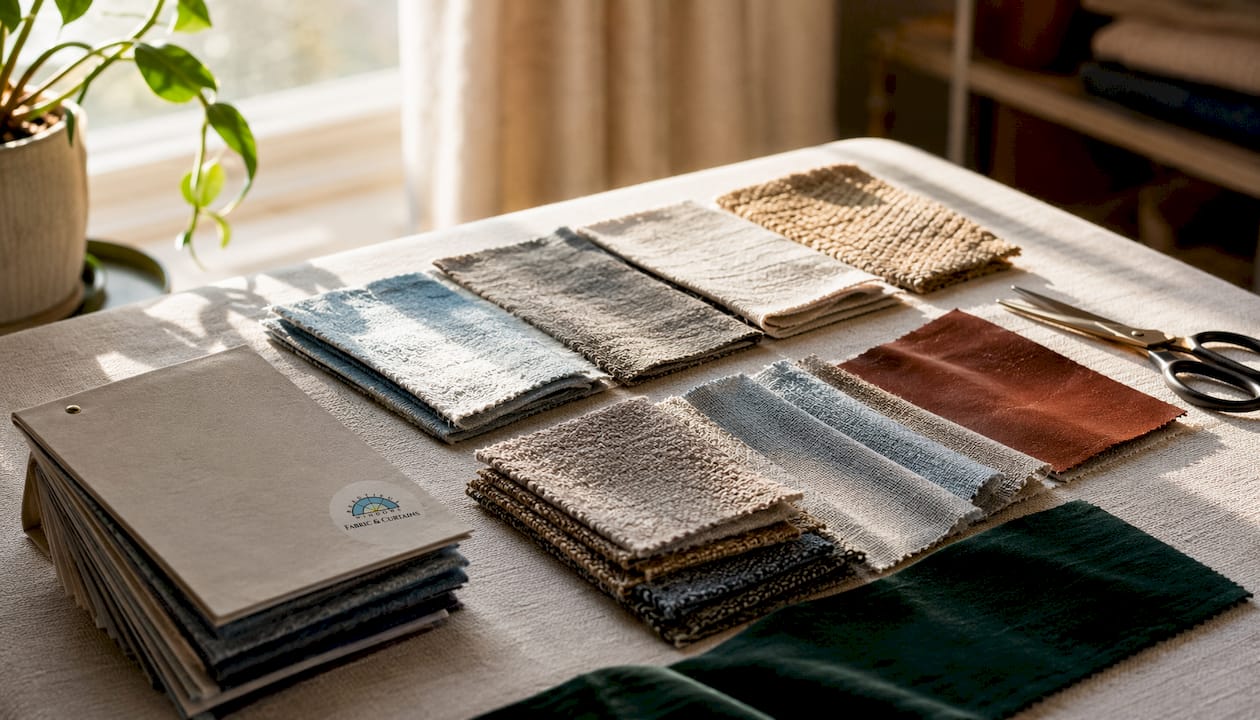
Synthetic fibers such as polyester, nylon, acrylic, and olefin generally resist fading and staining better than naturals. Polyester blends add resilience and wrinkle resistance to almost any fabric construction. Acrylic, used in outdoor-rated fabrics like Sunbrella, holds color exceptionally well under UV exposure. Nylon is among the strongest fibers available but is sensitive to prolonged sunlight.
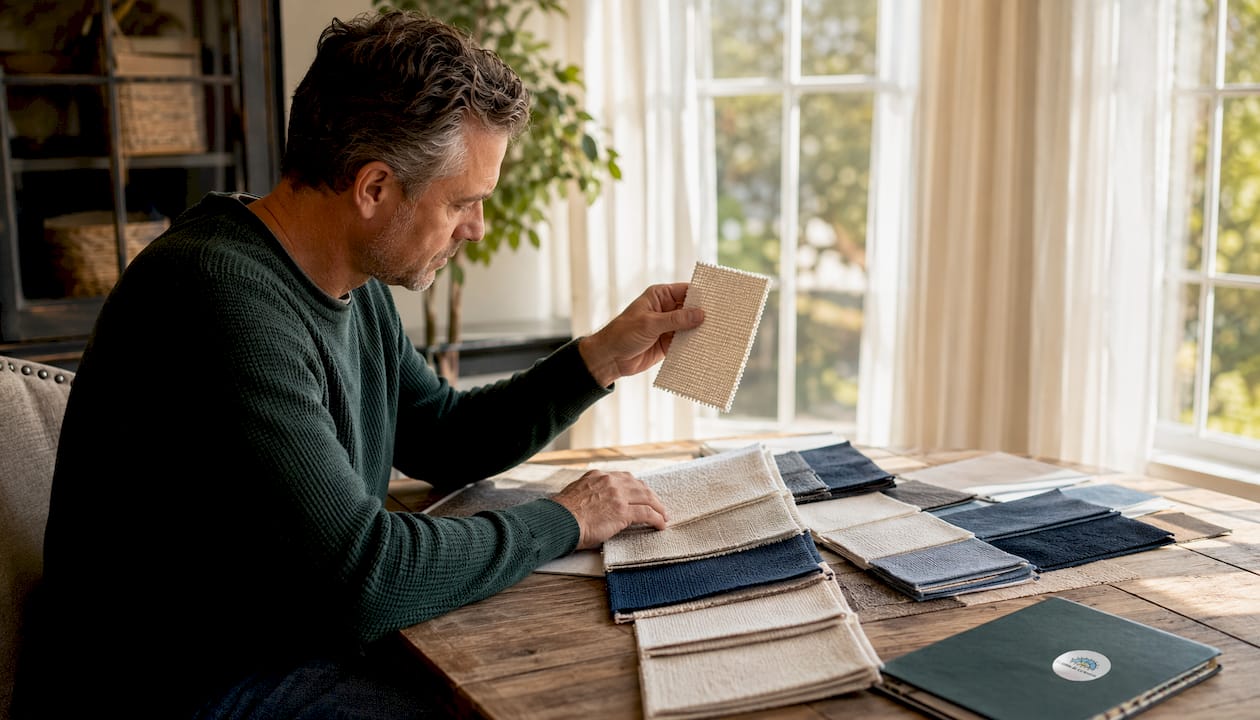
Performance fabrics represent a category of their own. Crypton embeds stain and odor resistance directly into each fiber rather than applying a surface treatment, and it carries Greenguard Gold Certification for low chemical emissions. Sunbrella, built from solution-dyed acrylic, resists moisture and fading and is widely used for both indoor and outdoor furniture. Revolution fabrics are inherently stain, water, and bacteria resistant without chemical additives, and they resist pilling and fading through heavy use. For homes with pets, children, or high daily traffic, performance fabrics are the most practical starting point.
Delicate options such as silk, loosely woven linen, and embroidered textiles suit low-traffic or decorative furniture. A silk velvet on a bedroom accent chair is a reasonable choice. That same fabric on a family room sofa is a maintenance problem waiting to happen.
Beyond fiber content, weave structure matters. A tight weave outperforms a loose one in almost every durability category. Textured weaves hide everyday wear and small stains better than smooth solids. Pile fabrics like velvet require attention to nap direction during both selection and installation.
Fabric cleaning codes are printed on the label or spec sheet and dictate how a fabric can be maintained:
- W: Water-based cleaning products are safe
- S: Solvent-based cleaners only; water can cause staining or shrinkage
- WS: Either water or solvent-based products work
- X: Vacuum or brush only; professional cleaning may be required
For busy households, W or WS codes are the most practical. An X-code fabric on a dining chair is a risk most homeowners would rather avoid.
Pro Tip: Order swatches and test them in varied lighting conditions before committing. Colors shift dramatically between morning daylight and evening lamplight, and a fabric that looks perfect in a showroom photo can read entirely differently against your flooring and wall color.
2. How to measure and estimate how much fabric you need
Accurate yardage calculation prevents two equally frustrating outcomes: running short mid-project or ordering so much excess that the cost climbs well past budget. The process has a few consistent steps regardless of furniture type.
Step-by-step yardage estimation:
- Measure the height and width of each section of the furniture piece (seat, back, arms, cushions, skirt if applicable) in inches.
- Add 2–3 inches to each measurement for seam allowances and tucking.
- Convert each section’s dimensions to yards (divide inches by 36).
- Add all sections together for a base yardage figure.
- Account for fabric width. Most upholstery fabric runs 54 inches wide; narrower fabric requires more yardage to cover the same area.
- Add pattern repeat allowance. A fabric with a 12-inch vertical repeat can waste a full repeat per cut section, so multiply your base yardage by a factor that reflects the repeat size.
- Add a buffer of 10–15% for errors, pile direction requirements, and potential reorders.
Common yardage benchmarks (approximate, based on 54-inch-wide plain fabric):
- Standard sofa (3-seat): 14–18 yards
- Armchair with cushion: 6–8 yards
- Dining chair seat only: 1–1.5 yards per chair
- Ottoman: 2–4 yards depending on size
Pattern repeats are where most homeowners underestimate. A large-scale print with an 18-inch repeat on a sofa can add 3–5 yards to the base calculation. Nap direction on velvet or microfiber adds another 10–15% on top of that.
Pro Tip: When ordering, always round up to the next half-yard and specify the dye lot on your order confirmation. Dye lots can vary visibly between production runs, and a reorder from a different lot on the same pattern can create a noticeable color mismatch.
3. Key tips to keep in mind when buying upholstery fabric
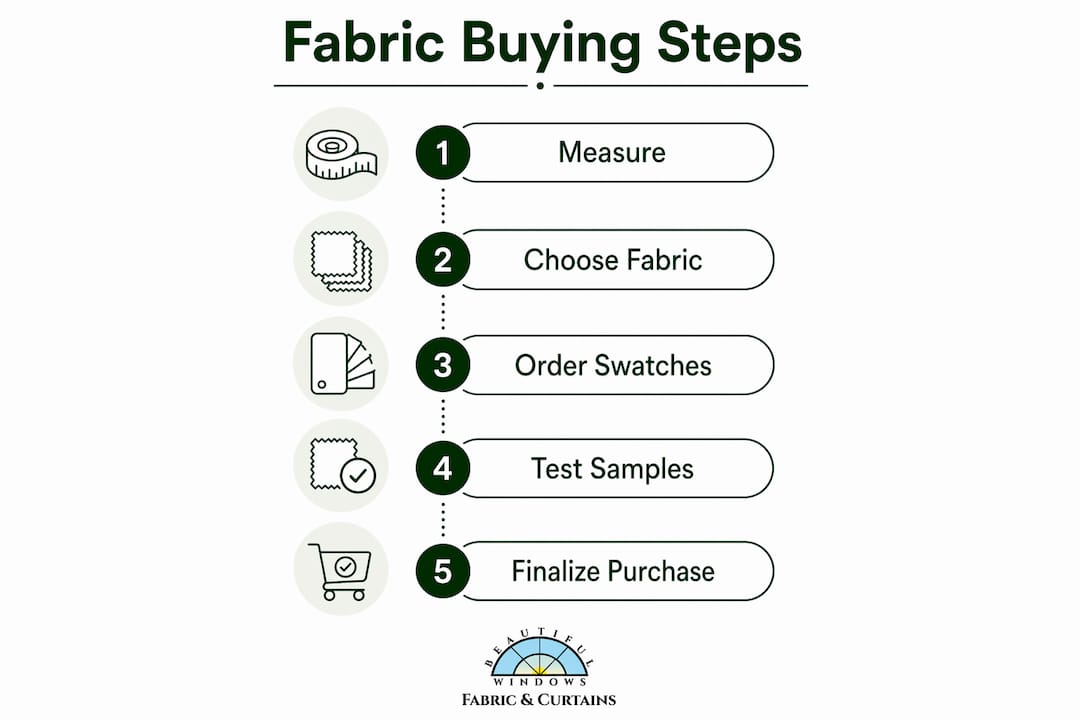
The practical side of the upholstery fabric buying process involves more than picking a color. Lead times, minimum order quantities, and seller reliability all affect whether your project finishes on schedule and on budget.
- Check minimum order quantities upfront. Many fabric suppliers set minimums of 2–5 yards per colorway. If your project requires only 3 yards of a specialty fabric, a 5-yard minimum changes your cost calculation.
- Build lead time into your schedule. Specialty fabrics, custom colorways, and trade-only lines can take 2–6 weeks to ship. Ordering at the last minute and paying for rush shipping is an avoidable expense.
- Verify the complete order specification before submitting. A well-placed order includes the exact pattern and style number, color name and code, fabric width, yardage, dye lot, pile or pattern direction, and your required delivery date. Missing any of these details invites errors.
- Assess seller reliability before you buy. A trustworthy supplier offers clear product specifications, sample programs, and responsive customer service. If a seller cannot provide a spec sheet with rub count, cleaning code, and fiber content, that is a meaningful gap.
- Understand the difference between retail and trade pricing. Trade accounts typically offer 30–50% lower prices than retail for equivalent or better fabric, but they require a verified business account. Homeowners who do not qualify for trade pricing should prioritize reputable domestic retailers who offer verified specifications and sample programs.
- Evaluate color and pattern suitability for the furniture’s shape. Curved or complex frames work best with solid colors or small-scale patterns. A bold geometric on a camelback sofa can look fragmented once the fabric is cut and reassembled across the curves.
- Request large swatches for patterned fabrics. A small cutting rarely shows the full motif. Seeing the complete pattern repeat before ordering prevents the disappointment of a design that looked elegant on a 4-inch sample but reads busy at full scale.
Pro Tip: When evaluating a new seller, ask specifically whether they can match dye lots on reorders. A supplier who tracks and documents dye lot information is operating at a professional standard that protects your project from color inconsistencies down the line.
4. How to choose upholstery fabric based on durability and lifestyle
Durability is where most homeowners make their costliest mistake. Professionals consistently advise starting with lifestyle factors first: who uses the furniture, how often, and what the realistic worst-case scenario looks like. Aesthetics come second.
The Martindale rub test is the primary durability benchmark used in the upholstery industry. It simulates the friction of a person sitting down and standing up repeatedly, measuring how many cycles a fabric withstands before showing visible wear. The standard thresholds are:
- A baseline rub count suitable for domestic, moderate-use furniture
- **A higher rub count recommended for high-traffic areas or commercial settings
Those numbers are useful starting points, but they do not tell the whole story. A fabric can pass the Martindale test at a high rub count and still snag on pet claws, fade near a sunny window, or absorb stains readily. Rub count measures abrasion resistance specifically, not overall durability.
Durability considerations by lifestyle:
- Pets and children: Choose performance fabrics with 50,000+ rub ratings. Crypton, Sunbrella, and Revolution are engineered for exactly this scenario, resisting stains at the fiber level rather than relying on surface treatments that wear off.
- High-traffic living rooms and family rooms: Tight-weave polyester blends, microfiber, and performance textiles handle daily use reliably. Avoid loosely woven linens, silk, or embroidered fabrics in these spaces.
- Formal or low-traffic rooms: Velvet, linen, and fine jacquard are appropriate where the furniture sees limited daily contact. A bedroom accent chair or a formal sitting room settee can carry these materials without the durability concerns that apply to a family sofa.
- Sunlight exposure: Acrylic-based fabrics like Sunbrella hold color under UV exposure far better than cotton or rayon. If a piece sits near a window, fade resistance should factor into the selection.
Testing samples in your actual home environment is the most reliable step in the entire selection process. Drape the swatch over the furniture, observe it in the room’s natural and artificial light, and if pets are a factor, check whether hair clings to the surface. A fabric that performs well in a showroom but collects pet hair like a magnet is a daily frustration.
Pro Tip: For upholstery fabric durability, consider the full picture beyond rub count: snag resistance, fade resistance, and how the fabric responds to moisture. A brief water-bead test on a performance swatch reveals a great deal about how it will handle everyday spills.
5. Expert guidance from Beautifulwindowselgin on choosing upholstery fabric
Choosing upholstery fabric well means asking the right questions before you fall in love with a color. At Beautifulwindowselgin, the guidance starts with how you actually live in your home, then works toward the fabric that serves both your practical needs and your aesthetic vision. A beautiful fabric that cannot survive your household is not a good investment, no matter how refined its weave.
Beautifulwindowselgin brings together a curated selection of upholstery and drapery fabrics sold by the yard, with verified specifications including fiber content, rub counts, and cleaning codes available for each product. The team supports homeowners and DIY enthusiasts through the full selection process, from initial fabric samples to final order placement.
What sets a trusted fabric source apart:
- Sample programs: Ordering swatches before committing to full yardage is the single most effective way to avoid buyer’s remorse. A reliable seller makes this straightforward.
- Verified product specifications: Rub count, cleaning code, fiber content, and fabric width should be clearly listed. If that information is absent, the seller cannot support an informed decision.
- Design consultation access: For homeowners navigating complex projects, the ability to speak with someone knowledgeable about fabric performance and compatibility with specific furniture types is genuinely useful.
- Consistent dye lot management: A professional supplier documents dye lots and can match them on reorders, protecting projects that require additional yardage after the initial order.
- Nationwide shipping: Beautifulwindowselgin ships across the United States, making its curated fabric selection accessible regardless of location.
The upholstery fabric selection process becomes considerably more manageable when you have access to a seller who can answer specific questions about how a fabric will perform in your home. Generic online listings with no specifications and no sample option leave too much to chance on a purchase that involves both significant cost and significant labor.
For homeowners ready to explore quality fabric options, Beautifulwindowselgin’s upholstery fabric collection offers a well-organized starting point, with options spanning performance textiles, woven jacquards, and decorative accents suitable for a range of furniture projects.
Key Takeaways
Matching fabric to your actual lifestyle and verifying durability ratings before purchase are the two decisions that most determine whether an upholstery project succeeds long-term.
| Point | Details |
|---|---|
| Start with lifestyle, not aesthetics | Assess who uses the furniture, pet and child factors, and sunlight exposure before selecting any fabric. |
| Use Martindale ratings as your baseline | Domestic furniture should use fabrics with a Martindale rating of at least 20,000+ rubs; high-traffic or commercial pieces require 40,000+ rubs for reliable long-term performance. |
| Verify cleaning codes before buying | W and WS codes suit busy households; X-code fabrics belong only on low-contact decorative pieces. |
| Calculate yardage with pattern repeat included | Add 10–15% buffer yardage and account for pattern repeat waste to avoid shortfalls. |
| Source from verified sellers with sample programs | Confirmed specifications, dye lot tracking, and swatch availability protect your investment at every stage. |
Recommended
- Tips for Selecting Upholstery Fabric: A Practical Guide – Fabric Store in Columbia, SC | Drapery Making Services
- Defining upholstery materials: A practical guide for homes and designe – Fabric Store in Columbia, SC | Drapery Making Services
- Step by Step Fabric Selection for Home Projects – Fabric Store in Columbia, SC | Drapery Making Services
- Upholstery Fabric Types: A Practical Guide for 2026 – Fabric Store in Columbia, SC | Drapery Making Services