

Understanding embroidered fabric: Custom décor guide
TL;DR:
- Genuine embroidered fabric features raised, stitched textures created by needle and thread, offering superior depth and durability. Printed textiles mimic embroidery visually but lack the tactile richness, surface dimension, and long-lasting quality of true embroidery. Selecting authentic embroidered fabrics enhances the tactile experience, light interaction, and overall elegance of custom home décor.
Reaching for a bolt of fabric labeled “embroidered” only to discover it’s a printed imitation is a frustration many homeowners and interior designers know well. The market is full of textiles that mimic the look of embroidery through digital printing, yet lack the raised texture, dimensional thread work, and lasting quality that genuine embroidery delivers. When you’re investing in custom drapery or fine home décor, knowing the difference isn’t just useful — it’s essential to getting the results you want.
Table of Contents
- Defining embroidered fabric: What makes it unique?
- Embroidery vs. weaving and prints: Spot the real deal
- Quality indicators: Choosing embroidered fabric for custom décor
- Applications and inspiration: Transforming spaces with embroidery
- A designer’s take: Why embroidery elevates interiors beyond the ordinary
- Transform your space with true embroidered fabric
- Frequently asked questions
Key Takeaways
| Point | Details |
|---|---|
| Embroidery is stitch-based | Authentic embroidered fabric features stitched decoration with distinct texture, not just prints. |
| Easy identification tips | Checking the fabric surface and texture helps you spot true embroidery instantly. |
| Quality impacts longevity | Carefully chosen embroidered fabrics withstand use and elevate custom drapery projects. |
| Endless décor possibilities | Embroidered textiles offer creative options for drapery, pillows, and statement accents. |
Defining embroidered fabric: What makes it unique?
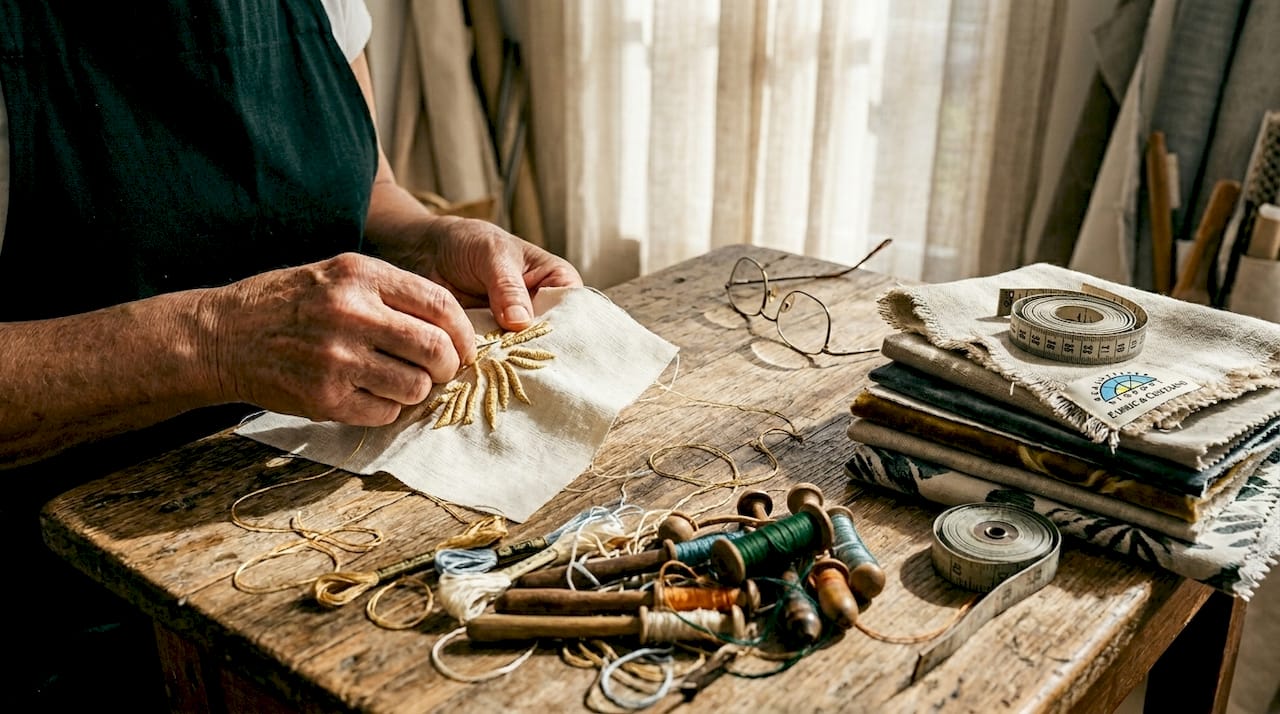
True embroidered fabric is not about pattern alone. It’s about how that pattern is made. Embroidery is defined as the craft of decorating fabric using a needle to apply thread or yarn, and it may incorporate additional materials such as beads, quills, pearls, and sequins. This stitched construction is what separates genuine embroidered fabric from everything else on the market.
When you run your fingers across real embroidered fabric, you feel the stitching. The threads sit proud of the base fabric, creating a three-dimensional surface that catches light and adds visual depth. A printed version simply cannot replicate this quality. The design is flat, ink-based, and gives no tactile feedback beyond the texture of the base fabric itself.
The curtain fabric types available today span a wide range, and embroidered options represent some of the most refined choices for custom window treatments. Understanding why starts with recognizing what materials go into the craft.
Common materials used in embroidered fabrics:
- Silk, cotton, linen, and polyester base cloths
- Rayon, silk, or metallic embroidery threads
- Beads, sequins, pearls, and decorative trims worked into the stitching
- Dense satin stitches that build bold, smooth motifs
- Open chain stitches that create delicate, lace-like effects
“The craft of decorating fabric using a needle to apply thread or yarn” has been practiced across cultures for centuries, resulting in techniques that range from delicate hand embroidery to precision machine-guided stitching. Both produce genuine textural dimension that printing cannot match.
Key characteristics at a glance:
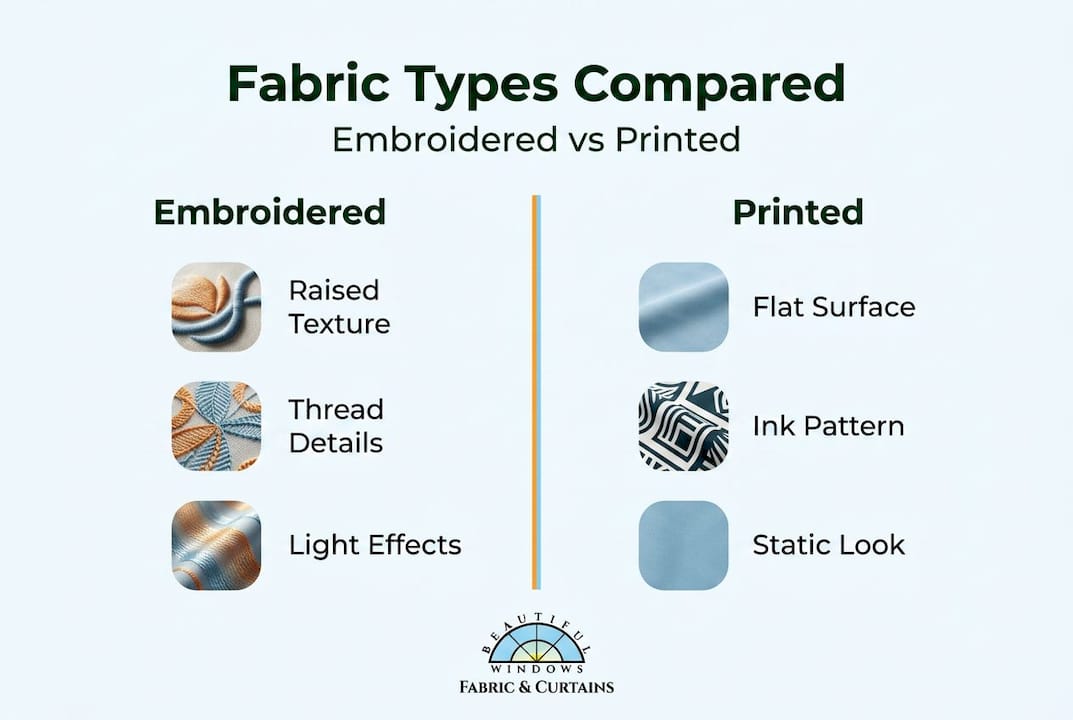
| Feature | Embroidered fabric | Printed fabric |
|---|---|---|
| Surface texture | Raised, stitched, three-dimensional | Flat, smooth |
| Pattern creation | Needle and thread on base cloth | Ink applied to surface |
| Durability of design | Thread is woven in; resists fading | Ink can fade or crack |
| Light interaction | Threads reflect and refract light | Uniform, flat reflection |
| Tactile appeal | Substantial; pronounced feel | Minimal |
This table makes one thing clear: the qualities that matter most for luxury home décor — texture, light interaction, and durability — are properties only genuine embroidery can provide.
Embroidery vs. weaving and prints: Spot the real deal
With the basics covered, it’s vital to understand what sets embroidery apart from other decorative fabric techniques. Three fabric types cause the most confusion: embroidered, jacquard woven, and digitally printed. Each has its place in home décor, but they are not interchangeable, and understanding the difference helps you choose wisely.
Embroidery adds decoration on top of an existing fabric surface using stitches, creating a raised, dimensional appearance. Weaving, by contrast, creates patterned fabric through the interlacing of threads during the actual construction of the textile. A jacquard weave is beautiful and durable, but its pattern is part of the fabric structure, not applied on top. Embroidery sits above the base cloth, which is precisely what gives it that characteristic three-dimensional quality.
Printed fabrics occupy a completely different category. Digital or screen printing applies ink to the fabric surface, producing a flat image that can look striking from a distance but lacks any surface dimension. Under close inspection, or when the light shifts across a room, printed fabric reveals its limitations immediately.
How to tell them apart — a step-by-step approach:
- Touch the surface. Genuine embroidered fabric has raised threads you can feel with your fingertip. Woven jacquard has texture within the weave but is relatively even. Printed fabric feels smooth throughout.
- Look at the back. Embroidered fabric often shows thread tails or backing fabric on the reverse side. Woven jacquard shows a mirrored or tonal pattern. Printed fabric looks plain on the reverse.
- Examine thread structure. With embroidery, individual stitches are visible under close inspection. You can see the needle path.
- Hold it to a light source. Embroidery threads catch and scatter light at multiple angles. Printed designs reflect light uniformly.
- Check edge finish. Hand or machine embroidery often shows deliberate stitching termination points around motifs, which print simply cannot replicate.
Pro Tip: When ordering fabric samples, always request a physical swatch before committing to a full yardage purchase. A photograph will never reveal the tactile dimension of true embroidery, no matter how high the resolution.
Knowing these differences is especially valuable when planning types of window treatments for a room. The fabric you choose directly affects drape, light filtration, and the overall visual weight of the finished treatment.
Quality indicators: Choosing embroidered fabric for custom décor
Being able to spot real embroidered fabric is just the first step. Knowing how to choose quality is just as essential. Not all embroidered fabrics are equal, and the difference between a fine embroidered textile and a lower-grade one is visible in several key indicators.
What to look for when selecting embroidered fabric:
- Stitch density. Higher stitch counts produce smoother, more defined motifs. Sparse stitching can look underdone and is more prone to snagging.
- Thread quality. Silk and rayon embroidery threads have a natural luster that polyester alternatives cannot fully replicate. Metallic threads add elegance but require more careful handling.
- Base fabric weight. A substantial base cloth such as medium-weight linen or silk supports embroidery stitches without distorting. Very lightweight bases may pucker.
- Pattern registration. In quality pieces, motifs are evenly spaced, symmetrically placed, and consistently sized throughout the fabric length.
- Color fastness. Quality embroidery threads are dyed to resist fading from light exposure, which matters greatly for drapery near windows.
When assessing choosing upholstered fabrics, many of these same indicators apply. Whether you’re selecting for drapery panels or upholstered accent pieces, thread quality and base fabric weight directly influence how the finished piece performs over time.
The most important test remains tactile. As noted by textile authorities, if someone uses “embroidered fabric” loosely to mean fabric printed with an embroidered look, you should check whether the surface is actually stitched with a raised texture and visible thread structure. True embroidery is always stitch-based decoration on fabric, never ink on surface.
Maintenance and care considerations:
Proper care extends the life of embroidered drapery and décor significantly. Dry cleaning is the safest method for most embroidered window treatments. If machine washing is permitted, use a gentle cycle with cold water and a mesh laundry bag to protect the stitching. Avoid high-heat drying, which can distort thread tension and cause puckering. For day-to-day upkeep, a soft brush attachment on a vacuum removes dust without disturbing the stitches.
For more practical fabric tips for homeowners, care instructions specific to fabric type make a real difference in how long your investment lasts.
Pro Tip: When hanging embroidered drapery panels, use a proper drapery lining. Lining protects the base fabric and the embroidery threads from sun exposure, significantly extending the life of both the color and the stitch integrity.
Applications and inspiration: Transforming spaces with embroidery
Equipped with quality criteria, you can now explore where embroidered fabric truly shines in interior design. The applications are broader than most people initially consider, and the visual impact of real embroidery in a room is difficult to achieve through any other means.
Where embroidered fabric works best in the home:
- Floor-length drapery panels. Long panels in embroidered fabric create a sense of ceremony at windows. The stitching catches natural and artificial light, adding movement and dimension as the fabric shifts.
- Roman shades and valances. Smaller window treatments in embroidered cloth allow intricate motifs to take center stage without overwhelming a space.
- Accent and throw pillows. Embroidered pillows introduce texture and pattern to sofas, chairs, and beds with minimal commitment.
- Table runners and placemats. A fine embroidered runner on a dining table elevates casual and formal settings alike.
- Upholstered headboards and accent chairs. Larger embroidered panels used for upholstery create statement furniture pieces that anchor a room’s design.
- Bed canopies and room dividers. Sheer base fabrics with delicate embroidery filter light softly while adding decorative interest.
“The craft of decorating fabric using a needle to apply thread or yarn,” and the diverse materials embroidery may incorporate — beads, pearls, and sequins alongside thread — means the design possibilities are nearly limitless, from restrained geometric borders to elaborate floral compositions.
Embroidered fabric fits naturally into many interior styles. In traditional and classic interiors, large-scale floral or damask embroidery patterns on silk or velvet grounds add richness and heritage. In contemporary spaces, simple geometric embroidery on linen or cotton provides texture without visual clutter. Minimalist interiors benefit from a single embroidered panel used as a focal point, while maximalist spaces can layer multiple embroidered textiles for layered opulence.
For inspiration on how specific fabrics translate to finished top window treatment fabrics, reviewing a curated selection is always a productive starting point. Seeing fabric in context helps clarify how pattern scale and thread density translate to a real room.
Color choice matters significantly with embroidered fabric. Tone-on-tone embroidery, where the thread color closely matches the base fabric, creates subtle, sophisticated texture that reads as quiet luxury. High-contrast embroidery, such as deep navy stitching on ivory linen, creates bold definition suited to statement pieces. Metallic thread adds a level of reflectivity that changes with the hour of day, particularly effective in dining rooms and formal living spaces.
A designer’s take: Why embroidery elevates interiors beyond the ordinary
Having seen the creative uses, let’s consider why designers and discerning homeowners consistently choose true embroidery over printed alternatives. The answer goes deeper than aesthetics.
There is a recurring assumption in the fabric market that printed lookalikes are a reasonable substitute for embroidered textiles, particularly when budgets are tight. The logic seems sound on the surface: if the pattern looks the same in photographs, why pay more for stitching? The flaw in this reasoning becomes clear the moment someone enters a room. Printed fabric reads as decoration. Embroidered fabric reads as craft.
The tactile richness of genuine embroidery changes how a room feels to occupants, not just how it looks in photographs. Guests reach out to touch embroidered drapery and upholstery instinctively. That interaction creates a memorable impression that no printed textile can generate. When clients invest in custom curtains, they are investing in the full sensory experience of a well-finished room, not just the visual component.
Embroidery also interacts with light in ways that printed fabric simply cannot. As daylight shifts throughout the day, the threads in an embroidered panel catch and release that light at different angles, creating subtle movement and life in the fabric even when it’s perfectly still. This quality makes embroidered drapery particularly effective in rooms where natural light varies across the day.
The longevity argument is also frequently underestimated. Quality embroidery on a durable base cloth outlasts most printed alternatives by years, sometimes by decades. Ink fades and cracks with repeated cleaning and sun exposure. Thread, when properly cared for, holds its color and structure far longer. For a custom drapery project where the goal is a finished result that ages gracefully, this is not a minor consideration.
Printed imitations may fit a specific budget in the short term, but they rarely hold their visual quality over the life of a home décor installation. The investment in genuine embroidered fabric pays forward in maintained appearance, tactile quality, and the kind of lasting impression that defines a well-designed interior.
Transform your space with true embroidered fabric
Ready to introduce genuine artistry into your home? Working with a knowledgeable fabric source makes all the difference when selecting embroidered textiles for custom drapery and home décor projects.
At Beautiful Windows Elgin, the curated selection of embroidered fabrics, jacquard satins, and designer textiles is backed by expert guidance tailored to your specific project. Whether you’re an interior designer sourcing premium yardage for a client installation or a homeowner planning your first set of custom window treatments, the team offers fabric samples, design consultations, and nationwide shipping. You’ll find quality embroidered options suited to both traditional and contemporary interiors, along with the professional support to make your selection with confidence.
Frequently asked questions
How can I tell if a fabric is truly embroidered or just printed?
Real embroidered fabric has a raised, textured surface where individual stitches are visible and detectable by touch; printed fabrics feel completely smooth and flat, with no surface dimension.
Are embroidered fabrics suitable for high-traffic areas?
Embroidered fabrics work well in high-traffic spaces when selected for durability — choose a dense, tightly woven base cloth with high-quality thread and follow proper maintenance guidelines to protect the stitching over time.
What care is required for embroidered drapery?
Vacuum embroidered drapery gently with a soft brush attachment for routine upkeep, and dry clean as needed to preserve the stitching, thread integrity, and overall appearance of the fabric.
Can embroidered fabrics be customized for any décor style?
Yes, embroidered fabrics are available in a wide range of patterns, motifs, thread materials, and color combinations, making them well-suited to both modern minimalist and richly traditional interior styles.
Recommended
- Decode designer fabric terminology: a guide for homeowners – Fabric Store in Columbia, SC | Drapery Making Services
- Decorative Textiles: Transform Your Space with Style – Fabric Store in Columbia, SC | Drapery Making Services
- Window decor terms every homeowner should know – Fabric Store in Columbia, SC | Drapery Making Services
- Step-by-step custom drapery workflow for flawless results – Fabric Store in Columbia, SC | Drapery Making Services
- Velours côtelé : histoire, fabrication et tendances déco – Joya Home