


Fix Billowing Outdoor Curtains in an Afternoon: Wind Control & When to Upgrade
The fastest fix for outdoor curtains wind control is a weighted hem paired with a secured bottom anchor. That combination solves billowing in most backyard settings within an afternoon. If gusts hit your patio regularly, reinforced mounting hardware or a track system stops the fabric from tearing loose. For homes exposed to frequent high wind, a purpose-built, wind-rated curtain system with full-perimeter anchoring is the only option that holds up season after season.
TL;DR:
- Weighted hems and bottom tie-downs are effective for light breezes but fail to withstand frequent or gusty winds, requiring more robust solutions.
- Continuous tracks and reinforced hardware are essential for larger panels to evenly distribute stress and prevent tearing in high wind conditions.
- Upgrading to purpose-built wind-rated curtains with full perimeter anchoring is recommended when gusts occur weekly or more, and temporary DIY fixes become costly.
- Heavier fabrics like Sunbrella or vinyl panels with documented wind load ratings significantly improve durability for seasonal or year-round outdoor use.
- Regular inspection after storms and proper hardware installation are crucial to maintaining long-term wind resistance and avoiding damage.
Table of Contents
- Outdoor Curtains Wind Control: Matching the Fix to the Exposure
- Practical DIY Fixes You Can Do Today to Reduce Billowing
- Mounting and Hardware That Materially Reduce Curtain Movement
- When to Upgrade to a Purpose-Built, Wind-Rated Curtain System
- Beautiful Windows Elgin Installation and Fabric Guidance
- Balancing DIY Economy With Long-Term Performance
- Get Custom, Wind-Ready Curtains from Beautiful Windows Elgin
- Sources
- FAQ
Outdoor Curtains Wind Control: Matching the Fix to the Exposure
Not every patio needs the same solution, and buying the wrong one wastes money either way. A light-breeze porch doesn’t need an enclosure system. A wind tunnel between two buildings won’t be tamed by a few sew-in weights.
Three tiers of solutions cover almost every situation:
- Weighted fixes and temporary anchors. Sewn-in hem weights, chain weight tape, or clip-on ballast keep fabric from flapping in light, inconsistent air movement. They cost little and install in minutes, but they do nothing to stop a panel from ripping off its rod during a real gust.
- Anchored tie-down systems. Grommets or tabs at the curtain’s base connect to deck-mounted hooks, ground stakes, or post cleats. This mid-range option holds curtains flat against sustained wind and works well for pergolas, gazebos, and covered patios that see regular breeze.
- Purpose-built windproof curtains with enclosure hardware. These use heavier fabric, reinforced tracks, and continuous tie-down points on all four sides. They’re built for full weather exposure, coastal properties, or anyone who wants the outdoor room usable in nearly any condition.
The tradeoff moves in a predictable direction: more wind resistance generally means less visibility (heavier weaves and clear vinyl panels block more of the view) and more upkeep, since dense fabric and hardware need periodic cleaning and inspection. Lightweight sheers stay easy to open and see through, but they’re the first thing to go airborne.
Practical DIY Fixes You Can Do Today to Reduce Billowing
Most billowing problems come down to two missing elements: weight at the bottom and a way to lock that weight in place. Here’s how to add both without hiring anyone.
- Sew or clip in a weighted hem. Chain weight tape or individual disc weights sewn into a hem pocket work best when matched to the fabric’s weight. Beautiful Windows Elgin’s guidance on hem weights and fabric GSM explains how to size the weight to the material so it hangs correctly instead of dragging or puckering.
- Add corner weights first, then fill in. Corners catch wind before the middle of a panel does, so weight them first, then space additional weights every 12 to 18 inches along the hem.
- Install bottom tie-downs at ground level. Grommets at the hem corners can connect to deck screws, ground stakes, or bungee-style tension hooks. In coastal or high-moisture areas, use stainless steel or marine-grade hardware so fittings don’t corrode and fail after a season.
- Use temporary fixes only for temporary problems. Magnets, hook-and-loop tape, and clipping a panel to nearby furniture can hold a curtain still for an afternoon gathering. They are not a substitute for real anchoring once wind turns from a breeze into anything sustained.
Pro Tip: Match your hem weight to your fabric’s actual weight, not a guess. A lightweight cotton blend and a heavyweight marine fabric need very different amounts of ballast, and overloading a light fabric just stretches and tears the hem.
Weights alone reduce flutter in a gentle breeze, but they won’t hold a curtain in place once wind becomes sustained or gusty. That’s the point where mounting hardware starts to matter more than the fabric itself.
Mounting and Hardware That Materially Reduce Curtain Movement
The rod or track holding your curtain often fails before the fabric does. A single tension rod flexes under repeated gusts, while a continuous track distributes that load across multiple mounting points and resists twisting.
- Choose continuous tracks over single rods for any panel wider than a few feet or exposed to regular wind. Tracks spread stress evenly instead of concentrating it at two end points.
- Reinforce stress points with webbing tape or backstitching along the top hem, where grommets or hooks bear the most repeated pulling force.
- Use reinforced grommets rather than standard hole punches. Metal-ringed grommets resist tearing far longer than raw fabric holes.
- Space anchors every 16 to 24 inches along the bottom hem, and always pair top attachment points with bottom tie-downs. A curtain anchored only at the top still swings and snaps in wind; one anchored only at the bottom still tears at the rod.
- Inspect hardware after any significant wind event. Check for stretched grommets, loosened screws, and frayed webbing before the next storm finds the weak point for you.
Beautiful Windows Elgin’s DIY Curtain & Drapery Installation Guide walks through anchoring and mounting choices step by step, which is worth reviewing before you drill a single hole.
When to Upgrade to a Purpose-Built, Wind-Rated Curtain System
DIY fixes handle occasional breeze well. They stop being enough once wind becomes a regular feature of your outdoor space rather than an occasional nuisance. The National Weather Service notes that damaging gusts and wind-driven debris are real hazards, which is a good reason to stop patching a system that keeps failing and invest in one built for the job.
Consider upgrading when:
- Gusts are a weekly occurrence, not a once-a-season event.
- You want a year-round outdoor room rather than a fair-weather one.
- Repeated DIY repairs are costing more in time and materials than a proper system would.
When shopping for a wind-rated system, look for:
- Heavier, purpose-built materials such as Sunbrella acrylic, Textilene mesh, or clear vinyl panels, all common choices for full-weather outdoor curtains.
- Reinforced tie-down points on every edge, not just the top.
- Documented wind-load ratings or a stated maximum wind speed from the manufacturer, plus clear warranty terms, so you know what the system is actually built to withstand.
Beautiful Windows Elgin Installation and Fabric Guidance
If you’d rather work from real fabric than guesswork, Resources are available that cover both the sewing and the mounting side of wind control.
- The installation guide walks through anchoring, mounting hardware choices, and hem weighting, all useful for high-exposure patios and porches.
- Custom fabric makes sense when you need heavier GSM material, a color matched to existing outdoor decor, or dimensions that off-the-shelf panels don’t offer.
- Starting a consult is straightforward: measure your opening width and drop length, note your typical wind exposure, and bring those numbers along with any fabric preferences.
Balancing DIY Economy With Long-Term Performance
Weighted hems make sense for a porch that catches an occasional breeze. Homes with regular gusts need anchored hardware or a custom, heavier fabric built for the job, not another round of temporary patches. Check your setup after every serious storm, and use a proper installation guide before you commit to hardware you’ll need to redo later.
— Marrion
Get Custom, Wind-Ready Curtains from Beautiful Windows Elgin
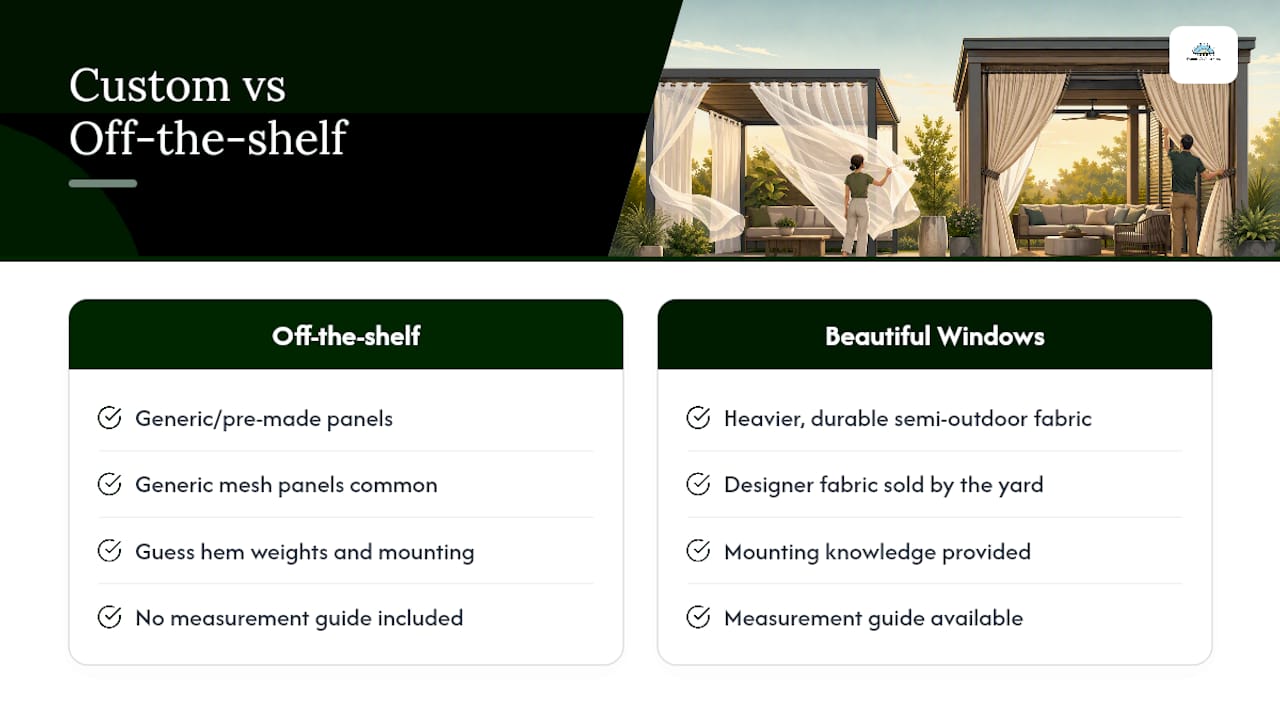
The company offers heavier, better-matched fabric than most off-the-shelf outdoor panels, plus mounting knowledge to help it hold up outside. Instead of guessing at hem weights or settling for a generic mesh panel, customers can order designer fabric by the yard, custom panel construction, and design consultation that accounts for exposure and window dimensions.

The designer drapery fabric collection includes heavier weights suited to durable, semi-outdoor applications, and the broader upholstery and drapery fabric selection gives you room to match color and texture to your existing outdoor decor. Not sure how much fabric you need or how your window is shaped? The measurement guide walks you through it before you order a sample. For general planning on interior and exterior style continuity, One Day Doors & Closets offers useful design guidance worth a look.
Ready to move past temporary fixes? Request a fabric sample, measure your space using the guide above, and schedule a design consultation to get a curtain built for your actual wind exposure, not a generic one.
Sources
Wind safety context for this article draws on NOAA’s wind hazard guidance and its wind safety overview, alongside Beautiful Windows Elgin’s own installation guide and hem-weight guidance. A retail outdoor curtain listing illustrates common material and spec terminology.
- National Weather Service — Wind hazards
FAQ
How Do I Stop Outdoor Curtains From Blowing in the Wind?
Add a weighted hem for light breezes, and pair it with bottom tie-downs anchored to the deck or ground for anything stronger. For frequent high wind, a wind-rated curtain system with reinforced mounting on all four sides holds up best.
How Can I Keep My Outdoor Curtains From Blowing In?
Secure the bottom hem with weights or grommet tie-downs so the fabric can’t lift and fold inward, and check that your top mounting hardware, ideally a continuous track, doesn’t allow the panel to slide or twist.
Do Wind Curtains Actually Work?
Purpose-built wind-rated curtains work well when they combine heavier fabric, reinforced tie-downs, and documented wind-load ratings; lightweight decorative panels without those features offer little real resistance once wind picks up.
What Are the Best Curtains for an Outdoor Patio?
Heavier fabrics such as Sunbrella acrylic, Textilene mesh, or clear vinyl hold up best against wind and weather, especially when paired with reinforced grommets and full anchoring. Beautiful Windows Elgin’s heavier-GSM designer fabrics work well for custom panels built to those same standards.
What’s the Difference Between DIY and Professional Installation for Wind Resistance?
DIY weighting and anchoring handle occasional breeze effectively and cost little. Professional installation or custom fabric construction makes more sense for frequent high wind, since it accounts for proper hardware spacing, fabric weight, and long-term durability that simple fixes can’t match.