


How to Return Fabric: Policy, Cut Fabric and Shipping
Quick Summary
A fabric return policy sets out whether you can send back fabric, what condition it must be in, how long you have to ask, and who pays for return shipping. Most stores accept only uncut, unwashed fabric returned within a stated window, and custom-cut pieces are often final sale.
- Check the store's own written policy, since its terms are the final word.
- Most stores accept fabric only if it is uncut, unwashed, and undamaged.
- Cut and custom-cut fabric is often nonreturnable, so confirm before you cut.
- Keep your order number, packing slip, and shipping receipt until the refund posts.
- Refund timing depends on store processing and your card issuer, so allow extra days.
Table of Contents
- What a Fabric Return Policy Covers
- Eligibility: Condition, Packaging and Time Limits
- Returning Cut Fabric: What Changes
- Custom-Cut and Made-to-Order Fabric Return Policy
- Fabric Order Return Shipping and Who Pays
- Refunds, Restocking Fees and Payment Timelines
- Your Step-by-Step Return Checklist Before You Ship
- Frequently Asked Questions
What a Fabric Return Policy Covers
A fabric return policy is the set of rules a store uses to decide whether you can send back fabric, what condition it must be in, how long you have to ask, and who pays for shipping. Most fabric return policy explained pages cover these same points, but the details vary by store and by how you bought the fabric.
The policy usually answers four questions. Can you return it? By when? In what condition? And what will you get back? Read those four points before you order, not after a problem shows up.
Common parts of a fabric return policy:
- Eligibility: which items qualify, and which are final sale
- Condition: whether the fabric must be uncut, unwashed, and unused
- Time limit: how many days you have from delivery to request a return
- Costs: who pays return shipping and whether any restocking fee applies
Store policies differ, so the written policy on the store's own website is the final word. Use this guide to know what to look for and what to ask. For current stock and options, visit the Shop fabric page on the store's site.
Eligibility: Condition, Packaging and Time Limits
Eligibility is the first thing to check. Most stores accept returns only when the fabric is in its original state. That usually means it has not been washed, cut, sewn, or damaged.
Packaging matters too. Keep the fabric in its original wrapping or a clean bag, and keep the order number and packing slip. Stores often ask for these to match your return to your purchase.
Quick eligibility checklist:
- Fabric is uncut and unwashed
- It shows no stains, odors, pet hair, or tears
- The return request is made within the stated window
- The item is not marked final sale or nonreturnable
Time limits are strict. Some stores give a fixed number of days from delivery, while others count from the order date. Request your return as soon as you decide, so you do not miss the window.
Returning Cut Fabric: What Changes
Cut fabric is the biggest source of confusion. Many policies accept uncut returns only, which means that once you cut a length, most stores will not take it back.
Some stores make exceptions for a mistake on their side, such as fabric that arrives the wrong length or damaged in transit. Others may accept a cut piece only if the cut was clearly their error. Check the policy for words like "cut," "remnant," or "custom length."
If you cut fabric and it is wrong for your project, contact the store before you cut more and ask what they allow. If you are planning window treatments, check the rules for the embroidered-fabric-for-custom-curtains collection before you order.
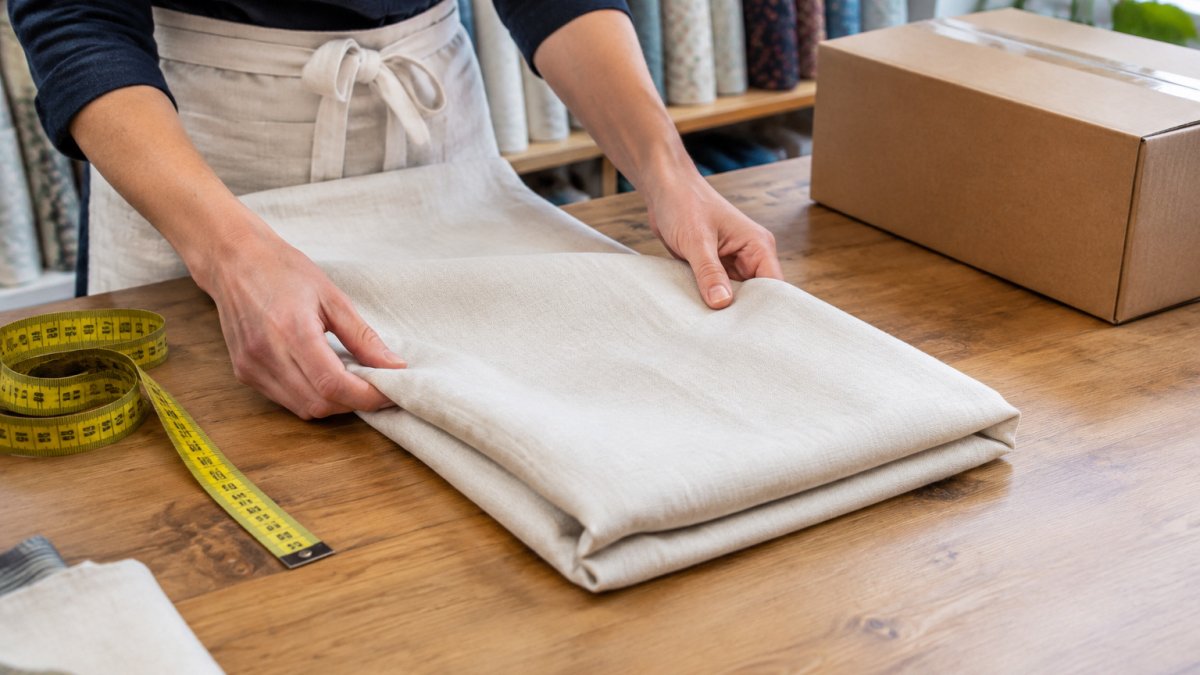
Custom-Cut and Made-to-Order Fabric Return Policy
Custom-cut and made-to-order fabric can be handled differently from stock fabric. Check the store's policy for these orders before you buy.
Why custom-cut fabric is usually nonreturnable. When a store cuts a length to your specified yardage, that piece can no longer be sold to another customer at full price. The same logic applies to made-to-order fabric that is woven, printed, or dyed to your specification: the seller has committed materials and production time to your order. Most policies therefore treat custom-cut and made-to-order fabric as final sale, and many state the exclusion in the same paragraph as the general return window.
How to confirm whether your order qualifies as custom-cut. The label is not always obvious. A few signals to check before you buy:
Ask the store these questions before you order custom-cut fabric, and get the answers in writing: whether the piece is treated as custom-cut or stock for returns, who pays for a replacement if the cut is wrong, the production lead time, and whether the order can be changed before cutting begins. If you are weighing options for Upholstery Fabric, ask the same questions.
Keep the packing slip and the uncut remainder intact until any issue with your order is resolved.
Fabric Order Return Shipping and Who Pays
Return shipping policies vary. Check whether the store covers return shipping, sends a prepaid label, or asks you to pay and be reimbursed.
Keep your shipping receipt so you can show what you paid if the store asks.
Ship the fabric in a sturdy box or mailer that protects it from water and crushing. Include the order number and a short note explaining the return. Use a tracked service so you can prove the package was delivered.
Refunds, Restocking Fees and Payment Timelines
Refund timing depends on several stages, and each one can add days. Knowing the stages helps you tell a normal delay from a problem.
The general refund sequence.
- The carrier delivers the return to the store's receiving dock.
- The store logs the package and matches it to your order number.
- An inspector checks the fabric against the return conditions: uncut, unwashed, undamaged, tags or packaging intact.
- The store approves the refund and sends it to its payment processor.
- The processor credits the original payment method.
- Your bank or card issuer posts the credit to your statement.
Steps 1 through 4 are on the store's clock. Steps 5 and 6 are on the payment network and your bank. A refund that looks "late" is often sitting in step 5 or 6 rather than stalled at the store.
How the payment method changes the timeline. Refund posting times depend on your payment method and your card issuer or payment provider. Review how ordering, payment and confirmation work on the store's site.
Restocking fees. Some stores charge a restocking fee. Check the return policy for any fee before you ship, and ask the store to confirm the amount in writing.
Shipping-charge deductions. Some stores deduct shipping or return label costs from a refund, so check whether the label is truly prepaid.
When a refund is late. Check your order status with the store first. If it shows a refund but your account does not, contact your card issuer. If it still shows the return as received after the store's stated window, contact customer service with your order number and tracking number. Keep every message in writing.
A refund marked "issued" on the store's side may not show as a credit on your statement yet, so confirm the store's refund date before you contact your card issuer.
The article breaks the refund process into stages, and the table below shows which stage each part of the timeline falls under.
| Stage | Who controls it | Typical delay |
|---|---|---|
| Carrier delivers return to store | Carrier | Depends on shipping service |
| Store logs and matches your order | Store | Not stated in article |
| Inspector checks fabric condition | Store | Not stated in article |
| Store approves and sends refund | Store | Not stated in article |
| Processor credits original payment | Payment processor | Not stated in article |
| Card issuer posts credit to statement | Bank or card issuer | Not stated in article |
Your Step-by-Step Return Checklist Before You Ship
Use this checklist to avoid delays and refund problems:
- Read the store's fabric return policy and note the time limit
- Confirm the fabric is uncut, unwashed, and undamaged
- Find your order number and packing slip
- Request a return through the store's process and wait for approval
- Repackage the fabric in clean, protective wrapping
- Ship with tracking and keep the receipt
- Watch for your refund and follow up if it does not arrive
Following these steps makes a fabric return policy much easier to work with. When in doubt, ask the store before you cut, wash, or ship.
Frequently Asked Questions
Do you have to give a reason for a return?
Many fabric sellers accept returns without asking for a reason, but many also require the item to be unused, unwashed and in its original condition. Read the policy on the store's site before you order. Some stores ask for a brief reason so they can process the return or spot a defective batch. If a policy asks for a reason, give an accurate one, such as wrong color, wrong quantity or a flaw in the fabric. Keep your order number and proof of purchase ready when you submit the request.
Can you return fabric after it has been cut?
Cut fabric is often treated differently from uncut fabric. Many retailers will not accept cut yardage back unless the cut was an error on their side, such as a wrong length or a damaged piece. Some sellers accept cut fabric only for store credit. Check whether the policy names cut, custom or final-sale items as nonreturnable. If your cut fabric arrived damaged or the wrong length, contact the seller promptly with photos and your order number.
Can custom-cut fabric be returned?
Custom-cut and made-to-order fabric can be handled differently from stock fabric. Before ordering custom lengths, check the store's policy and confirm your measurements and quantity, since a mistake in a custom order may leave you with no return option.
