


Avoid Returns: Measure Your Rod Before Choosing Grommet or Rod Pocket
Choose grommet (eyelet) headers for windows you open and close daily. The rings glide smoothly, hold a modern shape, and pair well with contemporary rooms, as seen in modern interior doors that elevate your home aesthetic. Choose rod pocket for a soft, gathered, traditional look, especially with layered sheers. The one exception: on very wide spans or heavy blackout panels, rod pocket loses ground and grommet with reinforced hardware performs better.
TL;DR:
- Grommet headers provide easier daily gliding and a modern look, especially suitable for frequently opened living room and sliding door curtains.
- Rod pocket panels are better for traditional, layered designs and heavier fabrics like blackout or velvet, but tend to sag on wide spans over 96 inches.
- Matching rod diameter with grommet rings is crucial, and heavy fabrics require reinforced hardware or support brackets to prevent sagging and damage.
- Grommets accumulate wear at reinforced points, while rod pockets experience fabric bunching and stretching over time with frequent use.
- Neither header style offers significant privacy or sound insulation benefits; layering with blackout liners and proper overlap better ensures privacy and noise reduction.
Table of Contents
- Grommet vs Rod Pocket: A Side-by-Side Look
- Weighing the Tradeoffs of Each Header Style
- Matching Fabric Weight and Rod Size to Each Header
- Sizing Panels So They Don’t Sag on Wide Windows
- Hanging, Cleaning, and Fixing Each Header
- How to Choose Between Grommet and Rod Pocket
- Do Grommet and Rod Pocket Handle Privacy and Sound Differently?
- Which Header Is Safer Around Kids and Pets?
- What I’d Actually Hang in Each Room
- Let Beautiful Windows Elgin Handle the Fabric and the Fit
- Sources
Grommet vs Rod Pocket: A Side-by-Side Look
The core tradeoff comes down to friction versus fullness. Grommet headers slide on metal or plastic rings, so they require an appropriate rod diameter, commonly 1 to 1.5 inches, and glide with almost no drag. Rod pocket panels slide the rod directly through a sewn channel, which means more fabric touches more rod surface, and more resistance every time you pull them.
- Ease of opening: Grommet wins for daily use; rod pocket drags, especially on wider panels.
- Look: Grommet gives clean vertical folds and a taller visual line; rod pocket gives a soft gathered effect that reads as more traditional.
- Fabric use: Rod pocket generally needs more fullness to look right; grommet achieves its structured folds with less yardage.
- Rod compatibility: Grommet needs a rod that fits the ring’s inner diameter; rod pocket works with slimmer rods, including tension rods.
- Light control: Rod pocket gathers can block more light along the header, though both styles can leak light at the sides without proper stacking.
- Maintenance: Grommet rings can wear or occasionally corrode; rod pocket fabric can bunch and needs periodic straightening.
Living rooms and sliding glass doors that get opened often tend to favor grommet. Bedrooms with layered sheers and formal dining rooms lean rod pocket. On spans over roughly 96 inches, rod pocket starts to sag under its own weight, a real consideration before you commit to a style for a picture window.
Weighing the Tradeoffs of Each Header Style
- Grommet pros: Smooth glide, neat and even folds, a rod that becomes part of the design instead of hiding. The rings concentrate wear at reinforced points, which can actually reduce fraying compared to fabric dragging directly on a rod.
- Grommet cons: You need the correct rod diameter or the rings jam or gap. Small light gaps can appear at the top of each ring unless you add a blackout liner.
- Rod pocket pros: The rod disappears completely inside the fabric, which suits a room where you want the curtain, not the hardware, to be the focal point. It layers beautifully under a grommet or pinch pleat drape for a fuller window treatment.
- Rod pocket cons: Constant friction against the rod causes wear over time, and pulling the panels open regularly stretches the fabric channel. It also calls for more yardage per panel.
- When neither fits: If you want crisp pleats with a hidden rod and less friction than rod pocket, pinch pleat or back tab headers split the difference and are worth a look before you commit.
Matching Fabric Weight and Rod Size to Each Header
Rod size comes first for grommet panels. Measure the rod’s outer diameter before ordering, since a mismatch between ring size and rod thickness is one of the most common installation mistakes homeowners make. Rod pocket is more forgiving here since the fabric simply wraps the rod, but heavy panels still need brackets rated for the weight.
Fabric choice matters just as much as the header:
- Grommet: Medium-weight fabrics and linen blends hold their shape in the rings and create the clean fold grommet is known for.
- Rod pocket: Lightweight sheers and voiles gather easily without bulk, which is why designers often pair rod pocket with layered sheers.
- Blackout and velvet: Both perform better on grommet, since heavier fabric needs a header that distributes weight across reinforced rings rather than one long fabric channel.
Designers typically order extra fabric width for rod pocket panels to get that classic gathered look, since grommet’s rings create regular folds with less fabric. If you’re sourcing yardage for a custom rod pocket panel, our designer drapery fabrics collection includes weights suited to both approaches.
Pro Tip: Before you buy a single yard, measure your rod’s diameter with a tape or ruler and write it down. It takes thirty seconds and prevents the most common return request: rings that won’t fit the rod.
Sizing Panels So They Don’t Sag on Wide Windows
Wide windows and sliding doors punish the wrong header choice fast. Rod pocket panels are prone to sagging on very wide spans because weight distributes unevenly and fabric friction fights against the rod. Grommet handles wide spans better since the rings spread the load and glide instead of dragging.
Before ordering, run through this:
- Measure the full span, then add width for fullness, generally 2 to 2.5 times the rod length for a gathered look.
- For anything over 96 inches, favor grommet or plan for a heavier rod with center support.
- Add a center support bracket on any rod carrying full length drapes over a patio door.
- Choose a metal rod rated for the panel’s weight rather than a lightweight tension rod for heavy fabrics.
Our curtain panel sizing guide walks through fullness math in more detail if you’re ordering for an unusual window shape.
Hanging, Cleaning, and Fixing Each Header
- Hanging grommet: Thread the rod through the rings, one panel at a time. Most panels take under five minutes once the rod is mounted.
- Hanging rod pocket: Gather the fabric onto the rod by hand, spreading the gathers evenly before hanging brackets. Expect closer to ten minutes per panel since even spacing takes more care.
- Cleaning grommet: Dust rings periodically and watch for corrosion on metal grommets in humid rooms. Most panel fabric is machine washable, check the label first.
- Cleaning rod pocket: Many rod pocket fabrics, especially sheers, do better dry cleaned or hand washed to avoid stretching the channel.
- Small repairs: Reinforce a worn grommet ring with fabric glue or replacement grommet kits; even out uneven rod pocket gathers by hand after washing.
Pro Tip: If a rod pocket panel looks lopsided after washing, rehang it damp and smooth the gathers by hand before it dries. It resets the fold pattern without ironing.
How to Choose Between Grommet and Rod Pocket
Work through these questions before you order fabric or hardware:
- How often will you open these curtains? Daily use points to grommet. Curtains that stay mostly closed or purely decorative work fine as rod pocket.
- What look are you after? Clean modern lines mean grommet. Soft, traditional gathers mean rod pocket, especially if you’re layering sheers underneath.
- How heavy is the fabric? Velvet and blackout lean grommet for support. Lightweight sheers and voiles suit rod pocket.
- Do you need serious blackout or privacy? Neither header fully blocks light at the header seam on its own, so plan on a blackout liner regardless of style.
- What’s your rod diameter and mounting depth? Confirm this before ordering, not after the panels arrive.
Watch for these red flags before you finalize an order: heavy blackout fabric hung on an unreinforced rod pocket or tab top, a grommet ring ordered without matching the rod’s actual diameter, and any span over 96 inches without a center support bracket planned.
Do Grommet and Rod Pocket Handle Privacy and Sound Differently?
Neither header style is a privacy or soundproofing solution by design. What changes is how much light and sound sneaks through the gaps each construction leaves behind.
Rod pocket gathers stack fabric more densely along the top, which can block more light right at the header compared to grommet’s open rings. But small gaps between ring and rod on grommet panels tend to let in thin lines of light near the top, something worth knowing if you’re hanging curtains in a bedroom or media room. Neither issue is dramatic, and both are solved the same way: add a blackout liner or a double layer of fabric behind either header style.
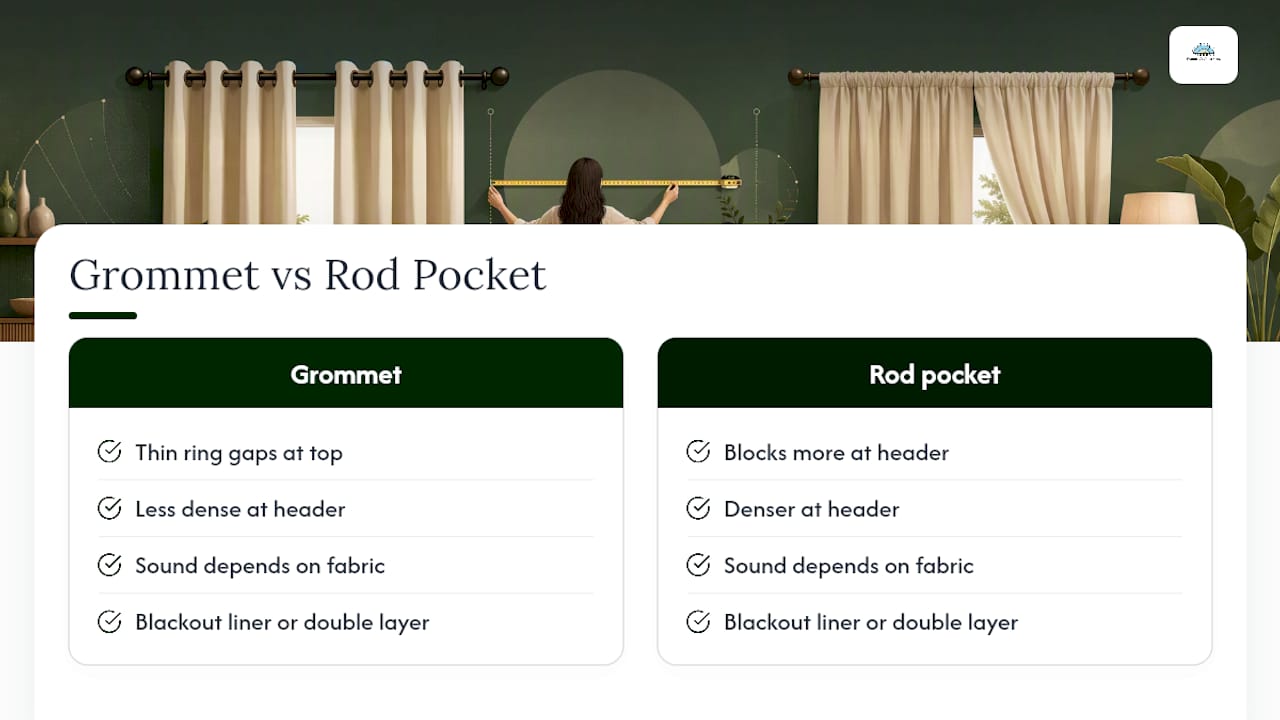
Sound insulation works on a completely different principle: fabric weight and layering, not header type. A heavy velvet or lined drape absorbs more ambient noise than a lightweight sheer, regardless of whether it hangs on rings or a pocket. If sound is a real concern, for a home office backing onto a busy street, for example, prioritize a heavier, tightly woven fabric over the header mechanism itself.
For true privacy at night, side gaps matter more than header gaps. Panels cut wide enough to overlap in the center and extend past the window frame on each side block far more light and sound than a marginal difference between ring gaps and gathered fabric ever will.
Which Header Is Safer Around Kids and Pets?
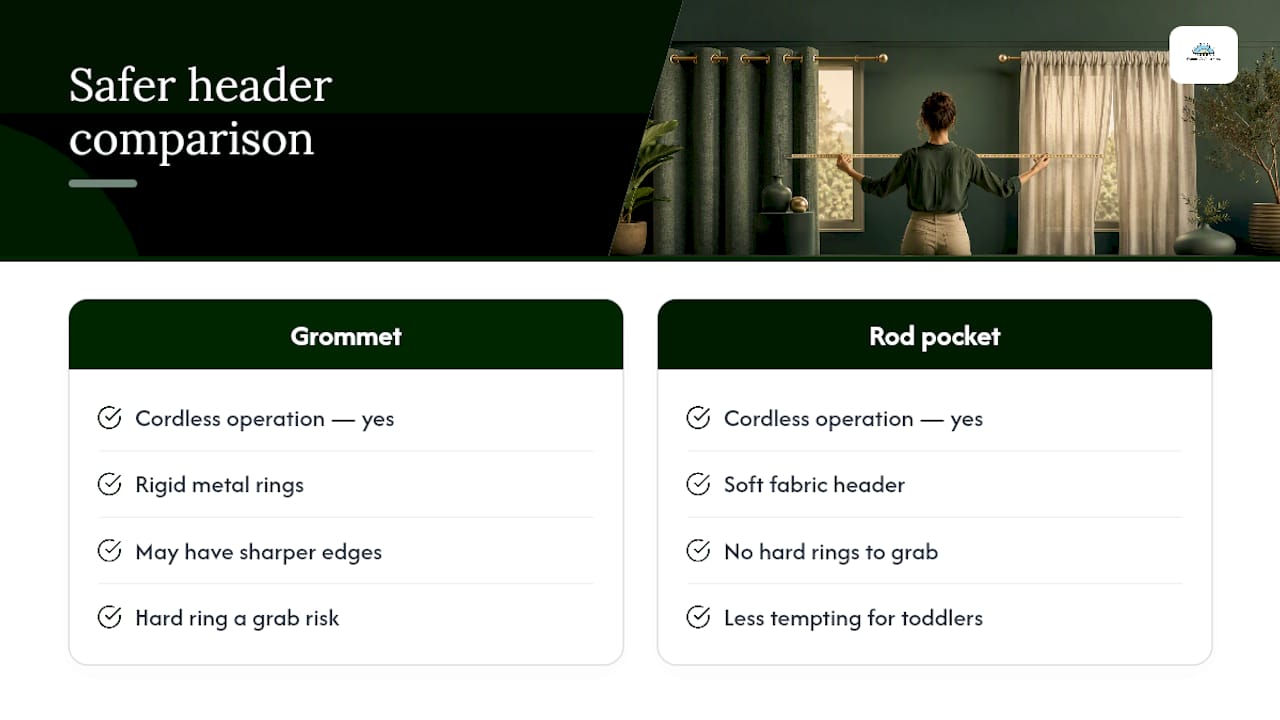
Cordless is the baseline rule for any window treatment near children, and both grommet and rod pocket panels satisfy that on their own since neither relies on a pull cord to operate. The real safety differences show up in the hardware and how panels behave when pulled.
Grommet rings are rigid and can occasionally have sharper edges on lower-cost metal hardware, worth checking by hand before installing in a nursery or playroom. Rod pocket fabric is softer at the header, with no hard rings for a curious toddler to grab or hang on, which makes it a slightly gentler choice in a child’s bedroom.
Weight and mounting matter more than header type here. A rod pulled loose from drywall brackets is the real hazard in either case, so use brackets rated for the panel weight and anchored into a stud or with proper wall anchors, especially on longer rods carrying heavier grommet panels. For playrooms or nurseries, a lighter-weight fabric on either header, secured with sturdy brackets, is a safer bet than a heavy blackout panel on undersized hardware.
What I’d Actually Hang in Each Room
Living rooms with sliding doors get grommet, every time, for the daily glide. Bedrooms with layered sheers get rod pocket for that soft, romantic stack. Rentals favor grommet since tension rods work without drilling. When a project gets complicated, wide bay windows, mixed fabric weights, unusual mounting depths, that’s when it’s worth getting help with measurements before you cut a single yard.
— Marrion
Let Beautiful Windows Elgin Handle the Fabric and the Fit
Once you know which header fits your room, the harder part is getting fabric weight, fullness, and rod compatibility right the first time. Designer fabric by the yard is available alongside custom drapery services to help you avoid guessing at yardage or rod diameter alone.

Browse the designer drapery fabrics collection for weights suited to grommet or rod pocket construction, from linen blends to blackout-ready textiles. If you’re unsure about rod diameter, mounting depth, or how much fullness your window actually needs, our window treatment measurement service walks you through it before you cut fabric or place an order. Request a fabric sample or book a measurement consultation today, and get a made-to-measure panel built for the header you actually chose.
Sources
- Eyelet vs Rod Pocket vs Tab Top: Curtain Header Styles Explained – haus & kinder
- What are grommet curtains? – Homes & Gardens
- Grommet vs Rod Pocket: Which Is Best for Your Space? – Heniemo