


12 Month Option: Fabric Stain Protection Matched to Home Fabrics
For most home upholstery, a water-repellent spray is the fastest effective defense against spills and everyday grime. Top picks worth your money include Scotchgard Fabric Water Shield, HydroThread Ceramic Fabric Protectant, protectME Fabric Protector, and ProofPlus Professional Home Fabric Protector. Choose ceramic formulas like HydroThread for high-traffic pieces that need to last closer to a year. Whatever you buy, clean the fabric first, run a test patch, and follow the cure time on the label before you trust it with a full glass of red wine.
TL;DR:
- Ceramic fabric protectors like HydroThread last up to 12 months but may feel different on soft fabrics and are better suited for structured upholstery.
- Proper application includes thorough vacuuming, testing on inconspicuous spots, spraying in light passes from six to eight inches, and waiting 12 to 24 hours for curing.
- Reapplication is necessary every three to six months for high-traffic furniture, with long-term cost depending more on fabric durability than spray price.
- Choosing tightly woven, performance-grade upholstery fabric reduces the need for frequent chemical treatments and extends the lifespan of protection.
- Always run a test patch first, avoid oversaturating the fabric, and ensure the coating fully cures before regular use to prevent damage and ineffective protection.
Table of Contents
- Top Fabric Protectors Worth Considering for Your Furniture
- How Do Fabric Protectants Actually Stop Stains?
- How to Apply Fabric Protector Without Ruining the Fabric
- How Do You Choose the Right Stain Protector?
- What Marrion Recommends for Long-Term Fabric Care
- What Does Fabric Stain Protection Actually Cost?
- Common Mistakes That Ruin a Fabric Protection Job
- Why the Best Stain Defense Isn’t Always a Spray
- Choosing Fabric That Needs Less Protection in the First Place
- Sources
Top Fabric Protectors Worth Considering for Your Furniture
Every product on this list does the same basic job, repelling liquid before it soaks into fibers, but they differ in chemistry, longevity, and which fabrics they trust themselves to touch. Here’s how the field breaks down.
- Scotchgard Fabric Water Shield is best for everyday indoor upholstery and clothing. It dries clear and odorless, and the manufacturer markets it as safe for delicate or dry-clean-only fabrics, with one can covering an average-sized couch or two chairs.
- HydroThread Ceramic Fabric Protectant uses a SiO2-based hydrophobic barrier that Chemical Guys claims can last up to 12 months, making it the pick for convertible tops and sofas that see heavy daily use.
- protectME Fabric Protector is a water-based, non-toxic formula that covers about 80.7 square feet per 25.4-ounce bottle, a solid choice for households that want fewer fumes around kids and pets.
- ProofPlus Professional Home Fabric Protector skips PFAS chemistry entirely and recommends reapplying every four to six months for typical use, which suits larger upholstery projects or anyone who prefers a documented maintenance schedule.
- RepelWell Fabric Protector Spray and SoftClad Extra-Strength Fabric Protector perform comparably to Scotchgard in hands-on tests, according to one side-by-side spray comparison, which found that texture and technique often matter more than brand.
- Guardsman Fabric Defense, Scotchgard Rug & Carpet Protector, and Scotchgard Sun & Water Shield round out the Scotchgard family for specific surfaces: rugs, carpets, and fabrics that also need UV protection.
- Chemical Guys Fabric Guard Interior Protector and TriNova Non-Aerosol Stain Guard give you aerosol and pump-spray alternatives if ventilation or overspray control is a concern in a smaller room.
- BobVila’s tested roundup of fabric protectors is worth a read before you buy. Its hands-on comparison flags real tradeoffs between ease of use, longevity, and how gentle a formula is on delicate weaves.
Treat every durability claim above as a manufacturer’s estimate, not a guarantee. Run a test patch first, always.
How Do Fabric Protectants Actually Stop Stains?
Most sprays work by making fabric fibers hydrophobic, meaning water and water-based spills bead up on the surface instead of soaking in, similar to how you can make a wool hat water resistant for everyday wear. That beading effect gives you a window of a minute or two to blot a spill before it becomes a permanent stain. Standard fluorocarbon and water-based sprays create this barrier at the fiber level without changing how the fabric breathes.
Ceramic or SiO2 formulas, like HydroThread, build a thicker molecular layer that resists both water and light oils, which is why manufacturers advertise longer durability windows. The tradeoff is that ceramic coatings can feel slightly different on very soft or napped fabrics, so they’re better suited to structured upholstery than delicate throws. Avoid heavy solvent-based industrial sealants on anything you’d call “delicate.” They can stiffen fibers or dull a fabric’s natural sheen.
How to Apply Fabric Protector Without Ruining the Fabric
Getting even coverage matters as much as picking the right product. Follow this sequence:
- Vacuum thoroughly and spot-treat any existing stains before spraying anything.
- Let the fabric dry completely. Spraying over damp fabric traps moisture under the coating.
- Test an inconspicuous spot, like the underside of a cushion, and wait several hours to check for discoloration or stiffening.
- Hold the can 6 to 8 inches from the surface and apply in light, even passes rather than one heavy soak.
- Allow the recommended cure window, often 12 to 24 hours, before a second coat or normal use.
- Increase drying time in humid weather. Moisture in the air slows how fast the coating sets.
If you notice streaking or a slightly stiff patch, a light brushing while the coat is still damp usually evens it out.
Pro Tip: On velvet, chenille, or any napped fabric, apply two or three light coats and brush gently between each one. One heavy coat looks patchy once it dries; light layered coats look invisible.
For the cleaning step, our fabric sofa cleaning guide walks through safe stain removal before you ever reach for a protectant spray.
How Do You Choose the Right Stain Protector?
Match the product to the fabric before you match it to a sale price.
- For silk, wool, or anything labeled dry-clean-only, choose a formula the manufacturer explicitly lists as safe for delicates and always test first.
- For heavy-use sofas, sectionals, and pet furniture, ceramic or professional-grade options built for reapplication every three to six months hold up better than light consumer sprays.
- For outdoor cushions or sun-exposed fabric, look for a product that names UV protection specifically, not just water repellence.
- Read the label for “water-based” versus “solvent-based.” Water-based formulas, like protectME’s, tend to be gentler on hand-feel and color.
- Treat “PFAS-free” and “non-toxic” claims as a plus for households with kids or pets, since these formulas are typically built to avoid harsh fumes.
- Walk away from anything that warns of strong fading risk on your fabric type, or that requires industrial ventilation in a room you can’t ventilate that well.
If you’re still unsure which fabric family you’re working with, our upholstery fabric types guide breaks down which weaves tolerate spray treatments best.
What Marrion Recommends for Long-Term Fabric Care
Marrion’s maintenance workflow is simple: clean, test, treat, document. Clean the fabric fully, test the protectant on a hidden patch, apply it following the cure window, then write down the product and date so you know when reapplication is due.
Before committing a whole sofa to a new protectant, order a fabric sample and spray it first. It costs you nothing but a few days’ wait, and it tells you exactly how a coating will behave on your specific weave. Beautifulwindowselgin provides swatch samples and design consultation precisely for this kind of decision, matching upholstery fabric to a household’s real-world wear before a single yard gets cut.
What Does Fabric Stain Protection Actually Cost?
Prices for consumer sprays generally sit in a modest range per can or bottle, and the real cost driver isn’t the sticker price. It’s how often you have to reapply. A basic spray that needs reapplying every three months on a high-traffic sofa can end up costing more over two years than a ceramic formula rated for closer to 12 months of durability.
Professional-grade options like ProofPlus lean into this math directly, recommending a four to six month reapplication cycle rather than promising a permanent seal. That’s a more honest cost model than a one-time miracle claim. Factor in coverage, too: protectME’s roughly 80.7 square foot yield per bottle means a large sectional might need two bottles, while a single can of Scotchgard covers an average couch or two chairs.
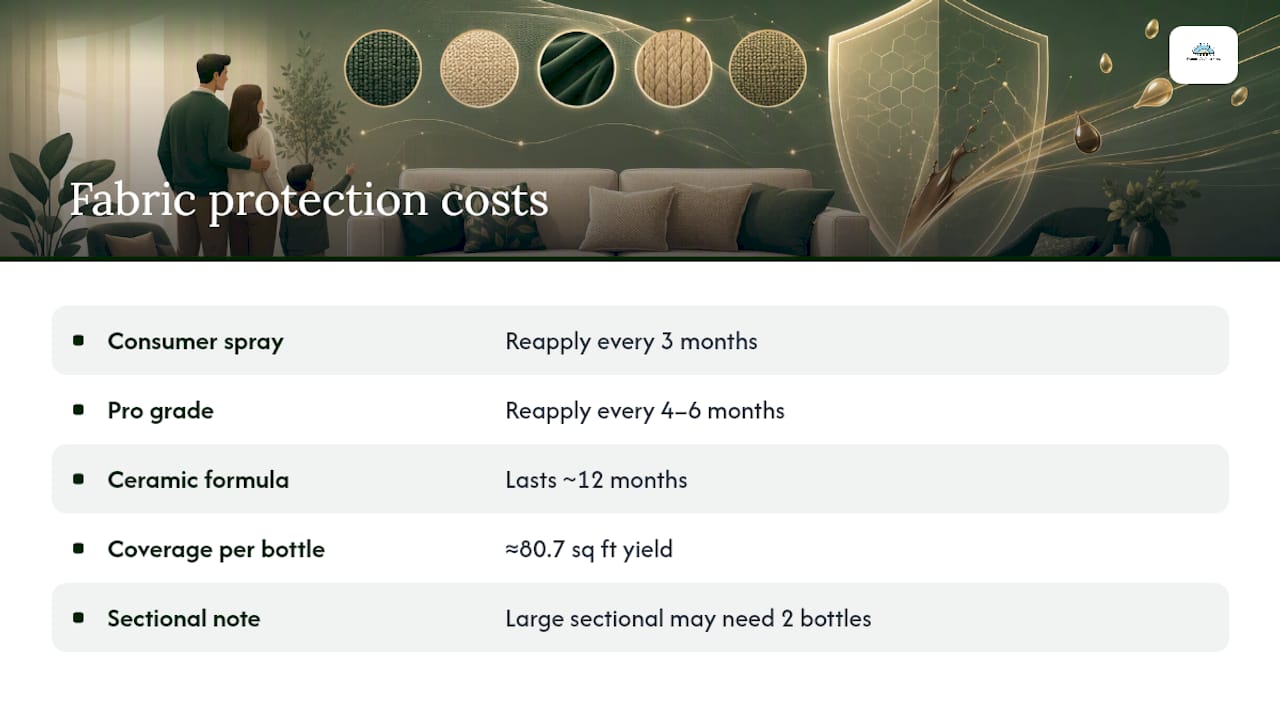
The cheapest long-term route often isn’t the cheapest can on the shelf. It’s the fabric itself. A tightly woven, stain-resistant upholstery textile needs less frequent chemical treatment than a loose, absorbent weave, which shifts the real cost conversation away from spray budgets and toward fabric selection at the point of purchase.
Common Mistakes That Ruin a Fabric Protection Job
The most common mistake is skipping the test patch. A formula that works beautifully on cotton twill can leave a faint water mark or slightly stiffen a silk blend, and you won’t know until it’s too late if you spray the whole piece first.
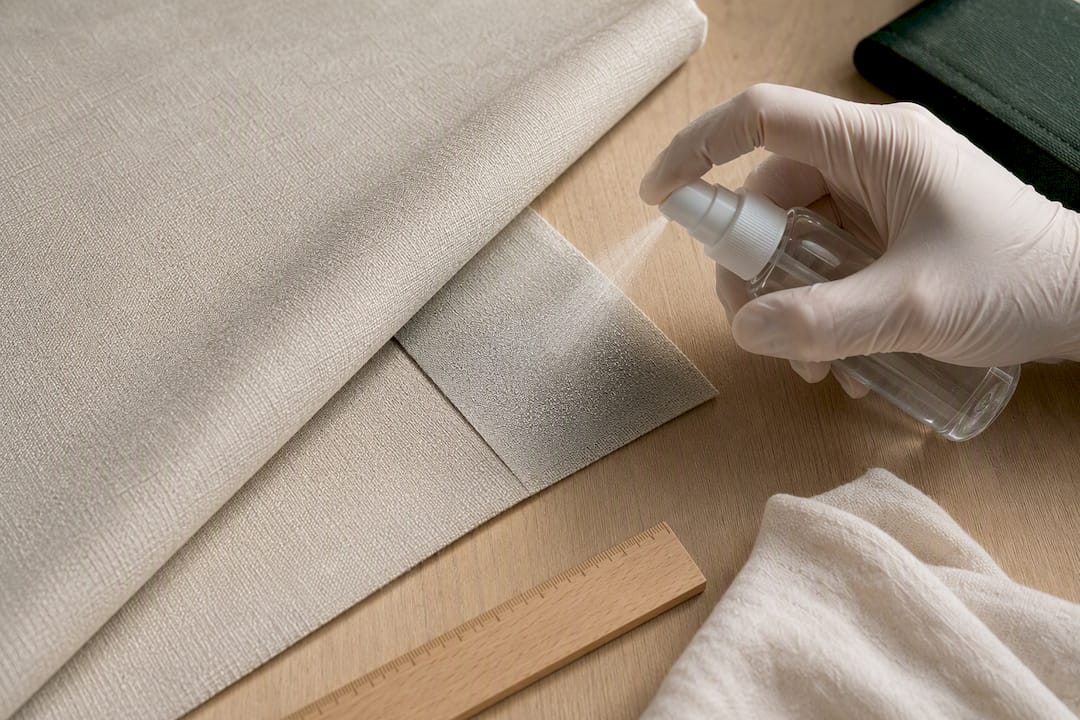
Spraying too close or too heavy is the second big one. A can held 2 inches from the fabric instead of 6 to 8 inches tends to oversaturate the fibers, leaving a visible sheen or a stiff patch that never fully softens. If that happens, blot the excess immediately with a clean towel and let it dry longer than the label suggests before judging the result.
Skipping the cure window is another frequent error. Using furniture right after spraying, before the coating has set for its recommended 12 to 24 hours, can wipe away protection in the exact spots people sit most. And treating dirty fabric compounds every other mistake. Spraying over embedded dust or old spills seals the mess in rather than protecting against new ones, so cleaning first isn’t optional. It’s the step that makes everything after it work.
Why the Best Stain Defense Isn’t Always a Spray
The industry sells fabric stain protection as a product problem, and most guides hand you a shortlist and call it done. That’s useful, but it skips the more important decision: what fabric you started with in the first place.
A dense, tightly woven upholstery textile resists staining before any spray touches it, and it holds up to repeated protectant applications without the fading or stiffening that thinner fabrics show after a year or two. The conventional advice treats every fabric as equally receptive to chemical treatment. It isn’t. A loose, absorbent weave will need reapplication more often no matter which product you choose, while a performance-grade upholstery fabric extends the interval between treatments significantly.
If there’s one thing readers should prioritize first, it’s asking what’s on the piece before asking what to spray on it. Match product chemistry to fabric type, respect the test patch every single time, and treat manufacturer durability claims as a starting estimate rather than a promise. That’s the difference between fabric protection that actually holds and a can of spray that just delays the inevitable stain.
— Marrion
Choosing Fabric That Needs Less Protection in the First Place
Sprays like Scotchgard and HydroThread solve a problem after the fact. This problem can be addressed earlier by choosing upholstery fabric that resists stains before a single can of protectant ever comes out.

A tightly woven, performance-grade textile holds up to spills and daily wear with far less frequent treatment than a loose, absorbent weave, which means fewer cans of spray and less time babysitting reapplication schedules. Beautifulwindowselgin’s upholstery and drapery fabric collection is built with exactly that durability in mind, and the upholstery fabric guide breaks down which weaves hold up best in households with kids, pets, or heavy daily use. Order a fabric sample before committing to a full yardage order, test it against your own routine, and book a design consultation through the fabric FAQ page to find a stain-resistant option suited to your furniture project.
Sources
- Scotchgard™ Fabric Water Shield | 3M United States
- Fabric Protector Spray 25 fl oz - Upholstery & More - protectME – protectME US
- The 7 best fabric protectors, tested and reviewed - Bob Vila