


Best Fabric for Living Room Curtains: 7 Top Picks for 2026
Table of Contents
- Quick Comparison: Best Living Room Curtain Fabrics at a Glance
- How to Choose Curtain Fabric for Your Living Room
- Linen and Linen Blends: The Leading Choice for 2026
- Cotton and Poly-Cotton Blends: Versatile and Easy to Maintain
- Velvet and Bouclé: Insulation, Luxury, and Heavy-Weight Drape
- Performance Synthetics: Durable Upholstery Fabric for Pet Owners
- Drapery Fabric Weight Guide: Medium-Weight vs Heavy-Weight
- How to Measure for Custom Curtains and Hardware Compatibility
- Frequently Asked Questions
Last Updated: September 27, 2026
Quick Comparison: Best Living Room Curtain Fabrics at a Glance
Choosing the best fabric for living room curtains comes down to matching material performance to how your room actually lives. A 2026 market analysis from JoyDeco's curtain trend report identifies linen blends as the leading choice this year, and for good reason: they balance the natural look people want with the durability a busy living room demands. At Beautiful Windows Elgin, we've watched homeowners cycle through the same regret: buying for looks, then discovering the fabric can't handle afternoon sun or a shedding dog.
Here's the short version before the details:
| Fabric | Weight | Light Control | Best For | Watch Out For |
|---|---|---|---|---|
| Linen blend | Medium | Filtered to blackout (lined) | Most living rooms | Pure linen wrinkles |
| Cotton / poly-cotton | Medium | Filtered | High-traffic family rooms | Shrinkage without pre-washing |
| Velvet / bouclé | Heavy | Room darkening | Insulation and luxury looks | Cost, dry cleaning |
| Performance synthetic | Medium-heavy | Varies by backing | Pet owners, kids | Less natural texture |
The shift toward linen blends and performance synthetics reflects a real change in what people need from living room curtains: light control, easy care, and fabric that survives daily use.
How to Choose Curtain Fabric for Your Living Room
Start with the room's conditions, not the color swatch. Sun exposure, traffic, privacy needs, and climate decide which fabrics will actually work before aesthetics enter the conversation.
Three questions narrow the field fast:
- How much direct sun hits the window each day?
- Who uses the room, and do they shed, climb, or spill?
- Do you want light softened, blocked, or somewhere between?
Answer those and you've eliminated half the fabric aisle. The rest is texture and budget.
Light Filtration, Opacity, and Privacy Levels
Opacity is how much light a fabric blocks, and it runs on a scale from sheer to blackout. Sheer curtains soften daylight but offer almost no privacy at night. Room-darkening fabrics cut most light while keeping some glow. True blackout panels, like a Flax Linen Look Blackout Curtain Panel, block light almost completely.

A popular 2026 configuration pairs semi-blackout panels with white or light beige sheers, according to UniCurt's living room curtain guide. The layered approach gives you light control by day and privacy at night without heavy, closed-off windows.
Sun Exposure, Fade Resistance, and UV Protection
Fade resistance matters more than most buyers expect. Direct sun degrades dye in natural fibers faster than in synthetics, and south- and west-facing windows take the hardest hit.
Look for fabrics rated for UV resistance. Many performance and poly-cotton fabrics carry a colorfastness rating around Grade 4.5 on the AATCC 16 light test, which signals strong resistance to fading. Beautiful Windows Elgin's [drapery fabric(/products/charcoal-grey-mock-linen-drapery-fabric-100-polyester-56-wide) guidance | beautifulwindowselgin.com] notes that 2026 drapery fabrics should prioritize both UV and stain resistance to hold up in high-traffic living areas.
Linen and Linen Blends: The Leading Choice for 2026
Linen blends deliver the organic, matte look of pure linen with better durability and less wrinkling. That trade-off is exactly why they've overtaken pure linen for everyday living rooms.
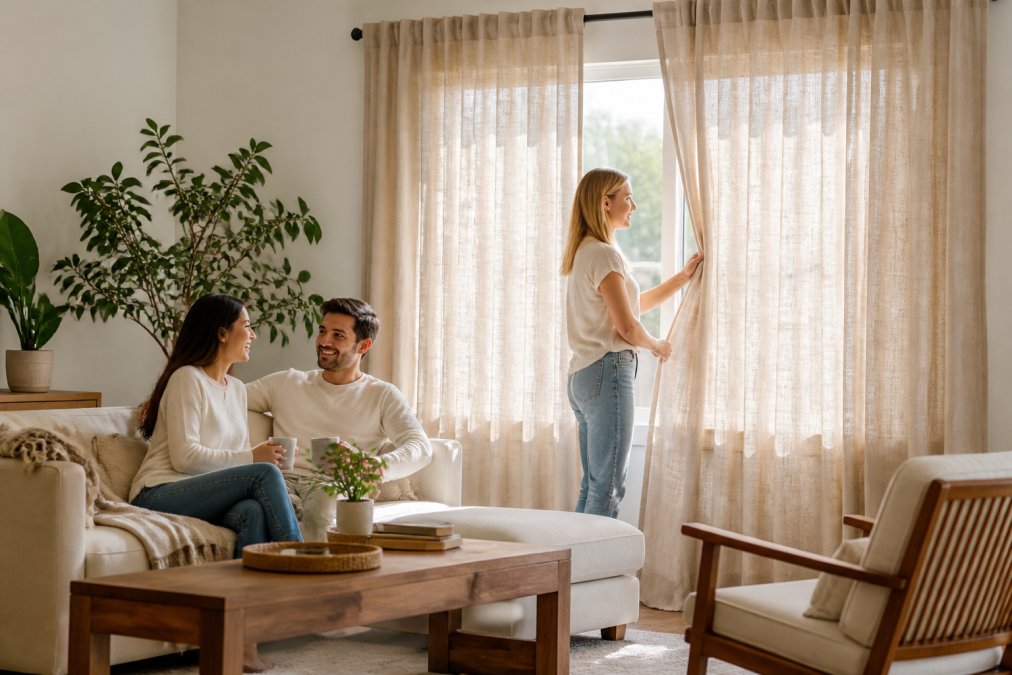
A Melaina Linen-Cotton Blend Curtain Panel shows how the blend works in practice: the 50% cotton, 50% polyester mix keeps the breathable, textured drape while resisting the stiffness pure linen develops over time.

Pros and Cons of Linen Curtains
Pros:
Flax Linen Look Blackout Curtain Panel →
- Natural, breathable texture with elegant drape
- Linen blends resist wrinkling better than pure linen
- Works with layered sheers for flexible light control
Cons:
- Pure linen stiffens and wrinkles without careful care
- Natural fibers fade faster in direct sun
- Often requires dry cleaning
Cotton and Poly-Cotton Blends: Versatile and Easy to Maintain
Cotton is the most versatile curtain fabric because it's stable, easy to maintain, and takes dye well, according to Strickland's Home drapery fabric guide. The catch is shrinkage: untreated cotton can shrink after washing, so pre-washed or blended options are safer.
Velvet and Bouclé: Insulation, Luxury, and Heavy-Weight Drape
Velvet and bouclé add depth and tactile interest, and their dense weave gives them real thermal value.
Performance Synthetics: Durable Upholstery Fabric for Pet Owners
For pet owners and families with young kids, performance synthetics are the practical answer. Medium-weight cotton blends and performance synthetics are the industry standard for households that need snag resistance, per UniCurt's fabric selection guide.
Drapery Fabric Weight Guide: Medium-Weight vs Heavy-Weight
Fabric weight decides how a curtain drapes, how much light it blocks, and, the part most guides skip, what kind of hardware the panel will actually hang from without sagging or pulling out of the wall. This drapery fabric weight guide breaks the range into three practical tiers and pairs each with the hardware it demands.
- Lightweight (under 200 gsm): Sheers and voiles. Great for layering, poor for privacy or insulation. A standard 1-inch decorative rod with basic brackets handles these easily, and tension rods can work for light sheers in a narrow window.
- Medium-weight (200-350 gsm): Cotton, linen blends, and most poly-cottons. The sweet spot for living rooms: enough body to drape well, light enough to hang on a standard rod. Use anchored brackets into studs or drywall anchors rated for the panel load, and space brackets no more than 30-36 inches apart so the rod doesn't bow.
- Heavy-weight (350 gsm and up): Velvet, bouclé, and lined blackout fabrics. Best for insulation and room darkening, but they demand sturdy hardware. A 1.5- to 2-inch diameter rod, cast-metal or heavy-gauge steel brackets, and bracket spacing of 24-30 inches is the common pattern. For very wide spans, add a center support bracket or switch to a ceiling-mounted track system.
How to Measure for Custom Curtains and Hardware Compatibility
Getting custom curtains right starts with the rod, not the window. Width, length, and hardware all depend on where the brackets sit, how much coverage you want, and how much the finished panel will weigh.
- Rod pocket: fabric slides onto the rod through a sewn channel. Clean and simple, and it distributes weight evenly, a good match for medium-weight linen blends and poly-cottons on a standard 1-inch rod.
- Grommet: metal rings slide easily, good for frequent opening. Best on medium-weight fabrics; heavy velvet can bind if the rod diameter is too small, so size up to 1.5 inches or more.
- Pinch pleat: tailored, formal folds that need rings and a sturdy rod or ceiling track. This is the header that heavy velvet and bouclé almost always use, because the pleats and rings spread load across multiple anchor points.
- Back tab or hidden tab: a middle ground that gives a soft, casual fold without rings. Works well for medium-weight fabrics but can sag under heavy panels.
Order a swatch before you commit to yardage. Color reads differently on screen than in your room's light, and a small sample beats returning yards of the wrong shade. Measure twice, then add 10% extra yardage for pattern matching and hem allowance, and confirm your rod and brackets are rated for the finished panel weight before you cut.
Frequently Asked Questions
What is the best fabric to use for living room curtains?
Linen blends lead the 2026 market because they combine linen's matte texture and natural drape with better wrinkle resistance and durability. For a living room with pets or heavy traffic, a medium-weight poly-cotton blend like the Dune Brook Window Curtain Fabric offers 65,000 double rubs and easy water-based cleaning. Pure linen looks refined but needs more care. Velvet suits rooms where insulation and light blocking matter most.
Should your curtains be lighter or darker than your sofa?
There is no fixed rule, but most designers keep living room curtains within two shades of the sofa or wall color for a cohesive look. Lighter curtains make a small room feel larger and let more daylight through, while darker panels like the Torrey Linen Blend in Dark Blue add depth and block more light. If your sofa is a bold color, choose a neutral drapery fabric so the curtains frame the room instead of competing with it.
How do I choose the right weight for drapery fabric?
Use a drapery fabric weight guide as your starting point. Lightweight fabrics under 200 gsm drape softly but wrinkle and offer little privacy. Medium-weight fabrics around 285 gsm, like most poly-cotton blends, hold pleats well and suit most living rooms. Heavy-weight fabrics above 350 gsm, including velvet and blackout-backed textiles, block light and insulate but need sturdy rods and brackets to support the extra pounds per panel.
Which curtain fabrics are best for blocking light?
Blackout and thermal-backed fabrics block the most light. The Flax Linen Look Blackout Curtain Panel uses a blackout lining to stop light while keeping a linen-inspired texture. The Spa Green Blackout Curtain Fabric is a 56-inch wide option sold by the yard for custom panels. For partial light control, pair semi-blackout curtains with white or light beige sheers, a layered approach that balances privacy with soft, filtered daylight.
How do I measure for custom curtains before ordering fabric?
Measure the full width of your rod, not just the window, then multiply by 2 to 2.5 for gathered fullness. For length, decide whether panels will kiss the floor, break slightly, or puddle, and measure from the rod to that point. Add 8 inches for hems and headers. Order all yardage in one batch, since dye lots can vary between runs, and confirm your fabric's width before calculating panels.