


How to Choose Between The Workroom vs Fabric Bistro in 2026
Last Updated: October 31, 2026
Quick Summary
Choosing in the workroom vs fabric bistro decision comes down to whether you need fabric or finished drapery. A workroom sells custom drapery fabrication, measuring, and installation, while a fabric bistro-style shop sells designer textiles by the yard for you or your seamstress to sew.
- Some businesses offer both fabric by the yard and custom drapery services under one roof.
- Request physical swatches and compare them against your wall paint in daylight before ordering.
- Minimum order quantities are often set per fabric rather than per order, which makes sampling a palette expensive.
- Calculate yardage per panel type separately when a project mixes different widths or lengths.
- Ask each workroom for its current lead time in writing and what happens if fabric arrives damaged.
Table of Contents
- The Workroom vs Fabric Bistro: What Each One Actually Offers
- Fabric Quality, Fiber Content, and Color Accuracy
- Online Fabric Stores for Designers: What to Check Before You Buy
- Designer Fabric by the Yard: How to Order the Right Amount
- Custom Drapery Workroom Services: What to Expect and How to Compare
- Professional Fabric Sourcing: A Checklist for Designers and Small Shops
- Choosing Your Fabric and Drapery Partner for Your Next Project
- Frequently Asked Questions
The Workroom vs Fabric Bistro: What Each One Actually Offers
Choosing between the workroom vs fabric bistro comes down to one question: do you need fabric, or do you need finished drapery? A workroom sells fabrication and installation of custom window treatments, while a fabric bistro-style shop sells textiles by the yard for you or your seamstress to sew.
The distinction matters more than most shopping guides admit.
Walk into a fabric retailer and you leave with yardage. Walk into a workroom and you can expect a measurement appointment, a fabrication timeline, and a finished panel hanging on your rod. Same industry, completely different transaction.
Here is the practical breakdown:
- A workroom handles custom drapery fabrication for window treatments.
- A fabric bistro-style store focuses on selection: designer fabrics sold by the yard.
- Some businesses do both, offering fabric and custom drapery services under one roof.
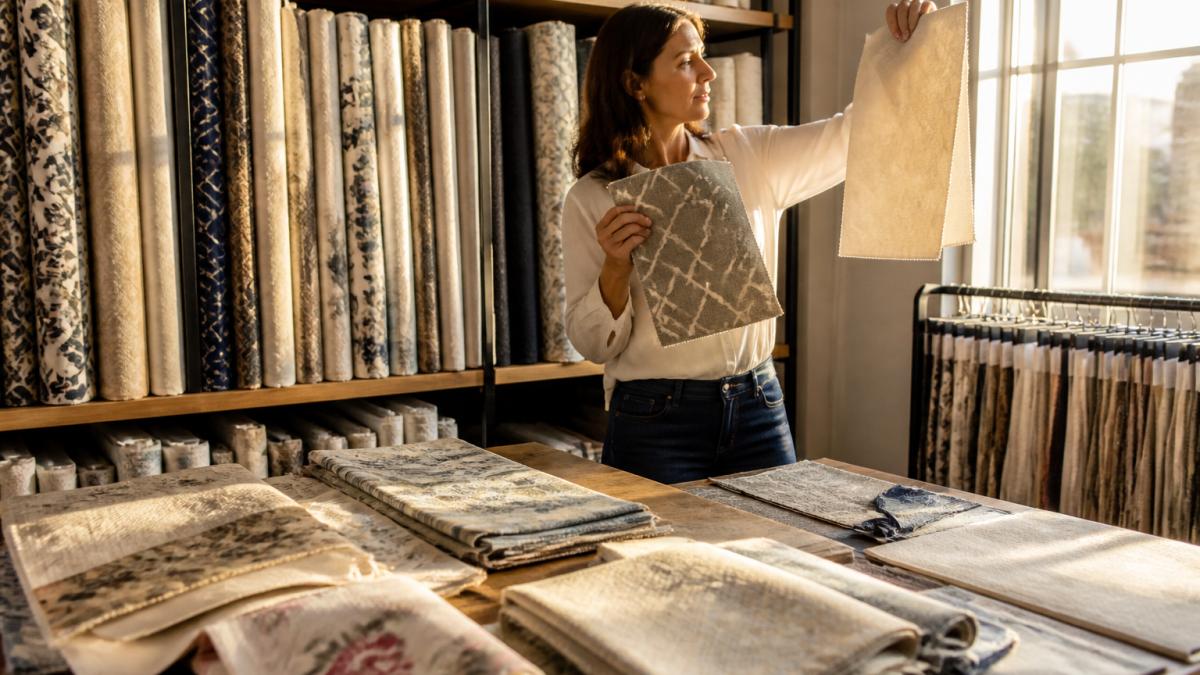
Fabric Quality, Fiber Content, and Color Accuracy
Color accuracy and fiber content both affect how a fabric looks once it is hung, and neither is always visible in a product photo.
Ask three questions before you buy anything:
- What is the fiber content? Linen drapes crisp and breathes well. To see a real silk fabric sold by the yard, view this vivid yellow dupioni silk fabric. Cotton blends resist wrinkling. Polyester holds pleats and costs less. Each behaves differently at the window.
- What is the fabric weight? Lightweight fabrics suit sheers and roman shades. Medium weights handle most drapery panels.
- Can I see a swatch first? Screens shift color. A physical sample under your own lighting settles it.
Watch out: ordering yardage from a photo alone is how most color mismatches happen. Request swatches, then compare them against your wall paint in daylight, not at night under a lamp.
Online Fabric Stores for Designers: What to Check Before You Buy
When comparing online fabric stores, it helps to review their policies on swatches, minimum orders, shipping terms, and returns on cut yardage before your first order. To judge selection and specs, browse this polyester drapery fabric sold by the yard.
Build a simple supplier scorecard and fill it in for every store you are considering:
| Criterion | What to Record | Why It Decides the Order |
|---|---|---|
| Swatches | Cost per swatch, turnaround, and whether the cost is credited toward a later order | Color and hand feel cannot be judged from a screen |
| Minimum order | Minimum cut in yards, and whether it applies per fabric or per order | Small-sample orders get blocked by per-fabric minimums |
| Shipping | Flat rate vs. weight-based, free-shipping threshold, and transit window | Freight can rival the fabric cost on small orders |
| Returns | Policy on cut yardage, restocking fees, and defect claims | Cut yardage is usually final sale, so defect terms matter most |
| Stock and dye lot | Current availability and whether more of the same dye lot can be reserved | A discontinued run breaks a multi-room project |
A few practical patterns most designers run into:
- Ask about swatch policies. Confirm whether swatch costs apply to a later order before you request several samples.
- Minimums are often per fabric, not per order. A store that requires a multi-yard minimum on each SKU makes sampling expensive across a palette.
- Shipping costs affect the total. Compare shipping terms before ordering a single panel.
- Report defects early. Check fabric for flaws before you cut it.
For client work, confirm the fabric is in stock and ask whether more of the same dye lot is available before you commit the project to it.
Designer Fabric by the Yard: How to Order the Right Amount
Ordering designer fabric by the yard starts with one formula: measure the finished panel, add hem and header allowances, multiply by the number of panels, then add a pattern repeat buffer. Skipping the buffer is a common mistake.
A simple working method:
- Measure your rod width and your desired finished length.
- Double the rod width for fullness on pleated panels.
- Add allowance for hems and headers on every panel.
- Add one full pattern repeat per panel if the fabric has a visible repeat.
- Round up to the next whole yard.
Total yardage = (finished panel width + allowances) × panels ÷ fabric width, then add repeat buffer.
Match the fabric to the project before you do the math
The formula only works once you have picked the right fabric for the job. You can view a linen-cotton blend drapery fabric sold by the yard as a concrete option while planning yardage. Most buying mistakes happen here, not in the arithmetic. Use this project guide to narrow the field first:
| Project | Fabric qualities to prioritize | What to avoid |
|---|---|---|
| Drapery panels | Medium weight, good drape, stable weave, lining-friendly | Stiff upholstery weights that resist pleating |
| Roman shades | Light to medium weight, crisp hand, minimal stretch | Heavy or stretchy fabrics that sag |
| Sheers | Lightweight, open weave, colorfast | Fabrics that yellow in direct sun |
| Upholstery | Heavy weight, abrasion-resistant weave, tight construction | Drapery-weight fabrics that pill or wear through |
| Quilting and crafts | Stable cotton, tight weave, pre-washed if shrinkage matters | Loosely woven fabrics that fray |
A few rules of thumb that save yardage and reorders:
- Buy extra fabric as a buffer. A small cushion per panel can help avoid a second order that may not match the dye lot.
- Pattern repeat eats yardage fast. A large repeat can add a full panel's worth of fabric across a room. Measure the repeat before you calculate.
- Fabric width changes the panel count. A wide goods fabric may let you cut two panels side by side; a narrow one may not.
- Order all panels at once when possible to reduce the risk of dye-lot mismatch.
Custom Drapery Workroom Services: What to Expect and How to Compare
Custom drapery workroom services may include consultation, measuring, fabrication, and installation. For a deeper guide to evaluating drapery workrooms before committing, see this guide to choosing a drapery workroom. Ask each workroom for its current lead time in writing, and ask what happens if the fabric arrives damaged.
Compare workrooms on five points:
| What to Compare | Why It Matters | What to Ask |
|---|---|---|
| Lead time | Sets your project timeline | What is the current turnaround, in writing? |
| Measuring | Errors here ruin the panel | Who measures, and is it included? |
| Fabric sourcing | Affects cost and control | Can I supply my own yardage? |
| Installation | Determines the finished look | Is install included or separate? |
| Issue resolution | Protects your investment | What happens if a panel arrives wrong? |
Professional Fabric Sourcing: A Checklist for Designers and Small Shops
Professional fabric sourcing rewards a repeatable process over one-off browsing. A specific option to act on is this poly-cotton drapery fabric with clear width details. Small upholstery shops and designers often need consistent yardage and predictable lead times.
Run this checklist for every new supplier:
- Confirm fiber content and fabric weight are published, not guessed
- Order a swatch before any bulk order
- Confirm current stock and dye lot availability
- Get minimum order quantities in writing
- Review the return policy
- Confirm shipping terms and delivery windows
Choosing Your Fabric and Drapery Partner for Your Next Project
The workroom vs fabric bistro decision really comes down to who carries the risk. Buy fabric by the yard and you handle the measuring, sewing, and installation. Buy workroom services and the workroom handles the finished work, so the questions you ask before ordering matter.
Our advice: match the partner to the job. Simple panels and DIY projects often suit a fabric retailer that publishes product specifications. Complex windows and difficult sizes may call for custom drapery fabrication. If you would rather hand off the sewing entirely, you can explore our Curtain Panels, while designers who want to specify their own material can shop our embroidered fabric for custom curtains by the yard.
Frequently Asked Questions
What is the difference between The Workroom and Fabric Bistro?
The Workroom and Fabric Bistro differ mainly in how they sell fabric and whether they offer fabrication services. A workroom typically combines fabric sales with custom drapery workroom services, meaning it can measure, cut, and sew finished window treatments. A fabric bistro-style shop focuses on selling fabric by the yard for sewing and crafting projects. When comparing the workroom vs fabric bistro, check whether you need finished drapery or just yardage, then confirm swatches, minimum orders, and return policies before ordering.
Which is better for professional fabric projects, The Workroom or Fabric Bistro?
It depends on your project scope. If you need consistent yardage for upholstery, bedding, or apparel and want professional fabric sourcing, look for a supplier with clear fiber content, fabric weight, and color accuracy details. If you need finished custom drapery, a workroom that handles fabrication is more practical. For designers comparing the workroom vs fabric bistro, request swatches, confirm inventory availability, and ask how the supplier handles returns or exchanges on cut yardage before committing to a large order.
Do The Workroom and Fabric Bistro offer designer fabrics?
Both types of shops can carry designer fabric by the yard, but assortments vary. A workroom often stocks fabrics it uses for custom drapery, while a fabric bistro may focus on quilting and apparel fabrics. Ask suppliers about swatches to check color accuracy and hand feel. Confirm whether the fabric is woven or knit, the fiber content, and the price per yard. If you need a specific designer fabric for a client project, verify availability and lead time with the supplier before finalizing your order.
Whether you are sourcing yardage for a single room or need finished drapery for a difficult window, the right partner makes the difference. Beautiful Windows Elgin offers curated designer fabrics sold by the yard with nationwide shipping, plus custom drapery services on request, so you can source material and finished panels from one team. Get started with Beautiful Windows Elgin and select your fabric with confidence.
