


Satin vs Sateen: Which Lasts After 100 Washes for Bedding & Decor
Satin is a high-gloss, filament-based weave that catches light and slips smoothly against skin, while sateen is a cotton-based, weft-faced version of that same weave built for daily wear. For everyday bedding, sateen wins on durability and breathability; satin earns its place in special-occasion pieces, decorative accents, and hair or skin-focused pillowcases.
TL;DR:
- Satin, made from long filament yarns like silk or polyester, produces a high-gloss shine but is more prone to snagging and requires careful handling.
- Sateen, usually spun cotton, offers a softer luster and greater durability, making it better suited for frequent laundering and everyday bedding.
- Satin’s longer warp floats create its signature shine but increase the risk of snagging, while shorter weft floats in sateen provide resistance to pilling and wear.
- Cotton sateen maintains integrity after numerous washes and is generally more breathable, whereas silk or synthetic satin is better for special occasions or skin and hair benefits.
- Choice depends on use: sateen suits bedding and daily wear, while satin is ideal for elegant, decorative, or skin/hair-sensitive items.
Table of Contents
- Satin vs Sateen at a Glance
- What Is Satin, Exactly?
- What Is Sateen, and Why Does It Last Longer?
- Satin vs Sateen: A Side-by-Side Comparison
- How to Choose Between Satin and Sateen
- Caring for Satin and Sateen Without Ruining Either
- Design Notes From Marrion at Beautiful Windows Elgin
- A Practical Take on Picking Your Fabric
- Fabric Selection Made Simple With Beautifulwindowselgin
- Sources
Satin vs Sateen at a Glance
Before you settle on either fabric, the quickest way to decide is to match the weave to how you’ll actually use it. Satin brings the shine, sateen brings the stamina, and your laundry habits should have real influence over which one lands in your cart.
- Typical fiber: Satin favors silk, polyester, or nylon filament yarns; sateen is almost always spun cotton, often mercerized.
- Sheen: Satin has a brighter, glassier shine; sateen has a softer, more muted luster.
- Best use: Satin suits evening wear, lingerie, and accent cushions; sateen suits sheets, duvet covers, and drapery lining.
- Care note: Satin often needs gentle or hand-wash cycles depending on fiber; cotton sateen tolerates regular machine washing.
Before buying, check the label for fiber content, run your fingers across the surface to feel for slickness versus softness, and request a swatch if you’re ordering fabric by the yard rather than off a shelf.
What Is Satin, Exactly?
Satin describes a weave structure, not a fiber. It’s built on a warp-faced construction, meaning the lengthwise (warp) yarns float over several weft yarns before dipping under one, creating long, uninterrupted stretches of yarn on the surface. Those floats are what bounce light back at you and produce satin’s signature gloss. Weavers measure this using harness counts, so a higher harness (like 8HS) means longer floats, more shine, and a fabric that catches light dramatically under a chandelier or bedroom lamp.
Because satin is a weave, it can be made from almost any filament yarn, though silk or synthetic filaments like polyester and nylon are the standard choices. Filament yarns are continuous strands rather than short, twisted fibers, which is exactly why satin drapes so fluidly and feels so smooth against skin.
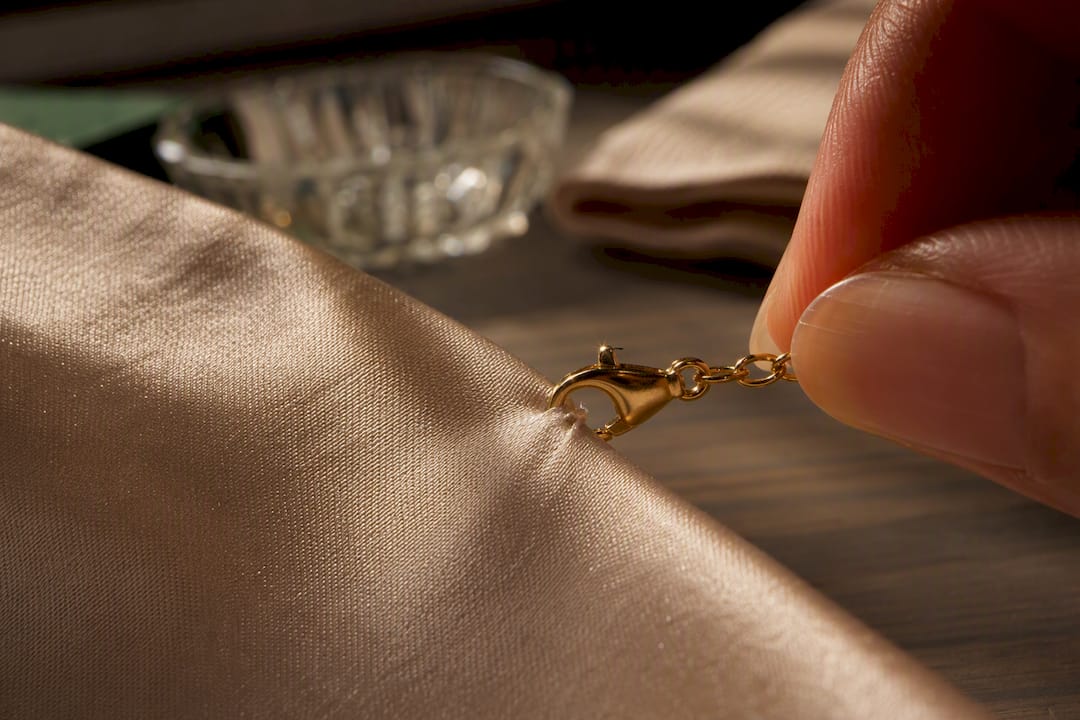
That same smoothness comes with a cost. Long floats are more exposed, so satin snags more easily on jewelry, nails, or rough furniture edges. That trade-off is why you’ll find satin most often in lingerie, evening gowns, and pillowcases marketed for hair and skin care rather than in hardworking bedsheets.
What Is Sateen, and Why Does It Last Longer?
Sateen uses the same satin-style weave, just flipped. Instead of the warp yarns floating on top, sateen is weft-faced, meaning the crosswise weft yarns create the surface floats. That structural swap matters more than it sounds. Because sateen typically uses shorter, sturdier floats woven from spun staple fibers, the surface holds up better against the abrasion of nightly tossing, tumbling, and washing.
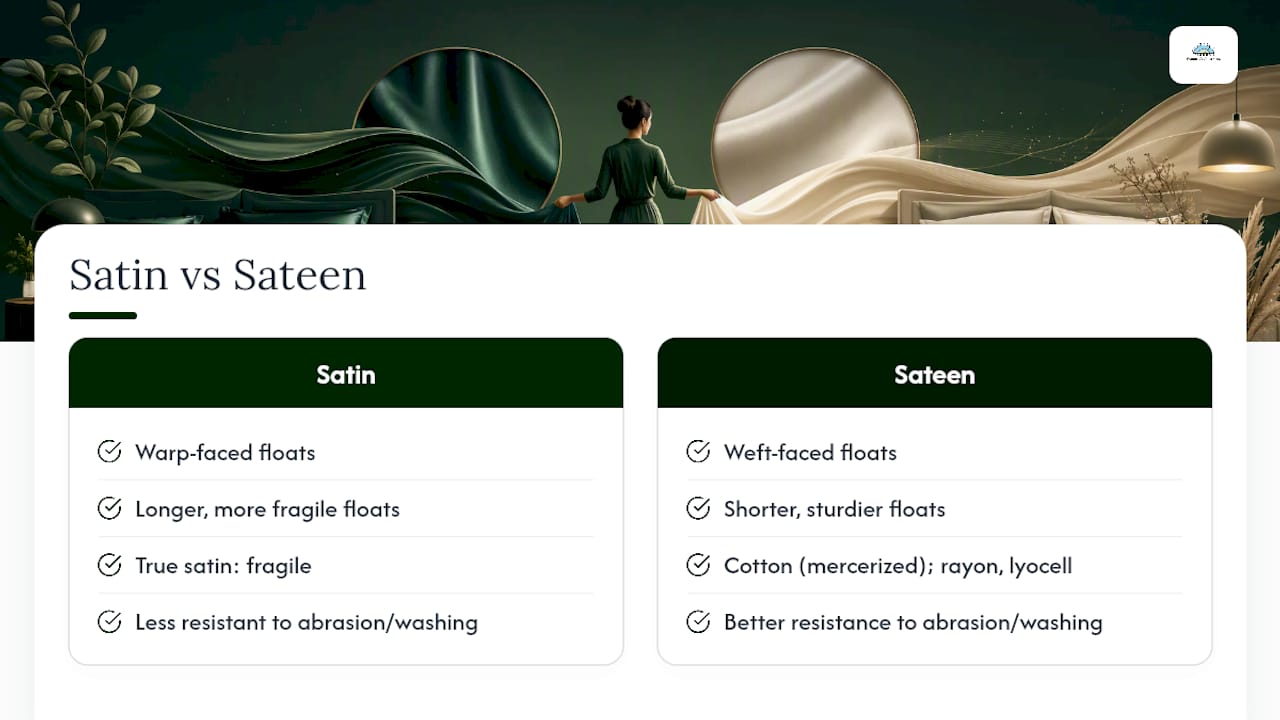
Cotton, especially mercerized cotton, is the fiber of choice for sateen, though rayon and lyocell versions show up in some home textiles too. Mercerization treats the cotton with a chemical process that boosts sheen, improves water resistance, and adds resilience, which is why quality sateen sheets can look nearly as lustrous as satin while wearing far better over time.
That combination of comfort and toughness explains why sateen dominates the bedding aisle. You’ll see it in sheet sets, duvet covers, drapery linings, and even some tailored apparel where a soft sheen is wanted without the fragility of true satin.
Satin vs Sateen: A Side-by-Side Comparison
The clearest way to see the trade-offs is side by side, especially once you look past sheen and into how each fabric behaves after a hundred wash cycles.
| Feature | Satin | Sateen |
|---|---|---|
| Typical fibers | Silk, polyester, nylon (filament) | Cotton, mercerized cotton, rayon (spun) |
| Sheen level | High gloss, glassy shine | Soft luster, subtle glow |
| Snag/pilling risk | Higher, especially with jewelry or nails | Lower, shorter floats resist catching |
| Breathability | Lower with synthetic filaments, higher with silk | Generally higher, especially with cotton |
| Typical uses | Lingerie, evening wear, accent pillowcases | Sheets, duvet covers, drapery lining |
| Care difficulty | Moderate to high, fiber dependent | Low to moderate, mostly machine washable |
| Typical price range | Mid to high, silk satin runs premium | Low to mid, cotton sateen is widely affordable |
The float direction is the real story behind every row in that table. Longer warp floats in satin create drama and shine; shorter weft floats in sateen trade a little shine for real staying power. There’s a simple snag test worth trying before you buy: gently try to lift a single floating yarn with a fingernail. If it lifts easily, that float is likely to snag during normal use, and satin’s longer floats make it noticeably more vulnerable to this than sateen.
How to Choose Between Satin and Sateen
Your priorities should drive the decision more than the fabric’s reputation. Start with how the item will actually be used in your home.
- Sleep temperature: Hot sleepers do better with cotton sateen; its breathability beats polyester satin, which tends to trap heat.
- Wash frequency: If it’s getting washed weekly, cotton sateen holds up; delicate silk satin wears out faster under heavy laundering.
- Hair and skin goals: Silk satin pillowcases are worth the splurge for reduced hair friction; cotton sateen is the practical daily choice.
- Aesthetic priority: For a dramatic, glossy drapery panel or accent pillow, satin’s shine outperforms sateen’s subtler glow.
Budget matters too. Polyester satin is widely available and often less expensive, but it sacrifices breathability for that shine. Cotton sateen usually delivers better everyday value, while silk satin is worth the investment specifically for hair and skin benefits, not daily bedsheets.
Pro Tip: Keep one silk satin pillowcase in rotation strictly for your hair and skin, and let cotton sateen handle the rest of your bedding. You get the beauty benefit without paying for durability you don’t need.
Caring for Satin and Sateen Without Ruining Either
Getting the care routine right protects your investment in either fabric, and the steps aren’t complicated once you know the fiber you’re working with.
- Wash sateen on a gentle cycle with cold or warm water, tumble dry on low or air dry, and iron on a cotton setting if wrinkles need smoothing. Expect modest shrinkage on the first wash.
- Check the fiber label before washing satin. Silk satin usually needs hand washing or dry cleaning; polyester satin often tolerates a gentle machine cycle but should avoid high heat in the dryer.
- Store both fabrics away from rough surfaces and direct sunlight to prevent snagging and color fading, and address any pulled thread immediately by gently working it back into the weave rather than cutting it.
Design Notes From Marrion at Beautiful Windows Elgin
Choosing between these weaves gets easier once you’ve handled both fabrics under real light. Marrion’s jacquard satin project guide covers where that shine works best in a room, typically lined drapery panels or accent cushions rather than everyday upholstery. The website offers fabric samples, yardage, and design consultations for shoppers weighing sheen against durability.
A Practical Take on Picking Your Fabric
Everyday bedding should favor sateen. It survives the wash, breathes better, and still looks refined enough for a well-dressed bedroom. Satin earns its keep in special-occasion pieces and targeted items like a hair-friendly pillowcase, not in fabric you’re washing weekly. Order swatches before committing, and be honest with yourself about how often that item will actually see the washing machine.
— Marrion
Fabric Selection Made Simple With Beautifulwindowselgin
The website presents designer satins and cotton sateen options side by side, sold by the yard, allowing comparison of weight, hand, and finish before committing to a full project.

The collection includes jacquard satins for accent pieces and richly finished sateen-style fabrics suited to drapery and cushions, all available as swatches before you order yardage. If you’re planning drapery rather than bedding, browse the designer drapery fabrics collection to compare weight and finish in person once samples arrive. Questions about ordering, fiber content, or care instructions are answered on the fabric FAQ page, and a design consultation is available for anyone planning custom drapery around a satin or sateen fabric. Request your swatches today and see the weave difference under your own lighting before you commit to a full order.
Sources
- Satin Vs. Sateen Weave: Understanding Floating Yarn Patterns - TextileTuts
- Sateen - Wikipedia
- Sateen Vs Satin: Key Differences, Uses & How to Choose (SewingTrip)