

Explaining Fabric Durability for Home Decor Projects
TL;DR:
- Fabric durability measures a textile’s ability to resist wear over time based on technical tests like tensile strength and abrasion resistance. Different tests such as Wyzenbeek and Martindale evaluate surface friction and are not directly comparable, so understanding the testing method is essential. Actual fabric lifespan depends on environmental factors, chemical exposure, and proper care, not just abrasion ratings or fiber type.
Fabric durability is defined as the ability of a textile to withstand physical and chemical wear over time without significant loss of function or appearance. For consumers and designers selecting materials for upholstery, drapery, or custom home projects, explaining fabric durability means understanding specific technical metrics like tensile strength and abrasion resistance, not just touching a fabric and guessing how long it will last. Standard industry tests such as the Wyzenbeek and Martindale methods give measurable benchmarks. Knowing what those numbers mean, and what they do not measure, is the difference between a sofa that holds up for a decade and one that pills and fades within two years.
What does explaining fabric durability actually measure?
Fabric durability, known in the textile industry as textile resilience, covers two distinct categories: mechanical performance and chemical resistance. Both matter equally in real home environments.
Tensile strength measures the maximum force a fabric can sustain before breaking, expressed in Newtons or kilogram-force. A higher tensile strength means the fabric resists tearing under stress, which is critical for upholstery seams and high-tension drapery headings. Elongation at break, expressed as a percentage, tells you how much the fabric stretches before it fails. Together, these two figures give a reliable picture of a fabric’s mechanical durability under load.
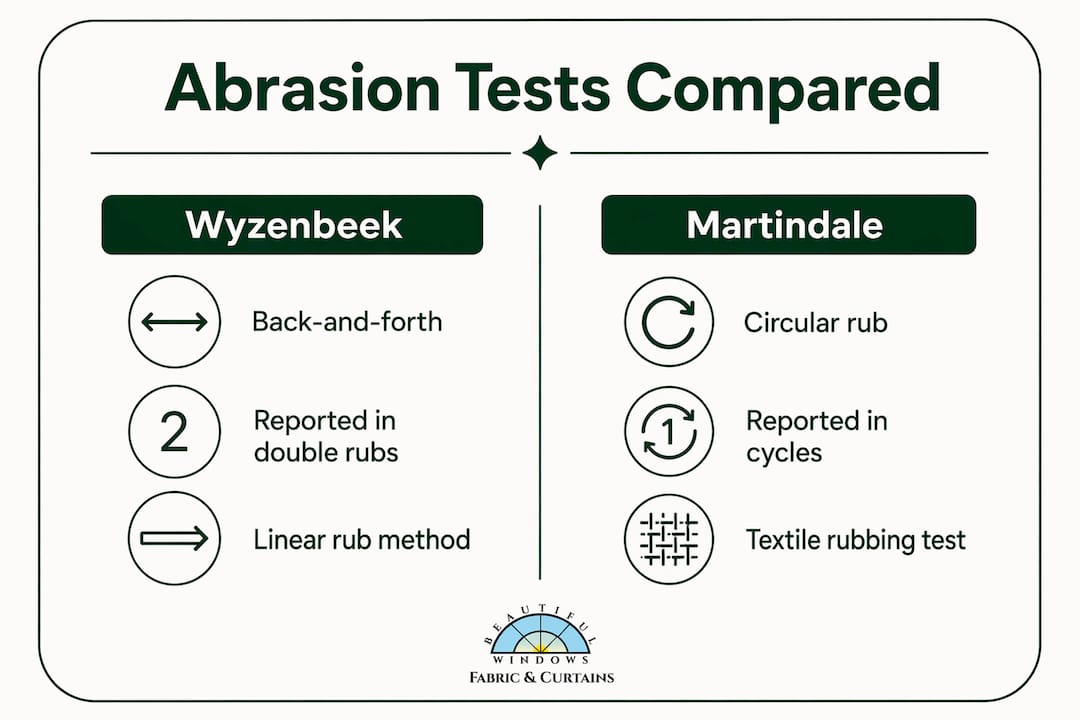
Abrasion resistance is the other core metric. The Wyzenbeek test and the Martindale test both measure how many cycles a fabric withstands before showing visible wear, but their numbers are not interchangeable. Wyzenbeek reports results in double rubs, using a wire screen or cotton duck rubbing back and forth. Martindale uses a circular motion with a wool abradant. The two tests simulate different friction patterns, so a fabric rated at 30,000 Wyzenbeek double rubs is not equivalent to 30,000 Martindale cycles.
How abrasion tests compare
| Test | Method | Unit reported | What it measures |
|---|---|---|---|
| Wyzenbeek | Back-and-forth linear rub | Double rubs | Surface wear from directional friction |
| Martindale | Circular multi-directional rub | Cycles | Surface wear from omnidirectional friction |
| Tensile strength | Machine stretch to break | Newtons / kgf | Breaking force and fiber elasticity |
| Tear strength | Controlled tear propagation | Newtons | Resistance to tear spreading |
| Puncture resistance | Probe penetration force | Newtons | Resistance to sharp object damage |
Pro Tip: Always ask which abrasion test was used when reviewing a fabric’s durability rating. A supplier quoting Martindale cycles and one quoting Wyzenbeek double rubs are not giving you comparable data, even if the numbers look similar.
How do physical and chemical factors degrade fabric over time?
Mechanical wear is the most visible form of fabric degradation. Continuous friction causes fiber ends to fray and pill, gradually thinning the fabric surface until holes develop in high-contact areas like seat cushions and armrests. Seam slippage is a related concern: when warp and weft yarns shift under stress, seams open without the fabric itself tearing. This is common in loosely woven decorative fabrics used in drapery panels that carry significant weight.
Chemical degradation is a less visible but equally serious threat to fabric longevity. UV rays cause photodegradation, breaking the chemical bonds within fiber polymers and making fabrics brittle and faded. South-facing windows in American homes expose drapery and upholstery to intense daily sunlight, accelerating this process significantly. A fabric that looks vibrant in a showroom can lose its color and structural integrity within one season of direct sun exposure.
Body oils, sweat, and cleaning products compound the damage. Acidic sweat, alkaline detergents, and chlorine all degrade fiber polymers from the inside out, causing brittleness that does not show until the fabric suddenly fails. One often-overlooked culprit is spandex. Spandex elasticity lasts 2–5 years with careful handling but can degrade in a single season when exposed to heat or harsh chemicals. In stretch upholstery fabrics, spandex is frequently the first component to fail.
Common factors that accelerate fabric degradation include:
- Direct sunlight without UV-protective window film or lining
- Chlorine-based cleaners used on upholstery during spot treatment
- High-heat drying of removable fabric covers
- Pet claws and rough play creating surface abrasion and snags
- Alkaline detergents used repeatedly on natural fiber upholstery
- Humidity fluctuations causing repeated fiber swelling and contraction
Pro Tip: Line your drapery panels with an interlining or blackout lining. It adds body to the drape and shields the face fabric from UV exposure, extending the life of even delicate jacquard or embroidered textiles by several years.
What are the most common misconceptions about durability ratings?
The most persistent misconception in fabric selection is that a high abrasion rating covers all durability concerns. Abrasion tests do not measure pilling, staining, fading, or seam durability. A fabric can pass 100,000 Wyzenbeek double rubs and still pill visibly after six months of use on a family sofa. Understanding this distinction protects you from expensive mistakes.
Here are the most common misconceptions, paired with the accurate picture:
-
“A high double rub count means the fabric is stain resistant.” False. Abrasion ratings measure surface friction wear only. Stain resistance requires a separate finish or fiber treatment, such as Teflon coating or solution-dyeing.
-
“Wyzenbeek and Martindale ratings can be directly compared.” False. The two tests use different abradants and motion patterns. Professionals stress naming the testing method when quoting any durability figure to avoid confusion.
-
“A durable fabric will resist UV fading.” Not necessarily. UV resistance depends on dye type and fiber chemistry, not abrasion performance. Solution-dyed acrylic fabrics like Sunbrella offer genuine UV resistance; most decorator fabrics do not.
-
“Natural fibers are always less durable than synthetics.” Incorrect. Tightly woven wool and linen can outlast loosely woven polyester in abrasion tests. Fiber type matters less than weave density and construction quality.
-
“The care label is optional guidance.” Care instructions are durability instructions. Washing a dry-clean-only fabric or using bleach on a protein fiber like silk or wool causes irreversible chemical damage that no abrasion rating can offset.
The practical takeaway is that fabric strength analysis requires looking at multiple test results together, not a single number in isolation.
How to select fabrics for durability based on your household needs
The best durability assessment starts with an honest evaluation of how a space is actually used. Assessing the presence of children, pets, sunlight, and cleaning frequency directly shapes which fabric performs well and which fails prematurely. A fabric that works beautifully in a formal sitting room used twice a week will not survive a family room with two dogs and three children.
Use these criteria when selecting fabrics for specific applications:
- Heavy-use upholstery (family sofas, dining chairs): Choose performance fabrics with a minimum of 30,000 Wyzenbeek double rubs, tight weave construction, and a stain-resistant finish. Crypton, solution-dyed polyester, and tightly woven linen blends are reliable choices.
- Drapery in sun-exposed rooms: Prioritize solution-dyed or fade-resistant fabrics and always add a lining. Review the upholstery fabric types guide for detailed fiber comparisons.
- Accent chairs and low-traffic areas: Abrasion ratings above 15,000 double rubs are generally sufficient. This opens the selection to more decorative weaves like jacquard satin and embroidered textiles.
- Pet-friendly households: Avoid looped weaves such as bouclé or chenille, which snag easily. Flat-woven fabrics with tight construction resist claw damage far better.
- Custom drapery projects: Weight and drape matter as much as durability. A fabric that is too stiff will not hang correctly regardless of its abrasion rating.
Care routines extend fabric life significantly. Vacuuming upholstery weekly removes abrasive particles before they work into the weave. Rotating cushions distributes wear evenly. Following a fabric furniture care process tailored to your fiber type prevents the chemical damage that shortens fabric lifespan from the inside out. For guidance on matching fabric properties to specific rooms, the resource on choosing upholstered fabrics provides a practical framework for balancing aesthetics with performance.
Key takeaways
Fabric durability is a multi-factor property requiring assessment of tensile strength, abrasion resistance, UV stability, and care compatibility together, not any single rating in isolation.
| Point | Details |
|---|---|
| Abrasion ratings have limits | Wyzenbeek and Martindale scores measure surface wear only, not stain, UV, or seam resistance. |
| Test methods are not interchangeable | Always confirm whether a rating uses Wyzenbeek double rubs or Martindale cycles before comparing fabrics. |
| Chemical degradation is underestimated | UV exposure, body oils, and harsh detergents weaken fibers internally, often before surface wear appears. |
| Household assessment comes first | Matching fabric choice to actual traffic, pets, sunlight, and cleaning habits determines real-world longevity. |
| Care routines extend fabric life | Regular vacuuming, cushion rotation, and correct cleaning methods preserve both appearance and structural integrity. |
Why the numbers only tell part of the story
I have reviewed fabric specifications for many home projects, and the pattern I see most often is this: a consumer selects a fabric with an impressive abrasion rating and is genuinely surprised when it pills, fades, or weakens within a year. The rating was accurate. The fabric simply faced conditions the test was never designed to measure.
The most overlooked factor is chemical degradation. Sunlight through an uncovered window, a weekly wipe-down with an all-purpose cleaner, and a pet that sleeps on the same cushion every day create a combination of UV, chemical, and mechanical stress that no single durability test captures. I always recommend thinking about fabric longevity the way you would think about a car’s maintenance schedule. The vehicle’s build quality matters, but so does how you drive it and whether you service it regularly.
My honest advice: do not let a high double rub count substitute for a realistic conversation about how a space is used. A 15,000 Wyzenbeek fabric with a stain-resistant finish and a UV-protective lining will often outlast a 50,000 double rub fabric left unlined in a sunny room and cleaned with the wrong product. The fabric strength analysis matters. The context around it matters more.
— Marrion
Discover durable fabrics at Beautifulwindowselgin
Beautifulwindowselgin offers a curated selection of performance and designer textiles suited to the full range of home decor and upholstery applications. Whether you are sourcing fabric for a high-traffic family room or a refined custom drapery installation, the collection includes options with verified durability specifications and quality construction.
Browse the upholstery fabric collection for textiles ranging from tightly woven performance weaves to elegant jacquard and embroidered options, all sold by the yard with nationwide shipping. For window treatments, the designer drapery fabrics collection provides premium materials with the weight and drape quality that custom installations require. Contact the Beautifulwindowselgin team for personalized fabric recommendations based on your specific project needs.
FAQ
What is the difference between Wyzenbeek and Martindale tests?
The Wyzenbeek test measures abrasion resistance using a back-and-forth linear rub and reports results in double rubs, while the Martindale test uses a circular motion and reports cycles. The two methods are not directly comparable, so always confirm which test was used before evaluating a fabric’s rating.
How do I know if a fabric is durable enough for upholstery?
For heavy-use upholstery, look for a minimum of 30,000 Wyzenbeek double rubs combined with a stain-resistant finish and a tight weave construction. Abrasion rating alone is not sufficient; also consider UV resistance and care compatibility for your specific environment.
Does a high abrasion rating mean the fabric resists stains?
No. Abrasion tests measure surface friction wear only and do not evaluate stain resistance, UV fading, or seam strength. Stain resistance requires a separate fiber treatment or protective finish applied to the fabric.
What causes fabric to degrade faster than expected?
UV exposure, harsh detergents, chlorine-based cleaners, and body oils all chemically weaken fibers from the inside out, often causing brittleness and fading before surface wear becomes visible. Spandex-containing fabrics are particularly vulnerable to heat and chemical exposure.
How can I extend the life of my upholstery fabric?
Vacuum upholstery weekly to remove abrasive particles, rotate cushions regularly to distribute wear, and follow the manufacturer’s care instructions precisely. Adding a lining to drapery panels also shields face fabrics from UV degradation and significantly extends their lifespan.
Recommended
- Understanding fabric durability for lasting home textiles – Fabric Store in Columbia, SC | Drapery Making Services
- Why Consider Fabric Durability for Home Décor Choices – Fabric Store in Columbia, SC | Drapery Making Services
- The Role of Fabric Durability in Interior Design Choices – Fabric Store in Columbia, SC | Drapery Making Services
- Upholstery Fabric Types: A Practical Guide for 2026 – Fabric Store in Columbia, SC | Drapery Making Services