

Defining upholstery materials: A practical guide for homes and designers
TL;DR:
- Choosing true upholstery fabrics requires understanding their performance characteristics, not just appearance.
- Natural and synthetic fibers each have distinct advantages and limitations depending on use, environment, and maintenance needs.
- Evaluating standardized tests and considering application-specific factors ensures durable, suitable material choices for any interior project.
Most people assume that any fabric they find beautiful will work well as an upholstery material. That assumption is one of the most common and costly mistakes made in interior design projects, from family room sofas to custom drapery. A fabric that looks stunning on the bolt can pill, fade, or fray within months if it lacks the structural integrity and performance attributes that upholstery demands. This guide clarifies exactly what defines a true upholstery material, how to read the tests and standards that prove real-world durability, and how to match the right fabric to your specific project with confidence.
Table of Contents
- What makes a fabric ‘upholstery material’?
- Core categories: Natural vs synthetic fibers
- Understanding standardized performance: Durability, colorfastness, and cleanability
- Matching material to project: Application-based recommendations
- The crucial missing link: Why context and communication matter most
- Ready to transform your space with the right upholstery material?
- Frequently asked questions
Key Takeaways
| Point | Details |
|---|---|
| Know your fiber types | Natural and synthetic fibers offer different strengths, so match them to your space and needs. |
| Standards matter | ACT and lab-tested guidelines ensure real durability, cleanability, and fade resistance for upholstery. |
| Test numbers aren’t the whole story | Single metrics like rub counts should be viewed with other factors like lightfastness and stain resistance. |
| Context drives material choice | Always align material selection with the room, use, sunlight, and lifestyle for the best results. |
What makes a fabric ‘upholstery material’?
Not all fabric is created equal, and the distinction between an upholstery textile and a decorative or drapery fabric goes far beyond weight alone. Upholstery materials are specifically engineered or selected to withstand repeated friction, pressure, cleaning, and environmental stress. Understanding the baseline qualities that separate them from other textiles is essential before selecting anything for furniture or window treatments.
When professionals talk about choosing upholstered fabrics, they are referring to a set of measurable performance characteristics rather than aesthetic appeal alone. These properties include:
- Abrasion resistance: The ability to withstand surface wear from repeated contact
- Colorfastness: Resistance to fading from light, cleaning agents, and friction
- Stain resistance: The capacity to repel or release spills and soiling
- Fabric weight: Typically measured in ounces per yard; heavier constructions generally indicate greater durability
- Seam stability: The ability of the fabric’s structure to hold stitching under stress without tearing or distorting
- Pilling resistance: Prevention of fiber balling on the surface after use or washing
A common misconception is that a heavy, textured fabric automatically qualifies as upholstery grade. In reality, some heavyweight decorative fabrics lack the weave density or fiber strength to survive regular use on seating. Conversely, certain medium-weight performance fabrics with tight weave structures and solution-dyed fibers outperform much thicker materials.
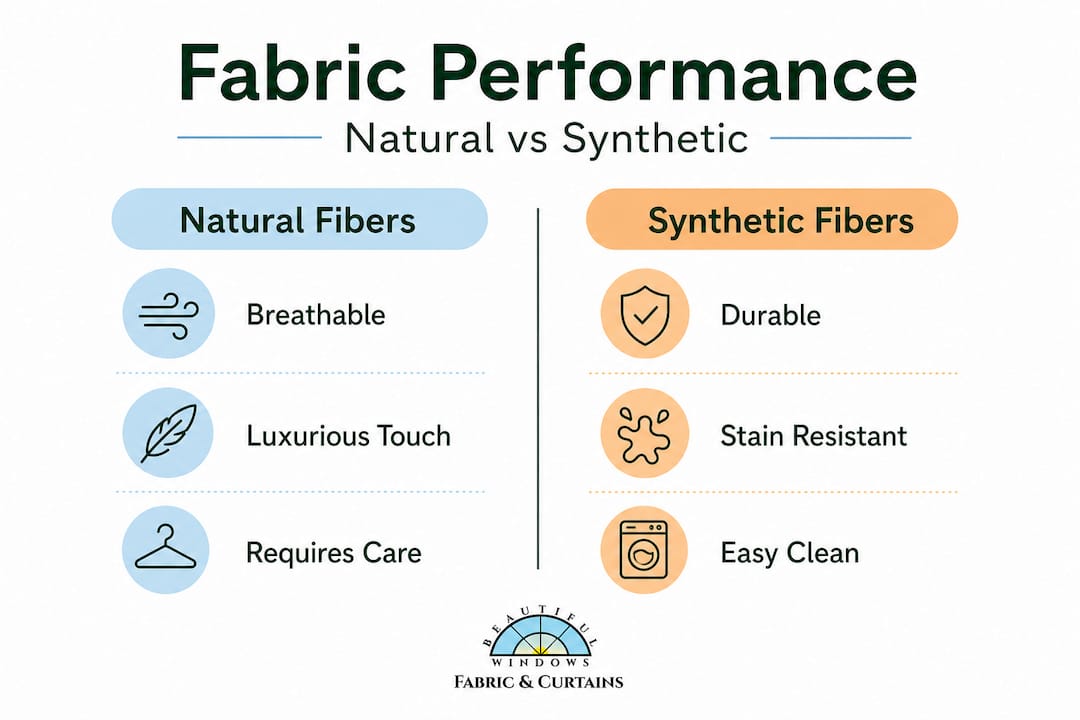
“Upholstery material selection typically contrasts natural vs. synthetic fibers by practical trade-offs: synthetics and performance textiles emphasize stain resistance and durability, while naturals emphasize breathability and hand-feel but may need more care and may be more UV or stain sensitive depending on treatment.”
The composition of the fiber itself matters enormously here. Natural fibers breathe and feel luxurious but often require professional attention, as detailed in resources on cleaning services for upholstery. Synthetic fibers, especially those engineered for performance, resist moisture and staining with far less maintenance. Understanding this distinction from the outset allows for smarter, more realistic fabric decisions. A designer fabric durability profile should always be reviewed alongside aesthetic considerations, not as an afterthought.
Core categories: Natural vs synthetic fibers
With the foundation of what makes a fabric truly upholstery-grade in place, comparing the two primary fiber families reveals why no single category wins for every project. The right choice depends on your lifestyle, environment, and how the piece will be used day to day.
Natural fibers include cotton, linen, wool, silk, and leather. Each brings distinct qualities:
- Cotton is breathable, soft, and dye-friendly, but it wrinkles and stains relatively easily without treatment
- Linen has a refined, textured hand-feel and performs well in low-traffic settings such as formal sitting rooms or decorative accent chairs
- Wool is naturally resilient and flame-resistant, making it a solid option for tailored upholstery in moderate-use spaces
- Silk is prized for its sheen and elegance but is highly sensitive to light, moisture, and abrasion, limiting its practical use to very low-traffic applications
- Leather is durable and easy to wipe clean but can crack without conditioning and may feel uncomfortable in humid climates
Synthetic fibers include polyester, nylon, acrylic, olefin, and microfiber. These materials are specifically engineered to address real-world stressors, and natural vs synthetic fabric trade-offs show clearly that synthetics outperform in high-demand environments. Solution-dyed acrylic, for example, is an outstanding choice for family rooms or sunrooms because the color is embedded into the fiber itself during manufacturing, offering exceptional fade resistance even under prolonged UV exposure.
| Fiber type | Abrasion resistance | Colorfastness | Cleanability | Best use case |
|---|---|---|---|---|
| Cotton | Moderate | Moderate | Moderate | Bedrooms, low-traffic chairs |
| Linen | Moderate | Good | Moderate | Formal or accent pieces |
| Wool | Good | Good | Moderate | Tailored upholstery, moderate traffic |
| Silk | Low | Low | Poor | Decorative, minimal use |
| Polyester | High | Very good | Very good | Family rooms, high-traffic seating |
| Nylon | Very high | Good | Good | Commercial-grade or heavy-use furniture |
| Solution-dyed acrylic | High | Excellent | Excellent | Sunrooms, outdoor/porch cushions |
| Microfiber | High | Good | Very good | Homes with pets and children |
The most practical approach for many households is a fiber blend. A cotton-polyester or linen-acrylic blend captures the breathability and texture of natural fibers while adding the stain resistance and durability of synthetics. Blended fabrics also tend to hold their shape better over time, which is particularly important for custom drapery where fabric behavior at the fold and pleat affects the final visual.
How fabric and comfort interact in a living space is about more than touch; it also reflects how well the material holds up through daily wear and cleaning cycles. For guidance on maintaining upholstered pieces between professional visits, home cleaning tips for upholstery offer straightforward, practical methods that can extend the life of any fabric type.
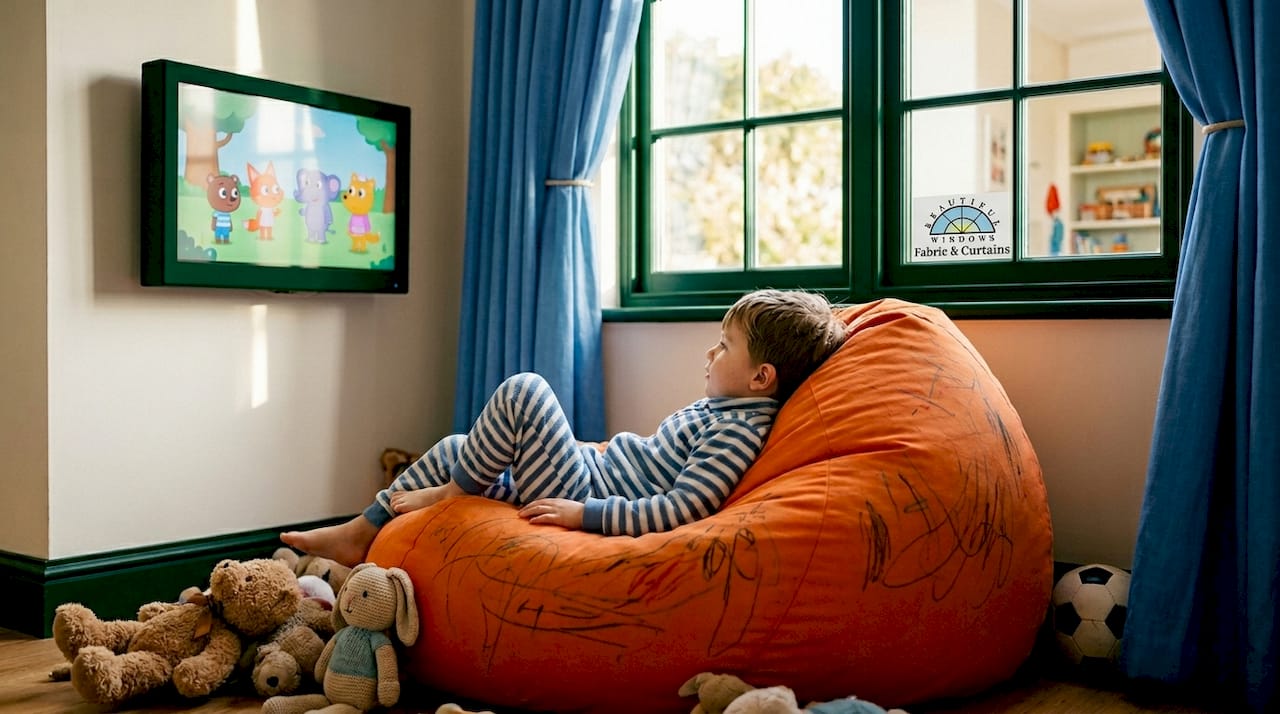
Pro Tip: When choosing between natural and synthetic fibers, consider your cleaning expectations first. If you want a fabric you can spot-clean with water and mild detergent, choose a synthetic or high-performance blend. If you prefer the feel and look of natural fibers, plan your maintenance routine before committing to the purchase.
Understanding standardized performance: Durability, colorfastness, and cleanability
Knowing the fiber type is a strong start, but the real proof of a fabric’s suitability for upholstery comes from standardized laboratory tests. These tests give spec sheets their credibility, and knowing how to read them protects you from selecting materials that look great on paper but underperform in practice.
Two abrasion tests dominate the upholstery industry. Martindale and Wyzenbeek tests are both widely cited on spec sheets, but their results are not numerically interchangeable because the test mechanics differ fundamentally. Martindale uses a circular, multidirectional rubbing motion, while Wyzenbeek employs a back-and-forth linear stroke. A fabric rated at 30,000 Martindale rubs cannot be directly compared to one rated at 30,000 Wyzenbeek double rubs; the actual wear simulation is different.
| Test | Method | General residential threshold | General contract threshold |
|---|---|---|---|
| Wyzenbeek | Back-and-forth rub with cotton duck | 15,000 double rubs | 30,000+ double rubs |
| Martindale | Circular multidirectional rub | 20,000 cycles | 40,000+ cycles |
| Colorfastness to light | Xenon arc exposure, graded 1-5 | Grade 3+ | Grade 4+ |
| Cleanability (ACT code) | W, S, WS, X codes | Context dependent | Context dependent |
Beyond abrasion, performance fabric standards encompass stain resistance, moisture resistance, repeated cleaning tolerance, and UV exposure all at once. Relying on a single number like rub count can mislead you into selecting a fabric that withstands friction well but fades badly in a south-facing room or disintegrates after repeated cleaning.
The ACT (Association for Contract Textiles) has established performance guidelines for upholstery that cover durability, flammability, colorfastness, and cleanability as interconnected standards. These guidelines are worth reviewing for any project where longevity is a priority, not just commercial installations.
Understanding how fabric performance in window treatments translates to real-world conditions helps designers and homeowners make decisions that hold up over years, not just months. Premium designer textiles are typically supported by comprehensive spec sheets that provide all of these performance parameters, making comparison straightforward when you know what to look for.
A useful note on cleanability codes: the W code means water-based cleaning is safe, S means solvent-based only, WS means either method works, and X means vacuum or brush only, no liquid cleaning. Verifying a fabric’s cleanability code before purchase is as important as checking its abrasion rating.
Matching material to project: Application-based recommendations
With a clear understanding of fiber types and performance standards, the final step is connecting all of that knowledge to the specific demands of your project. The right fabric for a formal dining chair is rarely the right fabric for a sunroom cushion or a set of custom drapery panels.
Here is a structured decision process for matching material to environment:
- Identify the use level. Is this a high-traffic family room sofa, a rarely used guest chair, or a window treatment that absorbs daily sunlight? Use level determines the minimum abrasion and colorfastness ratings you should accept.
- Assess environmental conditions. Sun exposure, humidity, and temperature fluctuations all affect fabric performance. ACT colorfastness standards define minimum fade-resistance thresholds that are especially relevant for sunny rooms.
- Consider household factors. Pets, children, and frequent entertaining demand higher stain resistance and cleanability. In these settings, solution-dyed synthetics or treated performance blends are consistently the more reliable choice.
- Review flammability requirements. Some settings, particularly rental properties or rooms with fireplaces, may require fabrics that meet specific flame-resistance benchmarks. ACT flammability guidelines organize these requirements by application type, distinguishing between upholstery and wallcoverings.
- Match fiber and weave to the piece. A tightly woven polyester or nylon blend suits a family room sofa. A linen or cotton-linen blend works beautifully on a formal accent chair. Custom drapery in a bedroom benefits from heavier jacquard or embroidered fabrics that drape well and hold their structure through repeated opening and closing.
- Confirm maintenance expectations. Whatever fabric you choose, establish a cleaning plan that aligns with the manufacturer’s care code. Professional upholstery cleaning can restore and extend fabric life, but the right care routine begins with knowing what the fabric can and cannot tolerate.
Real-world designer fabric examples show how these decisions play out across different room types and applications, from tailored window panels to fully upholstered accent pieces.
Pro Tip: Do not evaluate fabric options based on abrasion rating alone. A robust selection requires reviewing colorfastness, cleanability code, seam stability, and pilling resistance together. A fabric that scores well across all five parameters will consistently outperform one that excels in only a single area.
The crucial missing link: Why context and communication matter most
After mapping fiber types, test standards, and application steps, there is still a gap that causes more project failures than any single wrong fabric choice. It is the gap between what a spec sheet says and what a client actually needs.
Many homeowners, and even some experienced professionals, zero in on rub count as the primary indicator of fabric quality. The number feels objective and easy to compare. But reading spec sheets accurately means treating rub count and lightfastness as planning tools, then verifying the fabric’s full performance endpoints, including pilling, seam stability, and cleanability codes, rather than comparing a single number across fabrics that were tested by different methods.
The most effective designers we have encountered work as translators. They take laboratory data and convert it into plain terms that a homeowner can act on. A colorfastness grade of 3 means something specific to a textile engineer. To a client with floor-to-ceiling south-facing windows, it means their drapery will likely show fading within two to three years. Framing that number in context changes the decision entirely.
Lifestyle conversations are equally critical. A family with three dogs and young children has fundamentally different needs than a retired couple furnishing a formal sitting room. Neither household is wrong in their preferences, but giving each the same fabric recommendation would be. Asking the right questions about daily use, cleaning habits, and long-term expectations before selecting material is what separates a good project from a great one.
Reviewing upholstered fabric selection tips with these contextual factors in mind gives both designers and homeowners a more complete picture of what truly defines a successful material choice.
Ready to transform your space with the right upholstery material?
Selecting the right fabric is a layered decision that rewards careful attention to fiber composition, performance standards, and project-specific needs. When those elements align, the result is an interior that looks refined and holds up beautifully through years of daily life.
At Beautiful Windows Elgin, we specialize in guiding both homeowners and interior designers toward upholstery and drapery fabrics that perform as well as they look. Our curated selection includes jacquard satins, embroidered textiles, and performance-grade upholstery fabrics, all available by the yard with nationwide shipping. Whether you are sourcing material for a single custom piece or outfitting an entire home, our team is ready to help you match the right fabric to your project with confidence. Explore our full collection and design services at Beautiful Windows Elgin and take the next step toward a more refined, durable interior.
Frequently asked questions
What’s the difference between Martindale and Wyzenbeek tests for upholstery fabrics?
Martindale uses a circular rubbing motion while Wyzenbeek is a back-and-forth test, and their abrasion scores differ because the test mechanics are fundamentally different. You cannot directly compare a Martindale cycle rating to a Wyzenbeek double-rub number.
Which is better for homes with kids and pets: natural or synthetic upholstery?
Synthetics generally offer better stain resistance and durability for households with children and pets, while natural fibers deliver comfort and breathability but typically require more careful maintenance.
How important is colorfastness to light for upholstery in sunny rooms?
Colorfastness to light is critical in sun-exposed spaces; look for fabrics that meet minimum fade-resistance grades as defined by standardized test benchmarks to ensure the color holds over time.
What performance guidelines matter most for custom drapery upholstery?
Prioritize durability ratings, colorfastness, and cleanability codes that match your project’s actual conditions, as ACT performance categories organize these by application type and use level.
Are performance fabrics only for commercial projects, or do homes benefit too?
Homes with heavy daily use gain significant advantages from performance fabrics; real-world upholstery stressors like spills, UV exposure, and repeated cleaning affect residential settings just as much as commercial ones.
Recommended
- How to Choose Upholstered Fabrics for Your Home – Shop Designer Fabrics by the Yard | Curtains & Drapery
- Top designer fabrics for custom drapery and upholstery – Fabric Store in Columbia, SC | Drapery Making Services
- Trending curtain fabrics for stylish windows in 2026 – Fabric Store in Columbia, SC | Drapery Making Services