


Custom Drapery vs Store Bought Curtains: A 2026 Guide
Table of Contents
- Custom Drapery vs Store Bought Curtains: The Core Trade-Off
- Side-by-Side Comparison: Cost, Fit, Timeline, and Quality
- How to Measure for Curtains: A Fit Checklist
- Curtain Panel Width and Fullness: Getting Proportions Right
- Custom Drapery Lead Time vs Same-Day Store-Bought Options
- Fabric, Lining, and Light Control: What Changes the Decision
- Which Option Fits Your Windows and Household?
- Conclusion: Matching the Choice to the Window
- Frequently Asked Questions
Last Updated: October 5, 2026
Custom Drapery vs Store Bought Curtains: The Core Trade-Off
The custom drapery vs store bought curtains decision comes down to one question: do you need the window covered today, or covered properly? Store-bought panels win on speed and upfront price. Custom drapery wins on fit, finish, and how long the window looks right.
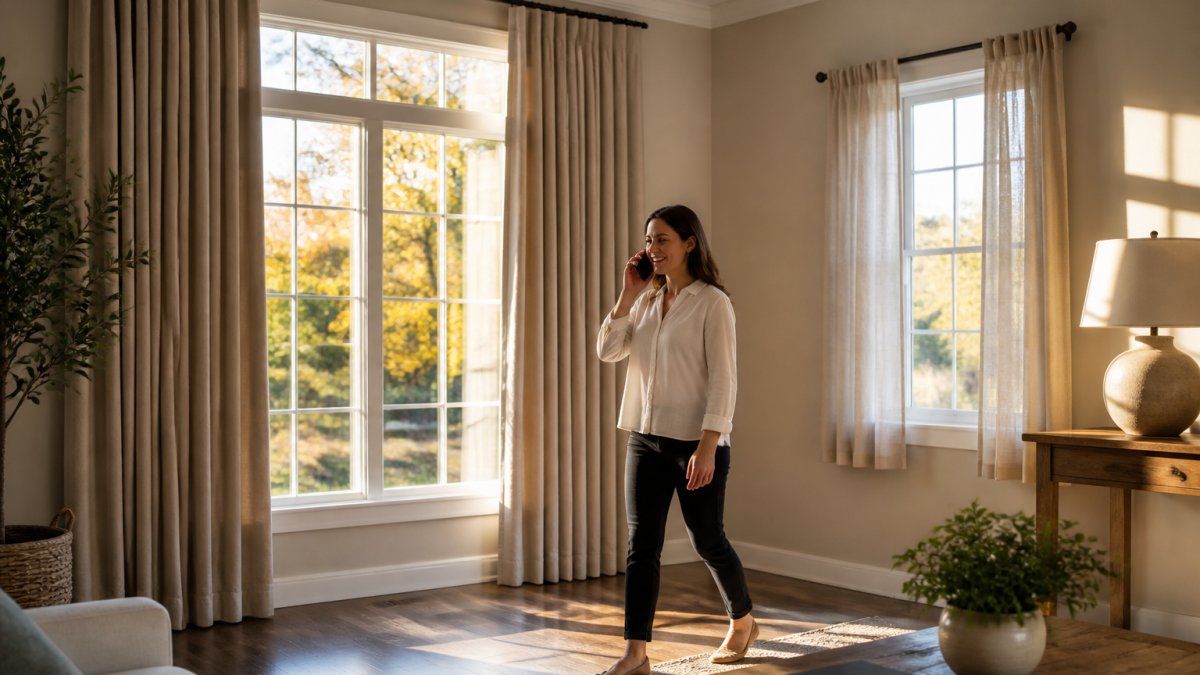
The trade-off is real. Ready-made panels can be bought, ironed, and hung the same day, while custom drapery must be measured, cut, sewn, and shipped. That timeline gap is the argument for store-bought; the fit gap is the argument for custom.
Side-by-Side Comparison: Cost, Fit, Timeline, and Quality
Here is the honest comparison across the factors that decide most purchases. Store-bought curtains are pre-sized panels in standard widths and lengths. Custom drapery is built to your window dimensions with your chosen fabric, lining, and header.
| Factor | Store-Bought Curtains | Custom Drapery |
|---|---|---|
| Upfront price | Lower per panel | Higher per panel |
| Fit | Standard sizes only | Built to your window |
| Timeline | Same day | Weeks for fabrication |
| Fullness | Fixed by panel width | You choose the ratio |
| Fabric choice | Whatever is in stock | Designer fabric by the yard |
| Lining | Often none or basic | Cotton or blackout options |
| Lifespan | Shorter, replaced sooner | Longer, holds shape |
What the Comparison Table Reveals
Store-bought curtains are cheaper on day one, but custom drapery is the better buy when the window is hard to fit or the room needs to look finished. The winner depends on your window, not your taste.
Total Project Cost: What the Price Tag Doesn't Show
Most shoppers compare the sticker price of a single panel and stop there.
Ready-made panels. A standard 84-inch panel at a big-box store typically runs $20 to $60; a 96-inch panel runs $30 to $80.
Semi-custom panels. Made-to-order in standard size ranges with your fabric and lining choice, these run $80 to $200 per panel.
Full custom drapery. Built to your exact window dimensions with your fabric, lining, and header.
Hardware and installation. Custom projects often use decorative rods, rings, and brackets at $50 to $300 per window.
The hidden line items. Alterations, return shipping on wrong sizes, and replacement of faded or sagging panels never make it into the initial comparison.
How to Build Your Own Budget
Start with the window count, not the panel count. For each window, note the width, the height from rod to floor, and whether panels should stack back fully when open. Then price three scenarios, ready-made with alterations, semi-custom, and full custom, including hardware and installation. The scenario that fits your budget and window wins, even if it is not cheapest per panel.
How to Measure for Curtains: A Fit Checklist
Learning how to measure for curtains is the step most people skip, and it is why store-bought panels often look wrong. Measure the window frame first, then decide how far past it the panels should extend.
- Measure the window width from frame edge to frame edge
- Measure the height from the rod line to the floor
- Decide the rod placement: inside the frame or above it
- Add width for mounting wider than the window
- Note any trim, radiator, or furniture the panels must clear
- Record the numbers before you shop
Measuring for Store-Bought vs Custom Panels
Store-bought panels come in standard lengths, so you buy the closest size and accept the floor gap. Custom panels are cut to the exact curtain length you specify, so the hem lands where you want it. If your window is standard and you are not fussy about the hem, store-bought works; if not, measurement is the reason to go custom.
Curtain Panel Width and Fullness: Getting Proportions Right
Curtain panel width and fullness decide whether panels look rich or flat. Fullness is the ratio of fabric width to window width. A flat panel hung on a wide window reads as a sheet. A fuller panel reads as drapery.
Most designers aim for a fuller ratio than a single store-bought panel provides. The quiet problem with ready-made sets is that two panels often do not add up to enough fabric for a large window. Custom panels let you set the ratio and order matching yardage.
Custom Drapery Lead Time vs Same-Day Store-Bought Options
Custom drapery lead time is the trade-off you pay for fit. Store-bought panels can be hung the day you buy them; custom panels must be measured, cut, sewn, and shipped, and made-to-measure work is not available same-day.
Our made-to-measure panels ship in about 10 to 15 days. Plan around that window if you have guests coming or a listing photo shoot.
Fabric, Lining, and Light Control: What Changes the Decision
Fabric selection and lining do more for light control than any other choice. A heavier fabric with a blackout liner blocks more light and absorbs more sound than a thin, unlined panel. That matters most in a bedroom, where light blocking and privacy drive the purchase.
Our Helium cotton blend made-to-measure drapery is built for exactly this: it reduces sunlight and outside noise, and it takes an optional blackout liner. If you want to sew your own panels instead, our Blue custom curtain fabric is a 95% polyester, 5% cotton woven plain that works for drapery and other window treatments.
Blue Custom Curtain Fabric | Premium Quality Material by the Yard →


Which Option Fits Your Windows and Household?
Match the choice to the window and household, not the trend. Standard windows in a low-traffic room can take store-bought panels without much loss. Odd sizes, tall windows, and rooms where the window is the focal point are where custom drapery earns its cost, but the decision also depends on who lives there and how long you plan to stay.
When Store-Bought Makes Sense
Store-bought curtains are the practical pick for renters, temporary setups, and standard windows where speed and upfront affordability matter most. You can buy, iron, and hang them the same day. If the window is common and the room is not a design priority, ready-made panels do the job.
They also make sense when staging a home for sale or furnishing a short-term rental with expected turnover. In those cases, the panels are a prop, not an investment, and the lower upfront cost is the right call.
When Custom Drapery Earns Its Cost
Custom drapery earns its cost on non-standard window dimensions, large windows, and rooms where the drapery is part of the design. It also wins when you need light blocking, sound absorption, or a specific fabric and color. Our Korora rod-pocket panel is a made-in-USA example: a 50% cotton, 50% polyester panel with lining included and a customer-chosen header. If you would rather start from the fabric up, browse our Curtain Panels and embroidered fabric for custom curtains to see what a made-to-measure project can look like.

Lifecycle Value: Cost Per Year, Not Cost Per Panel
The purchase price is only half the story; the other half is how long the panels last and what replacement costs. A ready-made panel of thin, unlined fabric often fades, sags, or loses shape within two to four years, especially in sunny rooms.
Run the math. A $120 ready-made set replaced every three years costs about $40 per year over a decade, plus rehanging hassle. A $900 custom project lasting ten years costs about $90 per year but includes the fit, lining, and look you wanted.
Repairability matters too. Custom panels can often be re-hemmed, re-lined, or re-headed by a workroom; ready-made panels are usually replaced, not repaired, because the construction does not support alteration. That difference shows up in cost per year.
Decision Framework by Household Need
Renters and short-term occupants. Buy ready-made. You cannot take custom drapery with you, and the window is not yours to alter.
Light-sensitive sleepers. Go custom or semi-custom with a blackout liner.
Tight budgets with standard windows. Start with ready-made panels in a fuller width than you think you need. Two wide panels often look better than two narrow ones, and the cost difference is small.
Long-term homeowners with unusual windows. Go custom. Odd dimensions, arched windows, and floor-to-ceiling glass are where ready-made panels fail visibly. The custom cost is justified by the fit and the lifespan.
Noisy rooms or bedrooms. Custom panels with heavy fabric and lining absorb more sound than thin ready-made panels.
A Note on Semi-Custom
Semi-custom sits between the two extremes. You choose the fabric and lining, and the workroom builds to a standard size range rather than exact dimensions. It costs less than full custom and fits better than ready-made, a practical middle path when the window is close to standard but ready-made options are too short or narrow.
Conclusion: Matching the Choice to the Window
Store-bought curtains solve speed and budget. Custom drapery solves fit, fullness, and finish. The mistake is treating this as a taste question when it is a measurement question: if your window is standard and the room casual, buy ready-made; if the window is odd, large, or central to the room, go custom. Beautiful Windows Elgin sells designer fabric by the yard with nationwide shipping and builds made-to-measure panels with your choice of header and lining. Select your fabric and we will help you get the fit right the first time.
Frequently Asked Questions
What is the average cost of custom drapes per window?
Custom drapery pricing depends on fabric, panel width, lining, and header style. At Beautiful Windows Elgin, made-to-measure panels start at $106.50 for the Helium Cotton Blend and $118.50 for the Korora Teak Rod-Pocket, while a pinch pleat panel in dark blue runs $396.99. Store-bought curtains usually cost less upfront but rarely match a non-standard window. Compare total cost per window, including lining and hardware, before deciding.
Do custom drapes fit better than store-bought curtains?
Yes, in most cases. Custom drapery is cut to your exact window dimensions, so panels reach the right length, break correctly at the floor, and cover the full window frame. Store-bought curtains come in fixed widths and lengths, which means you may need to hem them or accept gaps. For windows that are wider or taller than standard, made-to-measure panels are the only way to get a true fit.
How do you measure a window for curtains?
Measure the width of the rod, not just the window frame, and add extra inches on each side so the panels clear the trim. For length, decide whether you want sill, below-sill, or floor length, then measure from the rod down. Mounting wider than the window also helps with light control and makes the window look larger. Write down window dimensions before you shop.
How long does it take to get custom drapes made?
Custom drapery lead time varies by workroom and fabric availability. Store-bought panels can be purchased and hung the same day, while custom panels require cutting, sewing, and sometimes lining before shipping. At Beautiful Windows Elgin, allow 10 to 15 days for shipping on made-to-measure drapery. Ordering a sample first adds time, so plan ahead if you need drapes by a specific date.
Are custom curtains worth it for unusual window sizes?
For arched, oversized, or narrow windows, custom curtains are usually the better choice. Store-bought panels come in standard sizes and may leave gaps or hang awkwardly on non-standard windows. Made-to-measure drapery is built to your window dimensions, so the panels cover the full opening and hang correctly. If your window does not match a standard size, custom is often the only option that looks finished.