


12 inch Sample Test: Bump Interlining for Homeowners & DIY Sewists
Bump interlining is a heavy, loosely woven fabric layer sewn between the face fabric and lining of a curtain to add body, insulate against drafts, and dampen sound. It works best on full-length drapes, silk or lightweight face fabrics that need visual weight, and any room where thermal loss or noise is a real concern. Order a sample before committing to yardage. Fit and hand vary enough between brands that a swatch in hand tells you more than any spec sheet.
TL;DR:
- Bump interlining is the thickest option, providing significant insulation, fullness, and noise reduction, especially effective on lightweight fabrics like silk and linen.
- Choosing between cotton, bonded, or synthetic bump impacts handling, fiber shedding, and sewing time, with bonded options offering stability and less dust.
- Testing a 12-inch sample by hanging it on the actual rod helps determine visual weight and pleat recovery before committing to full yardage.
- Heavier bump benefits larger windows, higher pleat fullness, and households with allergies, but adds bulk and shedding during construction.
- Proper care involves spot cleaning or professional dry cleaning, as machine washing risks warping and shrinking the layered fabric.
Table of Contents
- What Is Bump Interlining, Exactly?
- The Real Benefits: Warmth, Fullness, and Quiet
- Bump Interlining Types: Cotton, Bonded, and Synthetic
- How to Choose Bump Interlining for Your Project
- Sewing and Installation Tips That Actually Work
- Care, Cleaning, and Safety Notes
- Why Trust This Guidance
- What Most Buying Guides Get Wrong About Bump
- Order Samples and Get Custom Drapery Made
- Sources
- FAQ
What Is Bump Interlining, Exactly?
Bump interlining sits between the decorative face fabric and the lining, invisible once the drape is hung but doing most of the structural work. It’s a thick, loosely woven fabric, and that looseness is deliberate. It traps air, which is what gives bump its insulating and sound-dampening properties, and its bulk is what gives finished drapes their characteristic soft, substantial fall.
Modern versions expand into polyester and viscose blends, plus bonded variants fused to a twill or lining backing. Bump interlining is described in the textile trade as the coarse, loosely woven cotton fabric that gives curtains their body and insulating value, distinguishing it from flannel interlining, which is thinner and smoother, and from fusible interlining, which bonds with heat and skips a separate lining layer entirely. Bump is also the thickest interlining option on the market, which is exactly why it sheds fibers more than flannel and takes a steadier hand at the sewing machine.
The Real Benefits: Warmth, Fullness, and Quiet
Bump earns its place in a drapery workroom for three practical reasons, and each one shows up differently depending on your window and fabric.
Thermal performance is the most measurable benefit. A heavy interlining layer, paired with a proper lining, meaningfully reduces heat loss through a window by trapping a buffer of still air between the glass and the room. Expect noticeably less draft near the window in winter, not a sealed envelope.
Fullness and hand change the moment bump goes in. Pleats hold their shape longer, panels swing with more weight, and thin or slippery face fabrics like silk suddenly read as substantial rather than flat. Silk drapes and larger panels are common candidates for bump precisely because the face fabric alone has no body to offer.
Sound dampening comes from the same trapped air that helps with heat. It won’t turn a bedroom into a recording booth, but it takes a real edge off-street noise and voices carrying between rooms.
- Warmer windows, less draft near glass
- Fuller pleats and better fabric hand, especially on lightweight faces
- Noticeably quieter rooms, though not full soundproofing
- Trade-off: added bulk and weight on the rod, plus more fiber shed during construction
Bump Interlining Types: Cotton, Bonded, and Synthetic
Not every bump is the same weight, feel, or workroom behavior. Choosing the wrong one costs you either hand or hours.
- English bump (100% cotton): the traditional standard, prized for its soft drape and weight. It sheds more during cutting and sewing, so plan for a lint roller and a well-ventilated space.
- Fusible bump: bonds directly to the face fabric with heat, but compatibility depends heavily on the face fabric’s fiber content and heat tolerance. Test before you press an entire panel.
When shopping, check the listed weight in ounces per yard or grams per square meter along with the fabric width. Weight is the number that tells you how much body and insulation you’re actually buying, not the marketing description.
How to Choose Bump Interlining for Your Project
Matching interlining to face fabric matters more than any other decision in this process. Follow this order:
- Check face fabric compatibility. Silk, linen, and lightweight cotton all benefit from bump’s added body. Heavy velvet already has substantial weight, so a lighter interlining or none at all may suit it better.
- Pick weight by window size and fullness goal. Larger windows and higher pleat-to-width fullness ratios (2.5x fullness is common for pinch pleat) call for heavier bump; smaller panels can use a lighter hand.
- Screen for dust sensitivity. If anyone in the household has allergies, lean toward bonded or synthetic-blend bump over loose English cotton.
- Decide bonded versus unbonded. Bonded saves labor and adds stability during sewing; unbonded gives a softer, more traditional hand but takes longer to construct.
- Order and test a sample before buying yardage. Sewing a 12-inch sample and hanging it on the actual rod shows you pleat recovery and visual weight in the room’s actual light, something no swatch card can replicate. Pairing bump with a proper curtain lining fabric rounds out the thermal and light-blocking performance.
Pro Tip: Hang your 12-inch sample on the same rod, at the same height, for at least a full day before deciding. Morning and evening light change how heavy or sheer a fabric-interlining combination looks.
Sewing and Installation Tips That Actually Work
Bump’s bulk and shedding are the two things that trip up first-time sewists, so plan around both from the start.
Cut with sharp shears in a space you can vacuum afterward. Fiber shed is normal, not a defect, and it’s worse with loose English cotton than bonded or synthetic versions. Pin generously since bump shifts more than lining fabric under pressure.
For stitching, use a slightly longer stitch length and a needle sized for medium weight fabrics, and sew slowly through seam intersections where bump, lining, and face fabric stack up. Bonded bump can often be stitched directly to the lining in one pass, saving the separate step of basting loose interlining in place. For Roman shades, bonded bump prevents sagging between folds and keeps stack height even, which matters more on shades than on flowing drapery panels.
- Puckering at seams: lengthen stitch, slow down, check needle size
- Uneven fullness: verify pleat spacing before final stitching, not after
- Excess shedding: switch to bonded or synthetic blend next time
Care, Cleaning, and Safety Notes
Bump interlining is not something you toss in a washing machine. Spot clean minor marks, and send full panels to a professional drapery cleaner familiar with interlined construction. Machine washing risks shrinking the bump layer unevenly against the face fabric and lining, warping the whole panel.
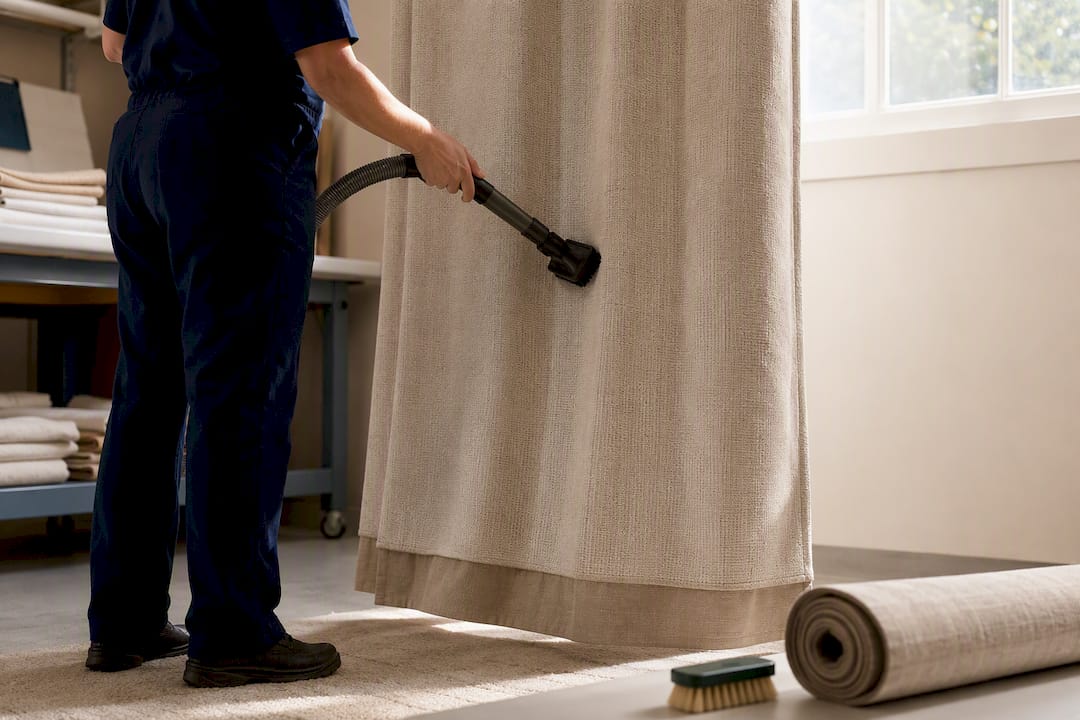
Check the manufacturer’s label for flammability rating, especially for drapes headed into a commercial or public space where fire code compliance is required. For households managing allergies, synthetic or bonded bump reduces airborne fiber compared to loose cotton, and regular light vacuuming of hung panels keeps dust from settling into the weave. Store extra yardage flat or loosely rolled, never folded tightly for long periods, to avoid permanent creasing.
Why Trust This Guidance
This guidance comes from experienced professionals specializing in designer textiles, drapery construction, and interlining choices that make or break a finished panel. The 12 inch sample test recommended throughout this guide reflects a practice we apply in our own workroom before any full yardage order ships. If you want hands-on input, order a swatch or book a design consultation before committing to a full bolt.
What Most Buying Guides Get Wrong About Bump
Most advice on interlining treats it as a single product decision: pick bump, order it, sew it in. That misses the real variable, which is how differently English cotton, bonded, and synthetic-blend bump behave once they’re actually on your sewing table.
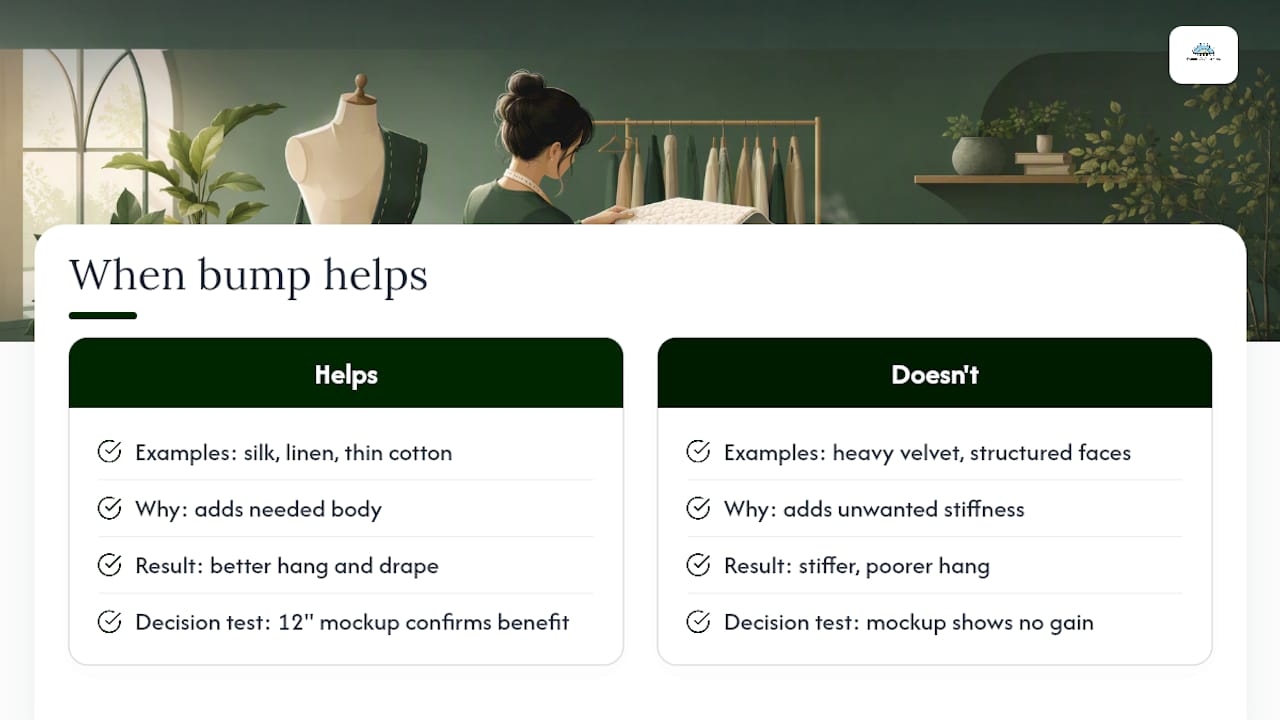
The conventional wisdom oversells bump as an automatic upgrade for every drape. It isn’t. Heavy velvet or already-structured face fabrics often gain nothing from bump and just end up stiffer and harder to hang well. The fabric that benefits most is the one with no body of its own, silk, linen, thin cotton, where bump does the structural work the face fabric can’t do alone.
If I had to prioritize one step for a first-time sewist or a designer specifying an unfamiliar fabric combination, it’s the sample. Not the fiber content, not the weight in ounces, the actual sewn and hung sample. Weight specs tell you what you’re buying on paper. A 12 inch mockup on the real rod, in the real room, tells you what you’re actually getting. Skip that step and you’re guessing with yardage you already paid for.
— Marrion
Order Samples and Get Custom Drapery Made
Specialized fabric retailers sell designer fabric by the yard, including the weights and blends that pair well with bump interlining, and offer custom drapery making with personalized design consultation for those who want the pairing done right the first time.
Rather than guessing at fiber content from a product photo, customers receive a real swatch and can consult with experts familiar with these fabrics, often with shipping available to many locations. That’s the advantage of working with a curated fabric retailer instead of piecing specs together from multiple vendor listings. Browse fabric by the yard to find a face fabric that pairs well with bump, or visit Beautifulwindowselgin to request a sample or book a custom drapery consultation before your next project.
Sources
FAQ
What Does Interlining Mean?
Interlining is a hidden fabric layer sewn between the face fabric and lining of a curtain to add body, insulation, or structure. Bump interlining is the heaviest and thickest type, used specifically when a drape needs substantial fullness or thermal performance.
Is Curtain Interlining Worth It?
Yes, for full-length drapes, thin face fabrics like silk, or rooms with drafty windows or noise concerns. Lightweight, already-structured fabrics like heavy velvet often see little added benefit and may not need it.
What Are the Types of Interlining?
The main types are English bump (100% cotton, the heaviest option), bonded bump (fused to a twill or lining for easier handling), synthetic or polyester/viscose blends, and lighter flannel interlining for less bulk. Fusible interlining bonds with heat rather than stitching.
What Is Interlining vs. Interfacing?
Interlining adds body and insulation to soft furnishings like curtains and is sewn as a separate layer inside the assembly. Interfacing is a garment-sewing term for a stiffer material used to reinforce collars, cuffs, and waistbands, and it’s typically fused rather than floated between layers.