

Tips for Selecting Upholstery Fabric: A Practical Guide
TL;DR:
- Choosing upholstery fabric involves balancing durability, fit, and maintenance requirements based on furniture design and household use. Selecting fabric before defining furniture shape can lead to fitting issues, especially on curved surfaces or cushions. Testing fabric samples on the furniture and considering fabric weight, abrasion resistance, and cleaning codes ensures a durable and practical upholstery choice.
Selecting upholstery fabric is defined as the process of matching textile properties to furniture design, household use, and maintenance capacity. The best fabric for upholstery balances three factors: durability measured by abrasion resistance, fit to furniture geometry, and realistic care requirements. Choosing upholstery fabric without a clear framework leads to costly mistakes, from premature wear to poor fit on curved cushions. This guide gives you a practical, tested approach to every decision point, drawing on industry standards like the Martindale rub test and GSM weight classifications used by professional upholsterers.
1. Tips for selecting upholstery fabric: start with a clear decision order
The single most common mistake homeowners make is choosing fabric before defining furniture design. Best practice is to select furniture shape first, then determine material direction, and finally choose fabric that suits your maintenance preferences. This hierarchy prevents mismatches between fabric behavior and furniture structure. Skipping the order often means buying a beautiful textile that puckers on curved arms or shows every crumb on a family sofa.
2. Understand Martindale rub counts before buying
The Martindale rub test is the industry standard for measuring fabric abrasion resistance. Rub count ratings break down as follows: 10,000–15,000 rubs for light use, 25,000 or more for family sofas, and 40,000 or more for commercial settings. A sofa used daily by a family of four needs at least 25,000 rubs to hold up over years of normal use. Anything below that threshold will show wear noticeably within two to three years.
- Light use (occasional chairs, guest rooms): 10,000–15,000 rubs
- Everyday family sofas: 25,000+ rubs
- Commercial or heavy-traffic seating: 40,000+ rubs
Pro Tip: Never rely on rub count alone. Abrasion rating alone is insufficient; fabric backing, stiffness, and weave construction also determine how well a fabric holds up to cleaning and daily stress.
3. Match fabric weight (GSM) to furniture structure
Fabric weight in GSM directly affects how upholstery drapes and fits on a piece of furniture. Lighter fabrics in the 200–350 GSM range suit occasional chairs where a soft drape is desirable. Mid-weight fabrics from 350–500 GSM work across most furniture types. Fabrics above 500 GSM provide the structure needed for tight, tailored pieces like tufted sofas or wingback chairs.
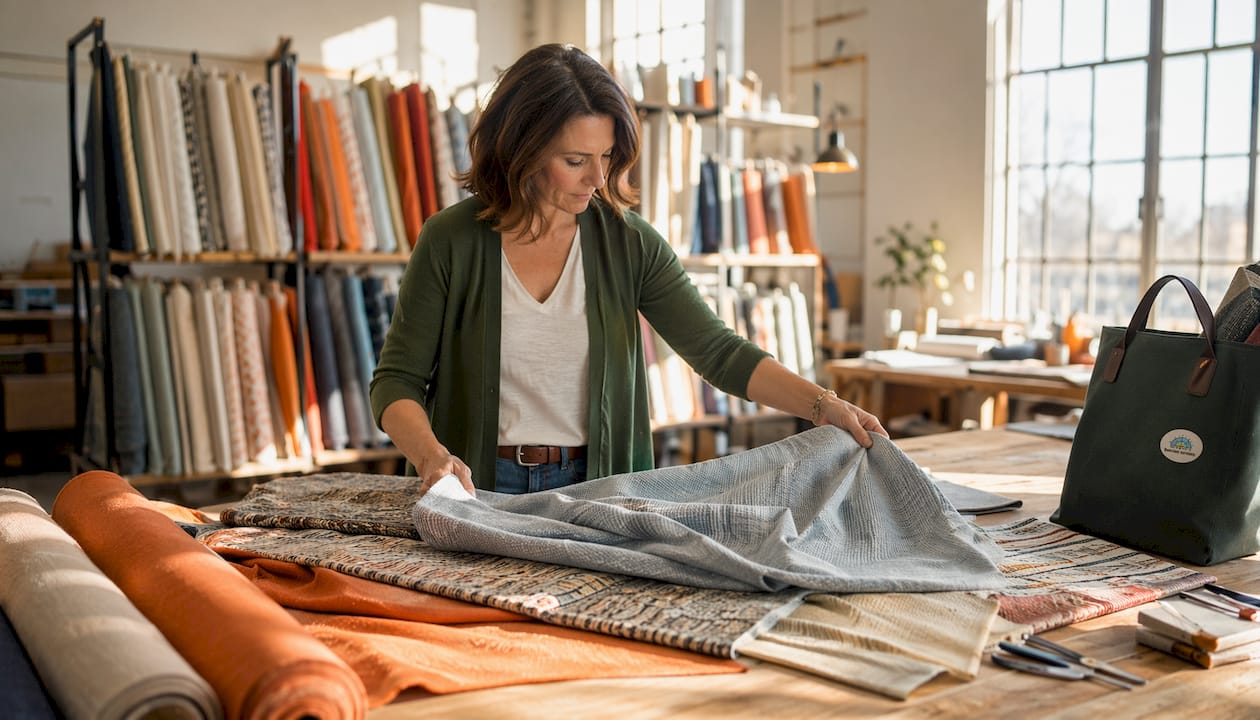
Choosing a fabric that is too light for a structured piece results in sagging and poor seam definition. Choosing one that is too heavy for a casual chair creates stiffness and limits the natural movement of cushions.
4. Evaluate fabric behavior on furniture shapes
Professional upholsterers assess fabric as a shaped cover, not just a flat sample. The way a textile stretches, responds to seam tension, and wraps around curves determines whether it will look polished or problematic after installation. A fabric that looks perfect on a bolt can pucker badly on a rounded arm or distort across a tight seat cushion.
Key factors to check before committing to any fabric:
- Directional nap: Velvet and corduroy have a nap that must run consistently in one direction across all panels.
- Backing stiffness: A stiff backing resists shaping on curves and increases the risk of seam stress.
- Weave structure: Loose weaves are prone to snag and distortion under tension.
- Stretch behavior: Fabrics with slight crosswise stretch conform better to curved furniture frames.
Pro Tip: Test fabric samples by bending them over furniture edges, sewing sample seams with planned layers, and rubbing the face to check for pilling or crocking before finalizing your order.
5. Choose performance fabrics for high-traffic homes
Performance fabrics with built-in water-based stain resistance are the most practical choice for homes with children, pets, or frequent entertaining. These textiles allow easier stain removal and withstand repeated cleaning better than traditional natural fibers. A linen sofa in a home with young children will require constant attention. A performance weave in the same color handles spills with a damp cloth and keeps its appearance far longer.
Microfiber and polyester blends are widely recommended for family use because they combine abrasion resistance with ease of cleaning at an accessible price point. They lack the visual richness of natural fibers but deliver consistent performance under daily stress.
6. Understand color and pattern trade-offs
Light-colored fabrics brighten a room but reveal marks quickly. High-performance light fabrics mitigate this by making stain removal easier, but they still require more frequent attention than darker tones. Dark fabrics hide stains well but show pet hair and dust more visibly. Mid-tones and textured weaves offer the best balance for most households.
Pattern selection carries a practical cost that many homeowners overlook. Larger pattern repeats require more fabric to align properly across cushions and panels, which increases both yardage and project cost. Always verify the repeat size before ordering. A 24-inch repeat on a large sectional can add several yards to your total fabric requirement.
| Fabric Color/Pattern | Pros | Cons |
|---|---|---|
| Light solids | Brightens space, versatile | Shows stains and marks easily |
| Dark solids | Hides spills well | Attracts pet hair and dust |
| Mid-tone textures | Conceals wear and minor marks | Can feel visually heavy in small rooms |
| Large-repeat patterns | Strong visual impact | Increases yardage and cost |
| Small-scale patterns | Easier to match, less waste | Less dramatic visual effect |
Always view fabric swatches in both natural daylight and artificial light before making a final decision. Colors shift significantly between lighting conditions, and a swatch that reads as warm beige in a showroom can appear yellow under incandescent bulbs at home.
7. Match fabric type to your household lifestyle
The right upholstery material depends on who uses the furniture and how often. A reading chair in a quiet study has entirely different requirements than a family room sectional. Matching fabric type to actual use patterns prevents both overspending on unnecessary performance features and underspending on durability where it matters most.
| Fabric Type | Best For | Key Consideration |
|---|---|---|
| Performance weaves | Families, pets, high traffic | Superior stain resistance, easy cleaning |
| Wool blends | Low-traffic elegance | Warm, durable, but requires careful cleaning |
| Linen | Formal or occasional seating | Breathable and refined, but marks easily |
| Velvet | Accent chairs, low-use pieces | Rich texture, directional nap requires care |
| Leather | Durable everyday seating | Ages well, but scratches from pets |
| Microfiber/polyester | Family rooms, budget projects | Affordable, resilient, less luxurious in feel |
Pet owners should prioritize tightly woven fabrics with a flat surface. Looped or loosely woven textiles catch claws and pull easily. Leather is durable against spills but shows scratch damage from pets over time. A tight microfiber or performance canvas offers the best combination of resilience and easy cleaning for pet-heavy households.
8. Check maintenance codes and cleaning requirements
Maintenance codes and recommended cleaning methods must align with your household’s actual willingness and ability to care for the fabric. A fabric coded “dry clean only” on a daily-use sofa is a poor match regardless of how beautiful it looks. Most upholstery fabrics carry one of four standard cleaning codes: W (water-based cleaner), S (solvent-based cleaner), WS (either), or X (vacuum only).
Choosing a fabric with a cleaning code that does not fit your routine leads to either neglected maintenance or accidental damage from using the wrong cleaning method. Read the care label before purchasing, not after installation.
9. Order and test fabric samples before committing
Ordering samples is not optional for a quality upholstery project. A sample lets you test the fabric against your furniture frame, check color accuracy in your room’s lighting, and evaluate texture and weight in person. Most fabric retailers, including Beautifulwindowselgin, offer samples by the yard so you can make an informed decision before ordering full yardage.
Test the sample by draping it over the furniture piece, folding it over sharp edges, and checking how it responds to a firm rub with your hand. These simple physical tests reveal far more than a product photo or specification sheet.
10. Consider sustainable upholstery fabric options
Sustainable upholstery fabric options have expanded significantly and now include recycled polyester, organic cotton, and natural wool blends certified to recognized environmental standards. Recycled polyester performs comparably to virgin polyester in abrasion resistance while reducing material waste. Organic cotton offers a natural, breathable surface without synthetic chemical treatments.
Choosing sustainable options does not require sacrificing durability or appearance. Many performance fabrics now combine recycled fiber content with built-in stain resistance, giving you both environmental responsibility and practical household performance. Check for certifications like OEKO-TEX Standard 100, which verifies that a fabric has been tested for harmful substances.
Key takeaways
Selecting upholstery fabric requires matching Martindale rub count, GSM weight, weave structure, and maintenance code to your specific furniture design and household use.
| Point | Details |
|---|---|
| Follow a decision hierarchy | Choose furniture shape first, then material direction, then fabric to avoid costly mismatches. |
| Use Martindale ratings correctly | Family sofas need 25,000+ rubs; rub count alone does not guarantee full durability. |
| Match GSM to furniture structure | Fabrics above 500 GSM suit structured pieces; lighter weights work for occasional chairs. |
| Test samples physically | Fold fabric over edges and sew test seams to reveal fit issues before ordering full yardage. |
| Align cleaning codes to your lifestyle | A fabric coded “dry clean only” on a daily-use sofa will deteriorate faster than expected. |
What I’ve learned from years of watching fabric choices go wrong
The most consistent mistake I see is homeowners choosing fabric entirely by appearance, then discovering the problem only after the upholsterer has finished the job. A fabric can look stunning on a bolt and perform poorly on a curved sofa back. The fix at that point is expensive and avoidable.
My honest advice: treat the physical sample test as non-negotiable. Fold it over the sharpest edge on your furniture. Rub it firmly with your palm. Sew a quick test seam if you have the means. These thirty seconds of testing tell you more than any specification sheet. I’ve seen high-rub-count fabrics fail on tufted cushions simply because the backing was too stiff to conform without stress fractures at the seam.
The other thing most guides skip is maintenance honesty. Ask yourself what you will actually do when something spills, not what you intend to do. If the answer is “wipe it with whatever is nearby,” choose a performance fabric with a W or WS cleaning code. Elegant natural fibers are worth every penny in the right setting. They are a poor investment when the setting is a household with three children and a dog.
Consulting an upholstery fabric guide before you shop narrows your options to fabrics that actually fit your situation. That single step saves more time and money than any other part of the process.
— Marrion
Quality upholstery fabrics for every home project
Beautifulwindowselgin carries a curated selection of upholstery fabrics for home décor projects, ranging from lightweight occasional-chair textiles to structured, high-GSM weaves suited for everyday family seating. Each fabric is available by the yard, with options spanning performance weaves, jacquard patterns, and embroidered textiles.
The collection includes fabrics across a range of weights and constructions, giving you the flexibility to match material to furniture type and household lifestyle. Beautifulwindowselgin also offers fabric samples and design consultation support, so you can verify color, texture, and weight before committing to a full order. Browse the full upholstery and drapery fabric collection to find the right textile for your next project.
FAQ
What Martindale rub count do I need for a family sofa?
A family sofa requires a minimum of 25,000 Martindale rubs for adequate durability under daily use. Commercial or very high-traffic seating should meet 40,000 rubs or more.
What does GSM mean for upholstery fabric?
GSM measures fabric weight per square meter and indicates how a textile will drape and hold its shape. Fabrics above 500 GSM provide the structure needed for tailored, tufted, or heavily used furniture pieces.
How do I choose upholstery materials for a home with pets?
Choose tightly woven, flat-surface fabrics with a W or WS cleaning code. Microfiber and performance weaves resist claw damage and allow easy spot cleaning better than looped or loosely woven textiles.
Do pattern repeats affect how much fabric I need to order?
Yes. Larger pattern repeats require additional yardage to align panels correctly across cushions and seams. Always confirm the repeat size before ordering to avoid running short on fabric mid-project.
What is the safest cleaning code for everyday upholstery?
The WS code, which permits both water-based and solvent-based cleaners, offers the most flexibility for everyday household cleaning. Avoid fabrics coded X (vacuum only) for any high-use seating.
Recommended
- Upholstery Fabric Types: A Practical Guide for 2026 – Fabric Store in Columbia, SC | Drapery Making Services
- Upholstery Fabric Checklist: A Practical Guide – Fabric Store in Columbia, SC | Drapery Making Services
- Defining upholstery materials: A practical guide for homes and designe – Fabric Store in Columbia, SC | Drapery Making Services
- How to Choose Upholstered Fabrics for Your Home – Shop Designer Fabrics by the Yard | Curtains & Drapery