


Homeowners, Test a 12 in. Sample to Choose Interlining for Silk Drapes
Yes, interlining is recommended for most silk drapes because it adds body, protects delicate fibers from sunlight, and improves insulation against heat and cold. The exception is sheer or intentionally lightweight silk panels, where the goal is a soft, translucent hand rather than a full, structured drape.
TL;DR:
- Heavier interlining, such as bump or napped blends, provides better insulation, sun protection, and drape fullness but increases weight and cost.
- Lighter interlining options like domette suit mid-weight silks and reduce bulk, especially for rooms with frequent sunlight exposure or delicate fabrics.
- Proper attachment, including a sandwich method and testing with fabric samples, is essential to prevent puckering and show-through, especially with high-sheen silk.
- Dry cleaning is recommended for interlined silk drapes, with special care to avoid uneven shrinking or damage to the layered fabric.
- Always test fabric and interlining combinations against actual window light at different times of day to ensure no visible show-through before purchasing full panels.
Table of Contents
- What Interlining for Silk Drapes Actually Does
- The Real Benefits of Interlining for Silk Drapes
- Choosing an Interlining Material and Weight for Silk
- How to Attach Interlining to Silk Drapes
- Caring for Interlined Silk Drapes
- A Quick Checklist for Choosing Silk Drape Interlining
- How Beautifulwindowselgin Supports Your Interlining Decisions
- What I’d Tell a Friend Before They Commit to Interlining
- Ready to Test Fabric and Interlining Before You Buy
- Sources
What Interlining for Silk Drapes Actually Does
Interlining is a soft layer sewn between the decorative silk face fabric and the standard lining, invisible once the panel is hung but doing most of the structural work. A silk drape typically stacks three layers: the silk on the outside, interlining in the middle, and a cotton or poly lining facing the room. This middle layer is what gives curtains their insulation and protective qualities, shielding the silk from direct sun exposure while adding heft nobody sees but everybody feels when they touch the fabric.
You’ll hear a few industry terms used almost interchangeably, though they aren’t identical:
- Bump refers to a thick, brushed cotton interlining prized for formal, heavy drape.
- Domette is a lighter, napped alternative that adds softness without much bulk.
- Napped interlinings have a fuzzy finish on one side that helps them grip the face fabric during construction.
Interlining is optional on lightweight sheers or casual panels where you want movement and light transmission. It becomes close to essential on formal silk panels facing direct sun or a drafty window.
The Real Benefits of Interlining for Silk Drapes
Silk on its own can look thin and a little flat once it’s hemmed and hung, even in a high-quality weave. Interlining changes that immediately. It rounds out pleats, softens the fold lines, and hides the seam allowances and lining edges that would otherwise print through under strong light.
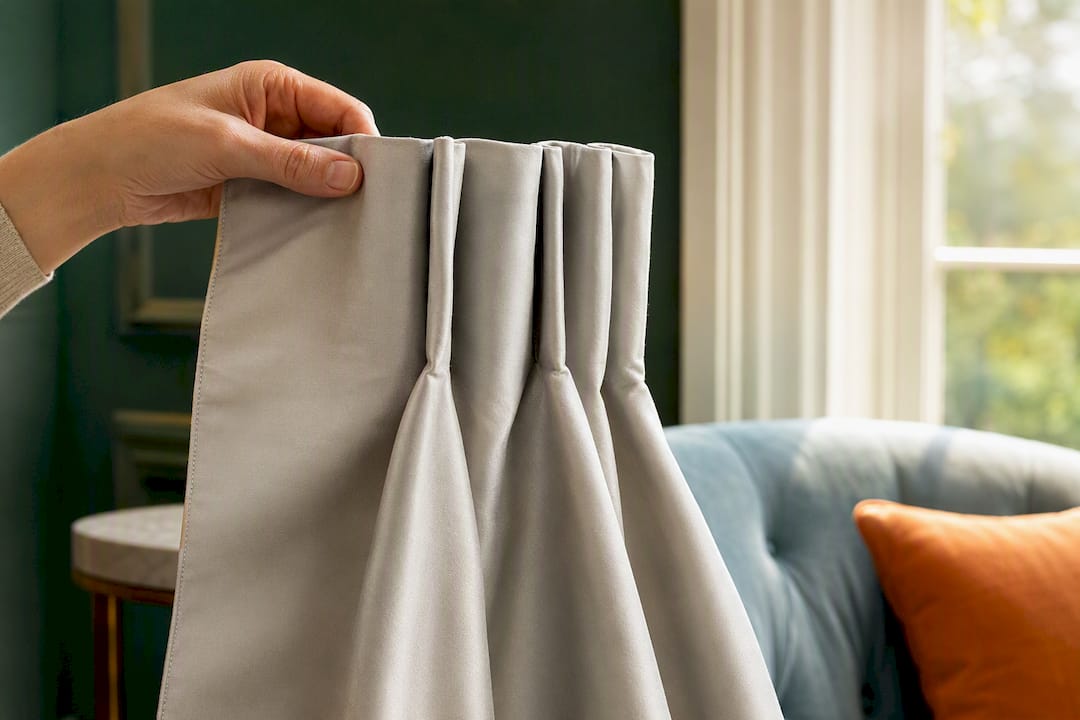
The protective case is just as strong as the aesthetic one. Silk is a protein fiber, and it degrades under prolonged UV exposure faster than synthetic curtain fabrics do. A layer of interlining, especially a heavier bump-style option like the kind marketed specifically to protect silk-faced draperies from sun damage, slows that breakdown and buys the fabric years of life it wouldn’t otherwise have.
Here’s what interlining brings to a silk panel, and where the tradeoffs show up:
- Body and fullness: crisper pleats, better fold memory, no lining show-through.
- Sun protection: slower fading and fiber breakdown on sun-facing windows.
- Insulation: measurable difference in heat loss through the glass in winter.
- Sound deadening: heavier panels absorb more ambient noise than single-layer silk.
Pro Tip: If your silk is very pale or has a high sheen, ask for a lighter interlining weight. Heavy bump under thin, light-colored silk can occasionally create faint shadow lines at the seams.
The tradeoff is weight and cost. Heavier panels need sturdier hardware, and adding a layer to a drapery job increases both fabric and labor cost, plus dry cleaning fees down the line.
Choosing an Interlining Material and Weight for Silk
Not every silk needs the same interlining, and matching weight to fabric is where most people go wrong. Interlining fabrics come in a range of weights and constructions, from light domette to heavy bump, and the right choice depends on your silk’s weight and how the window is used.
- Bump: the heaviest option, loosely woven for maximum drape and body. It’s a longtime favorite for formal silk-faced draperies, though it can be tricky to sew evenly because of its bulk.
- Domette (intermax): a lighter, thinner interlining that still insulates without weighing down a mid-weight silk.
- Napped blends: combine some of the smoothing effect of lining with light insulation, a reasonable middle ground for silk that’s neither paper-thin nor heavy dupioni.
- FR or blended interlinings: needed for rooms under fire-code requirements, such as commercial spaces or certain multi-unit buildings.
The general rule: heavier face fabric can carry a lighter interlining, while thin, delicate silks often need a protective interlining specifically to guard against light damage and to keep the fabric from looking limp once hemmed.
How to Attach Interlining to Silk Drapes
Most professional workrooms use what’s called the sandwich method, and it’s worth understanding even if you’re hiring out the work.
- Cut the interlining slightly narrower than the silk face fabric, since it sits inside the panel and shouldn’t peek past the edges.
- Layer the pieces: silk face down, interlining on top, matched to width and length before any stitching starts.
- Baste by hand or with long machine tacks along the sides, keeping stitches loose enough that the interlining settles naturally instead of puckering the silk above it.
- Handle the header and hem with extra allowance, since interlining adds bulk that changes how much fabric you need folded at the top and bottom.
- Fold in the lining last, enclosing the interlining completely so none of it is visible from either side of the finished panel.
For particularly delicate or high-sheen silks, some fabricators offset the interlining slightly off-center rather than perfectly aligned, which reduces the chance of show-through at seams and pleats.
Pro Tip: Before committing to full panels, sew a 12-inch by 12-inch mock sample with your actual silk, interlining, and lining, then hold it against the window at different times of day. Morning and afternoon light expose show-through and color shift that swatches alone never reveal.
Given how easily silk shifts, puckers, or shows needle marks, this is one job where a drapery workroom’s experience pays for itself. DIY basting on a small sample is reasonable; sewing full-length silk panels with heavy bump interlining is a job better suited to professional equipment and a steady hand.
Caring for Interlined Silk Drapes
Adding interlining changes how you clean the panel, not just how it looks. Silk is sensitive to water, heat, and agitation, and most silk drapery is labeled dry-clean only for good reason: wet cleaning can shrink or stain the fibers permanently.
- Always disclose to your cleaner that the panel is layered with interlining, since some cleaning methods that are safe for a single layer of silk can shrink interlining unevenly.
- Spot-clean small stains rather than attempting a full wash, since silk fibers can swell and lose texture when saturated with water.
- Rotate and dust panels regularly, and inspect sun-facing edges every season for brittleness or color change.
- Replace interlining if it feels stiff, yellowed, or separated from the face fabric. That usually signals sun damage has reached the middle layer.
A Quick Checklist for Choosing Silk Drape Interlining
Before you order fabric or brief a workroom, run through this short list:
- Match weight to your silk. Heavier dupioni can carry lighter interlining; thin silk taffeta often needs more structure.
- Prioritize UV resistance on any window that gets several hours of direct sun daily.
- Order swatches of both silk and interlining together, then test them against your actual window light before buying yardage.
- Confirm cleaning compatibility with your cleaner ahead of time, and build in extra lead time for interlined panels versus single-layer silk.
Pro Tip: Ask for interlining and face fabric samples pinned together, not separately. Seeing them stacked the way they’ll actually hang tells you far more than two flat swatches side by side.
How Beautifulwindowselgin Supports Your Interlining Decisions
Choosing the right interlining weight is easier with fabric in hand rather than guessing from a screen. Beautifulwindowselgin offers designer drapery fabrics by the yard, including silk options paired with a range of curtain lining and interlining choices, along with sample swatches so you can test drape and light behavior before committing to full panels.
Design consultations and measurement services help match interlining weight to your specific silk, window exposure, and pleat style, whether you’re outfitting a single formal window or a full room of custom silk drapery.
What I’d Tell a Friend Before They Commit to Interlining
Interlining earns its keep on silk drapes more often than not. It’s the layer people skip to save money and then regret once the panels fade unevenly or hang flat against the glass. My one insistence: test before you commit. Pin a sample of your silk, interlining, and lining together and hold it up to your actual window at 9 a.m. and again at 4 p.m. Light behaves differently across a day, and show-through that’s invisible in the morning can be obvious by afternoon. Beautifulwindowselgin’s sample program exists for exactly this reason, so use it before you cut a single yard of good silk.
— Marrion
Ready to Test Fabric and Interlining Before You Buy
Beautifulwindowselgin gives you a way to see and feel how silk and interlining behave together before you spend money on full panels, something a generic online fabric listing can’t offer.

Browse the designer drapery fabric collection to find silk options with compatible interlining choices, and request swatches before ordering yardage. If you’re unsure how much fabric an interlined panel requires, the window treatment measurement service walks you through accurate sizing so the extra bulk from interlining is accounted for from the start. For broader interior updates alongside your window treatments, design ideas for glass interior doors pair well with a refreshed silk drapery scheme. Reach out to schedule a consultation and get your samples moving before your next fabric order.
Sources
- Buyer’s Guide to Drapery Lining
- What types of interlining fabric are there?
- Silk Curtain Care: Essential Maintenance Tips
- How To Clean Silk Dupioni Drapes | Storables