


DIY Homeowners: Match Curtain Hem Weights to Fabric GSM
Yes. Adding hem weights fixes flared hems and improves curtain drape, and for most DIY projects, fabric-covered coin weights or weighted drapery tape are the quickest, most reliable options. Start there, and consider coordinating with your interior doors and finishes for a polished look. Measure your panel width, mark both bottom corners, and decide whether your fabric calls for individual weights or a continuous strip before you thread a needle.
TL;DR:
- Coin or tab weights are suitable for medium to heavy fabrics but may create visible bumps on lightweight curtains.
- Weighted tape ensures an even hem for sheers and long panels, with proper spacing and placement critical for optimal drape.
- Weights should match the fabric’s GSM, with lighter fabrics needing smaller weights and heavier fabrics requiring more substantial options.
- Proper installation involves measuring, tacking, and positioning weights carefully, with attention to pressing and finishing for a crisp, flat hem.
- Washing and caring require gentle methods, as metal weights can rust or loosen, making line-drying or dry cleaning preferable for durability.
Table of Contents
- What Types of Curtain Hem Weights Should You Use?
- How Do You Match Weight Type to Fabric Weight?
- How Do You Install Curtain Hem Weights Step by Step?
- What Are Safe DIY Alternatives to Store-Bought Weights?
- What Should You Look for When Buying Curtain Hem Weights?
- How Do You Remove or Replace Curtain Hem Weights?
- Does Adding Weights Change How You Wash and Care for Curtains?
- How Do Hem Weights Change the Way a Curtain Hangs?
- Beautiful Windows Elgin’s Take on Finishing Choices
- Ready to Finish Your Curtains the Right Way?
- Sources
What Types of Curtain Hem Weights Should You Use?
Not every curtain needs the same fix. The right weight type depends on your fabric, your hem style, and how much you care about seeing (or hearing) the hardware.
- Coin or penny weights are small, round discs, usually uncovered metal, tucked into a pocket at the hem corner. They work well on medium and heavy fabrics where a little bulk won’t show.
- Covered or tab weights are fabric-wrapped weights with a sewn-in tab, designed to be hand-tacked directly into the hem. Dritz Home’s covered lead drapery weights are a common example, marketed specifically for a quiet, low-profile finish on sheers and lightweight drapery.
- Weighted tape runs continuously along the hem instead of sitting at isolated points, which gives sheers and long panels an even, straight bottom edge without visible bumps.
- Coated or plastic weights trade a bit of density for peace of mind. They resist rust in humid rooms or near windows that sweat in winter, and they’re a safer bet in households with young kids or pets who might get into a torn hem.
- Clip-on or magnetic weights skip sewing altogether. They’re the fastest option for a rental or a temporary fix, but they tend to shift, and magnetic versions only work with hardware that can hold a magnetic charge.
For outdoor curtains or covered porches, stick with coated or plastic weights. Indoor décor gives you more freedom, but lead weights should always be covered rather than left bare, especially in homes with kids.
How Do You Match Weight Type to Fabric Weight?
This is the step most DIYers skip, and it’s the one that determines whether your finished curtain hangs flat or puckers at the seams. Fabric weight is measured in GSM (grams per square meter), and the category dictates how much weight your hem can carry without dragging.
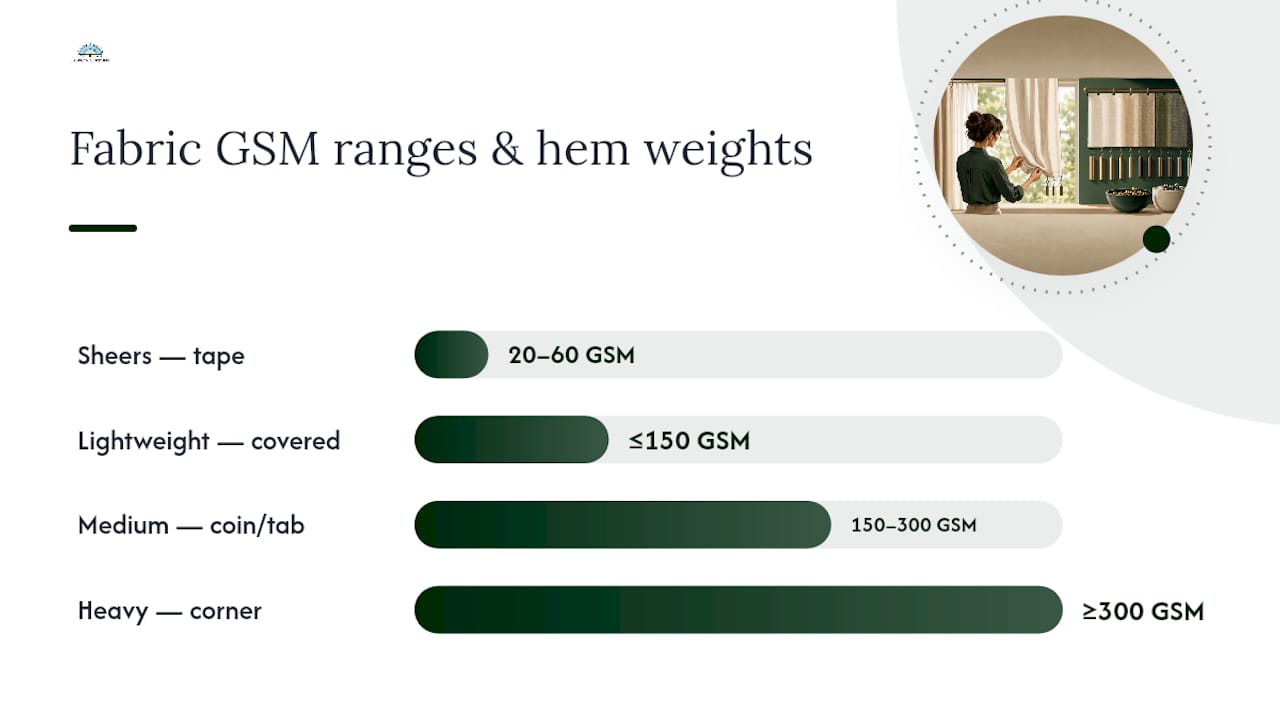
Sheers typically run 20 to 60 GSM, lightweight fabrics fall under 150 GSM, medium-weight fabrics sit between 150 and 300 GSM, and heavy fabrics exceed 300 GSM, according to SewingTrip’s fabric weight breakdown. Sheers and lightweight fabrics generally need weighted tape or small covered weights. Anything above 150 GSM usually pairs fine with coin or tab weights.
Convert that total to pounds and compare it against your rod or bracket’s stated capacity, leaving a 20 to 50% safety margin rather than loading it to the limit.
Pro Tip: A double-width sheer panel with lining can weigh two to three times more than the fabric alone suggests. Always check your hardware rating before you commit to a heavy rod pocket or a decorative bracket that wasn’t built for real load.
Placement matters as much as weight amount. Common supplier guidance calls for at least one weight in each bottom corner, with wider panels needing extra weights spaced evenly along the hem, according to WAWAK’s drapery hardware guide. A general spacing recommendation is one weight roughly every foot and a half to two feet for medium fabrics, with closer spacing or continuous tape preferred for sheers.
- Sheers (20 to 60 GSM): weighted tape, run the full hem length.
- Lightweight (under 150 GSM): small covered weights or tape, spaced closer together.
- Medium (150 to 300 GSM): coin or tab weights at corners plus one every 18 to 24 inches.
- Heavy (over 300 GSM): corner weights are often enough; check if the fabric even needs added weight.
How Do You Install Curtain Hem Weights Step by Step?
Installation isn’t complicated, but the order of operations matters more than most tutorials let on. Rushing the pressing step is the single most common reason a finished hem looks lumpy instead of crisp.
- Measure and mark first. Press your hem flat before you do anything else, then mark exactly where each weight will sit, both corners and any evenly spaced points along wider panels.
- For coin or tab weights, tuck each one into the hem pocket and hand-tack it in place with a few small stitches through the fabric tab, not through the metal itself. Dritz’s covered weight design exists specifically so you can tack through the fabric shell rather than piercing the weight, which keeps the stitch quiet and the finish flat.
- For weighted tape, center the strip inside the hem allowance before you sew the hem closed, then run a straight stitch along both edges of the tape so it can’t shift or bunch. Continuous tape is especially useful here because it gives sheers a straight bottom edge without visible lumps.
- Finish the tape ends by folding them under slightly so no raw edge peeks out, then stitch the hem closed as you normally would.
- Non-sew options, like clip-on or magnetic weights, just attach after the curtain is hung, but they tend to slide during washing and can leave small dents in delicate fabric over time.
- Hang and test. Once the panel is up, check for even drape across the width, adjust spacing if one section still flares, and give the hem a gentle tug to confirm nothing rattles or feels loose.
Wash a hemmed sample panel once before committing to the full set, especially if you used tape, since some adhesive-backed versions behave differently after a trip through the washer.
What Are Safe DIY Alternatives to Store-Bought Weights?
Homemade weights can work in a pinch, but they come with tradeoffs worth knowing before you raid the junk drawer.
- Pennies in a small fabric pouch, sewn shut and tacked into the hem, mimic a coin weight for almost no cost. Wrap them in a scrap of the curtain fabric or a bit of felt to keep them from clinking against the window frame.
- Washers sewn into a fabric tube work for heavier fabrics, but stainless steel washers are worth the extra cost over plain steel, which can rust after a few humid seasons or a wash cycle.
- Sealing matters. Widely shared DIY tips online skip this step, but an uncoated metal weight left loose in a hem can corrode, stain the fabric, or rattle against the glass every time a door slams.
- Keep them out of reach. Any homemade weight is a small, dense object, so tack it securely if there are kids or pets around, and avoid loose weights that could work free of a worn seam.
- For washing, hand-tacked pouches usually survive a gentle cycle, but tumble drying can loosen stitches over time, so line-dry weighted hems when you can.
Store-bought covered weights and tape still outperform homemade versions on consistency and quiet operation, but a well-sealed DIY pouch is a reasonable stopgap while you shop.
What Should You Look for When Buying Curtain Hem Weights?
Product listings use language that isn’t always intuitive if you’ve never bought drapery hardware before. A few terms to watch for will save you a return trip.
- Grams per piece tells you how much individual coin or tab weights actually weigh, useful for matching against your GSM calculation.
- Tab vs. tape distinguishes single sewn-in weights from continuous strips. Tape is sold by the yard, and rolls up to 144 yards exist for large commercial projects, which makes it the economical choice for full-length sheers.
- Covered vs. uncovered matters for both noise and appearance. Uncovered weights show through thin fabric and can click against glass; covered versions muffle that sound.
- Indoor vs. outdoor suitability should be listed clearly. If it isn’t, assume the product is indoor-only and choose coated weights for anything near moisture.
For sourcing, small sample packs are the right starting point for testing on one hem before you commit. Bulk weighted tape makes more sense once you know you’re finishing several long panels. Covered weights are worth the slight premium anywhere the hem will be visible, like a sheer over a bay window. Rowley’s covered lead weights come in a range of sizes for exactly this kind of testing before a bigger order.
Before buying in bulk, order a small pack and test it on a scrap or a single hem. If a store allows sample orders, take advantage of that rather than guessing on a full curtain’s worth of hardware.
How Do You Remove or Replace Curtain Hem Weights?
Weights loosen over time, especially in hems that get frequent washing or heavy sun exposure that weakens thread. Removing one is straightforward if you approach it in order rather than yanking at the hem.
Start by turning the curtain inside out so you can see the hem stitching clearly. Snip the tacking stitches around the weight with small embroidery scissors, being careful not to cut into the surrounding fabric. Slide the old weight out through the opening you just created. If it’s a sewn-in tab weight, you’ll usually find the thread concentrated in a tight cluster right around the tab, which makes it easy to isolate.
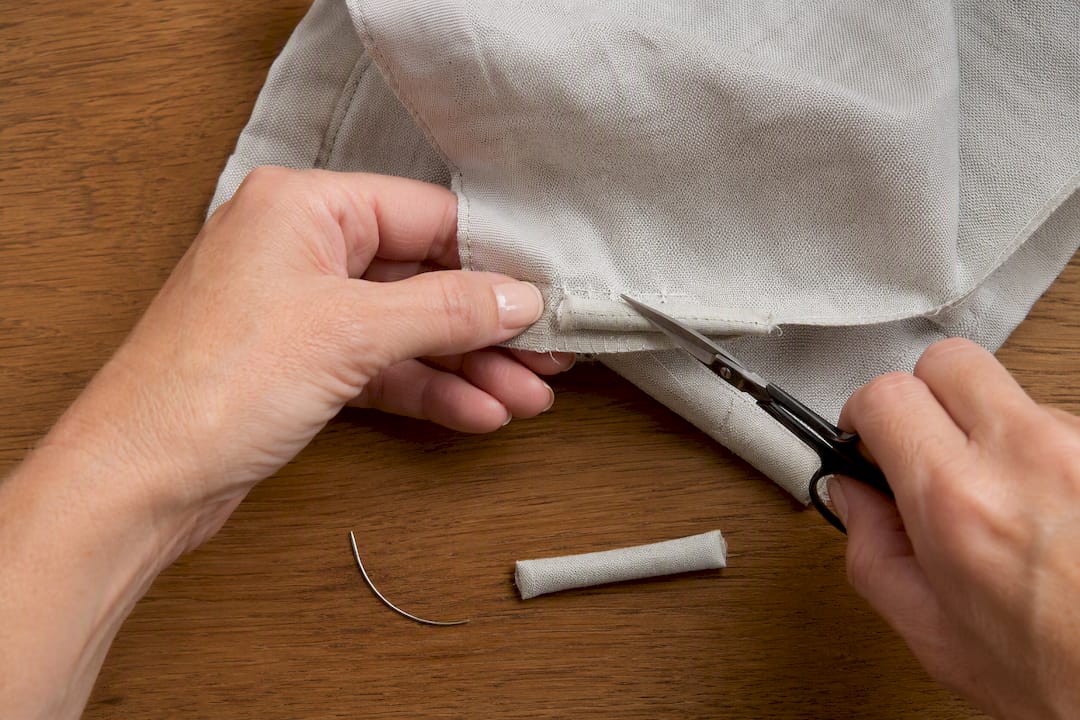
Once the old weight is out, check the hem pocket for any wear, rust staining, or small holes before inserting a replacement. A stained pocket sometimes needs a light spot clean before the new weight goes in, since rust marks can spread if left untreated.
To install the replacement, slide it into the same spot and hand-tack it with a few stitches through the fabric, mirroring the original stitch pattern. Use a curved needle if the hem is tight, since it maneuvers more easily inside a narrow pocket than a straight one.
For weighted tape, replacement is a bit more involved. Rip out the stitching along both edges of the old tape, remove it, then center a fresh strip and re-stitch. Cutting the tape slightly shorter than the hem width keeps the ends from poking out after a few wash cycles.
Does Adding Weights Change How You Wash and Care for Curtains?
Yes, and this is worth knowing before your weighted panels go anywhere near a washing machine. Metal weights, even coated ones, don’t always play well with agitation and high heat.
Hand-tacked coin and tab weights generally tolerate a gentle machine wash on cold, but tumble drying is riskier. Heat and repeated tumbling can loosen tacking stitches over time, and a weight rattling loose inside a dryer drum can also dent the drum or damage the fabric around it. Line-drying weighted panels is the safer habit, even if it takes longer.
Weighted tape behaves a little differently depending on the material. Some tapes are rated for machine washing, while others recommend spot cleaning or dry cleaning only, so check the product listing before you toss a full panel in with a regular load. When in doubt, treat weighted tape like a delicate item and wash it on its own cycle.
Rust is the other issue to watch for, particularly with uncoated metal weights or anything homemade. A rust spot that bleeds through fabric during a wash cycle can leave a permanent stain, which is one more reason coated or covered weights are worth the small price difference. If you notice a weight starting to feel gritty or the fabric around it developing a faint orange tint, that’s your signal to replace it before the next wash rather than after.
For dry cleaning, mention to the cleaner that the hem contains weights so they can flag any concerns about their pressing equipment or solvents interacting with the metal.
How Do Hem Weights Change the Way a Curtain Hangs?
The visual difference is often immediate. A curtain without weights tends to flare at the bottom corners, especially with lightweight or sheer fabric, and that flare only gets worse near a draft, an open window, or a ceiling fan running nearby. Weights pull the hem straight down, which lets the fabric fall in cleaner, more even folds from top to bottom.
Curtain weights function for both appearance and performance. Beyond the visual straightening, they reduce side-seam flaring and help panels resist draft-driven movement, an effect that shows up most with lightweight decorative fabrics that otherwise billow at the slightest air current.
The difference is especially noticeable on long panels, floor-length sheers, and anything hung near a frequently opened door. A properly weighted sheer panel holds its shape and pools evenly at the floor instead of twisting or lifting with every gust. Heavier fabrics benefit less dramatically since their own mass already resists movement, but even a heavy panel can develop uneven corners without at least a small weight anchoring each side.
Fullness plays into this too. A panel sewn with generous fullness, meaning more fabric bunched into the same rod width, tends to need slightly more weight distributed along the hem to keep those extra folds from sagging unevenly on one side. That’s part of why matching weight type and placement to your specific fabric and fullness ratio, rather than grabbing whatever weight is cheapest, makes the visible difference between a hem that looks tailored and one that looks like an afterthought.
Beautiful Windows Elgin’s Take on Finishing Choices
Weights solve a real problem, but they’re a finishing touch, not a fix for the wrong fabric. If a panel still flares after correct weighting, the fabric itself may be too light for the room’s drafts or too sheer for the fullness you chose. Before final hemming, test a weight on a cut sample and watch how it hangs for a day. When the pairing feels wrong, that’s the moment to look at heavier textiles or bring in a professional drapery consultation instead of forcing a DIY fix further.
— Marrion
Ready to Finish Your Curtains the Right Way?
Getting the weight right only matters if the fabric underneath is right, too, and that’s where Beautifulwindowselgin fills the gap between a DIY fix and a store-bought panel that never quite fits your window. Instead of guessing at GSM from a mystery bolt at a big-box store, you can order fabric by the yard with the weight and drape characteristics already known, then hem and weight it yourself with confidence.

An online retailer based in Columbia, SC, carries designer fabrics by the yard, from jacquard satin to lightweight sheers, alongside custom drapery services for readers who’d rather hand the whole project to a professional. If you’re unsure whether your chosen fabric needs coin weights or continuous tape, design consultations can walk through lining and fullness pairing before you cut a single seam. Browse the upholstery and drapery fabric collection to compare weights side by side, or check the fabric FAQ page for sample-ordering details before you commit to a full panel. Order a swatch, test your weight of choice on it, then place your yardage order once you know exactly how it hangs.
Sources
- Fabric weight for curtains — SewingTrip
- Curtain Weights, Drapery Weights & Hem Weights — WAWAK
- Draperysupplies