

How Durable Is Your Upholstery Fabric? A Buyer's Guide
For everyday sofas and family-room seating, your best bet is a performance textile, a solution-dyed acrylic, or a protected leather. These three categories consistently outperform standard woven fabrics against stains, sun, and daily wear. The real question isn’t which fabric has the highest lab score. It’s whether that fabric matches how the piece actually gets used.
Upholstery fabric durability comes down to one rule: match the material to the room’s real traffic, not to the biggest number on a spec sheet. A guest chair and a family-room sectional have completely different jobs, and they need different fabrics.
- General residential use: look for Wyzenbeek double-rubs indicating suitability for residential seating
- Heavy residential or high-traffic homes: choosing fabrics suitable for heavy residential or borderline contract use is recommended
- The caveat that matters most: abrasion test results are not a lifespan guarantee, according to the ACT Performance Guidelines, which explicitly warn against reading rub counts as a promise of how long a fabric will last
Key Takeaways
Matching fabric to real-world use, not chasing the highest rub count, is what actually determines how long upholstery lasts.
| Point | Details |
|---|---|
| Match fabric to use case | Choose performance textiles or protected leather for high-traffic, pet, or sun-exposed pieces. |
| Read rub counts correctly | Target 15,000+ Wyzenbeek double-rubs for general use, 30,000+ for heavy residential traffic. |
| Treat lab tests as a screen, not a promise | ACT Performance Guidelines confirm abrasion results don’t guarantee real-world lifespan. |
| Maintain what you buy | Vacuum weekly, rotate cushions, and follow the W/S/WS/X cleaning code on the tag. |
| Start with a swatch from Beautifulwindowselgin | Request a sample and consultation to test texture, weave, and color before ordering yardage. |
Table of Contents
- Understanding Upholstery Fabric Durability Tests
- What Rub Counts Actually Mean for Your Furniture
- Which Fabric Family Holds Up Best?
- What Actually Determines How Long Your Fabric Lasts
- A Simple Checklist for Choosing Durable Upholstery
- How Beautiful Windows Elgin Helps You Choose
- Humidity, Temperature, and Your Fabric’s Life Span
- Common Fabric Damage and How to Prevent It
- Balancing Fabric Cost Against How Long It Lasts
- A Practical Take on Picking Fabric That Lasts
- Beautifulwindowselgin: Your Partner in Durable Fabric Selection
- Sources
Understanding Upholstery Fabric Durability Tests
Two lab tests dominate every fabric spec sheet you’ll ever see, and they measure different things in different ways. Knowing the difference keeps you from comparing apples to oranges when you’re reading a swatch card.
Wyzenbeek testing (ASTM D4157) rubs a fabric sample against a cotton duck or wire mesh abradant in a back-and-forth motion. Each pass in both directions counts as one double-rub. Technicians run the test until the fabric shows visible wear, typically two yarn breaks or noticeable surface change, and that number becomes the fabric’s Wyzenbeek rating.
Martindale testing (ASTM D4966), used more often on European and finer-weave fabrics, moves a wool abradant over the sample in a tight, elliptical pattern rather than a straight line. Results are reported in cycles, not double-rubs, and the ACT Performance Guidelines note the two methods are not directly convertible. A fabric rated at 20,000 Martindale cycles isn’t automatically equivalent to 20,000 Wyzenbeek double-rubs.
Here’s what each number actually tells you:
- Wyzenbeek double-rubs indicate resistance to linear, back-and-forth friction, the kind a person sliding across a cushion creates
- Martindale cycles indicate resistance to multidirectional pressure and twisting, closer to what happens when someone shifts weight while seated
- Neither number accounts for sunlight exposure, spills, pet claws, or how the fabric was finished after weaving
That last point is the one most shoppers miss. The ACT Performance Guidelines state plainly that comparative lab results can differ by 60% or more between labs and testing conditions, and that abrasion results should never be treated as an indicator of how long a fabric will actually survive in someone’s living room. A high number screens out fragile fabrics. It doesn’t crown a winner on its own.
What Rub Counts Actually Mean for Your Furniture
Once you know how the tests work, the next step is translating a rub count into a real decision about a real piece of furniture. Industry guidance from the ACT Performance Guidelines treats 15,000 to 30,000 Wyzenbeek double-rubs as the range that separates light residential use from heavy residential and borderline contract-grade use.
- Accent chairs and rarely used formal seating: a lower rub count range is usually sufficient, since these pieces see occasional sitting rather than daily wear
- Living-room sofas with normal family use: a moderate rub count range typically covers most households comfortably
- Family-room sectionals, kids’ playrooms, or homes with multiple pets: aim for higher double rub ratings or lean toward a performance fabric regardless of the number
Very high rub counts found in commercial-grade fabrics are generally unnecessary for a home sofa. Contract-grade fabrics built for airport lounges and hospital waiting rooms carry those ratings because they face thousands of different bodies a week under commercial cleaning schedules. Your living room sofa does not need that kind of margin.
Realistically, a well-chosen upholstery fabric on a well-built frame lasts somewhere between 7 and 15 years with normal family use, though sun exposure, pets, and cleaning habits swing that range considerably in either direction. A fabric matched poorly to its use case can look worn in under two years, while the same fabric on a low-traffic accent chair might still look new after a decade. Upholstery fabric lifespan has less to do with the rub count on the tag and more to do with whether that fabric was ever the right choice for the piece in the first place.
Which Fabric Family Holds Up Best?
Every fabric family has a different weak point. Knowing what typically fails first helps you shop against your household’s actual risks instead of a generic durability score.
Performance fabrics and solution-dyed acrylics lead the pack for most households with kids, pets, or sun-facing windows. These fibers are dyed all the way through rather than just on the surface, so fading and staining have less to grab onto. Wirecutter’s practical guide to performance fabric points out that modern solution-dyed acrylics have gotten soft enough for everyday indoor use while keeping the fade and moisture resistance that made them popular for outdoor furniture first. If your family room takes direct sun for part of the day, this category solves a problem plain cotton or linen simply can’t.
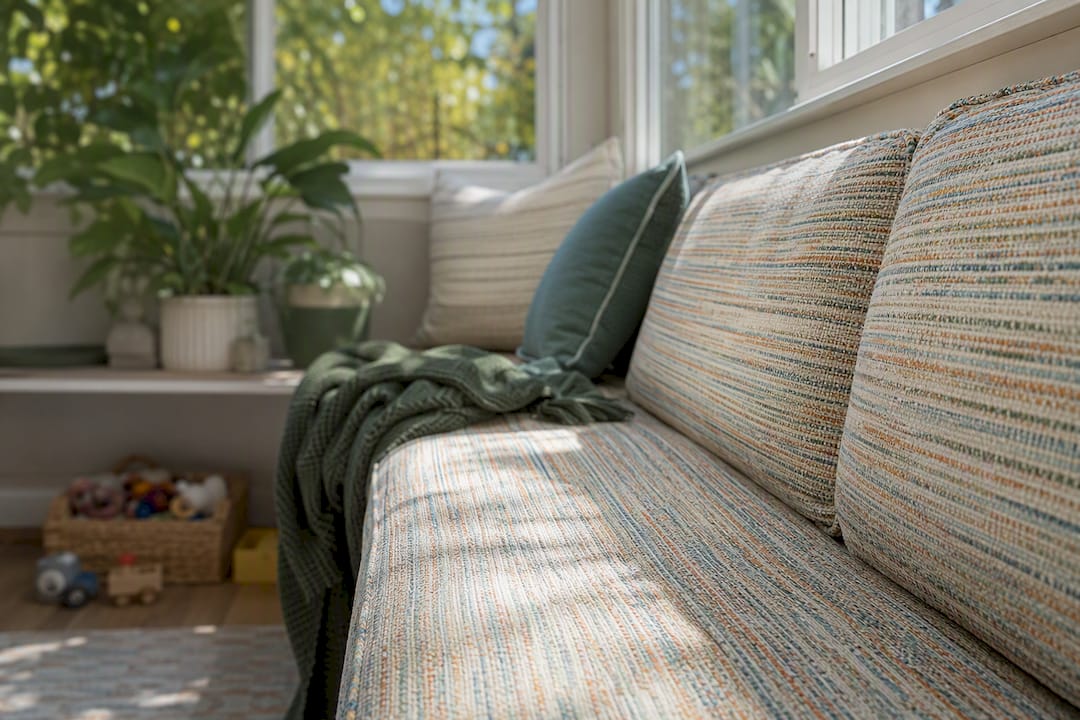
Microfiber and tight synthetic weaves resist abrasion well because the fibers are packed densely and the surface has almost nothing for claws or zippers to catch. Pet hair also tends to sit on top of microfiber rather than working into the weave, which makes cleanup easier. The trade-off is a slightly less natural hand-feel compared to woven cotton or wool blends.
Leather splits into two very different durability stories. Protected (or “finished”) leather has a topcoat that resists spills and scratches, making it a strong pick for busy households. Aniline leather, left mostly untreated to preserve a natural look, shows every scratch and stain and demands far more careful maintenance. Both age well over time, but only protected leather forgives daily mistakes.
Natural fibers like linen, cotton, and wool bring texture and warmth that synthetics can’t fully replicate, but they’re better suited to lower-traffic pieces. A linen-blend accent chair in a formal living room can look beautiful for years; the same fabric on a daily-use sofa will show wear much faster.
Velvet, chenille, and bouclé deserve a closer look before committing them to daily seating. Traditional cut velvet and loose chenille can crush and pill under regular use, and bouclé’s looped surface catches on pet claws easily, according to The Spruce’s breakdown of couch materials. Performance versions of velvet, woven with synthetic fibers and tighter backing, hold up considerably better than their traditional counterparts if you love the look but have a busy household.
Indoor-rated outdoor fabrics, often solution-dyed acrylics built for patio furniture, make sense for sunrooms, mud rooms, or any space getting heavy natural light. They trade a bit of softness for serious resilience against moisture and fading. Browsing upholstery fabric types side by side makes the differences between these families easier to see before you commit to yardage.
What Actually Determines How Long Your Fabric Lasts
The fabric itself is only part of the story. Weave tightness matters as much as fiber choice. A tight, flat weave resists snagging from pet claws and zippers far better than a loose or looped structure, which is why The Spruce recommends avoiding open weaves in households with cats or dogs. Back-coating, a resin or latex layer applied to the underside of woven fabric, adds stability and helps prevent seam slippage over years of use.
Furniture construction plays an equally large role. A hardwood frame with eight-way hand-tied springs holds cushions in the shape that keeps fabric from stretching unevenly, while a lower-grade frame lets fabric shift and stress at the seams. High-resiliency foam cushion fill also keeps fabric from developing permanent creasing where lower-density foam would.
Care codes printed on most fabric tags tell you how to clean without damaging the material:
- W means water-based cleaners are safe
- S means only solvent-based (dry) cleaners should be used
- WS means either method works
- X means vacuum only, no liquid cleaners at all
Simple habits extend fabric life more than any single purchasing decision: vacuum weekly to remove grit before it works into the weave, rotate seat cushions regularly to distribute wear evenly, and blot spills immediately rather than scrubbing them in.
Pro Tip: When you request a swatch, check the cut edge for fraying, run your fingernail lightly across the surface to test for snagging, and hold the sample up in the room’s actual light before deciding. Fabric that looks rich under store lighting can read completely differently near a sunny window.
A Simple Checklist for Choosing Durable Upholstery
Buying fabric or a ready-upholstered sofa gets a lot less confusing when you work through it in order rather than starting with color and pattern.
- Define the use case first. Is this piece for a formal sitting room, a family room with kids and dogs, or a sun-drenched reading nook? Traffic, pets, and sunlight each point toward different fabric families.
- Set a minimum rub-count band and cleaning code based on that use case, using the 15,000 to 30,000 Wyzenbeek range as your guide for residential seating.
- Request a full spec sheet and a physical swatch, then test it at home under your actual lighting and with the cleaning method the tag recommends. A practitioner-focused upholstery fabric selection guide notes that most durability complaints trace back to a mismatched fabric choice, not poor manufacturing.
- Weigh construction and maintenance together with the fabric itself: frame quality, cushion fill, and your own willingness to rotate cushions and vacuum regularly all factor into how the piece looks five years from now.
A downloadable upholstery fabric checklist can keep these steps in front of you while you’re comparing swatches side by side.
| Step | What to check |
|---|---|
| Use case | Traffic level, pets, sun exposure, likely spill types |
| Rub count and care code | 15,000+ for general use, 30,000+ for heavy traffic, plus W/S/WS/X code |
| Swatch test | Texture, nap direction, seam edges, and behavior under your room’s light |
| Construction | Frame material, spring type, cushion fill density |
How Beautiful Windows Elgin Helps You Choose
Choosing fabric from a screen is guesswork without something to touch. Beautifulwindowselgin offers fabric samples so you can check hand-feel, weave tightness, and color under your own lighting before committing to yardage, along with design consultations for buyers weighing a family-room sectional against a formal accent chair.
- Fabric samples shipped nationwide before you order full yardage
- Design consultations for matching fabric weight and weave to specific furniture pieces
- A curated selection of upholstery textiles, from performance-grade to natural fiber
- Guidance suited to interior designers, drapery workrooms, and homeowners alike
A family-room sectional calls for a tighter weave and a higher rub count than a rarely used accent chair, and that distinction shapes every recommendation Beautifulwindowselgin makes to customers weighing the two, much like choosing the right sculptural lounge chair that balances form and fabric durability.
Humidity, Temperature, and Your Fabric’s Life Span
Fabric doesn’t just wear down from friction. It also reacts to the air around it. Natural fibers like cotton, linen, and wool absorb and release moisture as humidity swings, and repeated expansion and contraction can loosen fibers over time, making the weave more prone to sagging or stretching at stress points like armrests and seat edges.
High humidity paired with poor airflow also creates conditions where mildew and mold can take hold, particularly on natural-fiber upholstery in basements, sunrooms, or coastal homes without air conditioning. Synthetic fibers and performance textiles resist moisture absorption far better, which is part of why they’re the standard recommendation for humid climates or rooms near exterior doors.
Temperature swings bring a different problem. Fabric near a radiator, a sun-heated window, or a fireplace can dry out and become brittle, especially natural fibers that lose their oils and flexibility under sustained heat. Synthetic fibers tend to handle heat cycling better structurally, though direct sun exposure still fades color regardless of fiber type.
The practical takeaway: keep upholstered furniture a reasonable distance from heat sources and direct HVAC vents, use blinds or UV window film on south-facing rooms, and run a dehumidifier in consistently damp spaces. None of these steps require replacing furniture. They simply protect the fabric you already chose.
Common Fabric Damage and How to Prevent It
Three types of damage account for most reupholstery calls: pilling, fading, and tearing. Each has a different cause and a different fix.
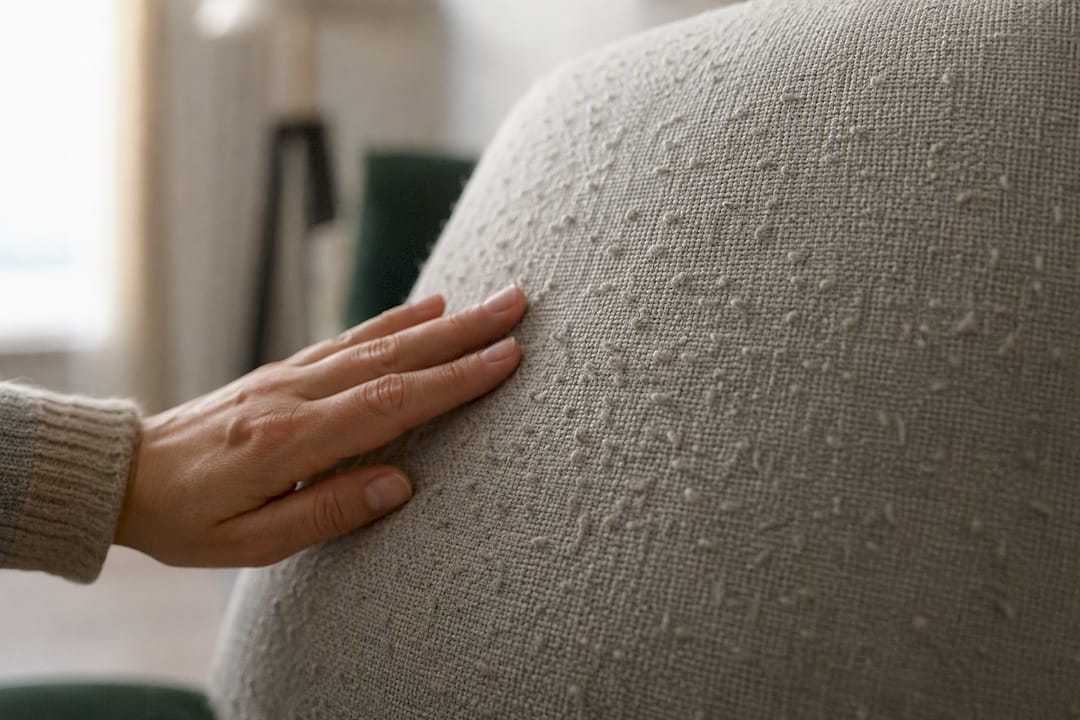
Pilling happens when short fibers work loose from the weave and tangle into small balls on the surface, usually from friction against clothing or skin. It’s more common on loosely spun natural fibers and traditional chenille than on tightly woven synthetics. A fabric shaver removes existing pills safely, and choosing a tighter weave from the start prevents most pilling before it begins.
Fading comes almost entirely from UV exposure, though household cleaning chemicals can accelerate color loss too. Solution-dyed fabrics resist fading far better than surface-dyed ones because the color runs through the entire fiber rather than sitting on top of it. Rotating cushions periodically evens out sun exposure across a piece instead of concentrating it on one arm or seat cushion.
Tearing usually starts at a weak point, a seam, a snag from a pet claw, or a spot where fabric was stretched too tight during upholstering. Tight, flat weaves resist snags better than loose or looped ones, and quality construction avoids over-stretching fabric across frames in the first place. Address small snags immediately with a needle and thread rather than letting them run.
Balancing Fabric Cost Against How Long It Lasts
The cheapest fabric on the shelf rarely turns out to be the cheapest choice over ten years. A budget woven fabric with a modest rub count might cost less per yard upfront, but if it wears out or fades within three years on a family-room sofa, reupholstering costs, plus the hassle, erase the initial savings fast.
Performance fabrics and solution-dyed acrylics typically carry a higher price per yard, but the Wirecutter guide to performance fabric notes that spending a bit more upfront on the right fiber for a messy household tends to reduce reupholstery costs and callbacks over the sofa’s lifetime. That math changes depending on the piece: an accent chair in a formal room rarely justifies premium performance fabric, since low traffic means even a modest fabric will last for years.
The smarter budget approach isn’t “cheapest fabric everywhere” or “premium fabric everywhere.” It’s matching spend to traffic. Put the budget where the wear happens: the family-room sectional, the dining chairs kids use daily, the sofa across from the TV. Save on fabric for guest rooms and formal spaces that see occasional use. That’s where a comprehensive upholstery fabric list helps, since it lets you compare price points across fiber types before you commit to yardage for either kind of room.
A Practical Take on Picking Fabric That Lasts
Most durability advice online fixates on rub counts like they’re a final score, and that’s the part I’d push back on hardest. A 40,000 double-rub fabric in the wrong application still fails a family, while a 15,000 double-rub fabric matched correctly to a low-traffic room outlasts it without complaint. The number is a screening tool, not a verdict, and the ACT guidelines say so directly.
What gets underrated is furniture construction. Readers obsess over fabric specs while ignoring frame quality and cushion fill, and both shape how fabric wears at the stress points that actually fail first: arms, seat edges, seams. A mediocre fabric on a great frame often outlasts a great fabric on a cheap frame.
If you take one thing from this guide, prioritize use case over spec sheets. Touch the swatch. Check it in your own light. That single habit prevents more disappointment than any rub-count chase ever will.
— Marrion
Beautifulwindowselgin: Your Partner in Durable Fabric Selection
Beautifulwindowselgin gives you something a spec sheet never can: fabric in your hands before you commit to yardage. Where big-box retailers push you toward whatever’s in stock, Beautifulwindowselgin lets you request real samples, compare weave and hand-feel side by side, and get a design consultation matched to your specific piece, whether that’s a sun-facing family-room sectional or a formal accent chair that barely gets used.
If you’re weighing performance fabric against a natural-fiber option for a high-traffic sofa, upholstery fabric sold by the yard from Beautifulwindowselgin covers both ends of that decision, with nationwide shipping so you’re never limited to what a local store happens to carry. For readers ready to move past research and into swatches, browse the full upholstery and drapery fabric collection and request samples for the pieces you’re planning to recover or build fresh.
Sources
- ACT Performance Guidelines — Abrasion (woven fabrics) — Feb 2025
- Kids, pets, wine. Performance fabric can help. | Wirecutter
- Types of couch materials and where they work | The Spruce
Recommended
- Upholstery Fabric Types: A Practical Guide for 2026 – Fabric Store in Columbia, SC | Drapery Making Services
- Understanding fabric durability for lasting home textiles – Fabric Store in Columbia, SC | Drapery Making Services
- Why Consider Fabric Durability for Home Décor Choices – Fabric Store in Columbia, SC | Drapery Making Services
- Top Upholstery Fabric Brands: What to Look For and Where to Buy – Fabric Store in Columbia, SC | Drapery Making Services