


Can You Really Order Custom Drapery Online in 2026?
Last Updated: November 1, 2026
Quick Summary
Yes, you can order custom drapery online in 2026 by choosing a fabric, entering your window dimensions, selecting a header and lining, and placing the order. Because the drapery is cut and sewn to your measurements, accurate measuring matters most, and made-to-measure orders are typically final sale.
- Measure the rod width, not the window width, and measure finished length from the top of the rod.
- Multiply rod width by a fullness multiplier, commonly 2x for a gathered look or 2.5x for a fuller drape.
- Order a fabric sample first, since colors on screen can look different in daylight.
- Confirm motorized hardware dimensions before finalizing rod width and projection.
- Made-to-measure drapery is typically final sale, so double-check every measurement before submitting.
Table of Contents
- How Ordering Custom Drapery Online Works in 2026
- How to Measure for Curtains Before You Order
- Ordering Custom Drapery Fabric Samples First
- Custom Drapery Styles and Which Suits Your Room
- Curtain Length and Fullness Guide
- Beautiful Windows Elgin Ready-Made and Made-to-Measure Options Compared
- Placing Your First Custom Drapery Order This Year
- Frequently Asked Questions
Ordering custom drapery online has become a realistic option for many homeowners in 2026, but the process differs from buying ready-made curtains off a shelf. Customers often ask how accurate measurements need to be, how long a custom order takes, and what the finished product costs. This guide walks through each step so you can decide whether online ordering fits your home.
How Ordering Custom Drapery Online Works in 2026
Ordering custom drapery online usually follows a simple sequence: choose a fabric, enter your window dimensions, select a header and lining, and place the order. The work that happens after that, cutting and sewing to your measurements, is what separates made-to-measure drapery from ready-made panels.
Made-to-measure drapery is typically final sale, so checking your numbers before you submit matters more than it would with ready-made stock.
How to Measure for Curtains Before You Order
Measuring is the step that determines whether your custom drapery looks intentional or off. You can see the size options and requirements you'll need to match on a made-to-measure custom-size product page. The good news is that the math is straightforward once you know which numbers matter.
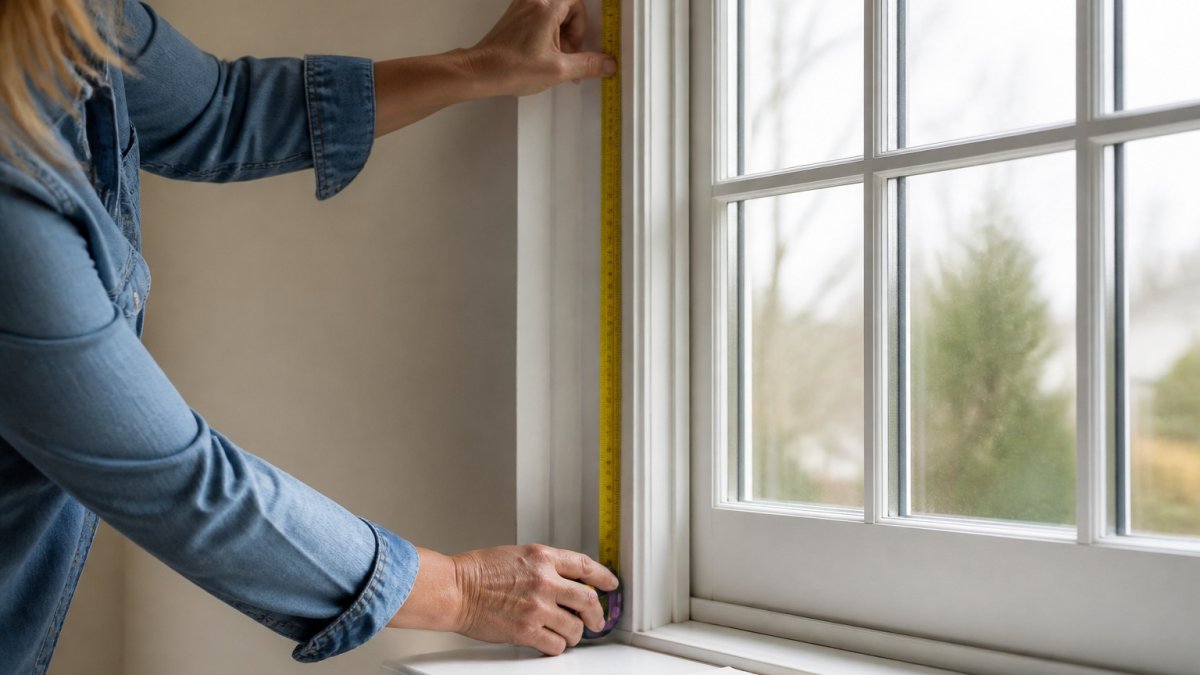
Step 1: Decide rod placement first. Rod height changes everything downstream. A common pattern is to mount the rod 4 to 6 inches above the window frame and extend it 6 to 12 inches beyond each side.
Step 2: Measure the rod width, not the window width. Run your tape from the left bracket to the right bracket. If you have not installed the rod yet, measure your planned span. Write this number down; it is the base for your fullness calculation.
Step 3: Measure finished length from the rod. Hook the tape at the top of the rod (or the ring, if you are using rings) and drop it to your desired hem point. Common hem targets:
- Sill length: 1/2 inch above the sill or 4 inches below it, avoid landing exactly on the sill, which looks accidental.
- Apron length: 4 inches below the sill, a practical choice for kitchens and casual rooms.
- Floor length: 1/2 inch above the floor for a clean break, or just touching the floor for a traditional look.
- Puddle: 1 to 3 inches of fabric pooling on the floor, formal, but harder to clean.
Step 4: Apply a fullness multiplier. Fullness is the ratio of fabric width to rod width. A common pattern is 2x for a standard gathered look, 2.5x for a fuller, more luxurious drape, and 1.5x for a flat, modern panel.
Step 5: Account for header and hem allowance. If you are ordering finished drapery, the workroom handles this.
Step 6: Measure in multiple spots. Walls and frames are rarely square. Measure width at the top, middle, and bottom of the window, and length at the left, center, and right. Use the smallest width and the longest length for a safe fit, or note the variance and ask the workroom how they handle it.
A note on 2026 smart-home setups: If you plan to motorize your drapery, measure for the track or rod system first, not the fabric. Motorized tracks add roughly 1 to 2 inches of depth and often require a specific rod diameter or track profile. Confirm the hardware dimensions before you finalize your rod width and projection, or you may find your panels do not clear the motor housing.
Ordering Custom Drapery Fabric Samples First
Ordering a sample before committing to a full order can help you judge color and texture. You can also browse fabric available by the yard to see the full range before you commit. Colors on a screen often look different in daylight, and a fabric's texture only becomes clear when you hold it. Check the sample under the lighting you use most, and compare it against your wall color and flooring.
Keep in mind that samples cannot be refunded, and the desired fabric yardage may be sold before the sample arrives. The sample size is approximately 4" x 6" and may not include all colors in the pattern. You can browse our fabrics sold by the yard at Shop fabric (https://beautifulwindowselgin.com/).
Custom Drapery Styles and Which Suits Your Room
Style choices shape how a room feels as much as color does, and they also change how much fabric you need, how the panels stack, and whether the drapery works with motorized hardware. Here is how the main header types and lining options compare.
ANASTASIA FRENCH PLEAT DRAPERY PANEL →
Header types and what they do:
- Pinch pleat: Fabric is gathered into sewn pleats at the top, typically in pairs or triplets. It creates a tailored, formal look and stacks neatly. Pinch pleat uses about 2.5x fullness and works well with rings on a rod or with a traverse track. It is a common choice for living rooms and dining rooms.
- French pleat (triple pleat): A variant of pinch pleat with three folds per pleat. It reads slightly more traditional and uses a bit more fabric. Good for formal spaces and tall ceilings.
- Rod pocket: The rod slides through a sewn pocket at the top. It is simple and casual, but the fabric bunches when you open the panels, and it does not slide as smoothly as rings. Best for stationary panels or low-traffic windows.
- Grommet (eyelet): Metal rings are set into the header, and the rod passes through them. It gives a casual, contemporary look and slides easily. Grommet panels stack compactly, which suits modern rooms and sliding doors.
- Tab top: Fabric loops over the rod. It is casual and easy to hang, but the tabs can stretch over time and the panels do not stack as tightly. Best for lightweight fabrics and informal rooms.
- Ripplefold: A track-based system with a continuous wave of fabric. It is the cleanest, most modern look and the easiest to motorize because the carriers run in a track. Ripplefold uses a specific fullness ratio (often 60% to 120% depending on the carrier spacing) and requires a compatible track.
Lining options and what they change:
- Unlined: Lightest and least expensive, but the fabric shows through and fades faster in direct sun. Best for sheers and casual spaces.
- Standard lining: Adds body, improves drape, and protects the face fabric from sun. A common default for most custom orders.
- Blackout lining: Blocks most light and is the go-to for bedrooms, media rooms, and nurseries. It also adds thermal insulation. Note that blackout lining adds weight, so confirm your rod and brackets are rated for it.
- Thermal lining: Designed to reduce heat transfer. It is often paired with blackout for bedrooms and sun-facing windows. Performance varies by fabric and construction, so ask the workroom for the specific rating rather than assuming.
- Interlining: A layer of flannel or bump cloth between the face fabric and lining. It adds weight, body, and a softer hand, common in formal drapery and in rooms where acoustic dampening matters.
Matching style to room use:
A bedroom benefits from blackout or thermal lining and a header that stacks tightly, such as pinch pleat or ripplefold. A living room often works best with a lighter fabric that filters daylight and a header that slides easily, such as grommet or ripplefold. A home office may benefit from interlining if noise is a concern, heavier fabrics and interlining absorb more sound than lightweight unlined panels, though the effect is modest compared to dedicated acoustic treatments.
The 2026 smart-home angle: Motorized drapery is no longer a niche upgrade. If you want your drapery to open with a voice command or a schedule, choose a header that works with a motorized track, ripplefold and pinch pleat on a traverse track are the most compatible. Rod-pocket and tab-top headers are difficult to motorize because the fabric does not run on carriers. Confirm the motor system's track profile and carrier spacing before you finalize your header choice, and check whether the motor requires a specific rod diameter or a low-voltage wiring run. Planning this at the style stage saves you from reordering later.
Consider how the drapery will hang when the panels are open, not only when they are closed. A header that stacks poorly will cover part of the glass even when the curtains are drawn back, which defeats the purpose of a wide rod span.
Curtain Length and Fullness Guide
For most custom drapery, a fullness of about two to three times the rod width gives a generous, gathered look. Less fullness produces a flatter, more modern appearance. Length is equally important: floor-length panels that just touch the floor look intentional, while panels that stop short can look like a mistake.
Account for pattern repeat when ordering fabric with a printed design. Patterned fabric must line up across panels, so the repeat can change how much yardage you need. Confirm the repeat figures on the product listing before you calculate your total.
Beautiful Windows Elgin Ready-Made and Made-to-Measure Options Compared
Ready-made panels come in fixed sizes. Made-to-measure drapery is made to your measurements. For unusual window sizes, made-to-measure is usually the better choice.
Our Made To Measure Drapery In Red (https://beautifulwindowselgin.com/products/made-to-measure-drapery-in-red) is an example of a made-to-measure option, made to your measurements. Ready-made stock is a practical choice when your windows are standard sizes and you need curtains quickly.

| Option | Best For | Fit | Timing |
|---|---|---|---|
| Ready-made panels | Standard windows, quick needs | Fixed sizes | Ships sooner |
| Made-to-measure drapery | Unusual or non-standard windows | Exact to your measurements | Made after you order |
| Fabric by the yard | DIY and designers | You sew or hire a workroom | Depends on your project |
Placing Your First Custom Drapery Order This Year
Start by measuring twice, then order a sample if color or texture matters to you. Review the sale terms, because made-to-measure orders are typically final.
When you are ready, shop our Helium Cotton Blend Made To Measure Drapery Dark Blue product selection or browse all fabrics at Shop fabric (https://beautifulwindowselgin.com/).

Frequently Asked Questions
Where can I order custom drapery online?
You can order custom drapery online from Beautiful Windows Elgin, which offers made-to-measure panels in several fabrics and nationwide shipping across the United States. Select a fabric, enter your window measurements, choose a header style, and check out. Beautiful Windows Elgin also sells fabric by the yard for home sewers and designers who prefer to make their own drapery. Read the product listing carefully before ordering, because made-to-measure panels are typically final sale and returns are not accepted.
How do I measure windows for custom drapes?
Measure the width of the window frame or the rod you plan to use, then add extra width for fullness. Measure the length from the rod or header position to the floor or the length you want. Record each measurement in inches, and double-check the numbers before entering them. Order fabric samples first so you can confirm color and texture in your own light. Accurate measurements prevent the most common ordering mistakes.
How long does it take to receive custom drapes ordered online?
Production and shipping times vary by product, so check the individual listing and the shipping information before you order. Made-to-measure products are fabricated after you place the order, which means the timeline is longer than for ready-made panels. Plan for the delivery window shown at checkout, and allow extra time before you need the drapes installed for an event or move-in date.
Can I order fabric samples before buying custom curtains?
Yes. Beautiful Windows Elgin sells fabric samples, which are approximately 4 by 6 inches. Samples cannot be refunded, and the fabric yardage you want may sell out before your sample arrives. Use the sample to check color under your room's natural and artificial light, and to judge texture and weight before committing to a full order.
