


5 Rules for Blackout Lining: Sewist Friendly Room by Room Choices
Blackout lining is a fabric backing sewn or attached behind drapery to block outside light from entering a room. The main options are 3-pass coated linings, 2-pass or dimout backings, foam-backed thermal linings, and cotton-based fleece interlinings, each varying in opacity and stiffness. For bedrooms and home theaters, choose a 3-pass or foam-backed thermal lining for near-total darkness; for living and dining rooms, a softer cotton-base option like Outblack balances drape with strong light control.
TL;DR:
- Full blackout coverage requires properly fitted, overlapping panels to prevent light leaks around the edges and maximize darkness.
- Foam-backed linings provide superior insulation but are heavier, less drapable, and may require professional sewing for large or heavy panels.
- 3-pass coated linings offer the highest level of light blockage, especially when combined with proper mounting and sealing methods.
- Choice of lining should prioritize room needs: use 3-pass or foam-backed for bedrooms and home theaters, versus dimout or cotton options for living spaces.
- Proper care, including avoiding water on coated linings, and ordering swatches beforehand, helps ensure long-term performance and accurate color matching.
Table of Contents
- Blackout Lining Options: 2-Pass vs 3-Pass Construction
- Which Base Fabric Works Best for Blackout Lining?
- How Much Light and Heat Does Blackout Lining Actually Block?
- How Do You Choose the Right Blackout Lining for Each Room?
- Which Way Round Does Blackout Lining Go?
- How Do You Care for and Maintain Blackout Lining?
- Beautiful Windows Elgin: How We Help You Choose the Right Lining
- A Simple Rule of Thumb for Choosing Blackout Lining
- Get Swatches and Start Your Blackout Project
- Sources
- FAQ
Blackout Lining Options: 2-Pass vs 3-Pass Construction
The construction method, not the fabric name on the label, determines how dark a room actually gets. Three-pass blackout construction applies a white coating, then a black layer, then a second white coating, sandwiching opacity between two neutral faces. That middle black layer is what stops light transmission through the weave itself, not just what reflects off the surface. A 2-pass lining skips that middle layer, coating the fabric once or twice with an acrylic or resin backing that blocks most, but not all, light. This is often marketed as “dimout” rather than true blackout.
Foam-backed thermal linings take a different approach, laminating a thin foam layer to the fabric back instead of applying coating passes. They add real insulating bulk but also weight and stiffness, which matters once you’re pinch-pleating or machine hemming yardage.
Here’s how the trade-offs actually break down:
- 3-pass coated: fullest blackout, moderate stiffness, neutral finish on the room side
- 2-pass/dimout: softer hand, easier to sew, visible light glow around edges
- Foam-backed: best insulation, heaviest and least drapable
- Acrylic, silicone, or suede coatings: each changes hand-feel and how the backing color shows through on the window side
Which Base Fabric Works Best for Blackout Lining?
The substrate underneath the coating shapes everything from drape to whether your sewing machine will fight you. Polyester substrates are the most common choice for commercial-grade linings. Eastern Accents’ Caelum lining, for example, is a heavyweight polyester that’s flame-resistant, available in wide widths, and lighter than older-generation blackout fabrics despite its durability.
Cotton and cotton-blend substrates sit at the other end of the spectrum. Hanes Outblack is a cotton-base with a 3-pass acrylic backing, and workrooms tend to favor it because it sews and drapes more like a natural fiber, even though it still delivers full blackout performance. Linen-look and jacquard-style substrates fall in between, offering more visual texture but usually pairing better with a lighter dimout backing than a rigid 3-pass coating.
Pro Tip: Match your lining stiffness to your drapery style. Rigid 3-pass linings hold crisp pleats beautifully but resist soft, billowy folds, so pair them with structured pinch-pleat or goblet headers rather than relaxed grommet panels.
A few sewing notes worth knowing before you cut fabric:
- Use a sharp, size 90/14 needle for coated backings; a dull needle can crack the coating
- Lengthen your stitch slightly (3.0 to 3.5mm) to avoid perforating the blackout layer
- Consider a professional workroom for foam-backed or heavier 3-pass yardage, since home machines can struggle with the added bulk at seams
Curious how lining choice changes overall daylight and privacy performance? Our guide to curtain lining fabric for light control and privacy breaks down the options further.
How Much Light and Heat Does Blackout Lining Actually Block?
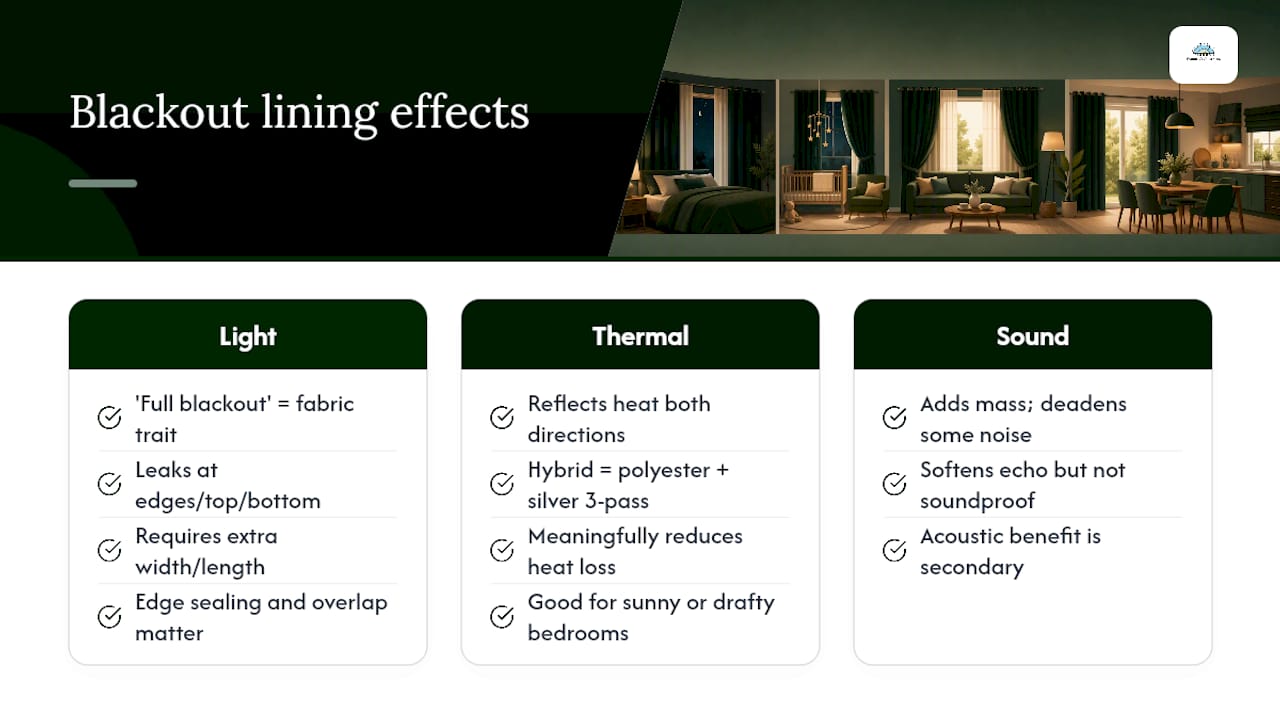
“full blackout (in fabric, when properly fitted)” describes the fabric itself, not the finished window. Even a true 3-pass lining leaks light around the edges, top, and bottom of a panel unless it’s mounted with enough width and length to cover the frame completely. That’s why edge sealing and overlap matter as much as the fabric choice.
On thermal performance: hybrid linings that pair a polyester substrate with a silver 3-pass backing are built to reflect heat energy in both directions, keeping summer heat out and winter warmth in. Properly fitted, lined drapery has been shown to meaningfully reduce heat loss through windows, which is one reason thermal linings get specified for bedrooms facing harsh sun or drafty older windows.
On sound, don’t expect miracles. Blackout linings add mass to a window treatment, which deadens some ambient noise and softens echo, but they don’t approach soundproofing. If acoustic control is your priority, treat the lining as a bonus benefit, not the solution.
How Do You Choose the Right Blackout Lining for Each Room?
Start with what the room actually needs, not what looks impressive on a spec sheet. Weigh these five factors before you order yardage:
- Darkness level required — a home theater or shift-worker’s bedroom needs full 3-pass blackout; a home office can tolerate dimout
- Thermal need — south-facing rooms or older single-pane windows benefit most from reflective or foam-backed linings
- Drape and aesthetic — formal living rooms often call for softer cotton-base linings that pleat well; utility spaces can handle stiffer coated fabric
- Care preference — decide upfront whether you’re willing to dry clean or need something water-cleanable
- Budget and lead time — coated and hybrid linings typically cost more per yard than basic dimout backing, and custom workroom orders take longer than off-the-shelf panels
For quick reference: bedrooms and home theaters do best with 3-pass or foam-backed thermal lining. Nurseries usually call for a softer, washable option since fabric gets handled and laundered more often. Living and dining rooms often land on a dimout or cotton-base blackout for the balance of light control and drape. Renters who can’t alter existing treatments can hang blackout liners behind current panels without any permanent changes.
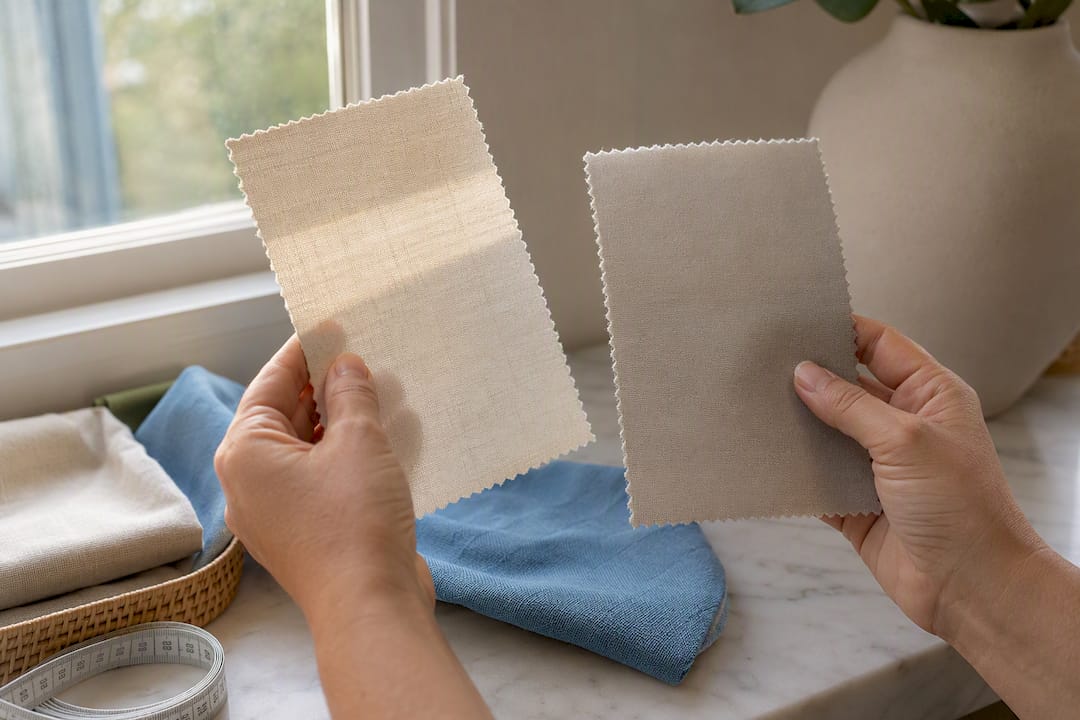
Whatever you land on, order swatches before committing to full yardage. Small samples let you check color, opacity, and hand-feel under your actual window before you cut a single yard.
Which Way Round Does Blackout Lining Go?
For reflective or foil-backed thermal linings, the silver or white reflective side faces the glass, toward the heat source, while the finished fabric side faces into the room. In standard 3-pass construction, the black layer sits internally between two white coatings, so orientation isn’t a concern there. It’s built in either direction.
For attachment, you have three common methods:
- Sew-in lining: most durable and closest to a finished, tailored look; best left to a workroom or confident home sewist
- Clip-in or hook-and-eye tape: allows lining to be removed for cleaning without unpicking seams
- Hook-and-loop tape (Velcro): fastest DIY option, though less secure over years of use
For light-sealing, extend your drapery rod several inches beyond the window frame, add generous side returns, and consider a pelmet or valance to block light spilling over the top. Blackout tape along the edges of the window frame can close persistent gaps.
How Do You Care for and Maintain Blackout Lining?
Check the care label before you wash anything. Many coated linings require dry cleaning because water and agitation can crack or peel the acrylic or silicone coating over time. Others, particularly some cotton-base linings, tolerate gentle washing.
Keep these maintenance basics in mind:
- Iron on low heat, fabric side only, never directly on a coated back
- Skip steam on coated linings; trapped moisture can degrade the backing
- Watch for delamination, cracking, or a chalky residue on the coating; these signal it’s time to replace the lining
- A sudden increase in light bleed-through after years of use usually means the blackout layer has broken down
Beautiful Windows Elgin: How We Help You Choose the Right Lining
Designer fabric suppliers often provide fabrics by the yard alongside custom drapery services, so you’re not choosing a lining in isolation from the fabric it sits behind. They may offer swatches, workroom guidance, and installation support for customers who want the darkness and drape right the first time.
A practical order of operations tends to work best:
- Request swatches of both your face fabric and your preferred lining together
- Confirm pass count and substrate against your room’s darkness and thermal needs
- Order yardage or finished panels once you’ve handled the samples
- Schedule installation or finishing so the mounting matches the lining’s performance
Customers who follow this sequence typically see better drape, more accurate darkness, and fewer returns than those who order lining sight unseen.
A Simple Rule of Thumb for Choosing Blackout Lining
My rule for clients is simple: match the lining to the room’s job, not the fabric’s looks. If the room’s job is sleep, pick 3-pass or foam-backed and stop second-guessing it. If the room’s job is entertaining, prioritize drape and order a swatch before committing to yardage.
— Marrion
Get Swatches and Start Your Blackout Project
Reading about pass counts and coatings only gets you so far until you have fabric in hand under your own window’s light. Order swatches of blackout and thermal linings alongside designer fabrics, so you can judge opacity, hand-feel, and color together before committing to yardage.

Whether you’re a homeowner replacing bedroom panels or a workroom sourcing yardage for a client, our nationwide shipping and custom drapery service mean you can move from swatch to finished window treatment without hunting down separate vendors for fabric and lining. Browse our upholstery and drapery fabric collection for face fabrics that pair well with blackout backings, or check our fabric FAQ page for details on ordering swatches and yardage. If insulation is a priority alongside your window treatments, it’s also worth looking at how energy-efficient doors improve older homes, since window and door upgrades often work best together. Request your swatches today and get your custom blackout panels moving toward installation.
Sources
- Hanes Fabrics Outblack Lining - Full Roll | Rowley
- Blackout Thermal Curtain Lining Fabric - 3 Pass - Ivory – Lullabee Fabrics
- Caelum blackout drapery lining in white | Eastern Accents
FAQ
What Is the Best Fabric to Use for Blackout Lining?
There’s no single best fabric; it depends on priorities. Cotton-base linings like Outblack offer the softest hand and easiest sewing, while polyester 3-pass linings offer the fullest blackout with better durability for heavy daily use.
What Is the Best Material for Blackout Blinds and Curtains?
For curtains specifically, a 3-pass coated lining or a foam-backed thermal lining delivers the strongest combined light-blocking and insulating performance, especially when paired with a heavier face fabric.
Which Way Round Does Blackout Lining Go?
For reflective or silver-backed thermal linings, the reflective side faces the window and the heat source, with the finished side facing into the room. Standard 3-pass linings have no wrong side since the black layer sits internally.
Is Thermal or Blackout Lining Better?
They solve different problems: blackout lining is engineered primarily to stop light transmission, while thermal or hybrid linings add reflective backing specifically to reduce heat transfer. Many hybrid products, like ERII-style linings, deliver both in one fabric.
Do Blackout Linings Reduce Noise as Well as Light?
Blackout linings add mass that modestly dampens sound and softens room echo, but they aren’t a soundproofing solution on their own.